
The biggest mistake you can make when cleaning your piercing jewelry is using harsh chemicals or abrasive tools, which can damage delicate metals and gemstones, causing discoloration, scratches, or even loosening of stones. Many think household cleaners are safe, but they’re often too strong and lead to irreversible damage. To keep your pieces safe and shiny, it’s best to use gentle, jewelry-specific solutions. Stick around to learn how to clean your jewelry safely and avoid costly mistakes.
Key Takeaways
- Using harsh chemicals like bleach or ammonia can corrode metals and damage delicate piercings.
- Ultrasonic cleaners may harm porous stones or intricate jewelry designs.
- Abrasive tools or powders can scratch or weaken piercing jewelry.
- Neglecting proper cleaning routines leads to buildup and tarnish, risking damage over time.
- Ignoring manufacturer instructions can result in irreversible harm to piercing jewelry.
The Biggest Mistake You’re Making When Cleaning Your Jewelry
Many people unknowingly damage their jewelry by cleaning it the wrong way. Relying on harsh chemicals or abrasive tools can harm delicate pieces, especially piercings. The biggest mistake you make often involves inconsistent or improper cleaning routines that neglect proper jewelry maintenance. Instead of routine cleaning, some think skipping regular upkeep is fine, but this can lead to buildup and tarnish. Using the wrong cleaning methods can weaken metals and dull stones over time. To avoid this, you need a consistent, gentle cleaning routine suited to each jewelry type. Proper jewelry maintenance isn’t just about shining pieces; it’s about preserving their integrity. Incorporating proper cleaning techniques helps prevent damage and extend the life of your jewelry, especially your cherished piercing jewelry.
Why Harsh Chemicals Damage Piercing Jewelry
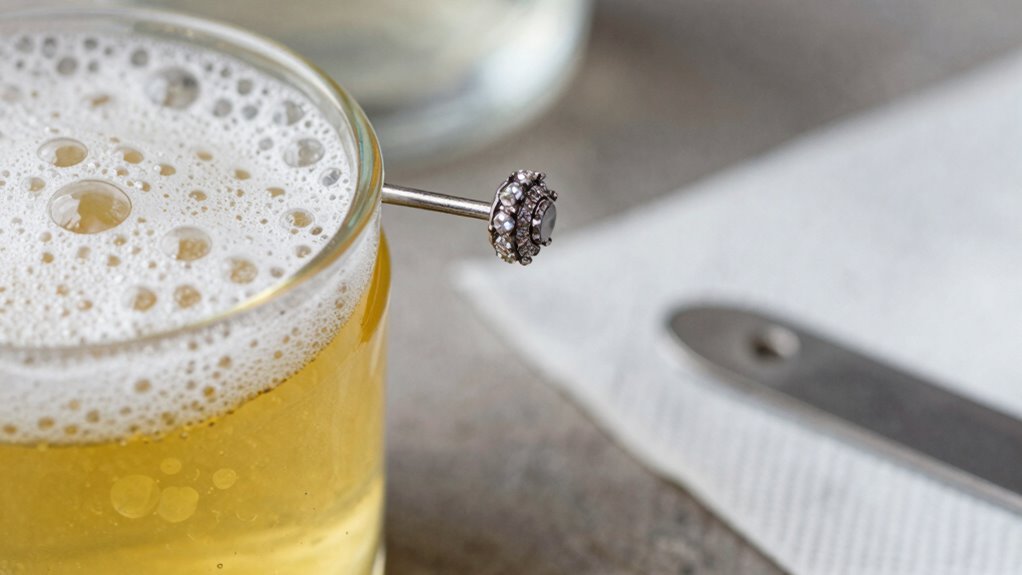
Harsh chemicals can quickly damage piercing jewelry because their strong formulas are designed to dissolve tough stains, not delicate metals or skin. When exposed, these chemicals trigger unwanted chemical reactions that weaken the jewelry’s structure. They can cause material degradation, leading to tarnishing, discoloration, or pitting. For example, bleach and ammonia can corrode metals like gold, silver, or platinum, compromising their integrity. Over time, this damage isn’t just cosmetic; it can cause the jewelry to become fragile or even break. Piercing jewelry is often made from sensitive materials that require gentle care. Using harsh chemicals ignores this, risking irreversible damage. Proper cleaning techniques are essential for maintaining water safety, especially when it involves delicate piercing pieces. Additionally, understanding material composition can help you choose the right cleaning methods to avoid unintended harm. Being aware of safe cleaning practices can further protect your jewelry from unnecessary damage, and consulting professional advice can often provide tailored guidance for your specific jewelry type. Recognizing the importance of cleaning product ingredients can assist in selecting safer cleaning solutions that won’t harm your jewelry.
Choosing Gentle, Jewelry-Safe Cleaners
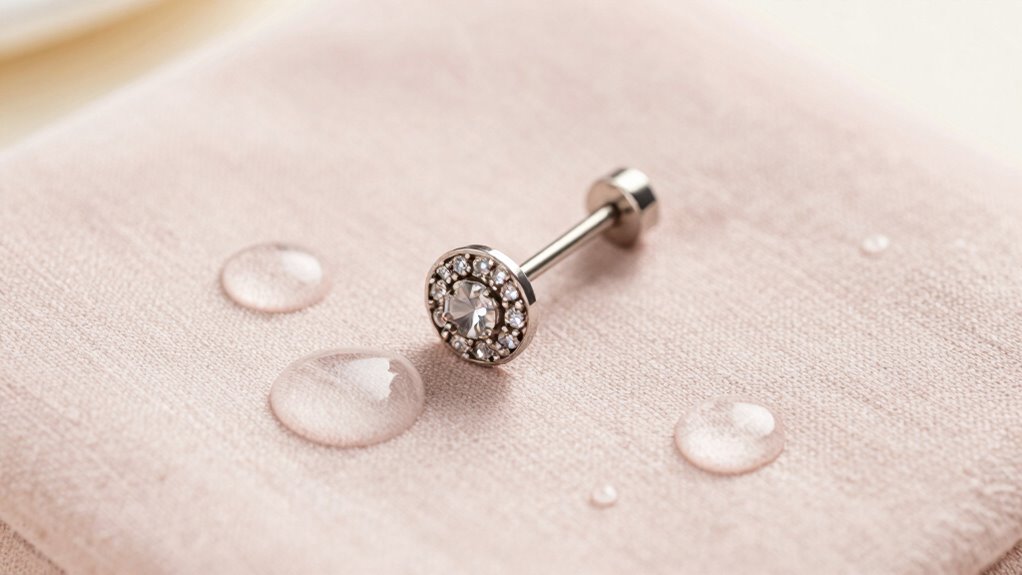
When selecting a cleaner for your jewelry, opt for non-abrasive solutions that won’t scratch or damage delicate surfaces. Avoid harsh chemicals like bleach or ammonia, which can weaken or discolor your pieces. Instead, choose products specifically designed to be jewelry-safe to keep your jewelry looking its best. Using gentle cleaning methods can help preserve the resale value of your precious piercing pieces over time. Incorporating proper maintenance techniques into your routine can further extend the lifespan of your jewelry. Regularly inspecting your jewelry for signs of wear and addressing issues promptly can also prevent damage, ensuring your pieces remain beautiful for years to come. Applying household cleaning tips can help you maintain your jewelry’s condition without risking harm to delicate components. Embracing Stoic wisdom reminds us to approach our possessions with care and mindfulness, ensuring their longevity and beauty.
Opt for Non-Abrasive Solutions
Choosing gentle, jewelry-safe cleaners is essential to prevent damage during cleaning. Harsh solutions can cause chemical reactions that weaken your jewelry and accelerate jewelry tarnish. To avoid this, opt for non-abrasive solutions that clean effectively without scratching or dulling the surface. These gentle cleaners help preserve the integrity of your pieces, especially delicate piercings. Using adaptable, long-term structures can also ensure your cleaning routine remains effective over time. Consider using:
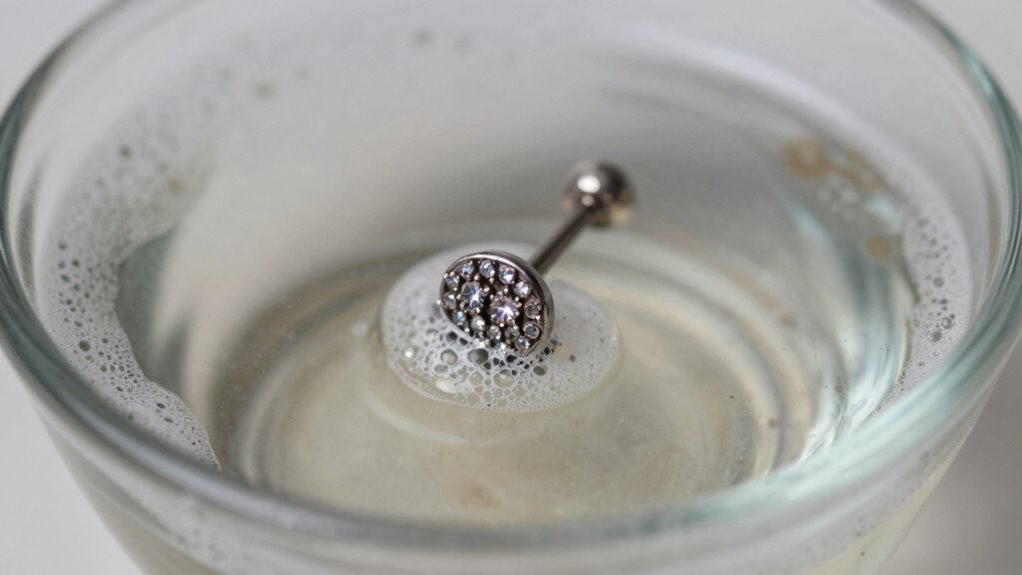
- Mild dish soap diluted in warm water
- Baking soda paste for stubborn spots
- White vinegar for natural cleaning
- Baby shampoo for sensitive jewelry
- Commercial jewelry cleaners labeled safe for piercings
Always test a small area first and avoid abrasive materials like brushes or powders that could scratch or damage your jewelry. Choosing the right solutions keeps your jewelry shining without risking harm. Additionally, understanding household safety tips can help maintain a safe environment during cleaning routines.
Avoid Harsh Chemicals
Many everyday cleaning products contain chemicals that can damage your jewelry over time. Harsh chemicals can trigger unwanted chemical reactions with certain materials, leading to discoloration, pitting, or weakening of your piercing pieces. Not all jewelry is compatible with strong cleaners, so using these substances may cause irreversible damage. To protect your jewelry’s integrity, opt for gentle, jewelry-safe cleaners designed specifically for delicate materials. These products minimize adverse chemical reactions and are formulated to be compatible with various metals and stones. By choosing mild, non-abrasive solutions, you reduce the risk of damage and preserve the beauty and longevity of your piercing jewelry. Always check ingredient labels and avoid products with ammonia, bleach, or other harsh chemicals to guarantee your jewelry stays pristine.
Choose Jewelry-Safe Products
Opting for jewelry-safe products is essential to maintaining the beauty and integrity of your piercing pieces. Using gentle, non-abrasive cleaners helps prevent unwanted chemical reactions that can tarnish or damage your jewelry. When selecting products, look for those specifically labeled as safe for jewelry or piercings, as harsh chemicals can compromise materials over time. Proper jewelry maintenance involves avoiding store-bought cleaners with strong acids or alkalis that may cause discoloration or deterioration. Instead, choose mild solutions like warm water with a gentle soap or specialized jewelry cleaners. These options keep your pieces shining without risking harm. Remember, consistent use of jewelry-safe products preserves both the appearance and longevity of your precious piercings.
Step-by-Step Guide to Cleaning Your Piercing Jewelry Properly
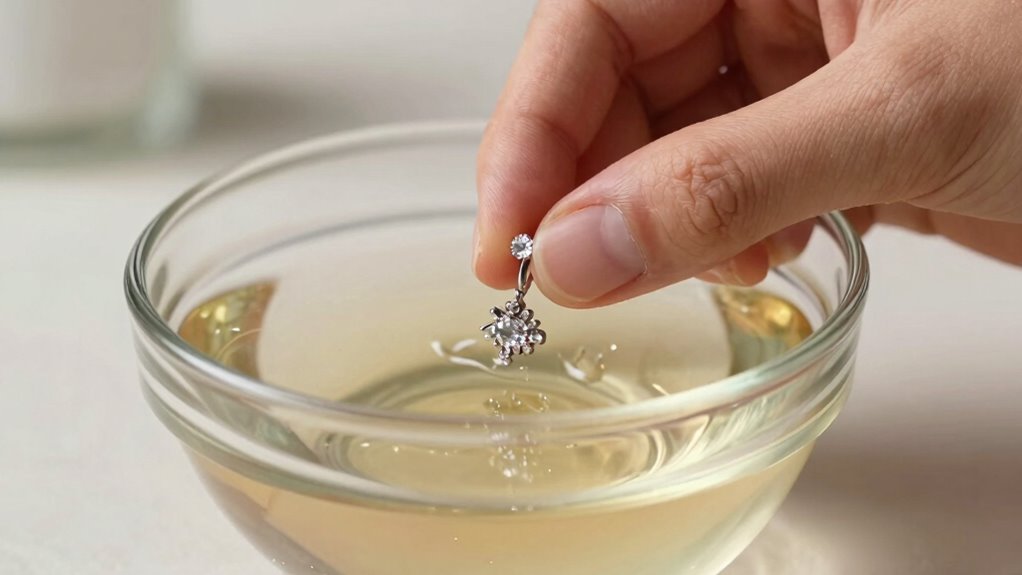
Cleaning your piercing jewelry properly is essential to prevent infections and keep it looking its best. Start by removing the jewelry carefully, following your piercer’s instructions. Use a gentle, jewelry-safe cleaner that aligns with current piercing trends and suits the jewelry’s material. Soak the piece in warm water mixed with mild soap or a specialized cleaning solution for a few minutes. Gently scrub it with a soft toothbrush to remove dirt and debris, paying close attention to intricate jewelry designs. Rinse thoroughly under warm water to eliminate any residue. Pat dry with a clean, soft cloth. Avoid harsh chemicals or abrasive tools, as they can damage the jewelry’s finish and compromise its design. Regular cleaning preserves both the appearance and health of your piercing and supports inspiring leadership by maintaining high standards of care and attention. Additionally, being mindful of safe disposal practices helps reduce environmental impact and promotes sustainability. Understanding the importance of measurement accuracy in cleaning processes ensures that your jewelry remains pristine and safe for wear. Proper material compatibility is also key to avoiding damage and prolonging the lifespan of your jewelry.
How to Spot Damage From Improper Jewelry Cleaning
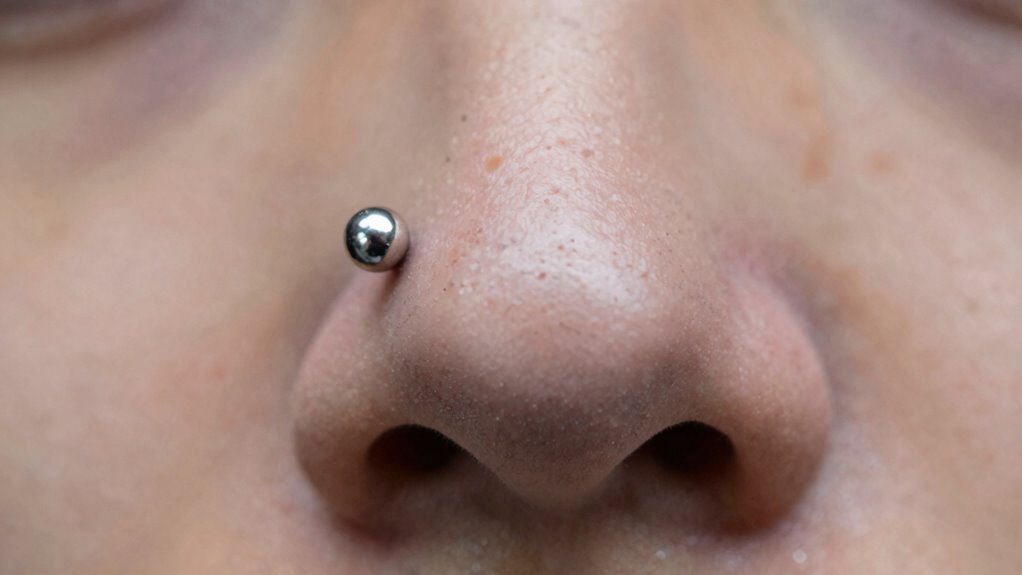
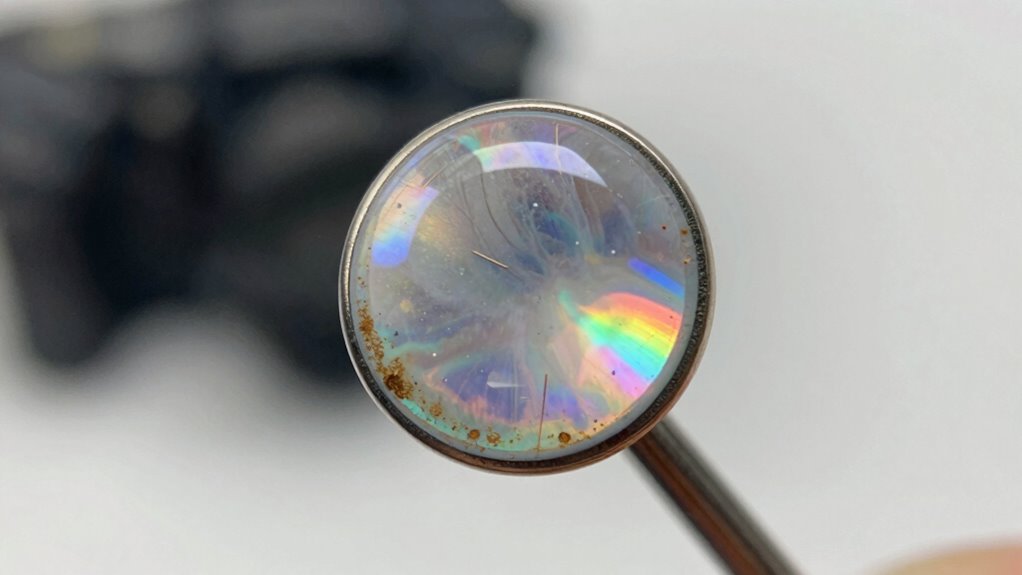
Improper cleaning can silently cause damage to your jewelry, making it essential to know what signs to look for. Over-cleaning or using harsh methods can weaken delicate parts or harm stones. Keep an eye out for these damage indicators:
- Dull or scratched surfaces
- Loose or chipped stones
- Discoloration or tarnish
- Buildup of residue or grime
- Metal fatigue or bending
A professional cleaning method can help preserve the integrity of your jewelry and prevent damage caused by improper techniques. Your cleaning frequency matters—clean too often or with aggressive products, and you risk damage. Regular maintenance and proper techniques are crucial, especially when dealing with delicate materials that require gentle handling. For example, certain jewelry materials like titanium or Bioflex may react differently to cleaning agents, so understanding material-specific care is important. Recognizing these signs early helps prevent further harm. If you notice any of these damage indicators, consider consulting a professional jeweler to assess and restore your piece. Proper cleaning habits, combined with vigilance, will keep your jewelry looking its best without risking damage.
Tips to Keep Your Metals and Stones Shiny and Safe
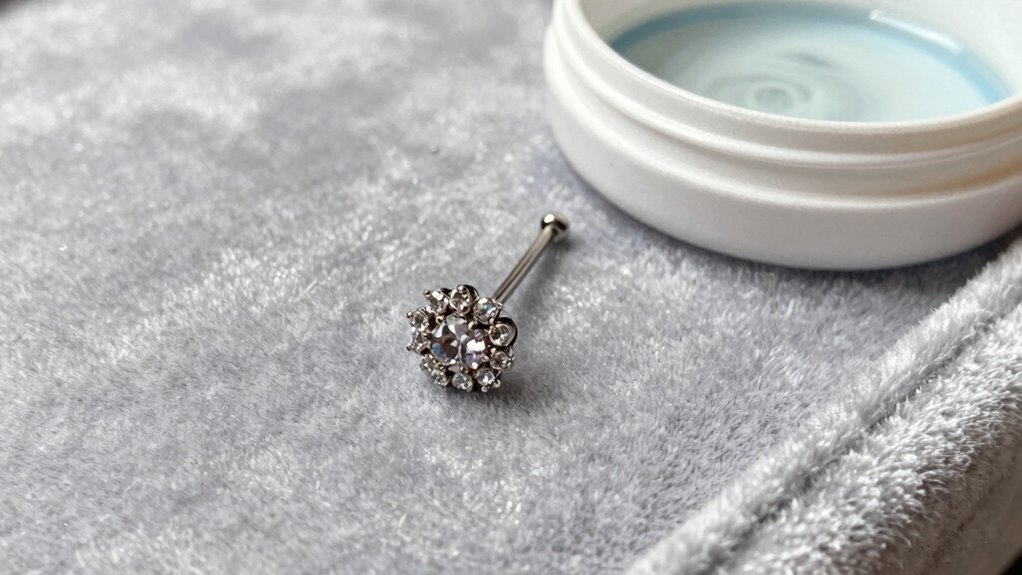
To keep your jewelry looking its best, use proper cleaning techniques and gentle methods that won’t damage the metals or stones. Store your pieces safely in soft pouches or lined boxes to prevent scratches and tarnishing. Avoid harsh chemicals, as they can harm your jewelry and reduce its shine over time. For valuable pieces like piercings, consider researching best cleaning methods for jewelry, ensuring you’re using techniques that preserve their quality and longevity.
Proper Cleaning Techniques
Keeping your jewelry sparkling and safe requires more than just a quick rinse. To properly clean your pieces, use gentle methods that preserve both stones and metals. Avoid harsh chemicals that can damage delicate materials or interfere with piercings healing. Instead, opt for soft brushes and mild soap solutions. Remember, proper jewelry storage prevents tarnish and scratches, keeping your pieces in top condition. Using template compatibility tips can also help you organize your jewelry cleaning supplies efficiently and safely. Proper cleaning also involves understanding the importance of affiliate disclosure to be aware of product recommendations and potential costs.
Additionally, being aware of over-the-counter (OTC) caution helps prevent accidental damage or allergic reactions from improper products.
- Use a soft, lint-free cloth to polish jewelry regularly
- Soak pieces in warm, soapy water for a few minutes
- Gently scrub with a soft toothbrush for hard-to-reach areas
- Rinse thoroughly with clean water
- Dry completely before storing to prevent tarnish or damage during piercings healing
Safe Storage Practices
Proper cleaning sets the foundation for maintaining your jewelry’s shine, but how you store your pieces is just as vital. Storage safety prevents scratches, tarnish, and damage, keeping your jewelry looking its best. Use soft pouches or individual compartments to avoid pieces bumping against each other. Keep jewelry away from direct sunlight and extreme temperatures, which can harm stones and metals. Organize your collection with a jewelry box that has dedicated sections, making it easier to find and prevent tangling or accidental damage. Avoid storing jewelry in humid areas, like bathrooms, to prevent tarnishing. Regularly check your storage setup to guarantee it remains protective. Incorporating herbal wellness practices such as using natural anti-tarnish remedies can also help maintain your jewelry’s brilliance. Good jewelry organization and storage safety help preserve your pieces’ brilliance and longevity, so they stay stunning for years to come.
Avoid Harsh Chemicals
Harsh chemicals can quickly damage your jewelry’s metals and stones, so it’s essential to steer clear of them. These chemicals can cause unwanted chemical reactions, dulling or corroding your pieces over time. Plus, they often have negative environmental impacts, harming ecosystems when washed away. To keep your jewelry safe and shiny, avoid common cleaning agents like bleach, ammonia, and acetone. Instead, opt for gentle solutions or professional cleaning methods.
- Use mild soap and warm water for regular cleaning
- Avoid commercial jewelry cleaners with strong chemicals
- Steer clear of household cleaners with harsh ingredients
- Limit exposure to chlorine in pools and hot tubs
- Choose eco-friendly products to reduce environmental impacts
Should You Clean Your Jewelry at Home or Leave It to Experts?
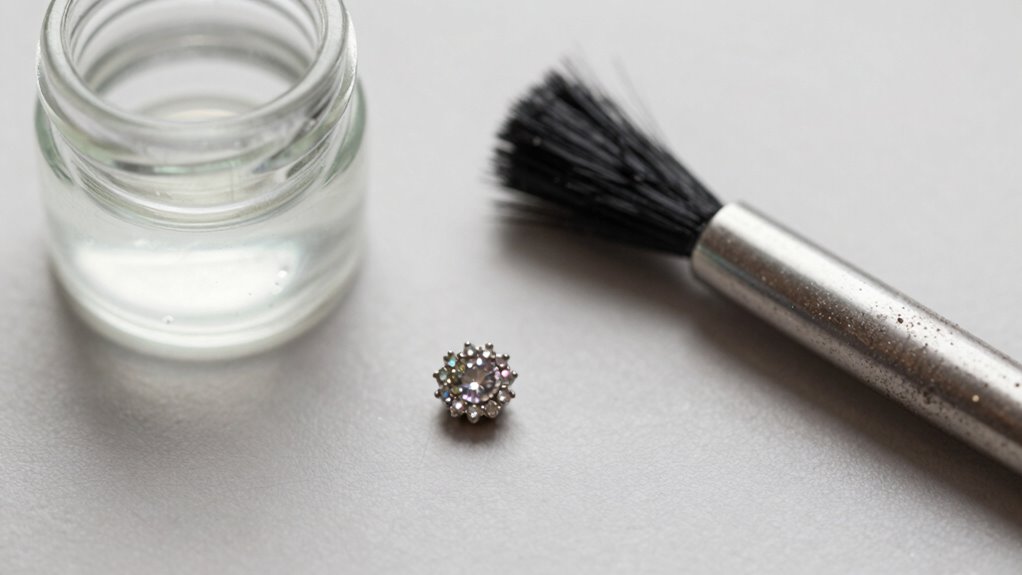
Deciding whether to clean your jewelry at home or leave it to professionals depends on several factors, including the type of jewelry and its condition. DIY methods can work well for simple pieces like gold or silver, but delicate or valuable items may require professional services to prevent damage. If your jewelry has intricate settings or is heavily tarnished, it’s safer to seek expert cleaning. Professionals use specialized tools and solutions that minimize the risk of scratching or ruining your pieces. However, for everyday cleaning of less delicate jewelry, gentle at-home methods can be effective if you follow proper techniques. Ultimately, knowing when to trust DIY methods and when to call in experts helps preserve the beauty and integrity of your piercing jewelry.
Expert Tips for Caring for Different Types of Piercing Jewelry
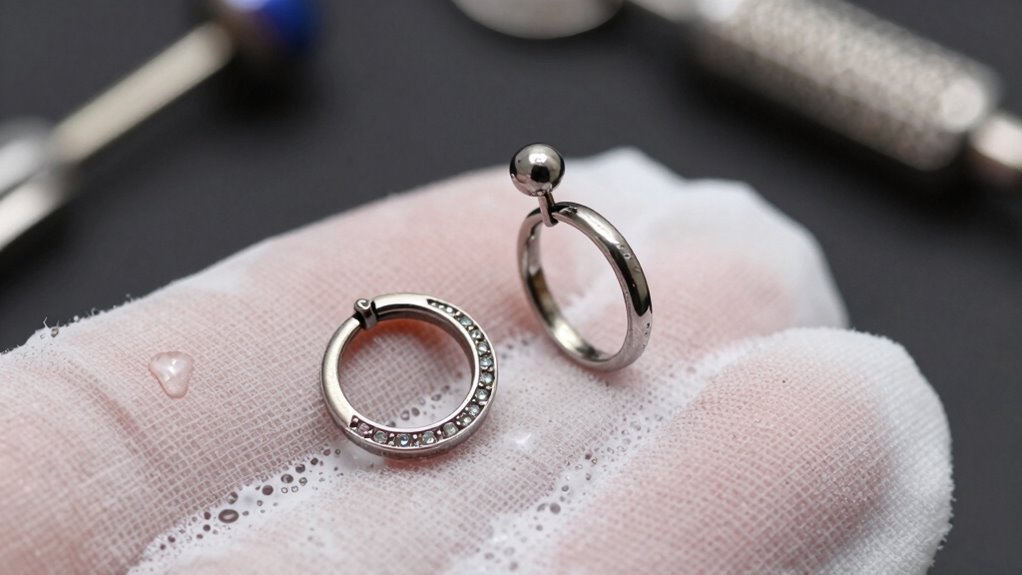
Different types of piercing jewelry require specific care to keep them looking their best and prevent damage. For example, cultural significance often influences the choice of materials and cleaning methods, while artistic designs may need gentle handling to preserve intricate details. To properly care for your jewelry:
Cultural and artistic jewelry require gentle care to preserve their beauty and significance.
- Use mild soap and warm water for cleaning, especially for delicate pieces.
- Avoid harsh chemicals that could tarnish or damage cultural symbols or designs.
- Regularly inspect for loose settings or damage, particularly on artistic or ornate pieces.
- Store jewelry in soft pouches to prevent scratches on sensitive or intricate designs.
- Rotate wearing different pieces to reduce wear and tear, preserving their cultural and artistic value.
Following these tips helps maintain the beauty and significance of your piercing jewelry.
Common Mistakes to Avoid When Cleaning Your Piercing Jewelry
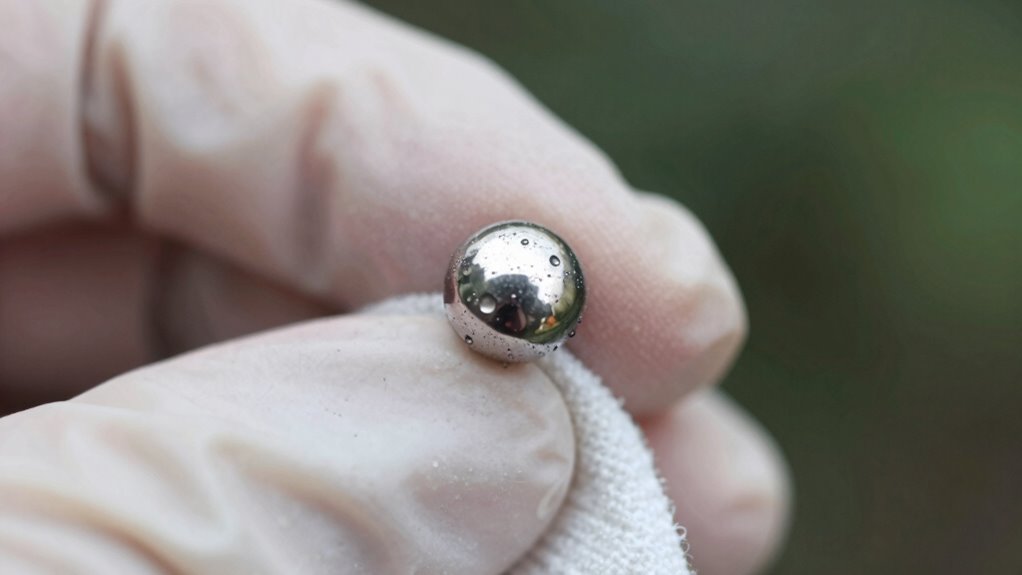
Many people make the mistake of using abrasive or harsh cleaning methods that can damage their piercing jewelry. You might think scrubbing with strong chemicals or rough brushes helps, but it can ruin delicate jewelry design and distort the piece. Ignoring fashion trends that emphasize gentle, stylish cleaning can lead to long-term damage. Instead, opt for mild solutions that preserve the jewelry’s shine and integrity. Avoid using alcohol, hydrogen peroxide, or baking soda unless recommended by a professional, as these can erode metals or gemstones. Be cautious with ultrasonic cleaners if your jewelry has intricate designs or porous stones. Proper cleaning not only maintains the jewelry’s appearance but also ensures your piercing stays healthy, so treat your jewelry with care and guarantee these common mistakes.
Frequently Asked Questions
How Often Should I Clean My Piercing Jewelry?
You should clean your piercing jewelry at least once a week to maintain proper jewelry maintenance and prevent buildup. During cleaning, use gentle, non-abrasive solutions to avoid damage. If your jewelry is new or exposed to dirt or sweat, increase cleaning frequency to twice weekly. Remember, consistent cleaning helps preserve the jewelry’s shine and integrity, ensuring your piercing stays healthy and looks great over time.
Can I Use Toothpaste to Clean My Piercing Jewelry?
Using toothpaste to clean your piercing jewelry is like pouring acid on delicate glass—you risk damage. Toothpaste dangers include abrasiveness that can scratch or weaken jewelry, especially if it’s made from sensitive materials like gold or certain alloys. For jewelry material safety, stick to gentle, jewelry-specific cleansers or warm soapy water. This protects your piercings and keeps your jewelry shining without risking harm.
Are Ultrasonic Cleaners Safe for All Jewelry Types?
Ultrasonic cleaners aren’t safe for all jewelry types because of ultrasonic risks that can cause jewelry damage. You should avoid using them on porous, fragile, or gemstone-studded pieces, as the vibrations might loosen stones or chip delicate materials. Always check your jewelry’s material and consult cleaning instructions or a professional before using ultrasonic devices, ensuring you protect your jewelry from potential harm.
What Signs Indicate My Jewelry Needs Professional Cleaning?
Like a lighthouse guiding ships, signs your jewelry needs professional cleaning shine brightly. If your jewelry material looks dull, scratches appear, or it develops discoloration, it’s time to seek expert help. Additionally, if you notice lingering odors or signs of piercing infections, professional cleaning can prevent further issues. Regular maintenance guarantees your jewelry stays beautiful and safe, especially for sensitive piercings, preventing infections and preserving its value over time.
Does Cleaning Affect the Color of My Jewelry Stones?
Cleaning your jewelry can affect the color of your stones if you’re not careful, especially with softer gems. To prevent color fading, use gentle cleaning methods suited to each gemstone’s durability. Harsh chemicals or abrasive tools can damage the stone’s surface and cause discoloration. Always opt for mild solutions and soft brushes, and avoid over-cleaning. Proper cleaning maintains your jewelry’s vibrant color and ensures its longevity.
Conclusion
So, next time you think about grabbing that harsh cleaner or tossing your jewelry in the sink, remember: your piercing pieces aren’t immortal. Treat them with care, avoid the temptation of quick fixes, and maybe, just maybe, you’ll keep them sparkling—and your piercings happy. Because nothing says “I love my jewelry” like ruining it with a careless scrub. Happy cleaning—just don’t be that person.