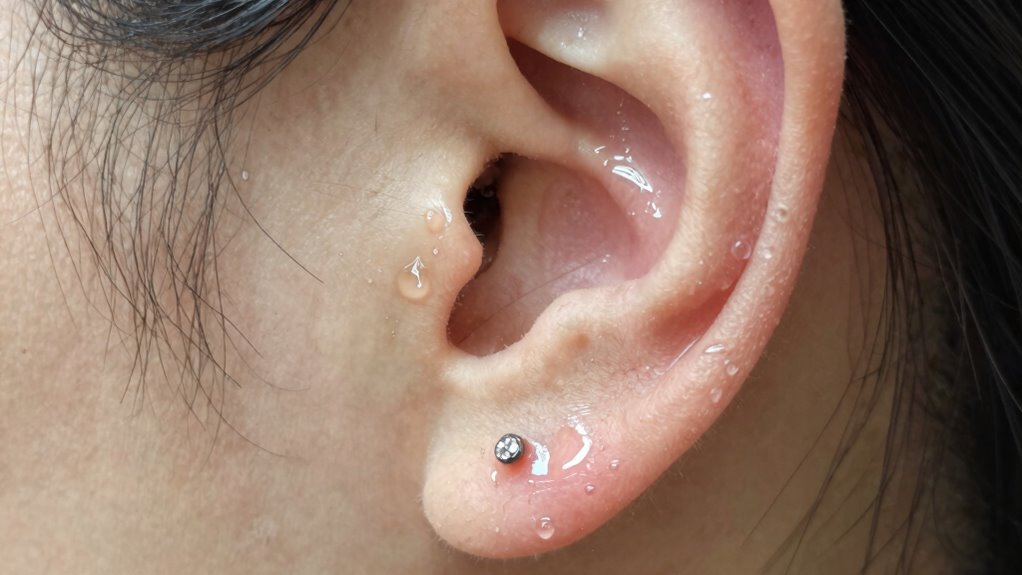

One overlooked reason your piercing stays irritated is often related to jewelry choices and materials. Not all metals are truly hypoallergenic, and using jewelry with irritating alloys or poor-quality materials can cause ongoing reactions. Even if a label says hypoallergenic, it might not suit your skin. Ill-fitting or rough jewelry can also scrape and irritate your skin, delaying healing. If you want to discover more about what might be causing your irritation, keep exploring the details.
Key Takeaways
- Using jewelry made from non-hypoallergenic materials can cause irritation despite proper aftercare.
- Poorly fitted jewelry can scrape or micro-tear skin, leading to prolonged inflammation.
- External irritants like harsh soaps or chemicals often damage healing tissue unnoticed.
- Frequent touching or movement of jewelry can traumatize the healing piercing.
- Overlooking the importance of high-quality, biocompatible materials increases the risk of irritation.
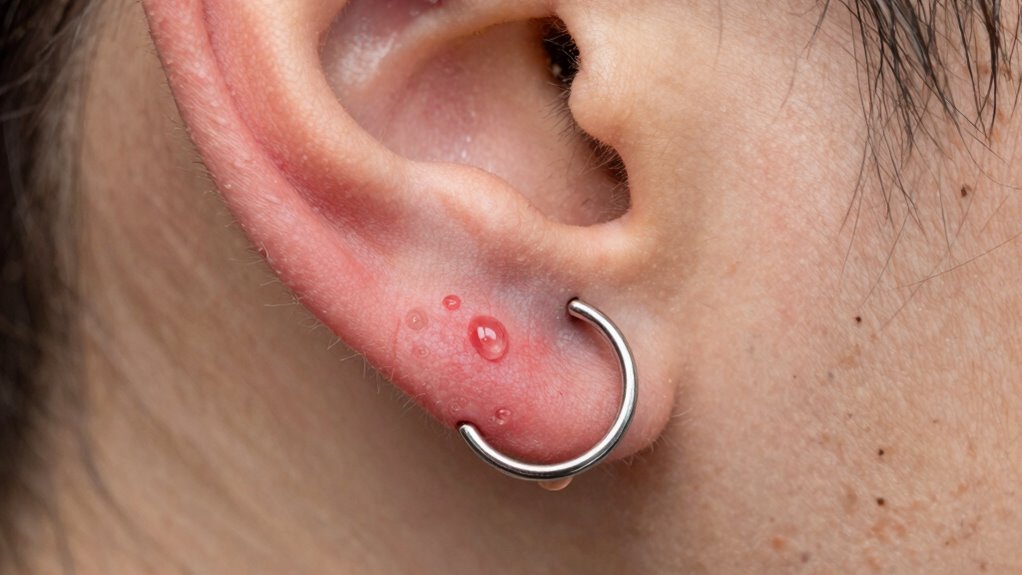
Have you ever noticed your piercings becoming irritated or red? It’s a common concern, and often, people jump to conclusions like infection or poor hygiene. But sometimes, the cause isn’t obvious. One of the most overlooked reasons your piercings might be acting up is because of the type of piercing jewelry you’re wearing or how it’s affecting the healing process.
Piercing irritation often stems from jewelry type and fit, not just hygiene or infection.
Your choice of piercing jewelry plays a significant role in how well your piercing heals. Not all metals are created equal, and some can cause allergic reactions or irritation, especially if they contain nickel or other irritating alloys. Even if your jewelry is labeled hypoallergenic, it might not be suitable for your skin. When you wear jewelry that doesn’t match your skin’s needs, your body reacts by turning red, swelling, or becoming sore. Over time, this irritation can interfere with the healing process, prolonging discomfort and increasing the risk of infection. That’s why selecting the right piercing jewelry—preferably high-quality, biocompatible materials like surgical steel, titanium, or niobium—is essential. These materials are less likely to cause adverse reactions and help your piercing heal faster.
Understanding the healing process is also key to avoiding irritation. Your body needs time to accept the new piercing and the jewelry inside it. During this period, your skin is especially sensitive, and any unnecessary stress can hinder healing. If you expose your piercing to irritants—like harsh soaps, chemicals, or excessive touching—you risk disrupting this delicate process. Wearing the wrong jewelry can add to this stress. For example, if your jewelry isn’t smooth or has rough edges, it can scrape against your skin, causing micro-tears and inflammation. This not only delays healing but also creates a perfect environment for bacteria to settle, which might lead to redness, swelling, or even infection. Additionally, being aware of the importance of material compatibility can help prevent adverse reactions and promote quicker healing. Choosing jewelry made from biocompatible materials is especially important for sensitive skin types.
It is also helpful to keep in mind that proper aftercare practices are essential for avoiding irritation, which includes avoiding unnecessary movement or trauma to the piercing. Moreover, selecting jewelry with a proper fit can significantly reduce irritation and discomfort during healing. It’s easy to overlook how much your jewelry impacts the healing process. Sometimes, you might think a piercing is healing slowly because of poor hygiene or accidental trauma. While those factors matter, the material and fit of your piercing jewelry could be the real culprits. If you notice persistent redness or irritation, consider whether your jewelry is suitable for your skin type and whether it’s properly fitted. Sometimes, switching to better-quality jewelry or adjusting the fit can make a significant difference. Remember, giving your piercing the right environment from the start—including using appropriate jewelry—sets the foundation for smoother healing and less irritation.

jagosen Flat Back Stud Earrings Cartilage Earrings for Women Men Hypoallergenic Threadless Flat Back Earring Surgical Steel Earring Tragus Helix Labret Lip Medusa Conch Body Piercing Jewelry
- Flat Back Design: Comfortable for sleep and active wear
- Hypoallergenic Material: Made from surgical steel, safe for sensitive ears
- Multiple Sizes Available: 16G, 18G, 20G with various bar lengths
As an affiliate, we earn on qualifying purchases.
As an affiliate, we earn on qualifying purchases.
Frequently Asked Questions
Can Diet Affect Piercing Irritation?
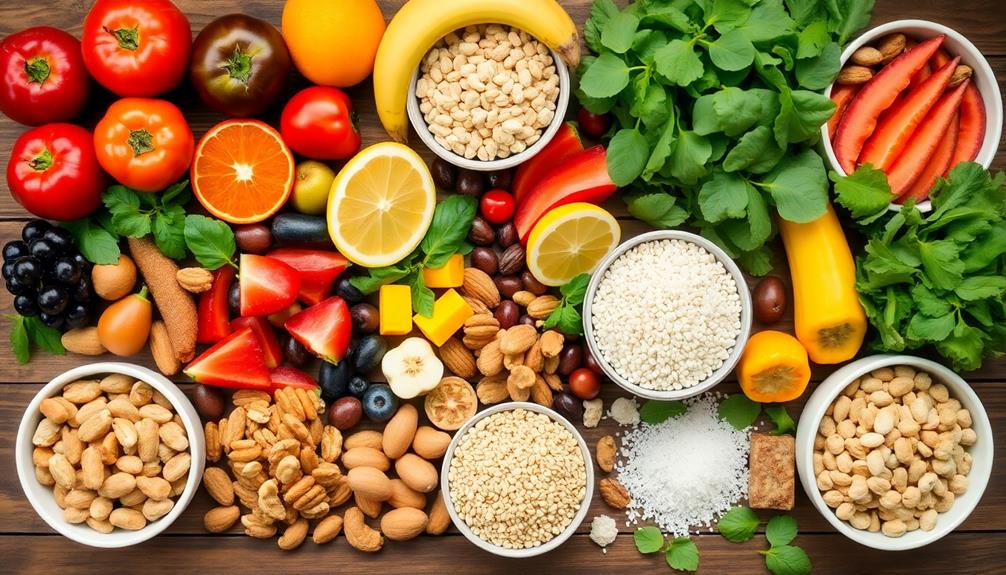
Yes, your diet can affect piercing irritation. Diet deficiencies, like lacking essential nutrients, can slow healing and increase sensitivity around your piercing. Food sensitivities may trigger inflammation, leading to irritation or swelling. Eating a balanced diet rich in vitamins and minerals supports healing and reduces irritation. Avoiding potential allergens and ensuring proper nutrition helps your piercing heal smoothly and minimizes discomfort caused by dietary factors.
Do Certain Fabrics Cause Piercing Discomfort?
Certain fabrics can cause piercing discomfort because fabric allergies or clothing friction irritate your skin around the piercing. Synthetic fabrics like polyester and nylon often trap moisture, leading to irritation, while rough materials like wool can cause friction, aggravating the area. To prevent this, opt for soft, breathable fabrics like cotton that reduce irritation and avoid tight clothing that increases friction, helping your piercing heal comfortably.
How Does Climate Impact Piercing Healing?
Climate markedly impacts your piercing healing process. Hot, humid weather can cause swelling and irritation, especially if your piercing jewelry isn’t suited for the environment. Cold, dry air might slow healing and cause dryness. To promote a healthy healing environment, choose jewelry that resists corrosion, and keep your piercing clean and protected from extreme weather. Staying mindful of climate conditions helps prevent irritation and guarantees your piercing heals smoothly.
Can Stress Worsen Piercing Irritation?
Yes, stress can worsen piercing irritation. When you’re stressed, your immune system weakens, making it harder for your body to fight off infection and maintain proper piercing hygiene. This can lead to increased swelling or redness. Additionally, stress might cause you to touch or fiddle with your jewelry more often, risking irritation from improper jewelry materials. Staying calm and maintaining good hygiene helps support healing and reduces irritation.
Are Natural Remedies Effective for Irritated Piercings?
Natural remedies can sometimes help with irritated piercings, but their effectiveness varies. If your piercing reacts to skin allergies or irritation, using gentle options like saline soaks or tea tree oil might soothe your skin. However, avoid harsh substances that could worsen the irritation. Keep your piercing jewelry clean, and consult a professional if symptoms persist. Natural remedies can support healing, but they aren’t always a replacement for medical advice.
Conclusion
Remember, your piercing is like a delicate garden that needs your care and attention. Ignoring the signs of irritation is like neglecting a fragile bloom—eventually, it wilts. By listening to your body and addressing issues early, you nurture your body’s own song of healing. Embrace patience and gentle care, for your piercing’s journey to perfect harmony depends on your mindful touch. Protect it, cherish it, and watch it flourish into a symbol of your unique beauty.