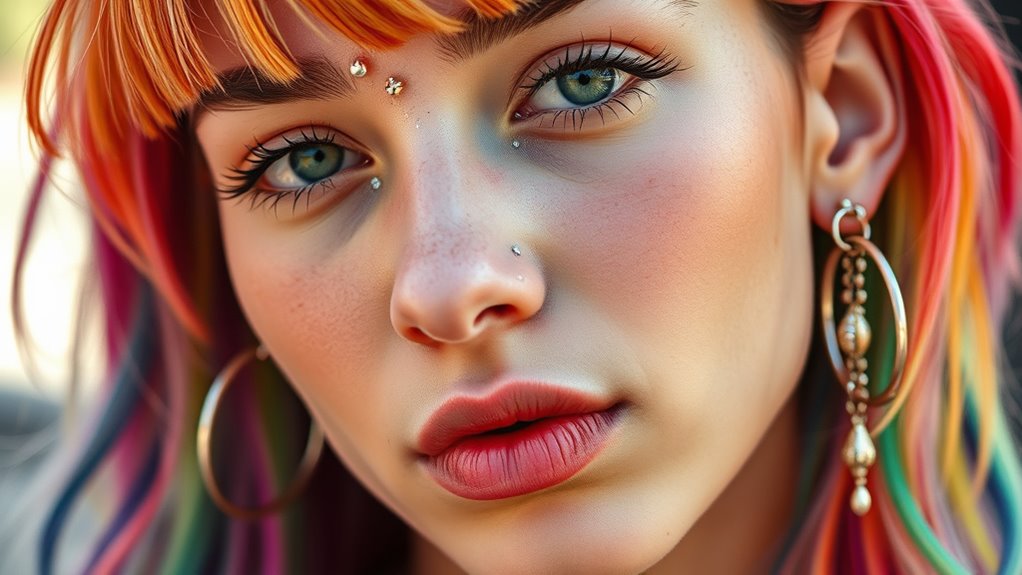

Piercings are powerful tools for expressing your identity and individuality within the LGBTQ+ community. They symbolize resilience, cultural roots, and personal stories, often challenging societal norms. Whether subtle or bold, piercings can mark milestones and serve as affirmations of self-acceptance. They connect you to cultural traditions or act as acts of empowerment. If you want to explore more about how piercings reflect your journey and pride, keep exploring these meaningful symbols.
Key Takeaways
- Piercings serve as symbols of individuality, resilience, and self-expression within the LGBTQ+ community.
- They often mark milestones, personal growth, or moments of self-acceptance and coming out.
- Cultural piercings connect individuals to their heritage, traditions, and serve as acts of pride.
- Body modifications like piercings challenge societal norms and foster empowerment and community identity.
- Piercings act as visual storytelling tools, expressing personal narratives, resistance, and cultural pride.
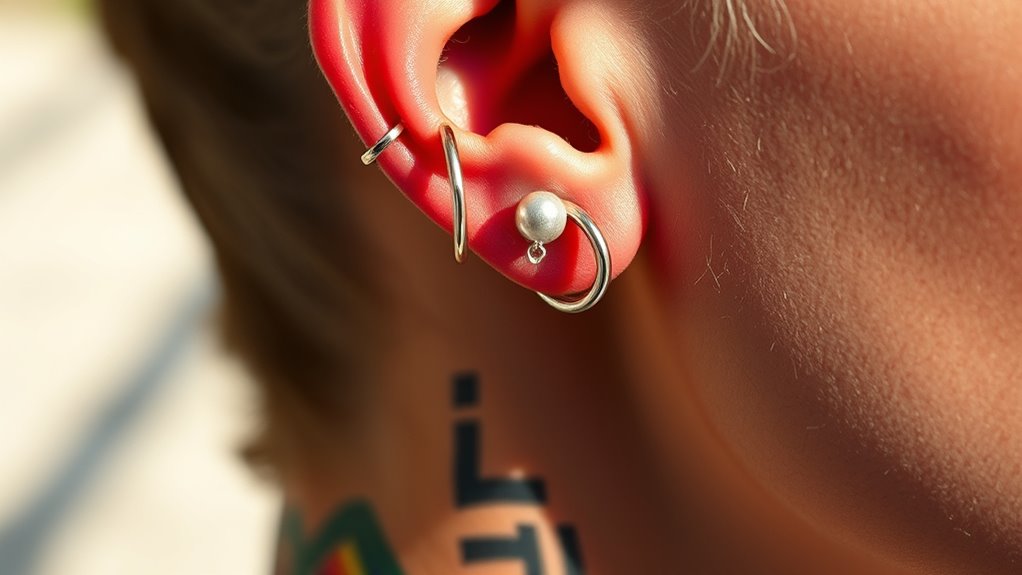
Piercings have long served as a powerful form of self-expression within the LGBTQ+ community, symbolizing identity, resilience, and individuality. They often carry deep cultural significance that connects you to your roots, community, or personal journey. When you get a piercing, you’re not just adding jewelry to your body — you’re telling a story about who you are and where you come from. Many LGBTQ+ individuals view piercings as a way to challenge societal norms and assert their authentic selves. Whether it’s a subtle ear piercing or a bold nose ring, each choice can reflect your personal narrative and the experiences that have shaped you.
Piercings express identity, resilience, and cultural roots within the LGBTQ+ community.
Cultural significance plays an essential role in how piercings are perceived and embraced within the community. For some, piercings are a nod to cultural heritage, honoring traditions from diverse backgrounds. For example, certain cultures have used body modifications for centuries as rites of passage, spiritual symbols, or signs of community belonging. As part of the LGBTQ+ community, you might choose a piercing that connects you to these traditions, reclaiming them in a way that affirms your identity. Alternatively, piercings can serve as a form of resistance against cultural or societal rejection, transforming what might have once been seen as outsider art into a badge of pride. You may wear a piercing that symbolizes your journey through adversity, making it a personal emblem of resilience.
Beyond cultural significance, piercings are a form of personal storytelling. Each piercing you choose often represents a milestone, a turning point, or a meaningful relationship. For many, piercing experiences are deeply personal; they mark moments of self-discovery or liberation. For example, getting pierced after coming out can symbolize embracing your true self, while a piercing received during a period of healing might remind you of overcoming hardship. These stories are often shared with others, becoming part of your identity and helping you connect with like-minded individuals who understand the importance of body art as a form of expression. Your piercings can serve as visual affirmations of your journey, fostering a sense of empowerment and community. Recognizing the diverse range of body modifications, such as dog breeds and names, can also reflect personal interests or identities.
Ultimately, piercings become more than just adornments—they are a way for you to express your unique story and cultural identity. They reflect your resilience and serve as a tribute to your personal growth. Whether you choose a subtle or striking piercing, it’s a deliberate act of self-affirmation. By embracing body modifications, you’re making a statement about who you are, celebrating your history, and sharing your story with the world in a way that’s both meaningful and empowering.

Lesbian Pride Female Symbols Rainbow Flag Tongue Ring – LGBTQ Jewelry Barbell (Tongue/Body Jewelry)
- Design: Lesbian Pride Rainbow Flag Theme
- Symbolism: Double Female Symbols
- Material: 316L Stainless Steel
As an affiliate, we earn on qualifying purchases.
As an affiliate, we earn on qualifying purchases.
Frequently Asked Questions
How Do Piercings Help With Gender Identity Affirmation?
Piercings help you affirm your gender identity by allowing you to express your gender expression authentically. They serve as a form of personal empowerment, giving you control over how you present yourself to the world. By choosing specific piercing styles or locations, you can highlight your unique identity, boost confidence, and feel more comfortable in your skin, making your journey toward self-acceptance more empowering and authentic.
Are Certain Piercing Types More Popular Within Specific Lgbtq+ Groups?
You’ll find that gender-specific piercings and symbolic choices often resonate more deeply within different LGBTQ+ groups. For instance, some may favor certain piercings as subtle signals of identity, like a tongue piercing or a helix to express confidence, while others opt for more specific styles to align with their gender expression. These piercing choices become meaningful symbols, helping you showcase your authentic self and connect with your community.
What Are Safety Considerations Unique to Lgbtq+ Individuals Getting Piercings?
When getting piercings, you should consider safety by choosing professional, experienced piercers to reduce risks like HIV transmission. You also need to account for skin sensitivities, especially if you have allergies or sensitive skin, to prevent infections or allergic reactions. make certain the studio follows strict hygiene practices, uses sterile equipment, and provides aftercare instructions, helping you enjoy your piercing safely and confidently.
How Do Cultural Backgrounds Influence Piercing Choices in the Community?
Your cultural background deeply influences your piercing choices, as you may select styles reflecting cultural significance or traditional symbolism. For example, some communities view certain piercings as rites of passage or symbols of identity. This connection helps you express pride and cultural roots. By understanding these influences, you can make more meaningful choices that honor your heritage and personal story, creating a powerful link between your identity and your piercings.
Can Piercings Be Used as Symbols of Community or Alliance?
Yes, piercings can serve as powerful symbols of community and alliance. When you get a specific piercing, you’re making an alliance expression that signifies your connection to a group or shared identity. These piercings act as community symbolism, allowing you to visibly demonstrate your solidarity and belonging. By choosing certain styles or placements, you communicate your support and affiliation, strengthening bonds within the community through this personal form of expression.
Conclusion
Piercings are more than just adornments—they’re powerful symbols of identity and self-expression within the LGBTQ+ community. They help you celebrate your uniqueness and challenge societal norms. As you explore your personal style, ask yourself: aren’t we all seeking to be authentically seen and heard? Embracing piercings can be a bold step toward that truth, reminding you that your body is a canvas for your story. So, why not wear your identity proudly?