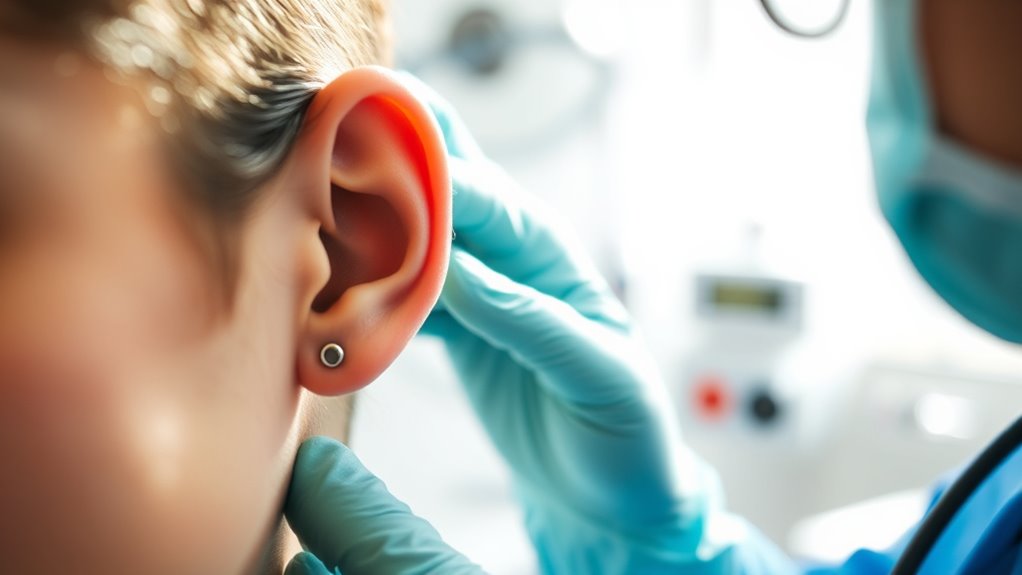

You should remove piercings before medical procedures to guarantee safety and smooth access for healthcare providers. Jewelry can interfere with equipment like MRI machines, cause burns, or lead to infections if left in place. It’s best to take out piercings well in advance, especially recently healed ones, and follow your provider’s instructions. Keep your healing areas cared for afterward. If you want to know when and why this is essential, continue exploring the details.
Key Takeaways
- Piercings should be removed before medical procedures to prevent interference with equipment and reduce injury risks.
- Removal timing depends on the healing stage; ideally, remove jewelry well in advance if healing is ongoing.
- Leaving jewelry in can cause burns, infections, or obstruct access during procedures like MRI or surgery.
- Consult healthcare providers for guidance on when and how to safely remove or reinsert piercings.
- Ensure complete healing before re-inserting jewelry post-procedure to prevent complications.
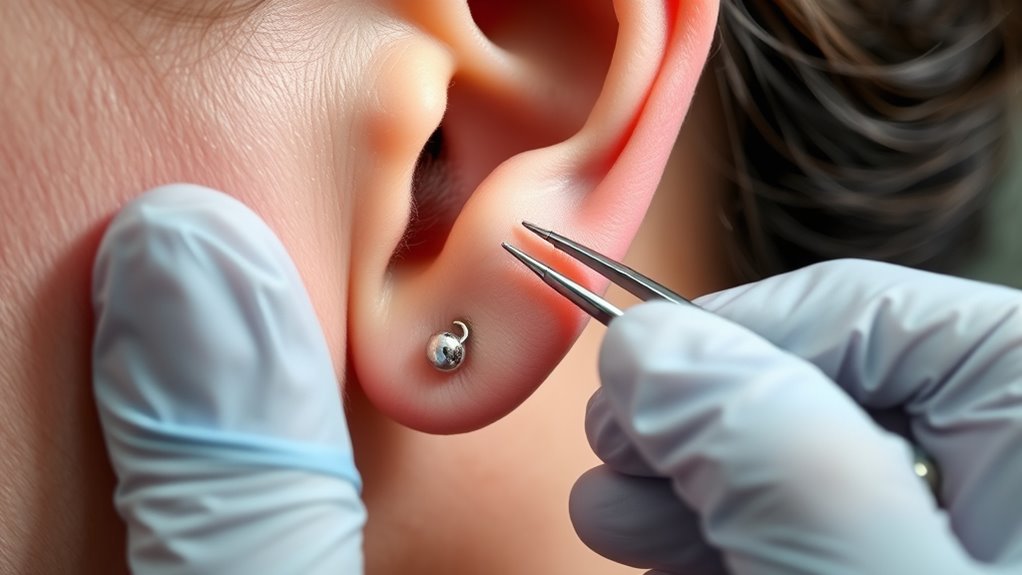
Removing piercings for medical procedures is a necessary step to guarantee your safety and prevent complications during treatment. When you undergo any procedure, whether it’s an MRI, surgery, or diagnostic test, jewelry safety becomes a top priority. Piercings can interfere with medical equipment, cause burns, or lead to infections if left in place. That’s why your healthcare provider will likely ask you to remove all jewelry, including earrings, nose rings, or body piercings, before the procedure begins. Ensuring your jewelry is out of the way helps medical staff access the area safely and reduces the risk of injury or equipment malfunction.
The healing process is another important factor to take into account when removing piercings. If you’ve had a piercing for a while, it might be tempting to leave it in, but doing so during medical procedures can cause problems. For example, if your piercing is in an area that needs to be sterilized or surgically accessed, removing it minimizes the chance of infection or inflammation. Once the piercing is out, the wound needs time to heal properly. Depending on the location and how long you’ve had the piercing, healing can take anywhere from a few days to several months. During this time, keeping the area clean and avoiding unnecessary trauma helps prevent complications. Additionally, understanding piercing healing can help you better manage post-procedure care and prevent issues.
It’s essential to follow your healthcare provider’s instructions carefully. They might recommend removing the jewelry well before the procedure to allow sufficient time for the piercing site to heal if it’s recent. If you’re concerned about losing your jewelry or if you have a sensitive piercing that’s difficult to remove, talk to your doctor beforehand. Sometimes, special precautions or tools are used to safely take out jewelry in tricky spots. Remember, the goal is to ensure your safety and make the medical process as smooth as possible.
After the procedure, you’ll likely be advised to wait until the area has fully healed before reinserting jewelry. Rushing this can reopen the wound or cause infection, which could complicate your recovery. In some cases, your healthcare provider might recommend replacing jewelry with safer, hypoallergenic options once healing is complete. Overall, prioritizing jewelry safety and understanding the healing process helps protect your health and ensures a successful treatment experience. Removing piercings isn’t just about following rules; it’s about taking care of your body and preventing unnecessary risks during medical procedures.

Vegolita 4PCS 16G Titanium Eyebrow Piercing Jewelry for Women Men Curved Barbell Internally Threaded CZ Tiny Vertical Labret Lip Ring Conch Rook Daith Helix Piercing Jewelry Silver 6-12MM
- Set Includes Multiple Sizes: 4 lengths and 4 replacement heads
- Safe Titanium Material: G23 titanium, lead and nickel free
- Comfortable and Durable: Lightweight, tarnish-resistant, smooth finish
As an affiliate, we earn on qualifying purchases.
Frequently Asked Questions
How Long Before a Procedure Should I Remove My Piercing?
You should remove your piercing at least 24 hours before your procedure, but check with your healthcare provider for specific guidance. Doing so helps prevent infection and guarantees proper healing. Keep in mind that the healing timeline varies depending on the piercing type, so if your piercing is recent, you might need to remove it even earlier. Always follow your provider’s instructions to minimize complications and promote a smooth recovery.
Can I Remove My Piercing Myself or Need a Professional?
Removing your piercing is like untangling a knot—you might think you can do it yourself, but it’s often better to seek professional extraction. DIY removal can cause infections or damage if not done properly. Unless you’re experienced, it’s safest to visit a professional piercer or healthcare provider who can gently and safely remove your jewelry, reducing risks and ensuring proper healing.
What Are the Risks of Not Removing a Piercing for Surgery?
If you don’t remove your piercing before surgery, you risk infection and implant displacement. The piercing can introduce bacteria into your body during the procedure, increasing infection risk. Additionally, the implant might shift or become displaced because of surgical manipulation or pressure. To avoid these complications, follow your healthcare provider’s advice on removing piercings, ensuring a safer surgical process and reducing potential post-surgery issues.
Are There Special Tools Needed to Remove Different Types of Piercings?
You might need special tools like piercing removal tools or specialty piercing pliers to remove different types of piercings. These tools help you safely extract jewelry without causing damage or excessive pain. For standard piercings, jewelry removal pliers work well, but more complex piercings may require specific tools designed for delicate removal. Always follow proper technique or seek professional help to avoid complications during the process.
Will Removing My Piercing Affect Healing or Future Piercing Options?
Removing your piercing can impact healing and future options. You might experience healing complications like delayed healing or infection, especially if scar tissue has formed. Scar tissue considerations are important because they can make re-piercing more difficult or affect how your skin heals later. To minimize these effects, follow proper aftercare and consult a professional if you notice any issues during removal.
Conclusion
Remember, removing your piercings for medical procedures is essential for your safety and ensuring accurate results. It might feel inconvenient or uncomfortable, but thinking ahead can save you from complications or delays. Picture yourself calmly going through the process, knowing you’re taking the right steps to protect your health. Don’t let fear or hesitation hold you back—your well-being is worth the small effort needed to remove your piercings beforehand.