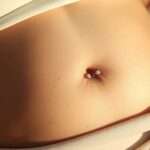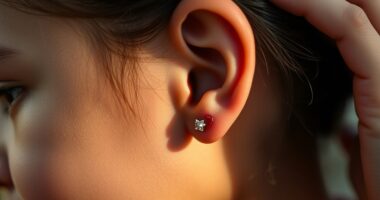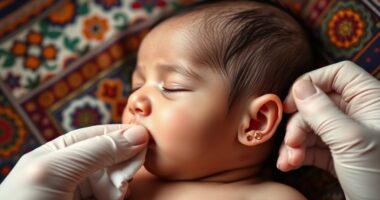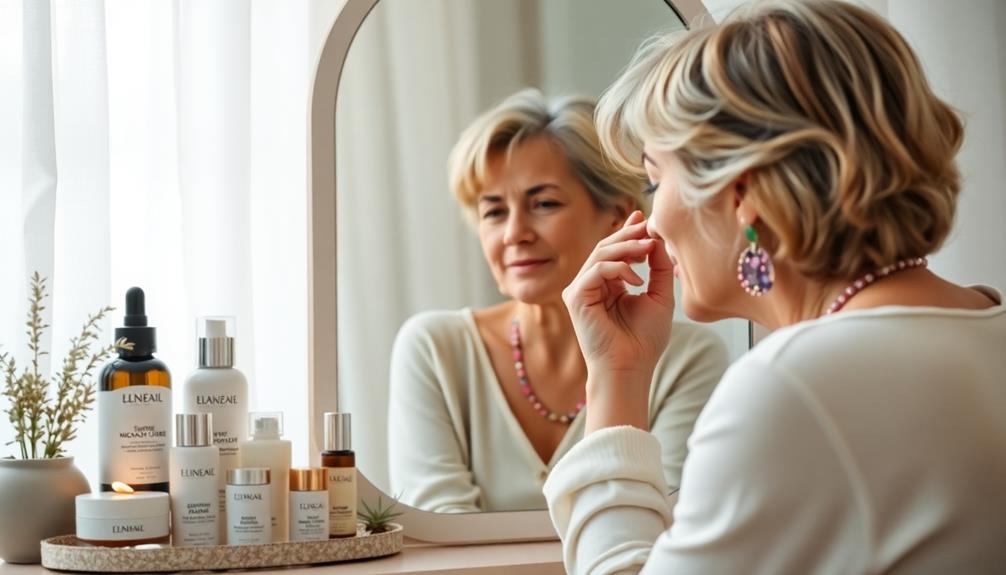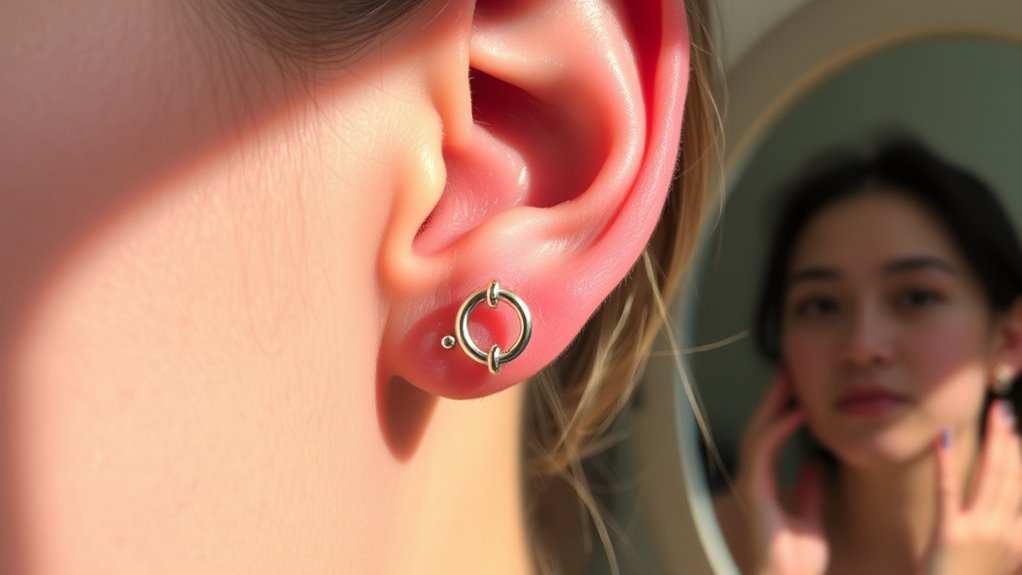
Getting a piercing triggers your immune system, causing temporary hormonal shifts as your body heals. You might notice mood swings, energy changes, or emotional sensitivity during this process. Inflammation and increased blood flow influence hormone levels, especially in the early stages. Factors like stress, healing location, and your body’s response can affect how long these fluctuations last. To learn more about what to expect and how to support your recovery, keep exploring.
Key Takeaways
- Piercing activates immune responses that can temporarily influence hormone levels, especially during initial healing.
- Inflammation and increased blood flow may cause fluctuations in hormones like cortisol and sex hormones.
- Hormonal changes may lead to mood swings, fatigue, or appetite shifts during the healing process.
- Factors such as piercing location, age, and stress levels can impact the degree and duration of hormonal fluctuations.
- Proper aftercare and stress management help support hormonal balance and promote smoother healing.

Getting a piercing can sometimes lead to unexpected hormonal changes, especially during adolescence or if you’re sensitive to bodily shifts. While piercings are primarily a physical modification, they can influence your body’s hormonal balance in subtle ways. The healing process involves more than just the skin; it can trigger hormonal fluctuations that might affect your mood, energy levels, and overall well-being. When you get pierced, your body responds by activating your immune system, which releases various chemicals to promote healing. These immune responses can interact with your endocrine system, leading to temporary changes in hormone levels. For some, this might mean feeling more emotional or experiencing shifts in appetite or sleep patterns during the initial healing phase. Additionally, the body’s response to injury, including increased blood flow and inflammation, can temporarily alter hormone production, further impacting your physical and emotional state.
During the healing process, your body is working overtime to repair tissue and prevent infection. This process can take anywhere from a few weeks to several months, depending on the piercing location and your body’s individual response. Throughout this time, hormonal fluctuations are common. You might notice increased stress or anxiety, which are linked to cortisol levels, or changes in libido, as sex hormones like testosterone and estrogen respond to the ongoing tissue repair. If you’re especially sensitive to bodily changes, these hormonal fluctuations might feel more pronounced, impacting your mood and energy more profoundly than expected.
It’s important to understand that these hormonal shifts are usually temporary. Your body is adapting to the trauma of piercing by adjusting its hormone levels, and as healing progresses, these fluctuations tend to stabilize. Proper aftercare can support a smoother healing process, reducing inflammation and complication risks that might prolong hormonal imbalances. Avoiding unnecessary stress, maintaining good hygiene, and listening to your body’s signals can help minimize adverse effects. If you notice persistent mood swings, fatigue, or other symptoms that seem disproportionate, consulting a healthcare professional is a good idea. They can assess whether your hormonal fluctuations are within normal recovery ranges or if additional support is needed.
Ultimately, while a piercing can influence your hormonal state during healing, these effects are generally temporary and part of your body’s natural response to injury and tissue repair. Staying attentive to your body’s needs and giving yourself time to heal will help guarantee your piercing becomes a positive experience rather than a source of ongoing hormonal imbalance. Remember, patience and proper care are key to navigating the complex interplay between piercings and your body’s hormonal landscape. Maintaining a healthy lifestyle and proper immune response support can further assist your healing process and minimize hormonal fluctuations.
Frequently Asked Questions
Can Piercings Affect Menstrual Cycle Regularity?
Piercings can sometimes affect your menstrual cycle due to hormonal effects caused by piercing complications like infections or inflammation. These issues may disrupt your body’s natural balance, leading to irregular periods. While most piercings don’t directly influence hormonal levels, complications can indirectly impact your cycle. If you notice irregularities, consult a healthcare professional to rule out any underlying issues and guarantee proper healing to minimize hormonal effects.
Do Hormonal Fluctuations Influence Piercing Healing Times?
Think of hormonal fluctuations as a stormy sky, sometimes bright and calm, other times turbulent. These shifts can influence your piercing pain and extend the healing duration, making your body more sensitive and slow to recover. When hormones fluctuate, they can cause increased inflammation or tenderness, delaying healing. So, expect your piercing healing times to vary, and be patient through the unpredictable weather of hormonal changes.
Are Certain Piercings More Prone to Hormonal-Related Infections?
Yes, certain piercings are more prone to hormonal-related infections, especially those near areas affected by hormonal acne and increased piercing sensitivity. You might notice that piercings like the nose or eyebrows become more irritated or inflamed during hormonal fluctuations. These areas tend to react more because hormonal acne can cause increased oil production and sensitivity, making infections more likely if proper care isn’t maintained. Stay vigilant and keep the area clean.
How Do Hormonal Changes Impact Allergic Reactions to Jewelry?
Hormonal changes often make you think your jewelry sensitivity is just imagination, but it’s real. Hormone-induced allergies can heighten your immune response, turning even your favorite earrings into enemy territory. You might find yourself more prone to itching, redness, or swelling, as your body reacts to metals it usually tolerates. So, don’t dismiss these reactions—your hormones are just throwing a little extra drama into your jewelry sensitivity.
Can Hormonal Treatments Alter the Appearance of Piercings?
Hormonal treatments can indeed alter the appearance of your piercing jewelry. As hormone therapy influences your skin’s elasticity and healing, it may cause your piercings to look different over time. You might notice swelling, changes in jewelry fit, or even increased sensitivity. Keep an eye on how your body responds and consult your piercer or doctor if you see significant changes, ensuring your piercing remains comfortable and healthy.
Conclusion
Remember, your body is like a delicate garden, and piercings are just tiny new blooms amid hormonal changes. As your hormones fluctuate, you might notice some swelling or sensitivity, but these are normal milestones on your journey. Stay patient and keep caring for your piercings—they’ll settle in just like a seed sprouting into a beautiful flower. With time and attention, you’ll enjoy your new adornments without letting hormonal storms overshadow your glow.