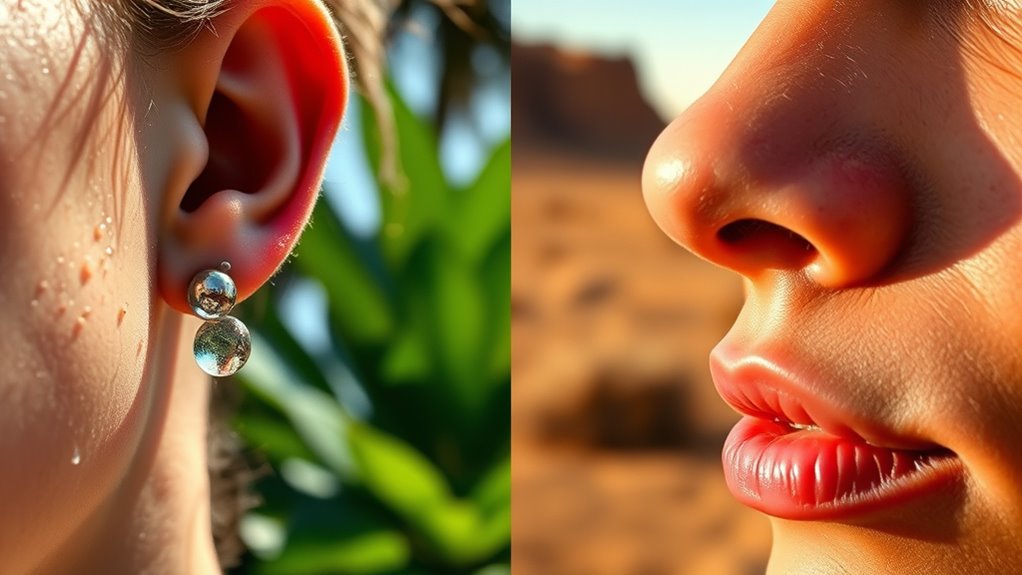

In humid climates, you should clean your piercing more frequently with saline to combat bacteria, and choose jewelry made of corrosion-resistant materials like surgical steel or titanium to prevent irritation. In dry environments, keep your skin moisturized and avoid excessive heat, while selecting gentle, biocompatible jewelry that minimizes friction. Adjust your hygiene routine accordingly to promote faster healing and reduce complications. For detailed tips tailored to your climate, keep exploring how environment influences your piercing care.
Key Takeaways
- Humid climates require frequent cleaning with saline to prevent bacterial buildup, while dry climates benefit from moisturizing and gentle care.
- Use corrosion-resistant jewelry like surgical steel or titanium in humid environments to reduce irritation and tarnishing.
- In dry climates, opt for jewelry that minimizes friction and keeps skin moist to promote faster healing.
- Adjust hygiene routines based on environmental moisture levels, avoiding over-cleaning in humid conditions and excessive dryness in arid areas.
- Protect piercings from excessive moisture or dryness to prevent complications like infection, scabbing, or scarring.
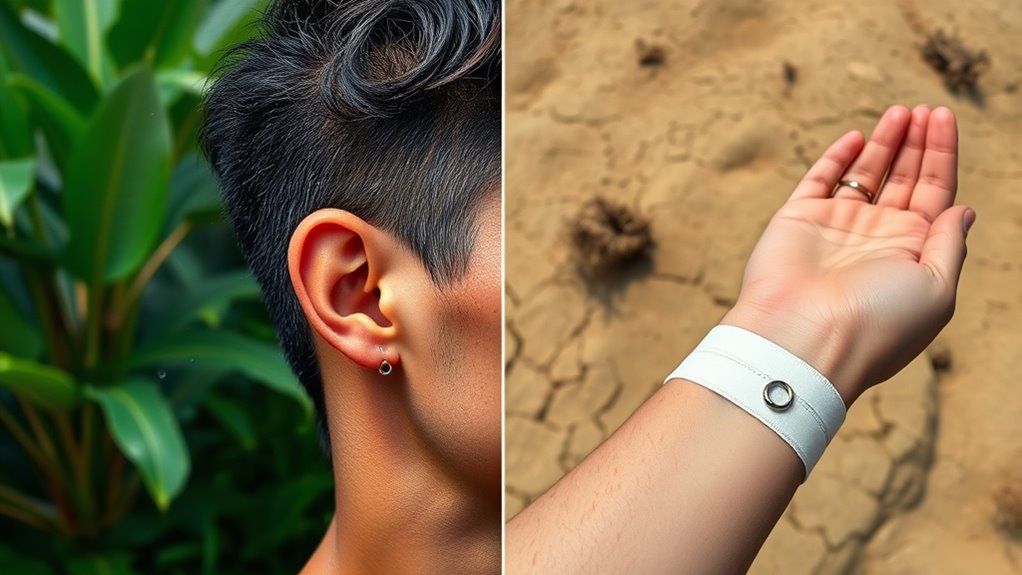
When caring for your piercing, it’s important to take into account the climate you’re in, as environmental factors can considerably affect healing. Humid and dry climates each present unique challenges that influence how your body heals and how you should care for your jewelry. The type of jewelry materials you choose plays a significant role in this process, especially since different materials react differently to environmental conditions. For example, in humid climates, jewelry made from hypoallergenic and corrosion-resistant materials like surgical steel, titanium, or niobium can help prevent irritation and tarnishing caused by moisture. These materials are less likely to trap bacteria or develop rust, which can extend your healing duration or cause complications. On the other hand, if you opt for jewelry with porous or reactive metals, you might find that healing takes longer or that you face increased risks of infection.
In dry climates, the key is to maintain moisture around your piercing to prevent the skin from becoming overly dry or cracked. Jewelry materials that retain moisture or are gentle on dry skin, such as biocompatible plastics or certain gold alloys, can help keep the piercing healthy. Since dry air can cause irritation and slow down healing, it’s also advisable to incorporate moisturizing solutions and avoid excessive touching or cleaning with harsh substances. The healing duration may be shortened by choosing jewelry that minimizes friction and irritation, which are more common in dry environments. Conversely, jewelry materials that cause dryness or irritation can prolong the healing process or lead to complications like scabbing or scarring.
Environmental factors also influence how often you should clean your piercing. In humid conditions, bacteria and fungi thrive more readily, so you might need to clean your piercing more frequently with a saline solution, carefully avoiding over-cleaning. In dry climates, regular moisturizing and keeping the piercing away from direct heat sources can promote faster recovery. Additionally, understanding the contrast ratio of your jewelry materials can help you select options that maintain a healthier healing environment. Regardless of the climate, choosing the right jewelry material and maintaining proper hygiene are essential steps in ensuring a smooth healing process. Pay attention to how your skin reacts and adjust your care routine accordingly. Being mindful of environmental influences and selecting appropriate jewelry materials can help you reduce healing time and prevent issues, ensuring your piercing heals beautifully and safely in any climate.

IPINK Piercing Kit 14G-16G Surgical Steel Body Piercing Belly Button,Tongue, Eyebrow, Nipple, Lip, Nose, Chi Gauge
- Select Your Kit Size: Multiple gauge options available
- Premium Surgical Steel: Made from 316L stainless steel
- Complete Piercing Kit: Includes all necessary tools and jewelry
As an affiliate, we earn on qualifying purchases.
As an affiliate, we earn on qualifying purchases.
Frequently Asked Questions
How Does Humidity Affect Healing Time for New Piercings?
Humidity impact can substantially influence your healing duration for new piercings. In humid environments, increased moisture can slow down healing, promote bacteria growth, and cause swelling or irritation. Conversely, dry climates tend to facilitate quicker healing because less moisture reduces infection risk. To guarantee ideal healing, keep your piercing clean and protected regardless of humidity levels, and monitor for signs of complications, adjusting your care routine as needed.
What Are the Best Fabrics for Jewelry in Humid Climates?
Like a knight’s armor in a storm, choose fabrics that resist the humid climate. Opt for stainless steel or titanium jewelry, as they’re durable and won’t tarnish easily. Avoid cheap metals that rust or tarnish quickly in moisture. In humid environments, these materials keep your piercing safe and look great longer, ensuring your jewelry stays beautiful and your healing process remains smooth.
Can Dry Climates Cause Piercings to Crack or Become Brittle?
Dry climates can cause your piercings to crack or become brittle, especially if your piercing material isn’t suited for the environment. To prevent this, adapt your piercing care by choosing materials like titanium or surgical steel, which resist dryness and temperature changes. Make sure to keep your skin moisturized and avoid excessive sun exposure. Proper climate adaptation helps maintain your piercing’s health and prevents damage caused by dry air.
How Often Should I Change My Piercing After Moving to a Different Climate?
Your piercing’s survival depends on proper care, especially when your climate changes—think of it as a tiny, delicate fortress. You should change your jewelry cautiously, typically after about 4-6 weeks, depending on healing progress and new environment demands. For climate adaptation, increase jewelry maintenance in dry or humid conditions, cleaning more often to prevent irritation or infection. Listening to your body helps make certain your piercing stays healthy amid new weather challenges.
Are Certain Piercing Types More Suitable for Humid or Dry Conditions?
Certain piercings are better suited for humid or dry conditions due to water resistance and jewelry materials. For humid climates, opt for jewelry made from water-resistant materials like titanium or surgical steel, which resist corrosion and irritation. Piercings like cartilage or helix can handle humidity better. In dry environments, more delicate jewelry works, but always prioritize water resistance and quality materials to prevent infection and guarantee healing.
Conclusion
Whether you’re in a humid or dry climate, caring for your piercing requires attention and adaptation. In humidity, you must combat excess moisture that fosters bacteria, while in dry environments, keeping your piercing moisturized prevents cracking. Both climates demand diligence—one emphasizes thorough cleaning, the other consistent hydration. By understanding these differences, you can protect your piercing and ensure it heals beautifully, proving that proper care isn’t one-size-fits-all but a personalized approach tailored to your environment.