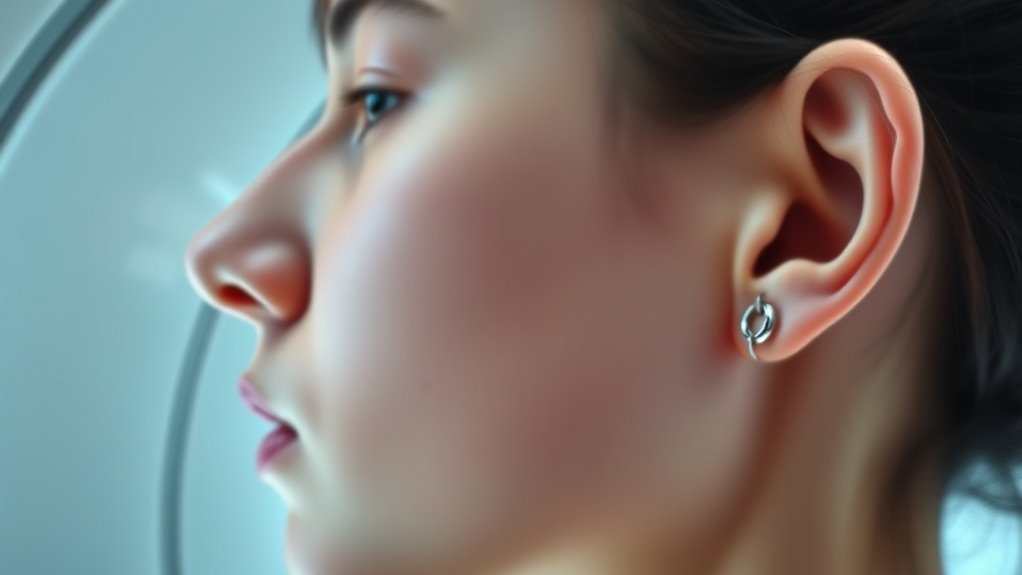

For MRI safety, it’s important to remove piercings and jewelry before your scan. Metal in piercings can cause artifacts, obscure images, and pose safety risks like heating or movement during the procedure. If you can’t remove certain jewelry, inform your technician; they may suggest alternatives or precautions. Taking these steps helps guarantee your safety and provides clear images for accurate diagnosis. Keep going to discover more tips for safe imaging with piercings.

Get beauty and skincare favorites delivered free — and shop member deals
- Fast, free delivery on millions of items
- Access to Prime Big Deal Days deals on October 6–7
- Prime Video, Amazon Music and more included
Key Takeaways
- Metal piercings can cause imaging artifacts and distort MRI results, reducing diagnostic accuracy.
- Jewelry during MRI can heat up or move, posing safety risks like burns or tissue injury.
- Removing piercings before MRI is essential for safety and to ensure clear, artifact-free images.
- If piercings cannot be removed, inform the technician to explore alternative options or protective measures.
- Following medical staff instructions on jewelry removal helps prevent safety issues and improves image quality.

If you have piercings and need medical imaging, it’s important to be aware that jewelry can interfere with the procedure. Metal jewelry, including piercings, can obscure images, cause artifacts, or even pose safety risks during MRI scans. That’s why jewelry removal is a pivotal step before undergoing MRI. Failing to remove piercings can lead to inaccurate results, as the metal may distort the images, making diagnosis difficult. Furthermore, leaving jewelry in place during an MRI introduces potential risks, such as the metal heating up or moving unexpectedly due to the magnetic field. This can cause discomfort, injury, or damage to surrounding tissues.
Removing piercings before MRI ensures safety and clear, accurate imaging results.
When preparing for an MRI, you should inform the technician about all piercings and jewelry. They often ask you to remove any metal accessories, including earrings, nose rings, or jewelry in other body parts, to guarantee clear imaging and safety. If you’re unable to remove certain jewelry, such as embedded or permanent piercings, tell the staff beforehand. They may suggest alternative imaging options or protective measures, but generally, removal remains the most essential choice.
The risks associated with MRI and jewelry aren’t just about image quality; they also involve safety concerns. Metal objects can heat up during the scan, causing burns or discomfort. In some cases, the magnetic forces can pull on the jewelry, leading to injury or damage to the piercing site. These hazards underscore why jewelry removal isn’t just a matter of convenience but a critical safety protocol.
In some situations, you might hesitate to remove piercings because of pain or personal preference. However, it’s necessary to follow the medical team’s instructions carefully. Removing jewelry reduces the chance of artifacts ruining the scan, which could require repeat imaging and delay treatment. It also minimizes the risk of injury from metal heating or movement during the MRI.
Ultimately, being proactive about jewelry removal before an MRI safeguards your health and guarantees the best possible imaging results. Always communicate openly with your healthcare providers about your piercings. They’ll guide you through the process and make sure you’re comfortable with the steps needed. Remember, prioritizing jewelry removal not only improves the accuracy of your scan but also keeps you safe from potential MRI risks associated with metal jewelry. Recognizing the importance of MRI safety and the role of proper preparation can help ensure a smooth and safe imaging experience.
Frequently Asked Questions
Can Piercings Be Safely Removed Before MRI Scans?
Yes, you can safely remove piercings before MRI scans to guarantee safety. Make sure to clean the piercing area thoroughly for proper piercing hygiene and prevent infection. Use jewelry options like plastic or non-metallic studs if removal is difficult. Removing piercings reduces the risk of interference with imaging and discomfort during the scan. Always follow your healthcare provider’s advice for specific instructions related to your piercings and MRI procedures.
What Are the Risks of Leaving Jewelry During Imaging?
Leaving jewelry during imaging can cause jewelry interference, leading to distorted images or artifacts that obscure vital details. Additionally, your jewelry can heat up due to the magnetic field, risking medical complications like burns or tissue damage. To guarantee accurate results and your safety, it’s best to remove all jewelry before imaging. If you’re unable to remove certain items, inform your medical team to assess potential risks.
How Do Different Types of Metal Piercings Affect MRI Safety?
Did you know that about 15% of MRI scan issues are caused by metal objects? Different metal piercings can impact MRI safety by causing magnetic interference and artifact distortion, which can jeopardize image quality. Non-magnetic metals like titanium are safer, reducing risks, while ferromagnetic metals like iron or nickel pose higher dangers. Always inform your technician about your piercings to make certain proper safety measures are taken during your scan.
Are There Alternatives to Removing Piercings for Imaging Procedures?
If you want alternatives to removing piercings during MRI, ask your healthcare provider about non-metal alternatives like silicone or plastic jewelry. These options reduce magnetic interference and are less likely to cause artifacts or safety issues during imaging. However, keep in mind that they might not be suitable for all types of scans. Always discuss your specific piercings and concerns with your medical team beforehand to guarantee safety and image quality.
How Long Does It Take for Metallic Particles From Piercings to Dissipate?
Metal particles from piercings typically take several months to dissipate completely, depending on the size of the particles and your piercing healing process. During this time, your body gradually absorbs these particles, reducing the risk of interference during medical imaging. To guarantee safety, it’s best to remove piercings beforehand or wait until metal particle dissipation is sufficiently complete, which also supports proper piercing healing.
Conclusion
So, next time you rush into an MRI with jewelry still on, remember—you’re basically inviting a metal party inside your body. The irony? That tiny piercing could turn your high-tech scan into a fiery ordeal, all because you ignored the safety rules. Maybe it’s time to think twice before donning that flashy nose ring or daring ear stud. After all, a little extra effort now could save you from a spark-filled surprise later.
Fall Picks
fall essentials
As an affiliate, we earn on qualifying purchases.