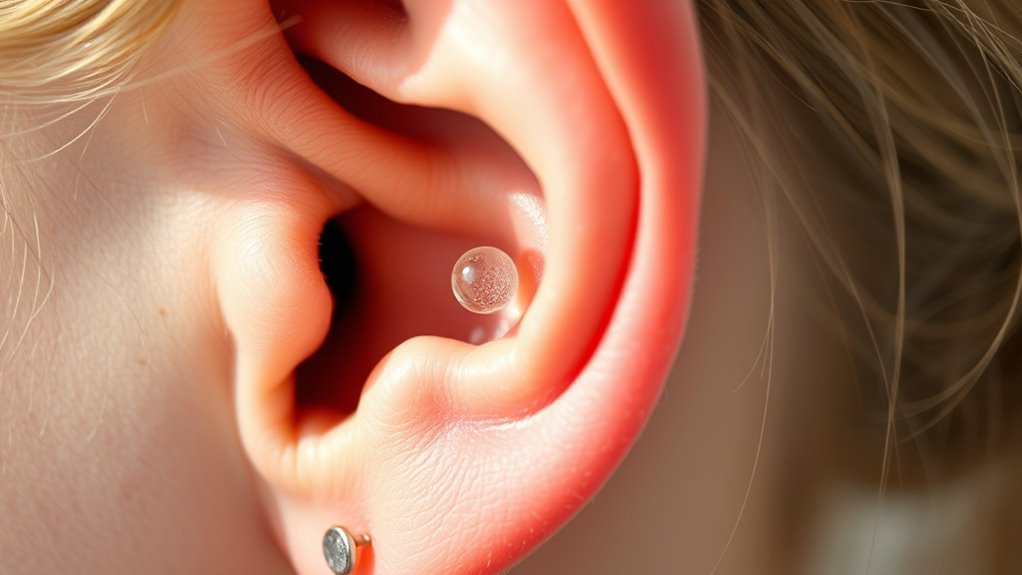
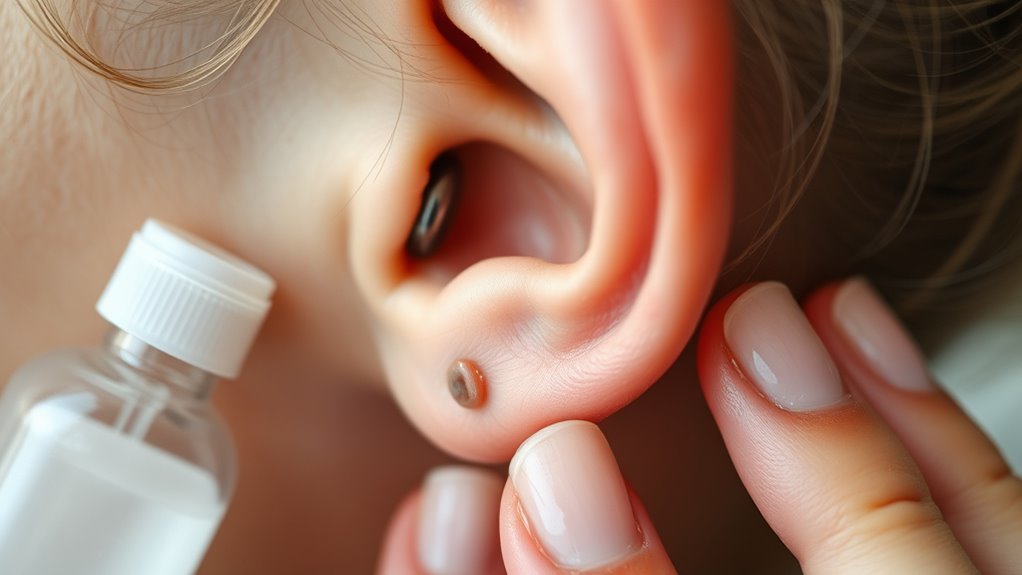
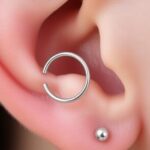
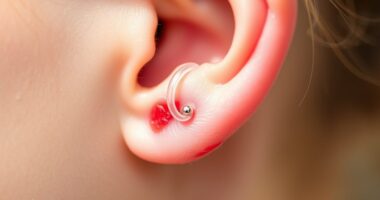
To care for your lobe, helix, or cartilage piercings, keep the area clean with a saline solution twice daily and avoid harsh cleansers. Don’t twist or remove the jewelry until fully healed, and avoid touching or fiddling with them. Protect your piercings from water, tight accessories, and hair products. Since healing times vary, knowing proper aftercare helps prevent infections and promotes healthy healing—explore further to make certain your piercings stay beautiful and safe.
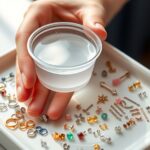
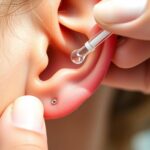
Clean your ear piercings twice daily with a saline solution to prevent infection and promote healing.
Avoid touching, twisting, or removing jewelry until fully healed, and follow your piercer’s advice.
Keep the area dry and avoid swimming in pools, hot tubs, or lakes during the healing process.
Choose a reputable piercer with proper sterilization practices to ensure safe placement and minimize complications.
Be patient; healing takes 6–8 weeks for lobes and up to 6 months for cartilage, requiring consistent care and gentle handling.
Getting an ear piercing is exciting, but proper aftercare is essential to guarantee it heals well and avoids complications. One of the most important aspects of aftercare is understanding the healing timeline. Typically, lobe piercings take about 6 to 8 weeks to heal, while cartilage piercings like helix or other upper ear piercings can take anywhere from 3 to 6 months. Knowing this helps you set realistic expectations and stick to a consistent cleaning routine. During the initial weeks, your body works hard to close the wound and form a protective barrier, so it’s important to be diligent in your care.
To prevent infection, you should keep your piercing clean and avoid touching it with dirty hands. Use a saline solution to gently rinse the area twice daily, removing any crust or debris that may accumulate. Avoid using harsh cleansers, alcohol, or hydrogen peroxide, as these can irritate the skin and delay healing. Also, steer clear of swimming in pools, hot tubs, or lakes during the healing process, since bacteria lurking in water can lead to infection. If you notice redness, swelling, pain, or discharge that smells foul, it’s a sign to seek professional advice promptly. Early intervention can prevent minor issues from becoming serious infections.
It’s equally important to handle your jewelry with care. Don’t twist or remove it prematurely, as this can disrupt the healing tissue or cause trauma. Keep the jewelry in place until your piercer confirms it’s safe to change or remove it. During this period, avoid sleeping on the side of the new piercing, as pressure and friction can cause irritation or prolong healing. Be mindful about hair products, cosmetics, or perfumes that might come into contact with the piercing, as these can introduce bacteria or cause irritation.
In addition to cleaning, maintain good overall hygiene by regularly washing your hair and avoiding excessive touching or fiddling with the piercing. Wearing loose, breathable clothing and avoiding tight accessories around the ear can also reduce irritation and prevent accidental tugging. Remember, patience is key; rushing to change or remove jewelry before your piercing is fully healed increases the risk of complications. Following these aftercare tips, understanding your healing timeline, and prioritizing infection prevention will help you enjoy your new piercing and ensure it heals beautifully.
Additionally, choosing reputable piercers or studios that follow proper sterilization practices can significantly reduce the risk of infection and ensure your piercing heals properly.
Frequently Asked Questions
Can I Wear Headphones During Ear Healing?
You can wear headphones during ear healing, but prioritize ear hygiene and headphone safety. Make sure your headphones are clean and avoid sharing them to prevent infection. Opt for over-ear or on-ear styles that don’t put pressure on your new piercing. Keep the area dry and avoid prolonged use, especially if you notice discomfort or swelling. Proper hygiene and gentle handling will help your piercing heal faster and stay healthy.
How Do I Prevent Keloids After Piercing?
An ounce of prevention is worth a pound of cure, so to prevent keloids, focus on keloid prevention and scar management early. Keep the piercing clean, avoid unnecessary touching, and don’t pick at scabs. Use silicone gel sheets or scar creams as recommended by your piercer. Avoid trauma or irritation, which can trigger keloid formation. Proper aftercare minimizes risks, ensuring your piercing heals smoothly without unwanted scars.
Is It Safe to Change Earrings During Healing?
It’s best to wait until your piercing has fully healed before changing earrings, which typically takes 6-8 weeks for lobes and longer for cartilage. During healing, avoid switching jewelry to prevent irritation or infection. When you do change, choose jewelry made of safe materials like surgical steel or titanium, and verify the piercing has healed properly to avoid complications. Patience helps ensure a healthy, beautiful piercing.
What Should I Do if I Experience Persistent Itching?
If you experience persistent itching, stop touching or twisting your earrings. To find itch relief, gently clean your piercing with saline solution and avoid allergens or irritating products. Managing potential allergies involves switching to hypoallergenic jewelry, like surgical steel or titanium. If itching continues or worsens, consult a professional piercer or healthcare provider to rule out infection or allergic reactions, ensuring proper allergy management and healing.
Are There Specific Foods That Aid Healing?
Think of your healing process as a garden needing nourishment. Focus on nutrient-rich foods like leafy greens, berries, and lean proteins, which act as the sunshine and water for your body’s recovery. An immune-boosting diet, packed with vitamins C and E, helps ward off infection and speeds healing. Incorporate these into your meals to support your body’s natural ability to mend and thrive, ensuring your ear piercings heal beautifully.
Conclusion
Taking proper care of your ear piercings is vital for a confident, carefree healing experience. By following simple steps—cleaning, avoiding trauma, and healing patiently—you protect your new piercing and prevent problems. Remember, patience and persistence promote perfect, pain-free results. So, stay vigilant, be gentle, and embrace your evolving elegance. Your dedication during this delicate phase ensures your ears emerge exquisite, expressive, and entirely your own. Celebrate your stunning style with care, commitment, and confidence!
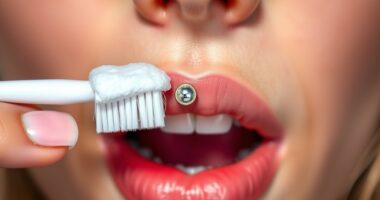
Lip and Oral Piercing Maintenance: Eating and Hygiene
Keeping your lip and oral piercing healthy involves careful eating and hygiene practices that can prevent complications and ensure long-term satisfaction.
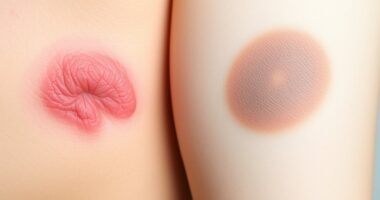
Keloids vs. Hypertrophic Scars: Piercer‑Approved Action Plans
Learning the differences between keloids and hypertrophic scars can help piercers develop effective action plans—discover how to manage each for optimal results.