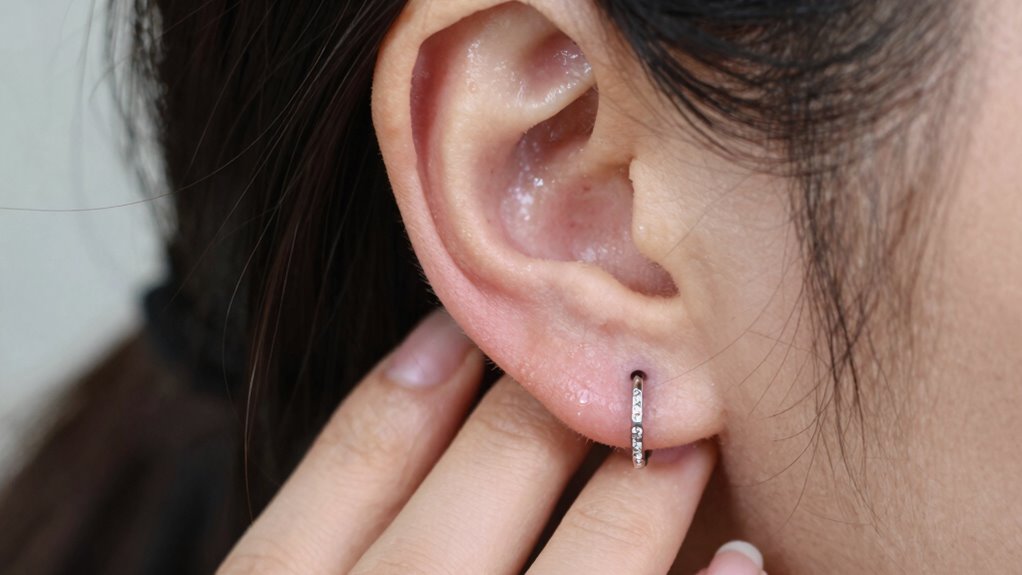

To avoid regret when choosing a visible cartilage piercing, take your time and carefully consider the placement, style, and jewelry material. Visualize how it will match your hairstyle, makeup, and wardrobe, using tools like photo filters or fake piercings. Follow expert advice on proper aftercare and healing times, and select high-quality, comfortable jewelry suited to your face shape. Being well-informed and patient now can save you disappointment later—there’s more to discover for confident decision-making.

Get beauty and skincare favorites delivered free with Prime
- Fast, free delivery on millions of items
- Prime Video, Amazon Music and more included
- Member-only deals all year
Key Takeaways
- Research different cartilage piercing types and healing requirements thoroughly before deciding.
- Visualize how the piercing complements your hairstyle, makeup, and overall style.
- Choose high-quality, hypoallergenic jewelry that fits comfortably and suits your face shape.
- Consult a professional piercer to ensure proper placement and suitable jewelry options.
- Take your time making the decision, considering long-term appearance and potential impact on confidence.

Getting a visible cartilage piercing can be exciting, but it’s important to choose carefully to avoid future regret. This decision impacts your appearance and your daily routine, so taking the time to plan properly is vital. One of the first things to think about is jewelry selection. Opt for high-quality materials like surgical steel, titanium, or niobium. These are less likely to cause allergic reactions and will heal faster. Avoid cheap or decorative metals that might irritate your skin or cause infections. When selecting jewelry, think about the size and style that best suits your face shape and personal style. Remember, you’ll be wearing this piece daily, so comfort and durability matter. Choosing a versatile piece that can be swapped out later is a smart move, especially if you’re unsure about your long-term preference.
Piercing aftercare is another vital factor you shouldn’t overlook. Proper aftercare ensures your piercing heals well and reduces the risk of complications, which can lead to regret down the line. Follow your piercer’s instructions carefully—this usually involves cleaning the area twice daily with a saline solution, avoiding unnecessary touching, and steering clear of harsh products like alcohol or peroxide. Be cautious during daily activities; sleeping on your side or touching the piercing with dirty hands can introduce bacteria and cause infections. Healing times vary depending on the piercing, but patience is key. Rushing to change jewelry prematurely or neglecting aftercare can lead to swelling, scarring, or even the need for removal, which might leave you wishing you’d waited longer. It’s also helpful to be aware of high-quality materials that reduce the risk of allergic reactions and promote proper healing. Additionally, understanding the healing process can help you set realistic expectations and avoid unnecessary worry. Being informed about Proper aftercare routines can significantly improve your healing experience and prevent complications. Researching the specific healing times for cartilage piercings can also help you plan and prepare accordingly.
To make a truly informed decision, consider researching different types of piercings and their specific healing needs beforehand. Before you commit, spend time visualizing how the piercing will look with your hairstyle, makeup, and wardrobe choices. Consider trying out fake piercings or using photo filters to see how different placements and jewelry styles suit you. It’s also helpful to discuss your options with a professional piercer who can advise on the best placement and jewelry type based on your anatomy and lifestyle. Remember, this is a permanent addition to your body, so don’t rush into it. Take your time to weigh the pros and cons, and gather as much information as possible. Making informed choices about jewelry selection and following proper piercing aftercare will help guarantee you’re happy with your visible cartilage piercing for years to come, minimizing the risk of regret and maximizing your confidence.
hypoallergenic cartilage piercing jewelry
As an affiliate, we earn on qualifying purchases.
As an affiliate, we earn on qualifying purchases.
Frequently Asked Questions
What Are the Latest Trends in Cartilage Piercing Styles?
You’ll notice that the latest cartilage piercing trends focus on unique jewelry styles and modern piercing techniques. Popular cartilage jewelry includes minimalist hoops, geometric studs, and layered ear cuffs, allowing for versatile looks. Piercing techniques now emphasize precision, minimizing discomfort and healing time. To stay trendy, choose high-quality jewelry and consult experienced piercers who use the latest methods, ensuring your cartilage piercing remains stylish and safe.
Can I Get a Cartilage Piercing at Home Safely?
Getting a cartilage piercing at home is like trying to paint a masterpiece without proper tools—you risk messing up. While it’s possible, it’s not safe. Piercing safety is essential, and home piercing risks include infection, improper placement, and nerve damage. To avoid complications, consider visiting a professional piercer who follows sterilization protocols. Your health and the perfect look are worth the extra effort and expense.
How Do I Know if My Cartilage Is Suitable for Piercing?
You can determine if your cartilage is suitable for piercing by understanding cartilage anatomy and practicing piercing safety. Check if your cartilage has enough thickness and firmness without being too thin or fragile. Consult a professional piercer who knows about cartilage anatomy and follows strict safety standards. They can assess your ear’s structure, guarantee proper technique, and reduce risks like infection or improper healing. Always prioritize safety over DIY attempts.
What Are the Best Aftercare Products for Cartilage Piercings?
You should choose high-quality piercing jewelry made from hypoallergenic materials like surgical steel or titanium to prevent irritation. For aftercare, use gentle healing ointments designed specifically for cartilage piercings, such as those containing antibacterial properties. These products help reduce inflammation and promote healing. Keep the area clean and avoid unnecessary touching or twisting. Regularly applying appropriate piercing jewelry and healing ointments guarantees your cartilage piercing heals smoothly and looks great long-term.
How Long Does It Typically Take for a Cartilage Piercing to Heal?
Think of your cartilage piercings as delicate flowers needing time to bloom. Healing timeframes typically range from 4 to 12 months, depending on your body’s response. During this period, focus on infection prevention by keeping the area clean and avoiding unnecessary touching. Patience is key; rushing healing can cause setbacks. With proper care, your piercing will flourish, becoming a beautiful part of your unique self.
Conclusion
To avoid regret, take your time choosing a visible cartilage piercing. Imagine yourself a year from now, still loving your decision or wishing you’d picked differently. For example, Sarah initially loved her helix piercing, but after a few months, she felt it clashed with her style. By thoughtfully considering your lifestyle, jewelry, and healing process now, you’ll make a choice that feels right and keeps you happy long-term, preventing any future “what ifs.”
Columbus Day / Indigenous Peoples' Day Picks
long weekend sales
As an affiliate, we earn on qualifying purchases.