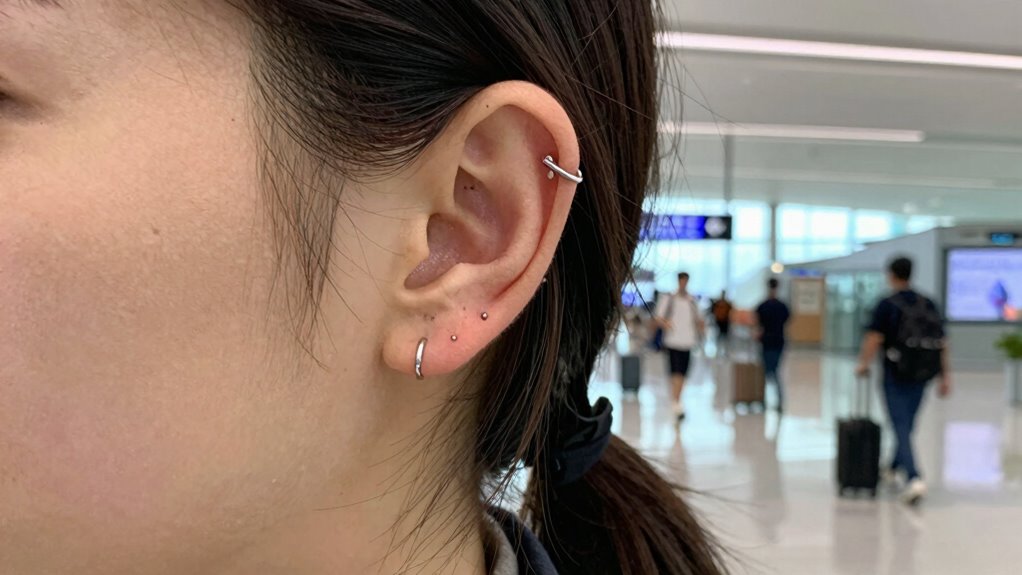
Certain ear placements work better for frequent travelers because they create a better seal with noise-canceling devices and help open your eustachian tubes more easily. Proper positioning blocks out more ambient noise and reduces pressure discomfort during altitude changes. Small adjustments can make a big difference in comfort, noise reduction, and pressure regulation. If you want to discover simple techniques to improve your travel experience, you’re in the right place to learn more.

Get beauty and skincare favorites delivered free with Prime
- Fast, free delivery on millions of items
- Prime Video, Amazon Music and more included
- Member-only deals all year
Key Takeaways
- Proper ear placement enhances seal quality, improving noise cancellation and reducing ambient sound intrusion during travel.
- Correct positioning helps open eustachian tubes, facilitating pressure regulation during altitude changes.
- Tailored ear placement optimizes the effectiveness of pressure relief devices, minimizing ear pain.
- Adjusting ear positioning based on travel scenario improves comfort and manages specific noise or pressure issues.
- Consistently correct ear placement reduces travel fatigue and enhances overall comfort for frequent travelers.
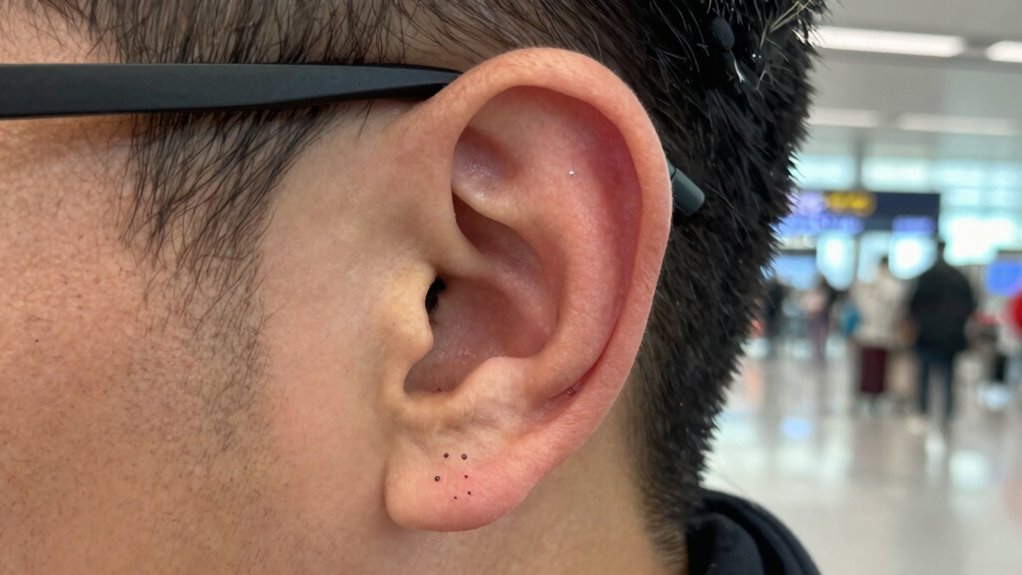
Ever wonder how your ear placements can help you manage travel-related discomfort? For frequent travelers, understanding how to position your ears can make a significant difference in reducing discomfort from noise and pressure changes. One key reason some ear placements work better is their ability to optimize noise-canceling tips. When you position your ears correctly, you enhance the effectiveness of noise-canceling devices or earplugs, creating a better seal that blocks out ambient noise. This not only protects your ears from loud sounds like engine noise or chatter but also minimizes the mental fatigue that comes with constant background noise. Proper placement ensures that your noise-canceling tools work at their fullest potential, giving you a quieter, more peaceful travel experience.
Proper ear placement enhances noise cancellation for a quieter, more comfortable travel experience.
Another critical aspect where ear placement impacts comfort is pressure regulation. During flights, train rides, or even driving through mountainous areas, your ears are subjected to rapid pressure changes. When you position your ears correctly or use specific techniques, you can help your eustachian tubes open more easily, equalizing the pressure and preventing that uncomfortable fullness or pain. For example, gently tugging on your earlobe or swallowing can encourage pressure regulation, but strategic ear placement can amplify these effects. Some travelers find that using ear inserts designed for pressure regulation, when placed properly, can make a noticeable difference in how well their ears adapt to changing altitudes. This reduces the likelihood of ear popping or pain, allowing you to focus on your journey instead of discomfort. Additionally, understanding ear anatomy can help you better grasp how to position your ears for optimal comfort and function. Knowing the pressure equalization techniques can also further enhance your ability to adapt quickly to altitude changes.
Your ear placement also influences how effectively you can apply noise-canceling tips. When your ears are aligned correctly, the seal created by earplugs or headphones becomes more effective, blocking out unwanted noise and preventing sound leaks. This not only enhances your listening experience but also helps you rest better in noisy environments. For frequent travelers, mastering the right ear placement becomes a simple but powerful tool to manage the diverse challenges of travel—whether it’s reducing engine noise on a plane, blocking out chatter in a crowded train, or preventing pressure-related pain during ascent or descent. Proper ear positioning can be especially beneficial when using specialized pressure relief devices or earplugs designed for travel comfort.
Furthermore, understanding how different ear placements impact sound and pressure can help you tailor your approach for various travel scenarios, making your journey more comfortable and less stressful. In essence, your ear placements are a small but vital factor in managing travel discomfort. By focusing on pressure regulation and optimizing noise canceling tips through proper positioning, you can make your journeys more comfortable and less stressful. It’s about understanding that a little adjustment can go a long way in helping you arrive at your destination feeling more refreshed and less exhausted by the travel experience.
Products Worth Considering

Therabody Theragun Relief Massage Gun, 3-Speed, Black

Oral-B iO Series 3 Rechargeable Electric Toothbrush for Adults, Black, with 2 Brush Heads and Travel Case

Oral-B iO Series 5 Rechargeable Electric Toothbrush with Travel Case and 3 Brush Heads, Black
As an affiliate, we earn on qualifying purchases.
Frequently Asked Questions
How Long Does It Take for Ear Placements to Become Effective?
It typically takes a few days to a week for ear placements to become effective, depending on your body’s response. The duration of effectiveness varies with each person, requiring some time adjustment. To maximize benefits, stay consistent with your placements and give your body time to adapt. Usually, you’ll notice improvements within this period, but patience is key for the best results and sustained comfort during your travels.
Are There Any Risks Associated With Different Ear Placements?
Think of your ears as delicate bridges, sensitive to shifts in air pressure and ear health. Different ear placements can pose risks like discomfort, ear infections, or damage to the eardrum if not done carefully. Always be cautious, especially during altitude changes, to prevent strain or injury. Prioritizing proper technique and listening to your body helps keep your ears healthy and safe, avoiding potential hazards during your travels.
Can Ear Placements Be Customized for Individual Travel Needs?
Yes, ear placements can be customized for your individual travel needs. You can opt for personalized fittings and travel-specific designs that cater to your comfort and ear shape. Personalized fittings guarantee a secure, comfortable fit, while travel-specific designs help block out noise or adapt to different environments. By customizing your ear placements, you enhance your travel experience, making it more comfortable and effective, especially during long journeys or frequent flying.
Do Ear Placements Need Regular Adjustments or Replacements?
Yes, ear placements may need regular adjustments or replacements to maintain personal comfort and meet your aesthetic preferences. As your ears change slightly over time or with frequent travel, initial placements might become uncomfortable or less effective. You should regularly check and tweak your ear placements, ensuring they fit well, look good, and don’t cause discomfort. Doing so helps you stay comfortable and confident, especially during long trips.
Are Ear Placements Suitable for Children or Only Adults?
Think of ear placements as custom-fit keys; they’re mainly designed for adults’ ears. Child suitability is limited because pediatric considerations show that children’s ears are still developing, making standard placements less effective and potentially uncomfortable. For kids, specialized pediatric options are safer and more comfortable. You should always consult a healthcare professional to guarantee the right fit, especially for children, to avoid issues and ensure proper ear health.
Conclusion
Think of your ears as a compass guiding your journey through busy airports and long flights. When you find the right placement, it’s like discovering a secret map that helps you navigate discomfort and maintain balance. Just as a seasoned traveler trusts their instincts, trusting your ear placement can become your personal compass, making every trip smoother. Embrace this simple step, and soon, your journeys will feel less like chaos and more like a well-charted adventure.