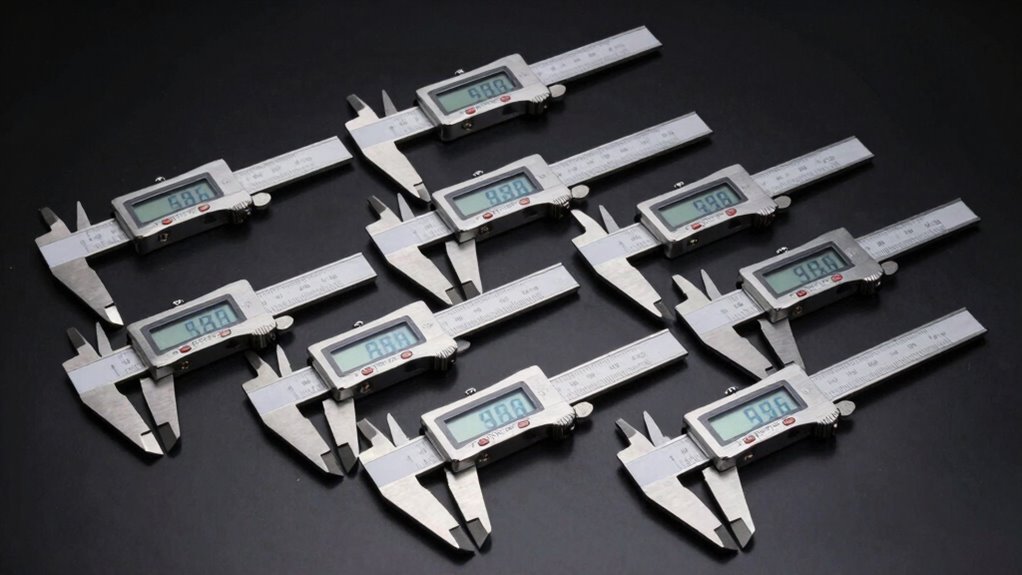
For a professional digital caliper set that balances dependable measurement with practical features, I’d start with the Mitutoyo 500-196-32 as the strongest general-purpose pick. The Brown & Sharpe 8-inch model is a better match for longer parts and wet or dusty work, while the iGAGING Absolute Origin adds USB output and a depth base for measurement workflows that need data capture. The main tradeoffs are range versus handling, basic readouts versus extra functions, and rugged protection versus a simpler tool. A caliper’s listed resolution does not by itself prove its accuracy, so the right choice depends on the demands of your work and how you verify measurements. Continue reading for a comparison of all eight options and guidance on which features are worth prioritizing.

Get beauty and skincare favorites delivered free with Prime
- Fast, free delivery on millions of items
- Prime Video, Amazon Music and more included
- Member-only deals all year
Complete the kit


Key Takeaways
The lineup splits between compact 6-inch calipers and longer 8-inch models: Mitutoyo, Starrett, iGAGING, PEC Tools, and the general stainless-steel options suit smaller work, while Housolution and Brown & Sharpe offer extra reach.
Brown & Sharpe is the standout for harsh shop conditions because its listed IP67 protection addresses exposure to dust and water more directly than the other models.
Mitutoyo and iGAGING take different routes to repeatable measurement: Mitutoyo’s Absolute Digimatic positioning favors straightforward use, while iGAGING adds USB output and a depth base for recording and specialized depth work.
The Starrett set is the only option pairing a caliper with a micrometer, making it useful for buyers who want two measuring tools rather than a caliper-only kit.
Low-detail listings call for extra caution: the generic 6-inch models and the PEC Tools ruler pairing should be checked for stated accuracy, resolution, calibration information, and included accessories before professional use.
| Housolution Digital Caliper 8 Inch, Inch/MM, 4 Measuring Ways, Auto-Off |  | Best for Versatile 8-Inch Measuring | Material: Stainless steel | Range: 0–8 inches / 0–150 mm | Accuracy: ±0.001 inches / 0.03 mm | VIEW ON AMAZON | See Our Full Breakdown |
| Starrett Basic Electronic Tool Set, 6″ Caliper & 1″ Micrometer |  | Best Two-Tool Starter Set | Included tools: 6-inch caliper and 1-inch micrometer | Caliper length: 6 inches | Micrometer size: 1 inch | VIEW ON AMAZON | See Our Full Breakdown |
| Mitutoyo 500-196-32 Absolute Digimatic Caliper, 6″/150 mm Range |  | Best for Repeatable Professional Readings | Range: 6 inches / 150 mm | Accuracy: ±0.001 inches | Material: Hardened stainless steel | VIEW ON AMAZON | See Our Full Breakdown |
| Brown & Sharpe 8 Inch Digital Caliper, IP67 Stainless Steel |  | Best for Wet or Demanding Shop Conditions | Measurement range: 0–8 inches / 0–200 mm | Accuracy: ±0.001 inches / 0.02 mm | Resolution: 0.0005 inches / 0.01 mm | VIEW ON AMAZON | See Our Full Breakdown |
| Digital Caliper with Stainless Steel Body, 6 Inch/150 mm, LCD Screen, Auto-Off, Inch/Millimeter Conversion |  | Best Straightforward 6-Inch Pick | Measurement range: 0–150 mm / 6 inches | Resolution: 0.01 mm / 0.0005 inches | Accuracy: ±0.02 mm / 0.001 inches | VIEW ON AMAZON | See Our Full Breakdown |
| iGAGING Absolute Origin 0-6″ Digital Caliper with IP54 Stainless Steel, USB Output, and Depth Base |  | Best for Measurement Logging | Measurement range: 0–6 inches | Material: Stainless steel | Protection level: IP54 | VIEW ON AMAZON | See Our Full Breakdown |
| PEC Tools 6 Inch Digital Caliper & 6 Inch Ruler |  | Best for Coolant-Exposed Shop Work | Measurement range: 6 inches / 150 mm | Accuracy: ±0.001 inches / 0.02 mm | Material: High-grade stainless steel | VIEW ON AMAZON | See Our Full Breakdown |
| Digital Caliper Measuring Tool, Stainless Steel Vernier Caliper with Large LCD Screen, 6 Inch |  | Best Straightforward Everyday Pick | Measurement range: 0–6 inches / 0–150 mm | Material: Stainless steel | Accuracy: ±0.001 inches / 0.02 mm | VIEW ON AMAZON | See Our Full Breakdown |
| professional digital caliper set | Material | Display | Accuracy | Measurement range |
|---|---|---|---|---|
| Housolution Digital Caliper 8 | Stainless steel | Large LCD | ±0.001 inches / 0.03 mm | — |
| Starrett Basic Electronic Tool | High-quality materials | No digital display specified | — | — |
| Mitutoyo 500-196-32 Absolute D | Hardened stainless steel | Digital LCD | ±0.001 inches | — |
| Brown & Sharpe 8 Inch Digital | Stainless steel | Extra-large LCD | ±0.001 inches / 0.02 mm | 0–8 inches / 0–200 mm |
| Digital Caliper with Stainless | Stainless steel | Large LCD | ±0.02 mm / 0.001 inches | 0–150 mm / 6 inches |
| iGAGING Absolute Origin 0-6" D | Stainless steel | High-contrast LCD | — | 0–6 inches |
| PEC Tools 6 Inch Digital Calip | High-grade stainless steel | — | ±0.001 inches / 0.02 mm | 6 inches / 150 mm |
| Digital Caliper Measuring Tool | Stainless steel | Large LCD screen | ±0.001 inches / 0.02 mm | 0–6 inches / 0–150 mm |
More Details on Our Top Picks
Housolution Digital Caliper 8 Inch, Inch/MM, 4 Measuring Ways, Auto-Off
The Housolution is a practical choice when a 6-inch caliper feels restrictive but you do not need the Brown & Sharpe’s stated 200 mm reach. Its 0–150 mm range, stainless steel body, and four measuring modes cover outside, inside, depth, and step measurements, while the large LCD keeps readings easy to scan. The supplied case and accessories make it a more complete ready-to-store package than the Mitutoyo 500-196-32 listing, which emphasizes the caliper itself. Its stated ±0.001-inch accuracy and 0.01 mm resolution suit general workshop work, but the product information does not specify a protective rating. The tradeoff is straightforward: choose this for varied everyday measurements and an 8-inch format, not for wet or dirty environments or jobs that exceed its range.
Pros:- Four modes handle inside, outside, depth, and step measurements
- Stainless steel construction and included storage case support regular workshop use
- Large LCD and inch/mm readings make measurements easier to read
- Auto-off helps conserve battery life
Cons:- The 8-inch range falls short of the Brown & Sharpe model’s stated 200 mm range
- No water or dust protection rating is listed
- Digital operation requires battery replacement, and new users may need time to learn the functions
Best for: Workshop users and serious hobbyists who need four measurement modes, a storage case, and more reach than a standard 6-inch caliper.
Not ideal for: Machinists working around coolant or debris, or anyone measuring parts longer than 8 inches; the listed details give no ingress-protection rating and the range remains limited.
- Material:Stainless steel
- Range:0–8 inches / 0–150 mm
- Accuracy:±0.001 inches / 0.03 mm
- Resolution:0.0005 inches / 0.01 mm
- Measurement modes:Depth, step, outside diameter, inside diameter
- Display:Large LCD
- Power feature:Auto-off
- Weight:14.08 ounces
Our verdict“Choose the Housolution for flexible general-purpose work and an included case, but pick the Brown & Sharpe if environmental protection or extra range matters more.”
Starrett Basic Electronic Tool Set, 6″ Caliper & 1″ Micrometer
The Starrett set earns a distinct place here because it pairs a 6-inch caliper with a 1-inch micrometer, giving a new measuring-tool buyer two different instruments rather than one digital caliper. That makes it a broader starting point for projects that call for both general measurements and micrometer work. The tradeoff is that this is not the right pick for someone specifically seeking a digital caliper set: the supplied description says the tools have no digital display, and it gives no accuracy, resolution, or measurement-mode specifications. Compared with the Mitutoyo 500-196-32, which provides a digital LCD and inch/mm conversion on its caliper, the Starrett favors a two-tool assortment over quick electronic readouts. It suits basic projects, but advanced users may need better-documented performance or specialized equipment.
Pros:- Includes both a 6-inch caliper and a 1-inch micrometer
- Protective case provides a place to store the set
- Two tool types offer more measurement variety than a caliper-only purchase
Cons:- No digital display is specified, unlike the Mitutoyo 500-196-32
- Accuracy, resolution, and measurement modes are not supplied in the product details
- The listed tools may not cover advanced or industrial measurement requirements
Best for: New workshop owners and DIY users who want a caliper and micrometer together for basic measuring tasks and do not require digital readouts.
Not ideal for: Buyers who need a digital caliper, specified accuracy and resolution, or equipment for demanding industrial inspection work.
- Included tools:6-inch caliper and 1-inch micrometer
- Caliper length:6 inches
- Micrometer size:1 inch
- Material:High-quality materials
- Case:Protective case
- Display:No digital display specified
Our verdict“Choose this set for a basic two-tool starting kit, but select the Mitutoyo or another digital model if electronic readings and defined specifications are priorities.”
Mitutoyo 500-196-32 Absolute Digimatic Caliper, 6″/150 mm Range
The Mitutoyo stands out for its stable origin point: the caliper retains its reference after power-off, reducing the need to reset before each measuring session. That feature makes it a stronger fit for repeatable shop routines than the Housolution, whose listed features include auto-off but do not mention a retained origin. Its hardened stainless steel body, digital LCD, inch/mm conversion, and stated ±0.001-inch accuracy support general-purpose professional work in a compact 6-inch range. The compromise is scope: unlike the 8-inch Housolution and Brown & Sharpe models, it cannot reach as far, and the listing specifies no SPC output. It is a focused digital instrument rather than a full tool set, so buyers who need a micrometer alongside their caliper may prefer the Starrett set, while users seeking a longer reach should look elsewhere.
Pros:- Origin point is retained after power-off for repeatable setup
- Hardened stainless steel construction is suited to regular shop use
- Digital LCD with inch/mm conversion supports quick reading in either unit
- Specified ±0.001-inch accuracy
Cons:- 6-inch range is shorter than the Housolution and Brown & Sharpe options
- No SPC output function is specified
- Digital display depends on batteries
Best for: Machinists and technicians who prioritize a repeatable digital reference, a 6-inch measuring range, and a hardened stainless steel tool.
Not ideal for: Users measuring larger parts, needing SPC data output, or seeking a bundled micrometer and caliper set.
- Range:6 inches / 150 mm
- Accuracy:±0.001 inches
- Material:Hardened stainless steel
- Display:Digital LCD
- Reference feature:Stable origin retained after power-off
- Unit conversion:Inch/mm
- Response speed:Unlimited response speed
- SPC output:Not included
Our verdict“Pick the Mitutoyo for repeatable 6-inch digital measurements, but choose an 8-inch model for more reach or the Starrett for a caliper-and-micrometer combination.”
Brown & Sharpe 8 Inch Digital Caliper, IP67 Stainless Steel
The Brown & Sharpe is the strongest choice in this group for work near moisture or shop grime, thanks to its IP67 rating and stainless steel construction. It also claims the lineup’s longest reach at 0–200 mm, exceeding the 150 mm Housolution and the 6-inch Mitutoyo. Four modes cover inside, outside, depth, and step measurements, so the extra reach does not come at the cost of basic versatility. Its stated ±0.001-inch accuracy matches the Housolution, while its listed metric accuracy is ±0.02 mm. The tradeoff is that the supplied details mention battery operation and warn that power loss may call for re-zeroing; this contrasts with the Mitutoyo’s retained origin feature. Choose it for protected, longer-range work, but not if battery-free operation or an origin that persists through power loss is your priority.
Pros:- IP67 protection suits work where water and dust exposure are concerns
- 200 mm range exceeds the listed ranges of the Housolution and Mitutoyo
- Four modes cover inside, outside, depth, and step measurements
- Large LCD and inch/mm units support clear, flexible readings
Cons:- Requires a battery for operation
- The product details warn that power loss may require re-zeroing, unlike the Mitutoyo’s retained origin
- The 8-inch maximum still limits measurement of larger parts
Best for: Machinists and maintenance technicians measuring parts up to 200 mm in damp, dirty, or variable shop environments.
Not ideal for: Users who need a retained zero after power loss, a caliper longer than 8 inches, or a non-electronic measuring tool.
- Measurement range:0–8 inches / 0–200 mm
- Accuracy:±0.001 inches / 0.02 mm
- Resolution:0.0005 inches / 0.01 mm
- Material:Stainless steel
- Units:Inch and mm
- Measurement modes:Inside, outside, depth, step
- Display:Extra-large LCD
Our verdict“Choose the Brown & Sharpe when IP67 protection and a 200 mm range outweigh the need for a retained reference after power loss.”
Digital Caliper with Stainless Steel Body, 6 Inch/150 mm, LCD Screen, Auto-Off, Inch/Millimeter Conversion
This model keeps the 6-inch digital-caliper format simple: a stainless steel body, large LCD, inch/mm conversion, four measurement types, and auto-off cover the needs of many routine workshop tasks. Its stated ±0.001-inch accuracy and 0.01 mm resolution put the listed performance on par with the Housolution, but the Housolution offers an 8-inch format while this one stays at 150 mm. Compared with the Mitutoyo, this caliper adds auto-off and specifies two included CR2 batteries, while the Mitutoyo’s standout advantage is its retained origin. The listing describes the body as water resistant but gives no IP rating, so it should not be treated as equivalent to the Brown & Sharpe IP67 model. Choose it for uncomplicated general use; skip it for larger workpieces or environments that call for a defined protection rating.
Pros:- Four measurement types cover internal, external, height, and depth work
- Large LCD and inch/mm conversion make routine readings straightforward
- Stainless steel body is described as water resistant
- Two CR2 batteries are included, and auto-off helps conserve power
Cons:- 150 mm range is shorter than the Housolution and Brown & Sharpe models
- No formal IP protection rating is listed, unlike the Brown & Sharpe
- Battery-dependent operation means replacements will eventually be needed
Best for: Home-shop users and technicians who want a 6-inch digital caliper with common measurement modes, a clear display, and batteries included.
Not ideal for: Buyers measuring parts beyond 150 mm, needing IP67-rated protection, or prioritizing a retained origin reference.
- Measurement range:0–150 mm / 6 inches
- Resolution:0.01 mm / 0.0005 inches
- Accuracy:±0.02 mm / 0.001 inches
- Material:Stainless steel
- Display:Large LCD
- Units:Inch and millimeter
- Power feature:Auto-off
- Batteries:Two CR2 batteries included
Our verdict“Choose this for straightforward 6-inch digital measuring with batteries included, but step up to the Brown & Sharpe for rated environmental protection or the Housolution for more reach.”
iGAGING Absolute Origin 0-6″ Digital Caliper with IP54 Stainless Steel, USB Output, and Depth Base
The iGAGING Absolute Origin is the strongest fit here for shops that need measurements to move from the workbench into a digital record. Its USB/SPC output can simplify logging readings in spreadsheets or CAD workflows, while absolute-origin calibration preserves the zero reference after power-off, cutting down on repeated setup. The included depth base also adds stability when measuring recesses. Compared with the PEC Tools caliper, iGAGING offers a clear data-transfer advantage, but its IP54 protection is a lower level of dust and moisture resistance than PEC’s IP67 sealing. Its stainless-steel construction and high-contrast display suit regular shop use, though batteries are required and the added functions may take beginners time to learn. I’d choose it for connected measurement work, not the wettest or dirtiest environments.
Pros:- Absolute-origin calibration retains the zero reference after power-off
- USB/SPC output supports measurement transfer to digital records
- Depth base helps stabilize depth measurements
- IP54-rated stainless-steel construction and a high-contrast LCD suit shop use
Cons:- IP54 protection is less suited to heavy coolant exposure than the PEC Tools IP67 model
- Battery-powered operation means keeping replacement batteries available
- USB and other added functions may involve a learning curve for new users
Best for: Machinists and inspection staff who regularly record caliper readings in spreadsheets or CAD workflows and want a persistent zero reference.
Not ideal for: Users working around frequent coolant spray or heavy dust; PEC Tools’ IP67 rating offers stronger environmental protection.
- Measurement range:0–6 inches
- Material:Stainless steel
- Protection level:IP54
- Output:SPC/USB
- Calibration:Absolute origin
- Display:High-contrast LCD
- Additional features:Depth base and fraction reading
- Power:Battery included
Our verdict“Choose the iGAGING if persistent zero and digital measurement logging matter more than maximum liquid and dust protection.”
PEC Tools 6 Inch Digital Caliper & 6 Inch Ruler
For machining and metalworking environments where a caliper may meet oil, coolant, or dust, the PEC Tools 6-inch caliper has the most protective build in this group. Its IP67 rating is a meaningful step above the iGAGING’s IP54 protection, making PEC the better match for messier work areas. The listed ±0.001-inch accuracy and jaw parallelism of ≤0.015 mm support close-fitting inspection tasks, and the stainless-steel body is designed for industrial use. The tradeoff is that this model’s supplied details do not list USB data output or persistent absolute-origin calibration, features that make the iGAGING more convenient for logged measurements. PEC also calls for calibration over time, so buyers seeking a set-and-forget tool should plan for upkeep. I’d prioritize it for environmental resilience over data connectivity.
Pros:- IP67 protection is suited to water, oil, and coolant exposure
- Specified accuracy of ±0.001 inches / 0.02 mm
- Stainless-steel construction and sealed electronics target demanding shop conditions
- Includes an eco-friendly storage case
Cons:- Requires periodic calibration to maintain precise measurements
- No USB/SPC data output is listed, unlike the iGAGING model
- The 6-inch range limits its use on larger workpieces
Best for: Machinists, automotive technicians, and metalworkers whose measuring tools regularly face coolant, oil, or workshop dust.
Not ideal for: Buyers who need USB measurement logging or a stated persistent zero reference; the iGAGING Absolute Origin offers those features.
- Measurement range:6 inches / 150 mm
- Accuracy:±0.001 inches / 0.02 mm
- Material:High-grade stainless steel
- Protection standard:IP67
- Jaw parallelism:≤0.015 mm
- Included:Eco-friendly storage case
Our verdict“Pick PEC Tools when resistance to coolant and shop debris matters more than USB logging or a persistent zero reference.”
Digital Caliper Measuring Tool, Stainless Steel Vernier Caliper with Large LCD Screen, 6 Inch
This stainless-steel caliper suits buyers who want a clear digital readout and the standard measurement modes without the extra workflow features of the iGAGING. Its large LCD, unit conversion, and inside, outside, depth, and step modes cover common inspection and fabrication tasks. The stated ±0.001-inch accuracy and 0.0005-inch resolution provide useful detail for small parts, while auto-off after five minutes helps conserve battery power. Compared with the PEC Tools model, however, this listing does not specify an IP protection rating, so I would not make it my first choice around coolant or heavy shop debris. The battery is not included, and auto-off can interrupt a sequence of paused measurements. It is the simpler daily-use option, but not the strongest pick for harsh environments or connected data collection.
Pros:- Large LCD is easy to read during routine measurement work
- Inside, outside, depth, and step modes cover varied tasks
- Specified accuracy of ±0.001 inches / 0.02 mm and resolution of 0.0005 inches / 0.01 mm
- Unit conversion and auto-off support convenient everyday use
Cons:- Battery is not included
- Five-minute auto-off may interrupt work when measurements are paused
- No dust or water protection rating is listed
Best for: Hobbyists, repair technicians, and small-shop users who need a readable 6-inch caliper for routine inside, outside, depth, and step measurements.
Not ideal for: Machine shops with regular coolant exposure or buyers needing USB logging; PEC Tools offers a stated IP67 rating, while iGAGING lists USB output.
- Measurement range:0–6 inches / 0–150 mm
- Material:Stainless steel
- Accuracy:±0.001 inches / 0.02 mm
- Resolution:0.0005 inches / 0.01 mm
- Display:Large LCD screen
- Measurement modes:Inside, outside, depth, and step
- Power saving:Auto-off after 5 minutes
- Battery:Not included
Our verdict“Choose this model for straightforward, readable measurements across common tasks, but select PEC Tools for coolant exposure or iGAGING for USB data transfer.”

How We Picked
I ranked these options by how well their stated features support professional measuring tasks, not by brand recognition alone. I weighed measurement range and readout approach, protection from shop conditions, useful functions such as data output or a depth base, and the practical value of any bundled tool. I also separated clearly specified features from broad claims: a large LCD or stainless-steel body can improve usability, but neither confirms measurement accuracy.
The ranking favors tools with a clearer purpose and more useful professional features. Mitutoyo leads as the most straightforward general-purpose choice; Brown & Sharpe ranks highly for its longer range and IP67 protection, while iGAGING is compelling when data handling matters. The Starrett set earns a distinct place for combining a caliper and micrometer. Simpler or less-detailed listings rank lower because buyers may need to verify specifications and intended use before relying on them for tighter-tolerance work.
| professional digital caliper set | Material | Accuracy | Display |
|---|---|---|---|
| Housolution Digital Caliper 8 | Stainless steel | ±0.001 inches / 0.03 mm | Large LCD |
| Starrett Basic Electronic Tool | High-quality materials | — | No digital display specified |
| Mitutoyo 500-196-32 Absolute D | Hardened stainless steel | ±0.001 inches | Digital LCD |
| Brown & Sharpe 8 Inch Digital | Stainless steel | ±0.001 inches / 0.02 mm | Extra-large LCD |
| Digital Caliper with Stainless | Stainless steel | ±0.02 mm / 0.001 inches | Large LCD |
| iGAGING Absolute Origin 0-6" D | Stainless steel | — | High-contrast LCD |
| PEC Tools 6 Inch Digital Calip | High-grade stainless steel | ±0.001 inches / 0.02 mm | — |
| Digital Caliper Measuring Tool | Stainless steel | ±0.001 inches / 0.02 mm | Large LCD screen |
Factors to Consider When Choosing Professional Digital Caliper Set
A professional caliper choice depends less on the word “digital” than on the parts you measure, the conditions around the tool, and how you use the readings. I’d settle those needs before comparing screens or bundled accessories, since a feature that solves one shop’s problem can add little for another.
Choose Range Around Your Actual Parts
A 6-inch caliper is easier to handle for routine small-part work, while an 8-inch model can reach larger dimensions without forcing you to reposition the tool. Extra range does not automatically make a caliper a better choice: longer tools can be less convenient in tight spaces and may add bulk to a frequently carried kit. Start by measuring the largest outside, inside, and depth dimensions you encounter, not just the longest part on your bench. Leave room for the caliper’s jaws and body to access the feature, since nominal range alone cannot solve an awkward setup. If your work rarely exceeds 6 inches, prioritize control and access over unused capacity. Choose 8 inches when that reach will regularly prevent awkward setups or a second measuring method.
Read Accuracy and Resolution as Different Specifications
Resolution tells you the smallest displayed increment; accuracy describes how close a reading is to the actual dimension. Buyers often mistake a finely changing display for proof that a tool can hold tight tolerances, but those are separate claims. Look for the manufacturer’s stated accuracy, repeatability, and any calibration guidance that matches your work. If those details are missing, ask the seller or manufacturer before assigning the tool to inspection tasks. For close-tolerance work, plan to check a caliper against suitable reference standards and keep a record of those checks. A professional-looking body or familiar brand name cannot replace specifications and verification.
Match Protection to the Shop Environment
Coolant, cutting fluid, metal chips, and fine dust can affect electronics and sliding surfaces, so environmental protection matters most in exposed work areas. An IP rating can help compare resistance to dust and water, but read the manufacturer’s conditions rather than assuming it permits every kind of exposure. Water resistance also does not make a caliper maintenance-free: wipe it down, keep the beam clean, and follow its storage instructions. In a clean inspection room, paying extra for a high protection rating may bring little benefit. In a machine shop, better sealing may reduce interruptions and protect the tool from common splashes. Match the rating to actual exposure, and avoid treating any caliper as a substitute for good care.
Decide Whether Data Output Earns Its Place
USB output can save time when readings need to move into inspection records, spreadsheets, or a measurement system. It has less value if you only take occasional readings and enter them manually. Before choosing a data-capable model, confirm how it connects, whether compatible software or an interface is needed, and whether the output format fits your workflow. A depth base can also improve stability when measuring holes or steps, though it does not replace a dedicated depth instrument for every setup. Extra functions are useful when they remove a repeatable bottleneck, not just because they appear on a feature list. If your readings must be traceable, plan the recording and calibration process along with the hardware.
Choose a Set Based on Tasks, Not Bundle Size
A caliper-and-micrometer bundle can cover a wider range of jobs, since micrometers often suit precise outside measurements while calipers handle inside, outside, and depth checks. That makes a two-tool set more useful when you need both kinds of measurement and know how to use each correctly. A bundled ruler may help with quick layout checks, but it does not add the same inspection capability as a second precision instrument. Check what is actually included, including cases, batteries, calibration documents, and connection accessories. Avoid paying for extra tools that will sit unused or for a kit that leaves out something your workflow requires. A well-matched caliper alone may serve better than a larger set with redundant pieces.
Plan for Calibration, Care, and Long-Term Use
Professional use depends on keeping the caliper clean, checking its zero, and verifying readings often enough for the risk of the job. Follow the maker’s instructions for battery changes and storage, since poor handling can interrupt work or affect repeatability. Before purchase, check whether replacement parts, service information, and calibration support are available for the model. A tool used for informal fabrication has different documentation needs from one used for customer acceptance or regulated inspection. Build the cost and time of verification into your decision rather than treating calibration as an afterthought. If the seller’s listing gives little information about support, request details before relying on that tool for critical measurements.
Frequently Asked Questions
Is a 6-inch or 8-inch digital caliper a better professional choice?
I’d choose a 6-inch model when most work involves smaller parts and access or handling matters more than extra reach. An 8-inch caliper makes more sense when you regularly measure dimensions beyond the comfortable range of a shorter tool. Longer range can add bulk, so it is not automatically an upgrade for bench work. Measure the largest features you need to check, including inside and depth dimensions, before deciding. If your jobs vary widely, a 6-inch caliper plus a separate tool for occasional large measurements may be easier to manage.
Can I rely on a digital caliper for tight-tolerance inspection?
That depends on the tool’s stated accuracy, the tolerance involved, and your calibration process—not simply on the number of digits shown. Check the manufacturer’s accuracy and repeatability specifications against the tolerance you need to verify. For critical inspection, confirm readings against appropriate reference standards and maintain records as your quality system requires. A caliper may be convenient for quick checks but may not replace a micrometer or another method suited to a particular tolerance. If the listing does not state accuracy clearly, get that information before using it for acceptance decisions.
Does an IP rating mean I can leave a caliper exposed to coolant?
No; an IP rating describes tested protection under defined conditions, not permission for unrestricted exposure. Check the manufacturer’s guidance for the specific model and the type of liquid or debris in your shop. Even a protected caliper should be cleaned and stored according to its instructions after use. If coolant regularly reaches the tool, choose a model whose protection rating and service guidance fit that environment. Avoid assuming that resistance to splashes also covers immersion, pressurized washdown, or corrosive fluids.
When is USB output worth choosing over a simpler caliper?
USB output is most useful when you record many readings or need to transfer measurements into a digital inspection log. It can reduce manual transcription, but only if the connection method and output format work with your computer or measurement software. Check whether a cable, interface, or separate application is required before buying. For occasional measurements written on a job sheet, a basic display may be quicker and simpler. Data transfer also does not replace a documented calibration process or a review of entered readings.
Should I buy a caliper set that includes a micrometer?
A set with a micrometer can be a good fit if your work includes both general dimensional checks and precise outside measurements. The caliper handles several measurement types, while the micrometer provides a different tool format for outside dimensions. The bundle is less useful if you do not need the second instrument or lack a process for checking and maintaining it. Compare the specifications of both tools rather than assuming the set is equally suitable for every task. If your main need is a dependable caliper, a well-specified standalone model may be the more practical choice.
Conclusion
For most buyers, I’d choose the Mitutoyo 500-196-32 as the best overall option for a straightforward professional 6-inch caliper. The best premium fit for exposed shop work is Brown & Sharpe, thanks to its 8-inch reach and listed IP67 protection; iGAGING is my pick for buyers who need USB output and a depth base. For value, I’d compare the simpler 6-inch models and PEC Tools against their stated accuracy, included items, and support before making a decision, since sparse specifications make it harder to judge them for demanding work. Beginners who want a second measuring tool in the same purchase may prefer the Starrett caliper-and-micrometer set, while those learning basic caliper work can start with a clearly specified, easy-to-read 6-inch model. Choose by the dimensions and conditions you actually encounter, and verify the specifications and calibration support before assigning any caliper to critical inspection.
Fall Picks
fall essentials
As an affiliate, we earn on qualifying purchases.