Lifting body art from taboo to art form, 1970s pioneers revolutionized tattoos and piercings, inspiring a lasting legacy you’ll want to explore further.
In the 1970s, pioneer tattoo artists like Lyle Tuttle and Cliff Raven helped transform body modification into respected art forms. They expanded styles, techniques, and designs, making tattoos more accepted in mainstream culture. Piercers like Jim Ward developed safer methods and new jewelry, broadening piercing options. These innovators challenged social norms and inspired personal expression through body art and modifications. If you explore further, you’ll discover how they paved the way for today’s diverse body modification community.
Lyle Tuttle and Cliff Raven were influential tattoo artists who helped legitimize tattooing as an art form.
The 1970s saw the rise of body modification as a form of personal expression and cultural rebellion.
Pioneers like Jim Ward developed safer piercing techniques and introduced new jewelry styles.
The decade marked the transition of tattoos and piercings from underground to mainstream acceptance.
Body modification inspired by punk fashion and pop culture became a symbol of individuality and defiance.
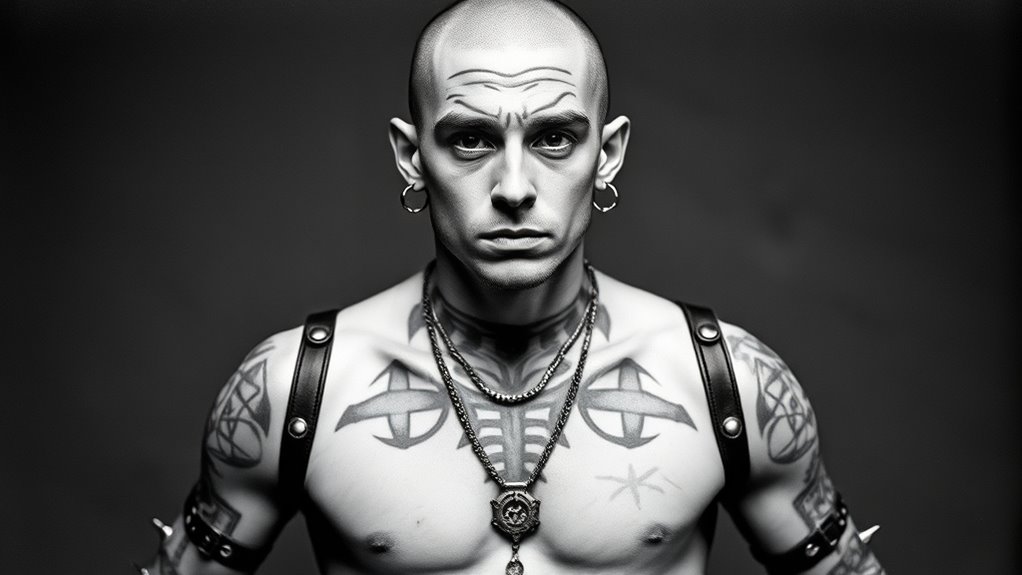
The 1970s marked a transformative era in body modification, as pioneers pushed boundaries and challenged societal norms. During this period, tattoo culture began to shift from being associated mainly with sailors and prisoners to a form of personal expression embraced by a broader audience. You might not realize it, but this decade set the stage for tattoos to evolve into a respected art form and a statement of individuality. Artists like Lyle Tuttle and Cliff Raven started gaining recognition, turning tattooing into a legitimate craft rather than underground activity. They popularized new styles, techniques, and bold designs, inspiring a wave of enthusiasts eager to use their bodies as canvases. This change didn’t happen overnight, but the 1970s marked the beginning of tattoo culture’s mainstream acceptance, encouraging more people to see body art as a form of self-expression rather than rebellion. Additionally, the development of dog breeds in that era influenced body art motifs, as tattoo artists began incorporating images of various breeds and traits into their designs, further expanding the artistic possibilities.
Meanwhile, piercings also saw significant evolution during this decade. Piercing practices, once limited mainly to earlobes, expanded to include eyebrow, nose, lip, and tongue piercings. You may not realize how much these modifications challenged conventional aesthetics and social expectations at the time. Pioneers in body modification experimented with new piercing locations and jewelry styles, making piercings more visible and more diverse. This evolution was driven by a desire for individuality and pushing the boundaries of accepted beauty standards. It wasn’t just about adornment anymore; piercings became symbols of defiance, spiritual beliefs, or cultural identity for many. Innovators like Jim Ward helped popularize piercing techniques, developing safer methods and new jewelry options, which fueled the increasing popularity of body modifications.
Throughout the 1970s, body modification was no longer confined to subcultures; it started to influence fashion and pop culture. The rebellious energy of the era empowered more people to explore their identities through tattoos and piercings. You’d see tattoos incorporated into punk fashion, with bold, graphic designs, while piercings became more elaborate, often paired with other body modifications. These pioneers weren’t just pushing aesthetic limits—they were reshaping societal perceptions of the body itself. They challenged the idea that body modification was taboo or deviant, ushering in an era of greater acceptance and experimentation. Their efforts laid a foundation for the diverse and vibrant body modification community we see today, transforming personal adornment into a powerful form of self-expression and cultural identity.
Frequently Asked Questions
What Were the Earliest Tattooing Techniques Used During the 1970S?
During the 1970s, you’d find that tattooing mainly used early needle techniques, where artists manually implanted ink with primitive tools. These methods involved hand-tapped or stick-and-poke styles, making the process more labor-intensive and less refined. Primitive ink application was common, often using homemade ink mixtures. Despite the simplicity, these techniques laid the foundation for modern tattooing, showing how pioneers pushed boundaries with minimal technology.
How Did Mainstream Media Influence Body Modification Trends in the 1970S?
You see, media portrayal and celebrity influence played a huge role in shaping body modification trends in the 1970s. When celebrities showcased tattoos and body piercings, the media highlighted these images, making such modifications more mainstream. As a result, more people felt encouraged to explore body modification, seeing it as a form of self-expression and rebellion, influenced by the glamorized images they constantly saw in magazines, TV, and movies.
Were There Any Legal Restrictions on Body Modification Practices in the 1970S?
In the 1970s, there were minimal legal restrictions on body modification practices, allowing you more freedom to explore bodily autonomy. Laws varied by location, but overall, authorities didn’t heavily regulate tattooing or piercing, letting enthusiasts and pioneers push boundaries. This lack of restrictions empowered you to express yourself creatively, fostering the growth of body modification as a form of personal and cultural identity during that era.
Which Cultural Movements Most Impacted Body Modification Innovation in the 1970S?
You see, the counterculture influence of the 1970s deeply impacted body modification innovation. As you explore this era, you’ll notice how artistic expression thrived, encouraging people to experiment with tattoos, piercings, and other body art. This movement challenged traditional norms, inspiring individuals to use their bodies as canvases. The rebellious spirit of the time pushed boundaries, making body modification a powerful form of personal and cultural statement.
How Did Body Modification Pioneers Communicate and Share Their Techniques?
You learn that body modification pioneers communicated and shared techniques through body modification communities and underground publications. These underground channels allowed them to exchange ideas, showcase their work, and develop new methods discreetly. By relying on these networks, they maintained privacy while fostering innovation, helping the community grow and evolve. This secretive yet collaborative approach was essential for pushing the boundaries of body modification during the 1970s.
Conclusion
You might think body modification was just a trend, but these pioneers truly transformed self-expression. Imagine piercing, tattooing, and altering bodies in ways that challenged norms—like a canvas of personal stories. Their boldness paved the way for today’s diverse styles, proving that embracing change can be empowering. So, next time you see someone with unique modifications, remember how these trailblazers dared to push limits and redefine beauty in the 1970s.
Body Piercings in the Punk Movement: a Symbol of Rebellion
Uncover the rebellious history of body piercings in the punk movement and discover how they symbolize individuality and defiance against societal norms.
Gaining insight into the cultural significance of male piercings reveals their profound historical and social meanings, inviting you to explore their intriguing origins further.
Never underestimate the cultural significance of piercing rituals in coming-of-age ceremonies; exploring their meanings reveals profound insights into identity and tradition.