
Choosing your first piercing involves picking a style that matches your personal look, considering current trends like helix rings or cartilage studs. Research reputable studios that prioritize safety and proper sterilization, and choose high-quality, hypoallergenic jewelry suitable for healing. Follow thorough aftercare routines, like cleaning twice daily with saline, and watch for signs of infection such as redness or swelling. If you want to make a confident choice, keep exploring the essential tips below.
Key Takeaways
- Consider current piercing trends and your personal style to choose a flattering and meaningful piercing.
- Research reputable, licensed studios with good reviews and sterile, safe environments.
- Select hypoallergenic, high-quality jewelry suitable for initial placement and your skin sensitivity.
- Follow proper aftercare routines, including cleaning twice daily and avoiding irritants during healing.
- Monitor healing progress for signs of infection and consult professionals if you experience redness, swelling, or pus.
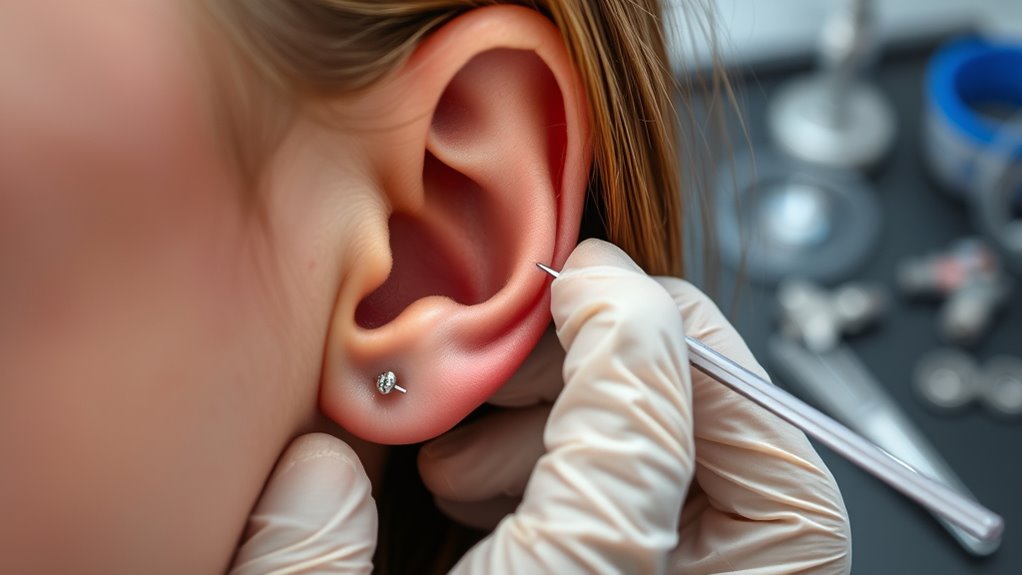
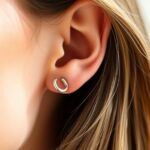
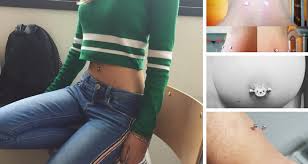
Deciding on your first piercing can be exciting but also overwhelming with so many options available. From classic earlobes to trendy nose or cartilage piercings, the choices can feel endless. To start, it’s helpful to consider current piercing trends, which often highlight popular styles like daith piercings, helix rings, or cartilage studs. These trends reflect what’s in style now, but it’s also important to choose a piercing that aligns with your personal aesthetic and comfort level. Think about how visible you want your piercing to be and how it fits with your lifestyle. Remember, a piercing is a form of self-expression, so pick something that truly resonates with you.
Choosing a piercing that matches your style and comfort makes self-expression enjoyable.
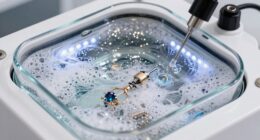
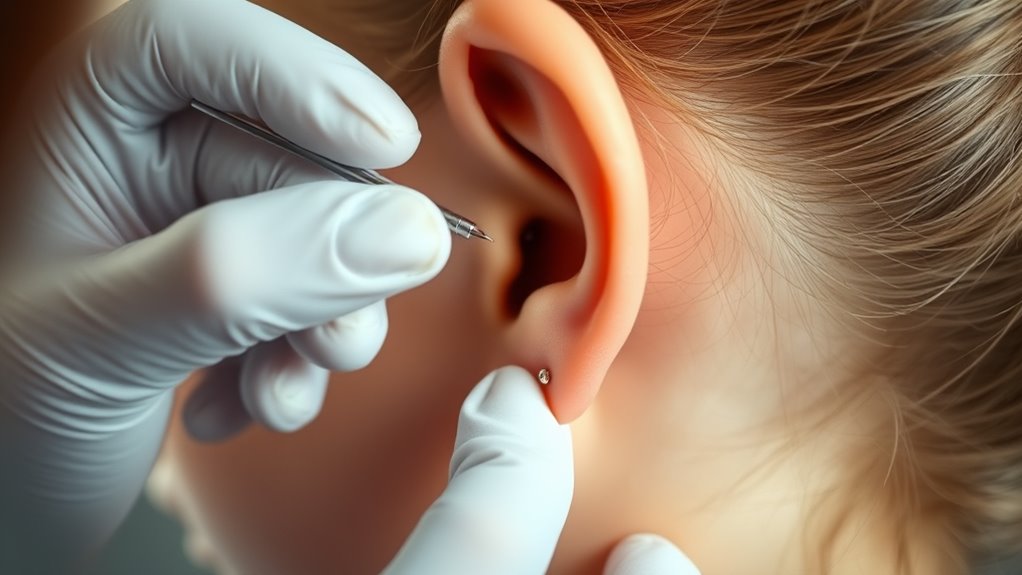
Once you’ve narrowed down your options, research reputable piercing studios. Look for professionals with good reviews, proper licenses, and a clean, sterile environment. Don’t hesitate to ask questions about their experience and what types of jewelry they recommend for first-time piercings. A skilled piercer will prioritize your safety and comfort, making the experience smoother and more enjoyable. When choosing your jewelry, opt for hypoallergenic materials like surgical steel, titanium, or gold, especially for initial piercings, to minimize irritation and reduce infection risk.
After deciding on the piercing site and studio, it’s essential to learn and follow aftercare tips. Proper aftercare ensures your piercing heals well and prevents complications like infections or scarring. This usually involves cleaning the area twice a day with a saline solution, avoiding touching or twisting the jewelry unnecessarily, and steering clear of harsh products like alcohol or hydrogen peroxide. You should also avoid submerging your piercing in pools, hot tubs, or lakes until it’s fully healed. Wearing loose, breathable clothing around the piercing site helps avoid irritation, and sleeping on your back can prevent unnecessary pressure or trauma. Additionally, understanding signs of infection can help you identify potential issues early, ensuring proper treatment if needed.
As you go through the healing process, keep an eye out for signs of infection, such as excessive redness, swelling, or pus. If you notice anything unusual, contact your piercer or a healthcare professional promptly. Remember, healing times vary depending on the piercing, but patience is key—most piercings take several weeks to a few months to fully heal. During this period, stick to your aftercare routine diligently and avoid changing jewelry prematurely. Keeping informed about piercing trends can also be fun, but the most important thing is choosing a piercing that makes you happy, feels right, and is cared for properly. This combination will help you enjoy your new piercing for years to come.
Frequently Asked Questions
How Do I Choose the Right Jewelry Material for My Skin?
To select the appropriate jewelry material for your skin, start with allergy testing to identify any sensitivities. Opt for hypoallergenic options like surgical steel, titanium, or niobium, which are less likely to cause reactions. Avoid nickel and cheap metals. When shopping, check product labels and ask piercers about materials. This way, you minimize your risk of irritation and ensure your healing process is smooth and comfortable.
What Are the Signs of an Infected Piercing?
If your piercing shows signs of infection, you might notice increased piercing pain, redness, swelling, or warmth around the area. You could also see pus or yellowish discharge, and the skin may feel tender or hot to touch. Sometimes, you’ll experience persistent itching or burning. If these signs appear, it’s important to clean the area gently and seek professional medical advice promptly to prevent further complications.
Can I Get a Piercing if I Have Sensitive Skin?
Your skin is like a delicate garden, so it’s wise to proceed carefully. If you have sensitive skin, you should definitely do allergy testing or skin patch tests before getting a piercing. These tests help identify reactions to metals or materials in jewelry. Consulting with a professional piercer can also guide you toward hypoallergenic options, ensuring your new piercing won’t turn your skin into a battlefield.
How Long Does It Typically Take for a Piercing to Heal?
Healing duration varies depending on the piercing type, but most take about 6 to 8 weeks. During this time, you should watch for infection signs like redness, swelling, or discharge. Keep the area clean and avoid touching it unnecessarily. If you notice any symptoms of infection, consult a professional piercer or healthcare provider promptly. Patience and proper aftercare guarantee your piercing heals smoothly and safely.
What Should I Do if I Experience an Allergic Reaction?
If you experience allergic reactions or suspect jewelry allergies, remove the jewelry immediately. Rinse the area with saline solution and avoid irritants. You should see a healthcare professional promptly to get proper treatment, like antihistamines or topical steroids. To prevent future issues, choose hypoallergenic jewelry such as surgical steel, titanium, or niobium, and always check for possible allergies before piercing.
Conclusion
Remember, choosing your first piercing is like planting a seed—you want to nurture it carefully. I once knew someone who rushed into a piercing without research and ended up with an infection. Take your time, follow the steps, and trust your instincts. When you choose wisely, your new piercing will flourish into a beautiful expression of yourself—just like a well-tended garden that blooms in its own perfect time.