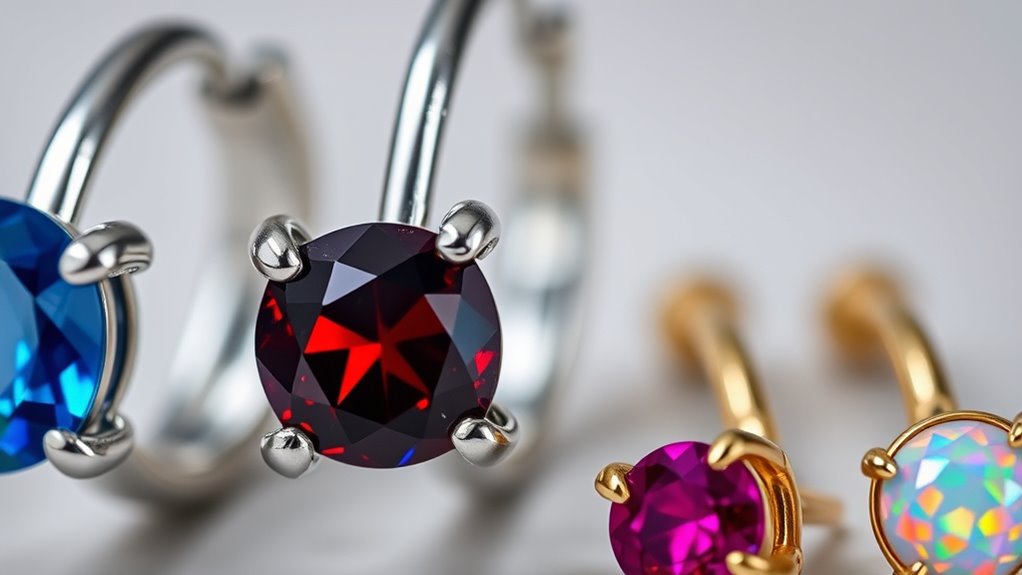
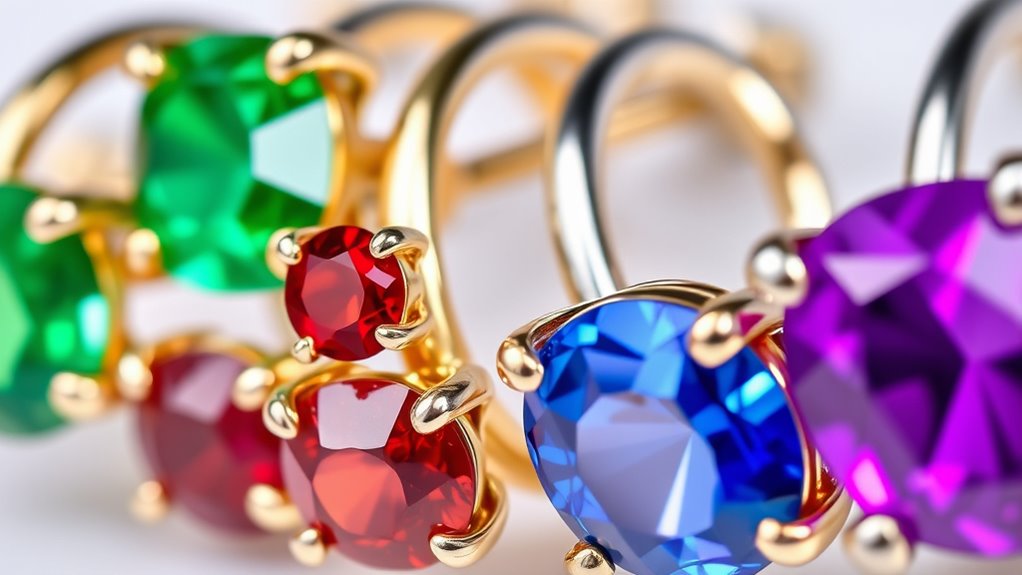
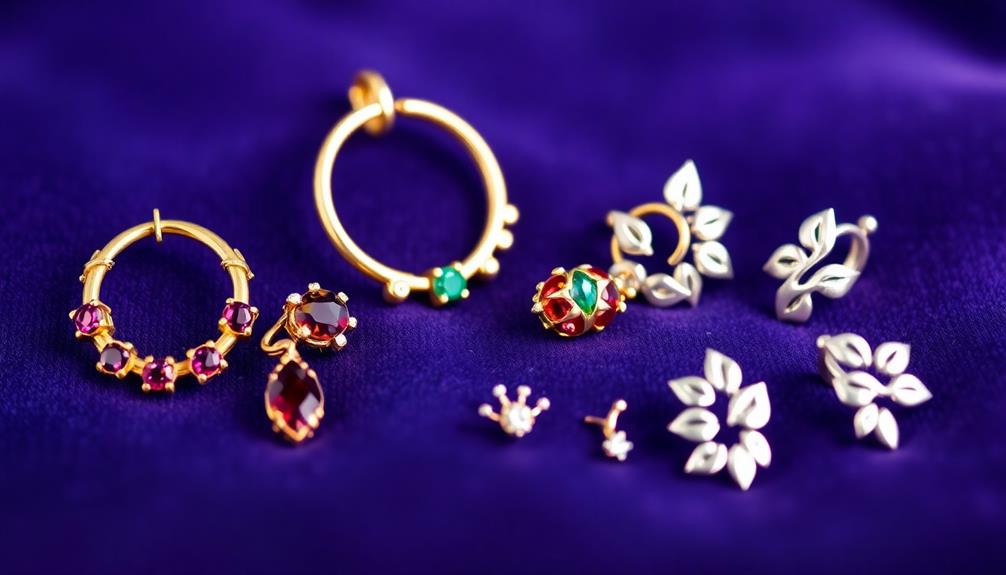
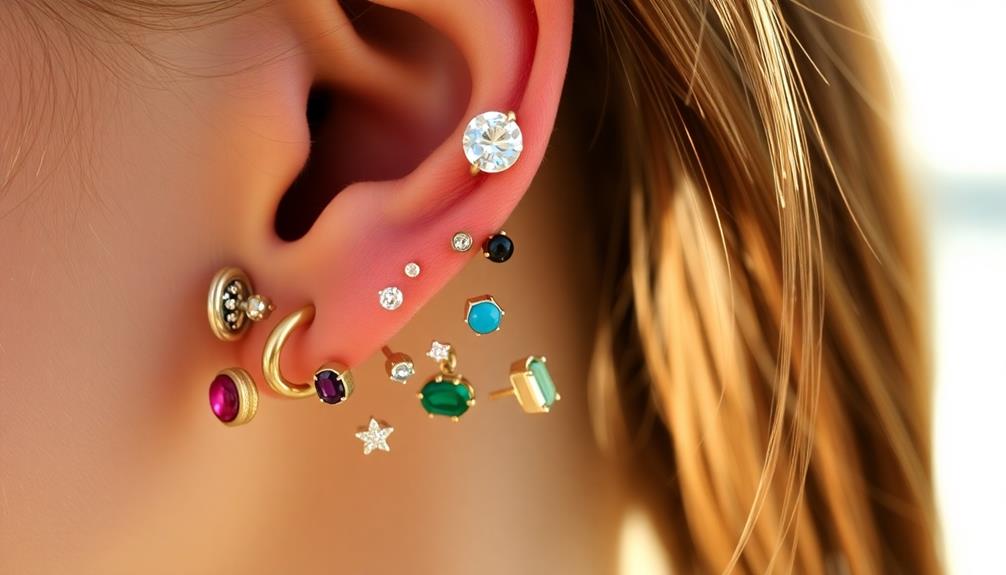
Colorful gemstones in piercing jewelry add vibrant appeal and meaningful symbolism, making your style stand out. Their colors not only enhance visual interest but can also carry qualities like calmness, protection, or healing, depending on the stone. Durability varies—harder stones like sapphires or rubies last longer, while softer ones need extra care. Choosing the right gemstone guarantees your jewelry remains beautiful and safe for everyday wear. If you want to explore more about gemstone options and their meanings, keep going.
Different gemstones offer unique colors and meanings, enhancing personal significance and visual appeal in piercing jewelry.
Consider gemstone hardness and durability to ensure longevity and resistance to daily wear and water exposure.
Proper setting and quality craftsmanship prevent gemstone loosening and maintain the jewelry’s safety and appearance.
Healing properties, like calming or protective qualities, add symbolic value but are based on beliefs rather than scientific evidence.
Choose resilient gemstones suited for everyday wear to balance aesthetic beauty with practicality in piercing jewelry.
When choosing piercing jewelry, gemstones can add a touch of elegance and personality to your look. Not only do they bring vibrant color and sparkle, but they also carry unique meanings and qualities that can enhance your overall style. Before selecting a gemstone, it’s essential to consider its healing properties and durability. These factors guarantee that your jewelry remains beautiful and safe for daily wear, especially when you’re dealing with sensitive pierced areas.
Healing properties are often associated with specific gemstones, and many people choose their jewelry based on these beliefs. For example, amethyst is thought to promote calmness and mental clarity, making it a popular choice for those seeking emotional balance. Turquoise is believed to have protective qualities, guarding against negative energies. If you’re looking for a gemstone that supports physical healing, amber is said to aid in reducing inflammation and soothing pain. While these healing properties aren’t scientifically proven, they add a meaningful dimension to your jewelry selection, allowing you to wear pieces that resonate with your personal intentions or well-being.
Durability is another essential aspect when choosing gemstones for piercings. Piercing jewelry faces daily wear, exposure to water, and occasional accidental bumps, so you want stones that can withstand these conditions without chipping or scratching. Hardness is a key factor; for instance, diamonds, sapphires, and rubies rank high on the Mohs scale, making them excellent choices for resilience. Softer stones like opals or pearls, while stunning, are more prone to damage and may require more careful handling or occasional replacement. Guaranteeing your gemstone’s durability means investing in jewelry that remains beautiful over time, minimizing the risk of damage and maintaining safety in your piercings.
In addition to healing properties and durability, you should also consider the gemstone’s overall toughness and whether it’s properly set in secure jewelry settings. A well-crafted piece will prevent stones from loosening or falling out. Also, pay attention to the quality of the gemstone—look for clear, well-cut stones without cracks or inclusions, which can weaken the stone’s structure and compromise its longevity. Furthermore, understanding the role of gemstone hardness can help you select stones that are suitable for everyday wear and less likely to suffer damage.
Ultimately, selecting the right gemstone for your piercing jewelry involves balancing aesthetics with practicality. Think about what qualities matter most to you—whether it’s the symbolic healing properties or the resilience needed for everyday life. When you make an informed choice, you’ll enjoy jewelry that’s not only beautiful but also durable and meaningful, elevating your piercing experience with personalized style.
Frequently Asked Questions
Are All Gemstones Suitable for Every Type of Piercing?
Not all gemstones are suitable for every type of piercing. You should consider gemstone durability, as some stones are more prone to chipping or scratching, and cultural symbolism, which might influence your choice based on personal or spiritual meaning. For areas with frequent movement or pressure, opt for harder stones like sapphires or diamonds. Always consult with a professional piercer to guarantee your gemstone choice aligns with your piercing location and lifestyle.
How Do Gemstone Prices Vary Based on Quality and Size?
You’ll find gemstone prices vary considerably based on quality and size. Higher gemstone grading, which involves clarity, color, and cut, increases cost. Larger stones often cost more, but size isn’t the only factor; quality matters just as much. Remember, size vs. cost isn’t linear—bigger isn’t always pricier if the gemstone’s grade is lower. You get better value by balancing size and quality when choosing your piercing jewelry.
Can Gemstone Piercings Cause Allergic Reactions?
Gemstone piercings can cause allergic reactions if you have gemstone sensitivities, especially with certain metals or dyes. To avoid this, choose hypoallergenic options like surgical stainless steel or titanium for your piercing jewelry. If you’re concerned about sensitivities, consult with your piercer and opt for gemstones labeled as hypoallergenic. Being aware of your allergies helps prevent irritation and ensures a comfortable piercing experience.
What Maintenance Is Required for Gemstone Jewelry?
Think of your gemstone jewelry as a delicate garden needing regular care. You should follow cleaning routines with gentle soap and water, avoiding harsh chemicals that could damage gemstones. Store your pieces separately in soft pouches or jewelry boxes to prevent scratches. Periodic inspection for loose settings is key. With proper maintenance, your colorful gemstones will sparkle brilliantly and last for years, like treasured keepsakes in your jewelry collection.
Are There Any Gemstones to Avoid in Specific Piercings?
You should avoid softer gemstones like opals and pearls in piercings because they lack durability and can chip or crack easily. Instead, opt for hypoallergenic gemstones such as sapphires or rubies, which are more durable and safe for sensitive skin. These gemstones withstand daily wear better, reducing the risk of damage or irritation. Always choose jewelry with gemstones that match the durability needed for the specific piercing location.
Conclusion
Now that you know about colorful gemstones in piercing jewelry, you can choose with confidence. Think of these stones as vibrant palettes, adding life and personality to your look. Whether you prefer the fiery glow of a ruby or the tranquil blue of a sapphire, each gemstone tells its own story. So go ahead, pick your favorite, and let your jewelry shine as brightly as your personality—like a rainbow after a storm.
Wondering how limited edition and collectible piercing jewelry can elevate your style and investment portfolio? Discover the unique allure of these exclusive pieces.