
To keep your piercings comfortable during workouts, choose hypoallergenic jewelry like surgical steel or titanium to reduce irritation. Make certain your jewelry fits well and avoid sharp edges that can cause discomfort. Keep the area clean and dry by regularly using saline solution and wearing moisture-wicking fabrics. Cover piercings with breathable bandages if needed, and avoid water exposure. For a full guide on protecting your piercings during exercise, explore more tips below.

Get beauty and skincare favorites delivered free with Prime
- Fast, free delivery on millions of items
- Prime Video, Amazon Music and more included
- Member-only deals all year
Key Takeaways
- Choose hypoallergenic, smooth jewelry that fits securely and comfortably, avoiding sharp edges or tightness during exercise.
- Keep piercings clean and dry before and after workouts using gentle saline solutions.
- Wear moisture-wicking fabrics and cover piercings with breathable bandages to reduce sweat buildup.
- Adjust or temporarily remove jewelry if it causes discomfort or presses against the skin during activity.
- Post-workout, gently cleanse and thoroughly dry piercings to prevent irritation and infection.

If you have piercings and want to stay comfortable during workouts, taking a few simple steps can make a big difference. Your piercing’s healing process is delicate, and exercise routines can sometimes cause irritation or even slow down healing if you’re not careful. To keep your piercings comfortable during physical activity, start by paying attention to your jewelry material choices. Opt for high-quality, hypoallergenic materials like surgical steel, titanium, or niobium, especially if your piercings are still healing. These materials are less likely to cause allergic reactions or irritation, which can be exacerbated by sweat and friction during workouts.
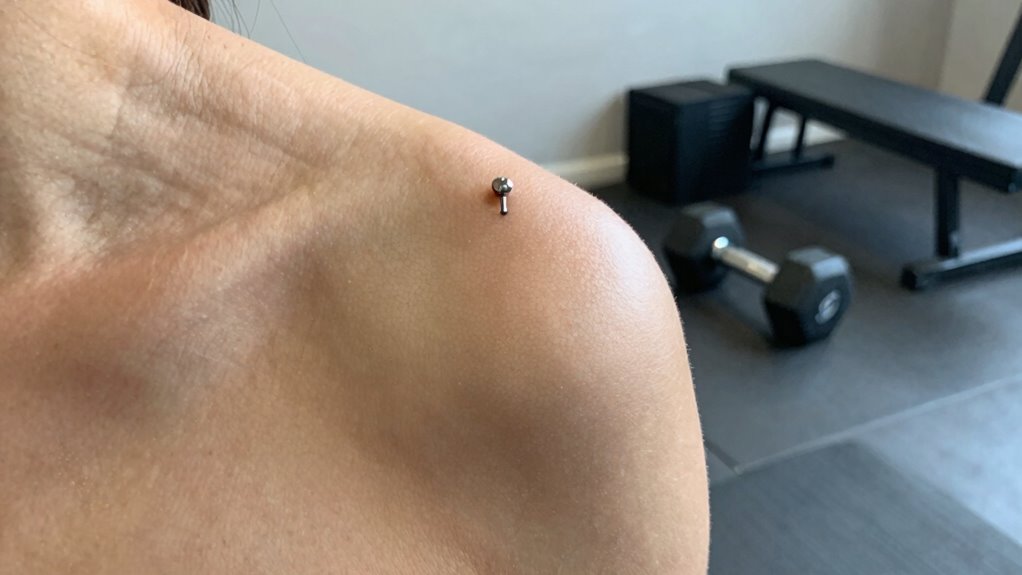
Choose hypoallergenic jewelry like surgical steel or titanium to prevent irritation during workouts.
Once you’ve selected the right jewelry, consider removing or temporarily switching to smaller, smooth jewelry pieces if your piercings are fully healed. This reduces the chances of snagging or catching on clothing or gym equipment, which can cause pain or tearing. If you choose to keep your regular jewelry in, make sure it’s secure and free of sharp edges. During exercise, tight or uncomfortable jewelry can press against your skin and cause discomfort, so adjust or loosen as needed.
Another essential step is to keep your piercings clean and dry before, during, and after your workout. Sweat can build up around jewelry, increasing the risk of infection or irritation and prolonging your piercing’s healing process. Use a gentle saline solution to clean your piercings regularly, especially if you notice any redness or swelling. Wearing moisture-wicking fabrics or workout gear can also help reduce sweat buildup around your piercings. If you’re doing intense or prolonged exercise, consider covering your piercings with a clean, breathable bandage or tape to shield them from excessive moisture and friction. Additionally, choosing hypoallergenic jewelry can significantly minimize irritation and promote comfort during physical activities.
Being aware of skin reactions and adjusting your routine accordingly can help prevent discomfort and potential complications. Listening to your body is crucial. If you feel any pain, tenderness, or discomfort during your workout, stop and check your piercings. Don’t ignore signs of irritation or infection, as these can worsen if ignored. It’s also helpful to be aware of proper aftercare techniques to support your piercings’ health. After exercising, gently cleanse your piercings again and dry them thoroughly. Avoid swimming in pools, lakes, or hot tubs while your piercings are healing or if they’re irritated, as bacteria in water can cause infections.
hypoallergenic surgical steel piercing jewelry
As an affiliate, we earn on qualifying purchases.
As an affiliate, we earn on qualifying purchases.
Frequently Asked Questions
Can I Wear Jewelry During High-Intensity Workouts?
Yes, you can wear jewelry during high-intensity workouts, but it’s best to choose practical options. Opt for sports-friendly jewelry styles like silicone or rubber pieces that stay secure and won’t cause discomfort or damage. While some fashion trends lean toward elaborate jewelry, during workouts, simplicity and comfort are key. Removing jewelry before exercise is safest, but if you wear pieces, prioritize secure, non-metallic styles to avoid irritation or injury.
How Often Should I Clean My Piercings After Exercising?
You should clean your piercings immediately after exercising, ideally within a few hours, to prevent piercing irritation. Follow proper hygiene practices by gently washing the area with saline solution or a piercing-safe cleanser. Avoid harsh chemicals or scrubbing, as this can cause irritation. Regular cleaning helps remove sweat, dirt, and bacteria, reducing the risk of infection and ensuring your piercing stays healthy and comfortable during your recovery.
Are There Specific Materials Better for Workout Piercings?
When it comes to workout piercings, you should opt for materials that are a cut above the rest. Titanium and surgical stainless steel are top choices because their material safety and hypoallergenic options reduce irritation and infection risks. These materials are like a breath of fresh air for your piercings, keeping them comfortable and safe during workouts. Prioritize high-quality materials to avoid any unnecessary trouble.
Is It Safe to Remove and Reinsert Jewelry Regularly?
It’s generally safe to remove and reinsert jewelry during piercing healing, but you should do so carefully to avoid irritation or infection. Regular jewelry removal can disrupt healing, especially if your piercing is still tender. Always wash your hands first, and avoid frequent removal once healed. During workouts, it’s better to keep jewelry in to prevent irritation, but if you need to remove it, do so gently and guarantee proper jewelry replacement afterward for continued healing.
How Long Should I Wait Before Exercising After Getting a Piercing?
You should wait at least 4 to 6 weeks after getting a piercing before exercising, as this allows the healing process to progress and reduces infection risk. During this time, your body needs to focus on healing, and sweating can introduce bacteria or irritate the piercing. After that period, start with gentle activities and avoid excessive sweating or contact to keep your piercing comfortable and healthy.
Conclusion
Keeping your piercings comfortable during workouts might seem tricky, but it’s all about balance. Just like finding harmony between effort and rest, protecting your piercings guarantees they stay healthy and pain-free. Ignoring them during exercise can lead to discomfort or damage, much like neglecting your body’s signals. So, stay attentive, wear suitable jewelry, and listen to your body—because a well-maintained piercing is a small investment for all the confidence and style you gain.
Halloween Picks
halloween
As an affiliate, we earn on qualifying purchases.