Gaining insight into the cultural significance of male piercings reveals their profound historical and social meanings, inviting you to explore their intriguing origins further.
Male piercings have historically symbolized social status, spiritual beliefs, and cultural identity across many civilizations. From African tribes stretching earlobes or piercing noses to Polynesian rituals involving facial and genital piercings, these practices marked maturity, warrior status, or spiritual connection. Today, they still honor their cultural roots while serving as expressions of personal identity and rebellion. Understanding the deep history behind male piercings can reveal their true significance—discover more about these meaningful traditions as you explore further.
Historically, male piercings signified social status, rites of passage, or spiritual beliefs across various ancient civilizations.
Specific piercings indicated maturity, warrior status, or tribal identity within cultural and societal hierarchies.
Many traditional piercings hold deep spiritual or symbolic meanings linked to community belonging and cultural heritage.
Modern male piercings often preserve traditional significance while also serving as personal expressions or symbols of rebellion.
Respecting the cultural roots of male piercings enhances understanding and appreciation of their historical and spiritual importance.
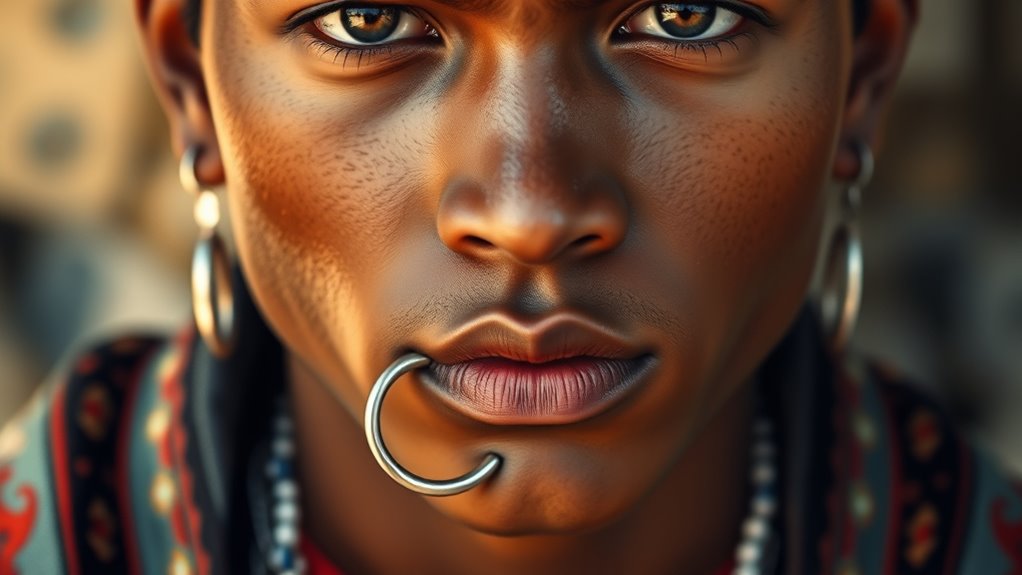
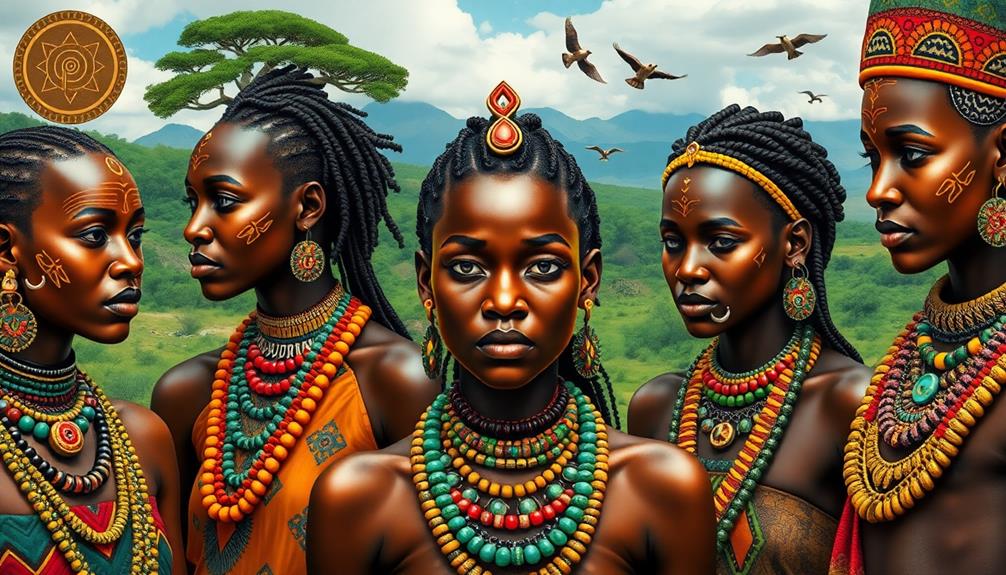
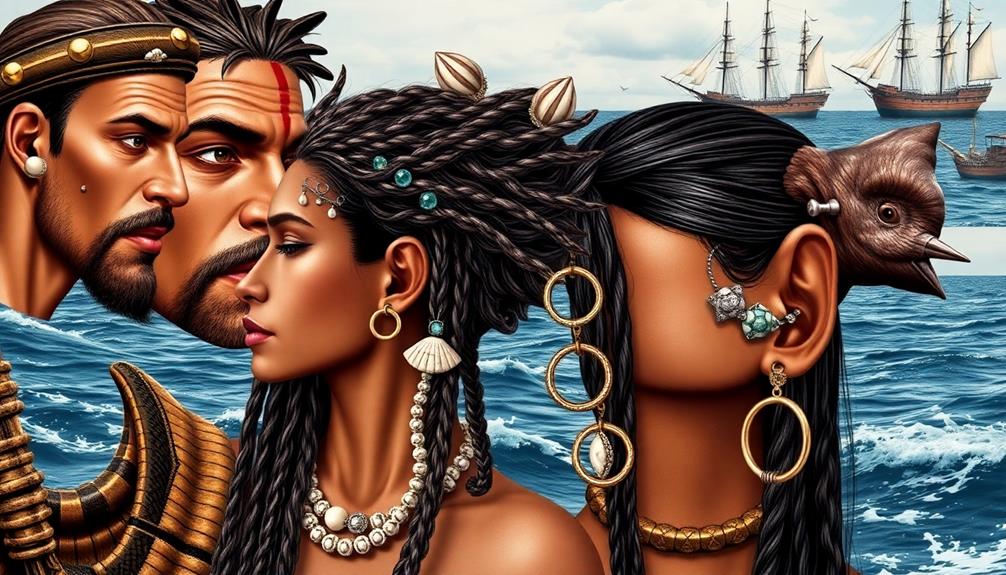
Piercings have long served as a powerful expression of cultural identity, tradition, and personal style around the world. When you explore the history origins of male piercings, you’ll find they date back thousands of years across diverse civilizations. Ancient tribes in Africa, Asia, and the Pacific used piercings to signify social status, rites of passage, or spiritual beliefs. For example, in some African cultures, men would stretch earlobes or pierce noses to demonstrate maturity or warrior status. Similarly, in Polynesian societies, facial and genital piercings played a vital role in rituals and community recognition. Over time, these practices spread and evolved, reflecting changing societal values and influences.
Male piercings originate from ancient cultures, symbolizing social status, rites, and spiritual beliefs across Africa, Asia, and Polynesia.
Today, modern trends have transformed the way male piercings are perceived and embraced. While traditional reasons still hold meaning in many cultures, contemporary society often sees piercings as a form of self-expression and individual identity. You might notice that piercings have become more diverse in placement—eyebrows, lips, nipples, or even genital areas—each carrying its own cultural or personal significance. The fashion industry, music scenes, and social media have propelled piercing culture into mainstream acceptance, making it a popular way for men to showcase their personality and style. Despite this shift, many still honor the cultural roots behind their piercings, blending tradition with modern aesthetics.
As trends continue to evolve, so does the approach to piercing safety and techniques. Modern procedures emphasize hygiene, using sterile tools and hypoallergenic materials, making piercings more accessible and less risky than ever before. You’re encouraged to research the cultural meanings behind specific piercings before choosing one, as many carry deep historical significance. Wearing a piercing isn’t just about looks; it’s a connection to a tradition, a statement of personal identity, or an act of rebellion. Whether you’re inspired by ancient customs or modern trends, understanding the cultural background enriches your experience and respects the origins of this age-old form of expression.
In essence, male piercings continue to serve as a bridge between history and contemporary culture. They symbolize more than just adornment—they reflect complex social narratives, personal journeys, and evolving attitudes towards body art. As you consider your next piercing, remember its historical roots and how modern trends have made it a versatile tool for identity and cultural connection. With awareness and respect, your choice can honor tradition while expressing your unique individuality.
Frequently Asked Questions
How Do Male Piercings Influence Modern Fashion Trends?
Male piercings influence modern fashion trends by serving as bold body modifications that make strong fashion statements. You can use them to showcase your personal style and stand out in a crowd. As body modification gains popularity, more men embrace piercings to express individuality and push fashion boundaries. These accessories often become iconic, inspiring new trends and encouraging others to experiment with their look, shaping contemporary fashion in exciting ways.
Are There Specific Male Piercings Linked to Particular Social Classes?
Yes, certain male piercings are linked to social class and cultural identity. For example, elaborate or traditional piercings may signify higher social status or cultural belonging, while simpler piercings are often more common across different classes. You might notice that these piercings help communicate your social standing or cultural roots, making them a meaningful expression of identity that can set you apart or connect you to a specific community.
How Does Age Affect the Cultural Acceptance of Male Piercings?
You might notice that age influences how people view male piercings, with generational attitudes shaping acceptance. Older generations often see piercings as rebellious or unconventional, while younger ones embrace cultural evolution and see them as a form of self-expression. As attitudes shift over time, society becomes more open-minded, making male piercings increasingly accepted across all ages. Your perspective may depend on your own experiences and cultural background.
What Are the Religious Implications of Male Piercings in Different Cultures?
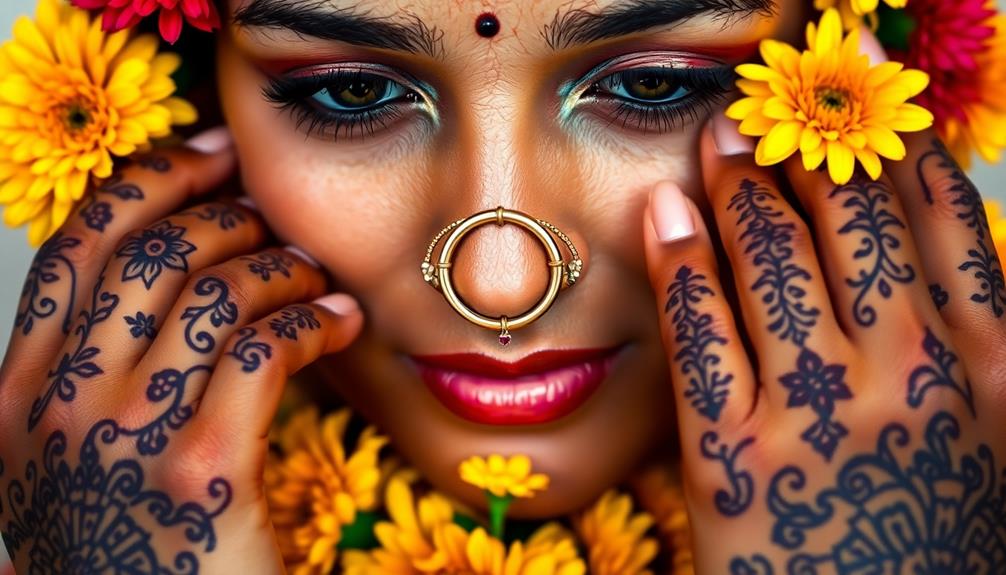
You should know that religious implications of male piercings vary across cultures. In some traditions, piercings symbolize spiritual practices or religious symbolism, signifying devotion or status. For example, certain Hindu and Buddhist practices incorporate piercings as part of spiritual rituals. Conversely, some religions discourage piercings altogether, viewing them as inappropriate or distracting. Understanding these cultural nuances helps you appreciate how piercings can carry deep religious significance.
Do Male Piercings Have Any Impact on Professional or Workplace Perceptions?
You might worry that male piercings could harm your professional image, but perceptions are shifting. While some workplace stereotypes linger, many employers now see personal style as an expression of individuality. If you present yourself confidently, a piercing can add uniqueness without undermining your professionalism. Just be mindful of your industry standards; in creative fields, piercings often boost your personal brand, while in conservative settings, discretion might be better.
Conclusion
Think of male piercings as a lighthouse on a rocky coast, guiding you through cultural waters. They shine a light on identity, tradition, and personal expression, standing firm amidst changing tides. Just as a lighthouse signals safety and belonging, piercings connect you to a deeper sense of community and history. Embrace this symbol, and let it illuminate your journey through the rich, diverse landscape of cultural significance.
Piercings in African Tribal Cultures: Meanings and Practices
Meaningful piercings in African tribal cultures reveal deep connections to identity and spirituality, but how are these traditions evolving in today’s world? Discover more.
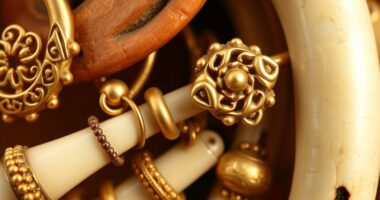
Gold and bone piercings have historically symbolized wealth, spirituality, and social status, revealing fascinating cultural stories worth exploring further.