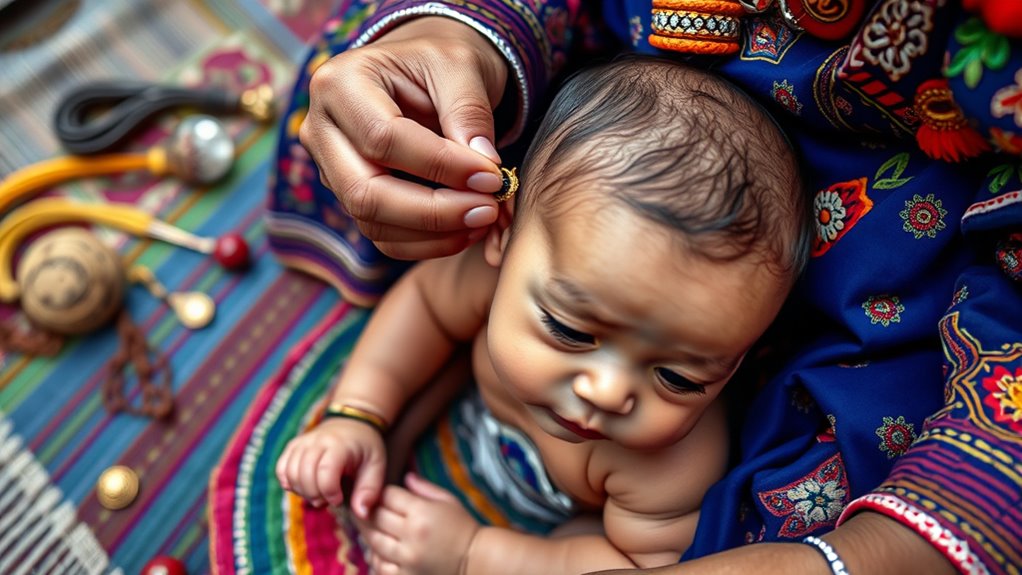
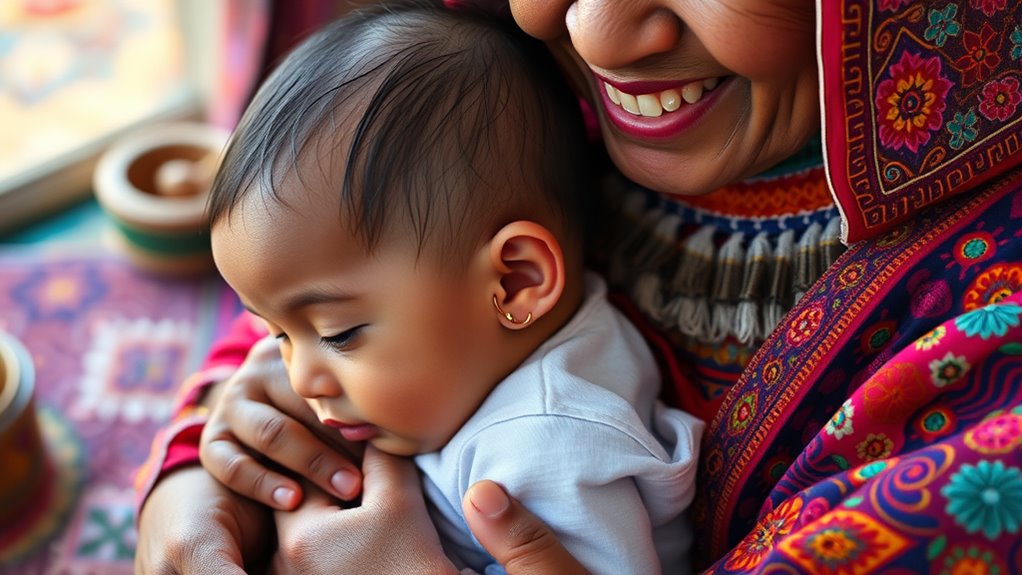
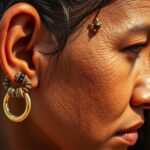
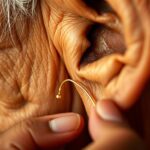
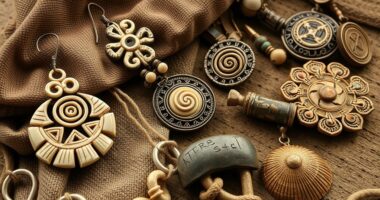
Across cultures, infant ear piercing often marks a significant milestone, symbolizing protection, beauty, or social identity. Rituals vary widely—some communities pierce within days after birth with sacred ceremonies, while others wait until the child is older to boost immune response. Practitioners might use sterilized tools, traditional materials, and specific rituals, all influenced by cultural beliefs. Exploring different traditions reveals meaningful practices rooted in history and values that shape families’ choices around this age-old custom.
Many cultures use ear piercing as a rite of passage symbolizing protection, beauty, or social status for infants.
Ritual timing varies, with some cultures piercing soon after birth for blessings, others waiting until the child is older.
Traditional methods often involve experienced practitioners, sterilized tools, and specific ceremonies or rituals.
Jewelry choices, such as gold or traditional materials, are influenced by cultural beliefs to promote healing and ward off harm.
Health considerations include minimizing infection risks through hygiene, proper technique, and material selection during infant piercing.
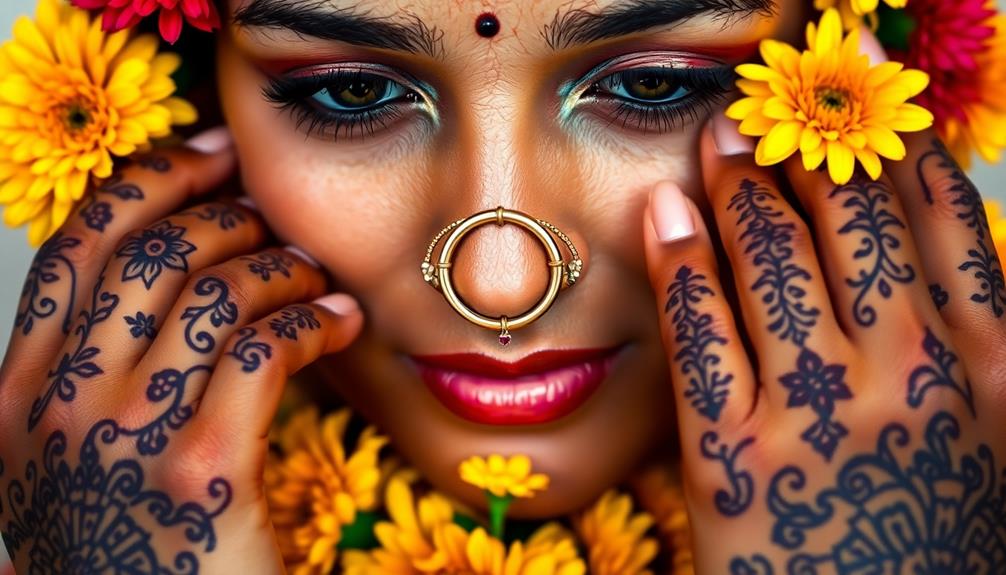
Ear piercing rituals for infants are a longstanding tradition in many cultures, symbolizing rites of passage, protection, or beauty. These practices often carry deep cultural significance, reflecting values, beliefs, and social identity. For some communities, piercing a baby’s ears signifies their transition into a new stage of life or marks their belonging to a particular group. In others, it’s seen as a way to enhance beauty or bring good luck. Understanding these cultural meanings helps you appreciate why families choose to pierce their infants’ ears despite the debates surrounding it.
While the cultural importance is clear, health considerations play a vital role in the decision to pierce a baby’s ears. You need to be aware of the risks involved, such as infections, allergic reactions, or improper healing. That’s why many cultures have developed specific rituals and precautions to minimize these health concerns. For example, some communities rely on experienced practitioners or traditional healers who use sterilized tools and natural antiseptics. Others prefer to wait until the child is older, believing that a stronger immune system can better handle healing and reduce complications. Regardless of when you choose to pierce your infant’s ears, ensuring proper hygiene and sterile techniques is essential to prevent infections. Additionally, understanding the effects of materials used in jewelry can help prevent allergic reactions during healing. In many cultures, the timing of the piercing is also significant. Some believe that piercing within a certain period after birth can protect the child from evil spirits or bring blessings. Others wait until the baby is a few months old, allowing their immune system to develop further. You might find that local customs dictate specific methods—such as using gold or other traditional jewelry believed to bring good luck or ward off harm—and these choices often align with cultural values. It’s common for families to consult elders or community leaders who endorse particular practices based on their cultural significance and health wisdom.
Frequently Asked Questions
What Are the Most Common Materials Used for Infant Earrings Across Cultures?
You’ll find that material preferences for infant earrings vary, but common choices include gold, silver, and sometimes surgical steel due to their safety and durability. In many cultures, these materials hold cultural symbolism, representing purity, protection, or status. Gold is often favored for its auspicious qualities, while silver is valued for its affordability and cultural significance. Always choose hypoallergenic options to guarantee comfort and safety for your infant.
How Do Parents Ensure Sterilization During Infant Ear Piercing?
Coincidentally, ensuring safety begins right at the moment of piercing. You should use sterilization methods like alcohol wipes or sterilized needles, and always choose a professional with proper sterilization procedures. Parental precautions include checking the tools are sterile, washing your hands thoroughly, and avoiding touching the earrings or piercing site afterward. These steps help prevent infection, making the process safe and hygienic for your baby.
Are There Any Age Restrictions for Infant Ear Piercing in Different Societies?
You should know that age restrictions for infant ear piercing vary widely across cultures. In some societies, there are strict age limits, often performed within the first few months, while others have no specific restrictions, allowing piercing at any age. Cultural practices influence these decisions, with traditions guiding when and how infants get their ears pierced. Always verify local customs and regulations to make certain you’re respecting cultural norms and safety guidelines.
What Are the Health Risks Associated With Infant Ear Piercing?
Are you aware of the health risks when piercing your infant’s ears? You should be cautious of infection risks and allergic reactions from metals used in earrings. Proper sterilization and choosing hypoallergenic materials can minimize these dangers. Can you make certain the piercing is done by a trained professional? Taking these precautions helps protect your baby’s health and prevents discomfort or complications down the line.
How Do Cultural Beliefs Influence the Choice of Piercing Techniques?
Cultural beliefs heavily influence your choice of piercing techniques, often emphasizing traditional methods that hold cultural symbolism. You might opt for age-old practices passed down through generations, believing they guarantee proper healing or spiritual protection. These traditional methods reflect cultural values and identity, guiding your decision to choose specific techniques that honor your heritage. By doing so, you maintain a connection to your culture and uphold its rituals and symbolism.
Conclusion
No matter where you come from, ear piercing rituals for infants reveal a universal desire to welcome new life and culture. These traditions, rich with meaning, connect generations and strengthen community bonds. Remember, “The more things change, the more they stay the same.” Embracing these practices reminds us that, in the end, shared customs help us celebrate our youngest with love and respect—no matter where in the world you are.
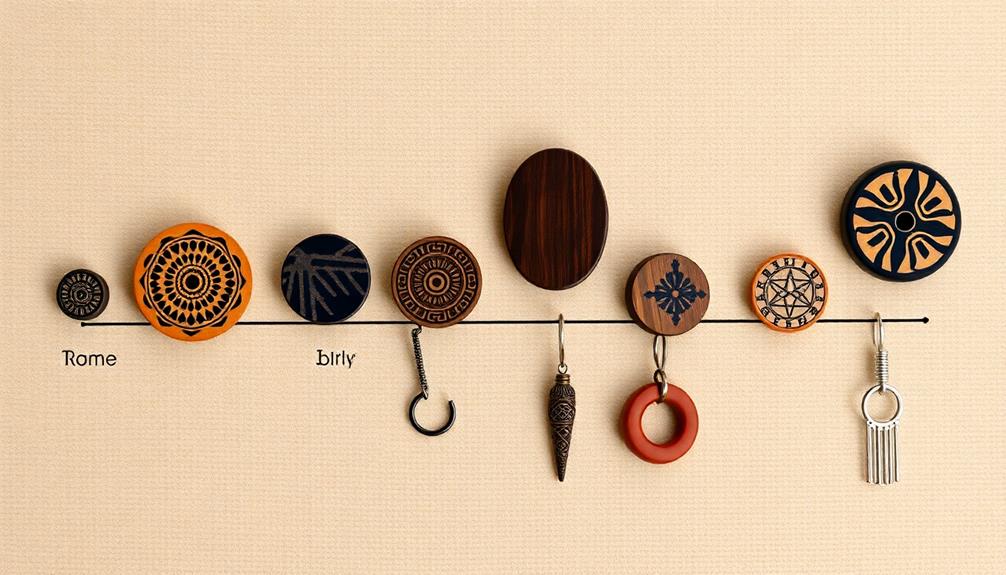
Learn how ear gauges transformed from ancient rituals to modern expressions of identity, revealing a rich history that still influences today’s body modification trends.
Nurtured by cultural traditions, piercings in Roman and Greek societies symbolized identity and status, revealing intriguing insights into their beliefs and social structures.
Piercings and Spiritual Beliefs in Ancient Civilizations
On exploring ancient civilizations, discover how piercings symbolized spiritual beliefs and cultural identity, revealing connections that still intrigue us today.