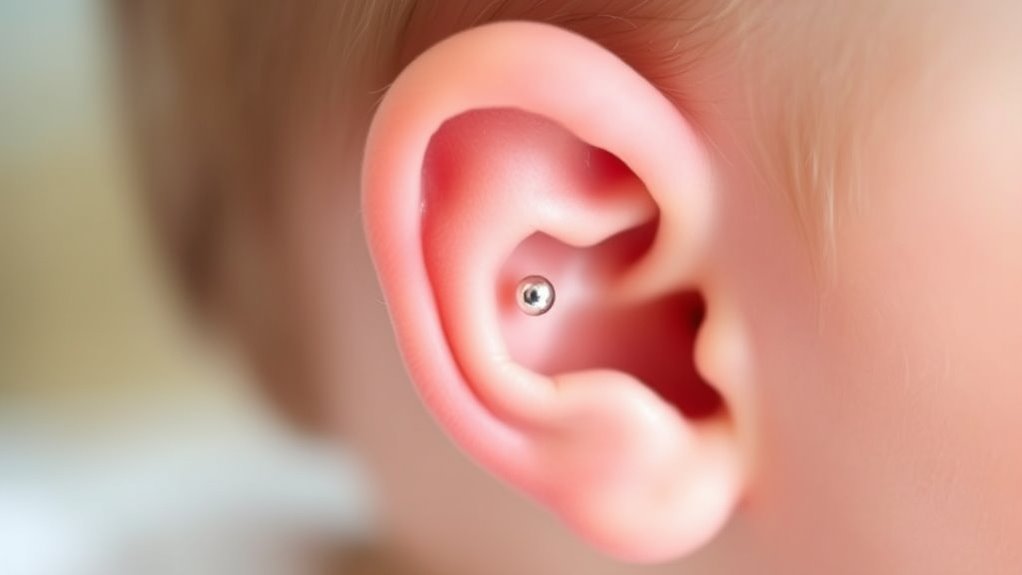
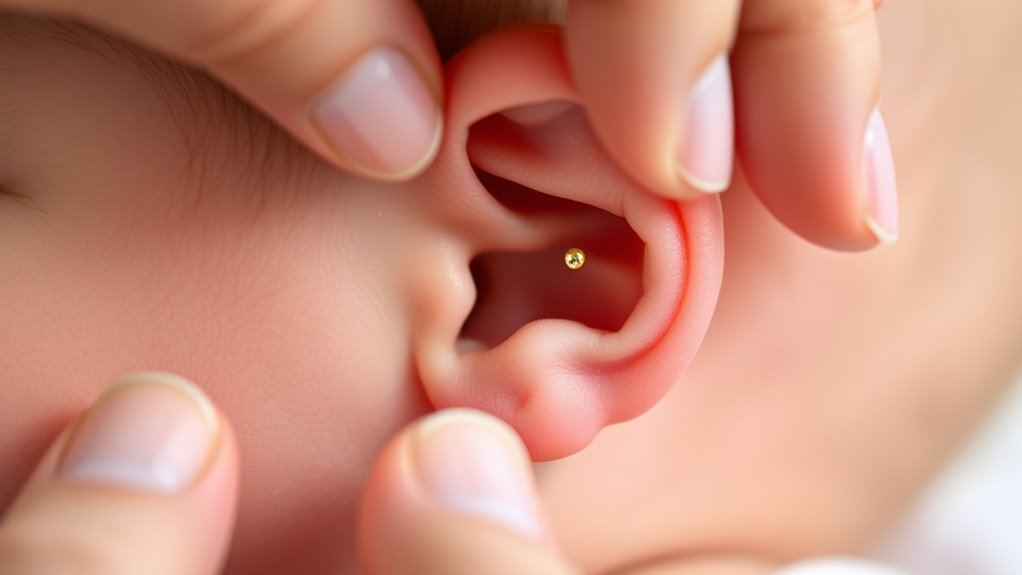
Ear piercing for infants is common in many cultures, often done early for tradition or convenience. To guarantee safety, choose a professional who sterilizes equipment and uses proper hygiene practices, like sterile needles instead of piercing guns. Timing depends on your comfort and your child’s well-being—early piercings may reduce trauma but require diligent aftercare to prevent infections. If you’re interested, you’ll find helpful tips on the best timing and safety practices to keep your little one safe.
Early piercing is common in many cultures, often performed shortly after birth for tradition and aesthetic reasons.
Professional piercing with sterilized equipment and trained personnel reduces infection and injury risks.
Proper aftercare, including cleaning and monitoring for infection signs, is essential for safe healing.
The timing of piercing depends on cultural norms, parental preference, and considerations of the child’s understanding and consent.
Weighing cultural benefits against health risks ensures a safe, informed decision regarding infant ear piercing.
Are ear piercings for infants a safe choice? This question often comes up among parents considering whether to pierce their baby’s ears early on. Many cultures have long-standing traditions of piercing infants’ ears, viewing it as a rite of passage or a cultural practice that holds meaningful significance. In these communities, piercing is often done shortly after birth or during infancy, reflecting deep-rooted customs passed down through generations. Parental preferences play a big role in this decision, influenced by cultural norms, personal beliefs, and aesthetic choices. Some parents see early piercing as a way to preserve tradition or honor their heritage, while others may opt for it simply because they believe it looks cute or helps avoid later trauma or discomfort.
When it comes to safety, it’s essential to understand that piercing an infant’s ears can be done with proper precautions. The key is to guarantee the procedure is performed by a trained professional using sterilized equipment. Many pediatric clinics and professional piercing studios follow strict hygiene protocols, reducing the risk of infection or complications. However, it’s important to note that infants have delicate immune systems, making them more susceptible to infections if the piercing isn’t handled properly. Choosing a reputable professional, preferably someone experienced with infants, can greatly reduce risks. They often use sterile needles instead of piercing guns, which can be less hygienic and cause more trauma to the tissue. Additionally, understanding that the quality of aftercare can significantly influence healing outcomes is crucial for parents.
Timing is another important factor to contemplate. Some parents prefer to pierce their infant’s ears within the first few weeks, believing that doing it early diminishes the child’s memory of the pain and prevents emotional trauma. Others wait until their child is older and can actively participate in the decision-making process. The decision often depends on parental preferences, cultural pressures, and how comfortable you feel with the procedure at a young age. It’s vital to weigh the benefits of early piercing against potential risks. For instance, if you choose to pierce early, make sure to follow aftercare instructions carefully, keep the area clean, and watch for signs of infection like redness, swelling, or pus.
Frequently Asked Questions
Are There Any Long-Term Health Risks Associated With Infant Ear Piercing?
Long-term health risks from infant ear piercing are rare, but you should consider genetic predisposition to keloids or allergies and cultural practices that influence healing. If your family has a history of keloid formation, piercing may increase scar risks. Proper hygiene and choosing a professional piercer can minimize infection and allergic reactions. Overall, with proper care and awareness, long-term issues are unlikely, but stay informed about your child’s health history.
How Do I Choose a Safe and Hygienic Piercing Location for My Baby?
Think of choosing a safe piercing spot as planting a seed of care. You should select a reputable, hygienic facility that prioritizes sterilized tools and trained professionals. Look for a clean environment and ask about their sterilization procedures to guarantee a hygienic ear piercing. Trust your instincts and avoid places that seem unclean or rushed. Your baby’s safety depends on this careful, loving choice.
What Are the Signs of Infection or Complications After Piercing?
You should watch for signs of infection after your baby’s piercing, like redness that worsens or spreads, swelling, pus, or a foul smell. If your baby seems unusually irritable, has a fever, or the pierced area feels hot, these are complication indicators. Keep the area clean, avoid touching it with dirty hands, and seek prompt medical advice if you notice any of these signs to prevent further issues.
Can Infants Have Allergic Reactions to Piercing Materials?
Are you worried about your infant’s reaction to earrings? Yes, infants can have allergic reactions to piercing materials. To prevent allergies, focus on allergy prevention by choosing hypoallergenic, surgical-grade stainless steel or gold. Always opt for material testing and consult with a pediatrician beforehand. Do you know how to spot early signs of a reaction? Being vigilant guarantees your baby’s comfort and safety during the piercing process.
How Do I Care for My Infant’s Pierced Ears During Healing?
To care for your infant’s pierced ears during healing, gently clean the area twice daily with a saline solution or a gentle, fragrance-free cleanser. Avoid touching or twisting the earrings to prevent irritation. Follow healing tips like keeping the earrings in place and avoiding water or dirty environments. Watch for signs of infection, such as redness or swelling, and consult your pediatrician if needed. Proper ear care guarantees smooth healing and keeps your baby comfortable.
Conclusion
In wrapping up, remember that waiting wisely and choosing well can wonderfully ward off worries. Weigh the timing, trust the tips, and test the technique to guarantee safe, stunning, and satisfying ear piercings. Prioritize patience, preparation, and proper procedures, and you’ll enjoy the joyful journey of your little one’s jewelry journey. With wise words and careful care, you’ll walk the way to wonderful, worry-free ear piercings for your infant.
Growing With Gauges: Stretching Lobes From Teens to Thirties
Meticulously growing with gauges from your teens to thirties involves patience and care, revealing the true journey behind this transformative process.
Childhood Piercings: Dealing With Regret or Stretching as an Adult
Pondering your childhood piercings? Discover how to navigate nostalgia and regret while reclaiming your identity in adulthood. What choices lie ahead for you?