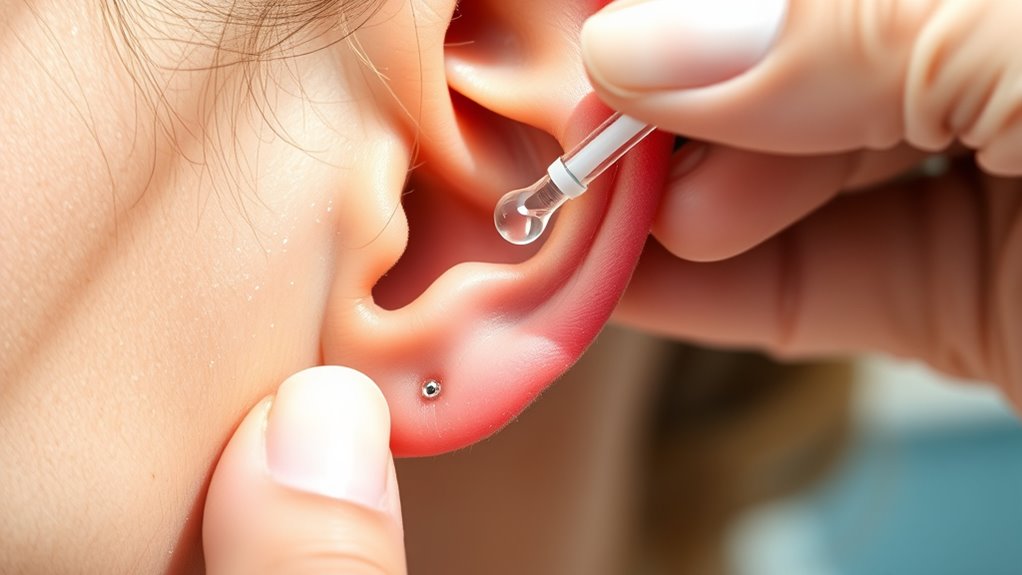
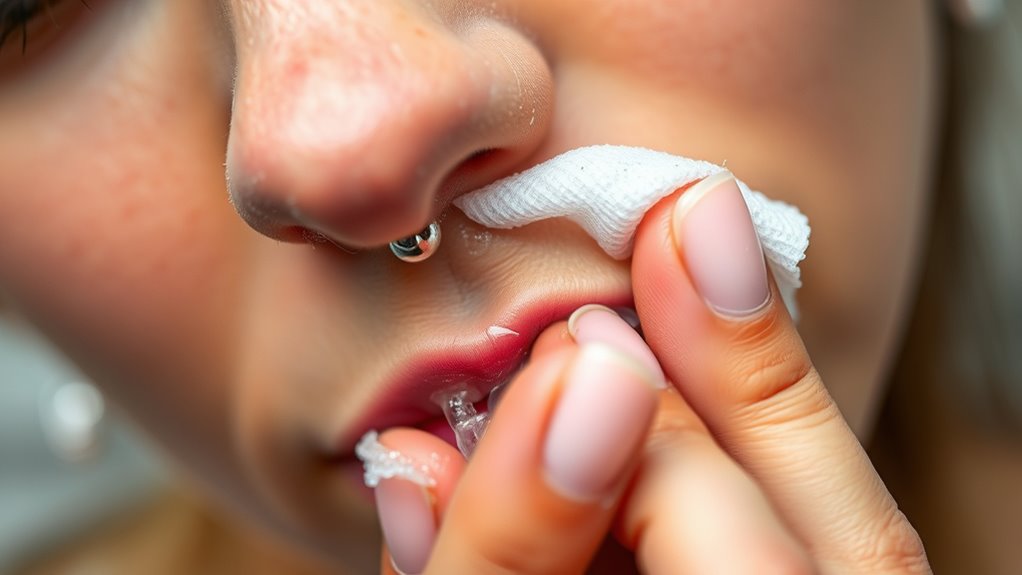
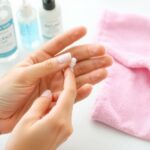
To care for your new piercing, clean it gently with a saline solution recommended by your piercer, using a clean cotton swab or gauze. Avoid touching or twisting the jewelry, and keep your hands clean to prevent infection. Protect it from dirt, pools, and harsh chemicals, and be cautious when sleeping. Monitoring for signs of trouble is key. If you follow these steps closely, you’ll discover more ways to guarantee a smooth healing process.
Clean the piercing with a saline solution and a soft cloth or cotton swab twice daily to prevent infection.
Avoid touching or twisting the jewelry to reduce trauma and bacterial transfer.
Keep hands clean and minimize unnecessary contact to prevent introducing bacteria.
Protect the piercing from dirty environments, pools, and harsh chemicals during healing.
Monitor for signs of infection such as excessive swelling, redness, or discharge, and consult a professional if needed.
Have you recently gotten a new piercing and wonder how to keep it healthy? The first step is understanding the healing timeline and how jewelry materials play a role in your aftercare. Healing time varies depending on the piercing location, but generally, a surface piercing might take a few months, while an ear lobe could heal in about six weeks. During this period, it’s vital to be diligent with cleaning and protecting your new piercing to prevent infection and facilitate proper healing. One of the most important aspects is cleaning your piercing gently and regularly, using a saline solution recommended by your piercer. This helps remove any crust or debris and reduces bacteria buildup. Avoid harsh chemicals like alcohol or hydrogen peroxide, which can irritate the skin and slow healing. When cleaning, use a clean cotton swab or gauze, and be careful not to twist or tug on the jewelry, as this can cause trauma. Additionally, choosing appropriate jewelry materials such as surgical steel or titanium can help minimize allergic reactions and support healing. Choosing the right jewelry material is essential during the healing process. Opt for high-quality, hypoallergenic materials like surgical steel, titanium, or niobium, especially in the early stages. These materials are less likely to cause allergic reactions or irritations, which can prolong healing or lead to complications. Avoid cheap or nickel-plated jewelry, as they can cause sensitivities and trap bacteria. Keep your jewelry in place unless instructed otherwise by your piercer, because removing it prematurely can allow the hole to close or introduce bacteria. If you notice swelling, redness, or discharge, it might be a sign of infection, and you should consult a professional promptly. Protection from external irritants is equally important. Be cautious about touching your piercing with unwashed hands, and avoid exposing it to dirty environments, pools, or harsh chemicals. When sleeping, try to keep the area protected and avoid sleeping on the side with the new piercing to prevent pressure and movement that could hinder healing. As your piercing heals, you’ll notice changes—initial swelling will decrease, scabbing will lessen, and the skin will start to settle into a more comfortable state. Patience is key; rushing the process can cause setbacks. Follow your piercer’s aftercare advice closely, and don’t hesitate to seek professional help if you encounter persistent issues. Proper cleaning, protecting, and choosing suitable jewelry materials will guarantee your new piercing heals smoothly and looks great for years to come.
Frequently Asked Questions
Can I Use Alcohol or Hydrogen Peroxide to Clean My Piercing?
No, you shouldn’t use alcohol or hydrogen peroxide for piercing cleaning. These harsh healing solutions can irritate your skin and delay healing. Instead, opt for a saline solution, which is gentle and effective in cleaning your piercing without causing damage. Proper piercing cleaning involves gentle, regular rinses with saline to keep the area clean and promote healing. Avoid strong chemicals to ensure your piercing heals smoothly and safely.
How Long Should I Avoid Swimming With a New Piercing?
Swimming with a new piercing is like inviting trouble to a party—avoid it for at least 4-6 weeks. During this time, stay out of pools, hot tubs, lakes, and oceans to prevent infection signs and contamination. If you notice redness, swelling, or discharge, skip swimming even longer. Protect your healing process by keeping water away until your piercings are fully healed, ensuring it stays safe and infection-free.
Are There Specific Soaps or Cleansers I Should Use or Avoid?
You should use gentle cleansers and fragrance-free soaps to clean your new piercing. Avoid harsh, scented, or antibacterial soaps, as they can irritate the skin and delay healing. Stick to mild, fragrance-free options that are specifically designed for sensitive skin or piercing aftercare. Always rinse thoroughly and pat dry with a clean towel to prevent irritation and infection, ensuring your piercing heals smoothly.
What Clothing or Accessories Are Best During Healing?
In the age of dial-up internet, you should prioritize comfort during healing. Opt for loose clothing made of breathable fabrics like cotton or bamboo, which prevent irritation and allow air circulation. Avoid tight or restrictive accessories that might snag or press against your piercing. By choosing comfortable fabrics and loose clothing, you help guarantee your piercing heals smoothly, reducing discomfort and the risk of complications.
How Can I Tell if My Piercing Is Infected?
You can tell if your piercing is infected by watching for signs of infection like increased redness, swelling, pain, or warmth around the area. Common symptoms also include pus or foul odor, and if the area feels tender or you develop a fever, it’s a clear warning. Trust your instincts—if these symptoms persist or worsen, see a professional promptly to prevent complications.
Conclusion
Remember, patience is a virtue when caring for your new piercing. Keep it clean and protected, and give your body time to heal. Treat it gently and follow your aftercare routine consistently. As the saying goes, “Good things come to those who wait.” By taking proper care now, you’ll enjoy your new piercing for years to come. Stay attentive, and your piercing will thank you with a healthy, vibrant look.