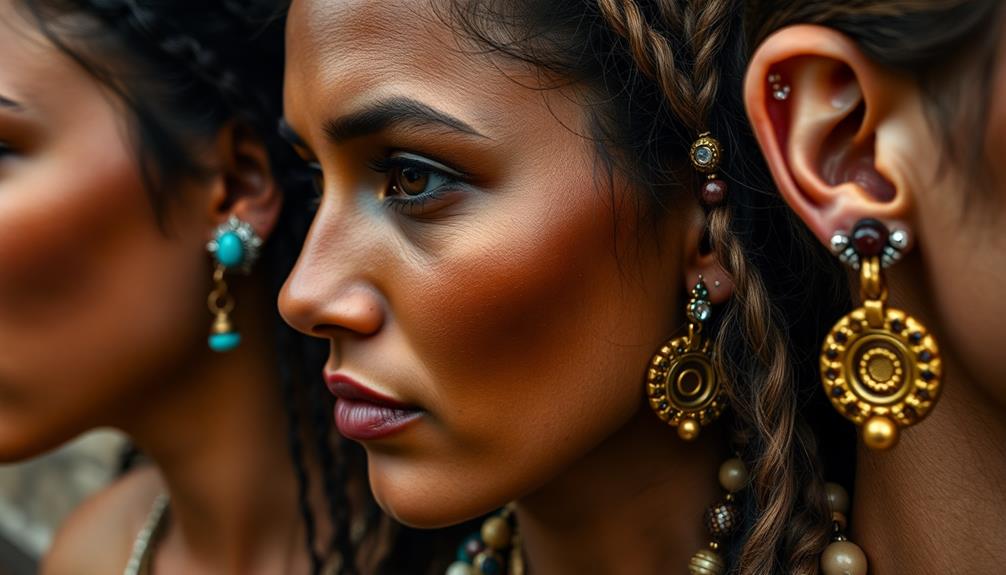
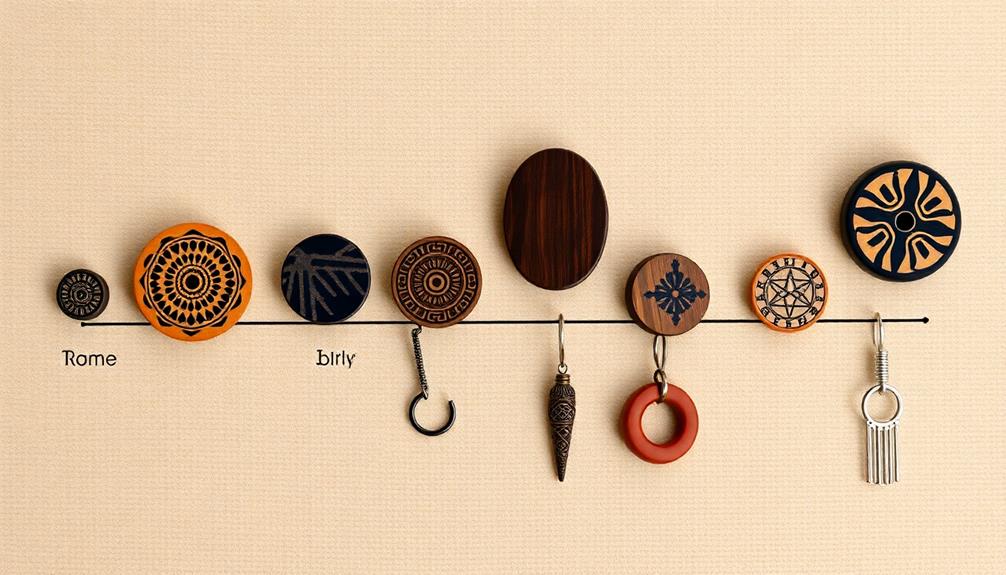
Gold and bone piercings have historically symbolized wealth, spirituality, and social status, revealing fascinating cultural stories worth exploring further.
Throughout history, you’ll see gold and bone piercings symbolize wealth, power, and spiritual ties across many cultures. Gold often represented divine favor, royalty, and social status, especially in ancient Egypt where it was linked to gods. Bone piercings connected wearers to their ancestors, nature, and spiritual beliefs, serving as talismans or symbols of belonging. To discover how these materials shaped cultural identities and spiritual practices, continue exploring their fascinating history.
Gold was historically used in piercings to signify wealth, spiritual power, and social status across various cultures.
Bone in piercings often represented a connection to ancestors, nature, and spiritual protection.
Gold’s luminous and rare qualities elevated it as a divine and prestigious material for adornment.
Carved bone piercings served spiritual, protective, or communal purposes in many indigenous societies.
Both gold and bone materials symbolized identity, spiritual beliefs, and social hierarchy throughout history.
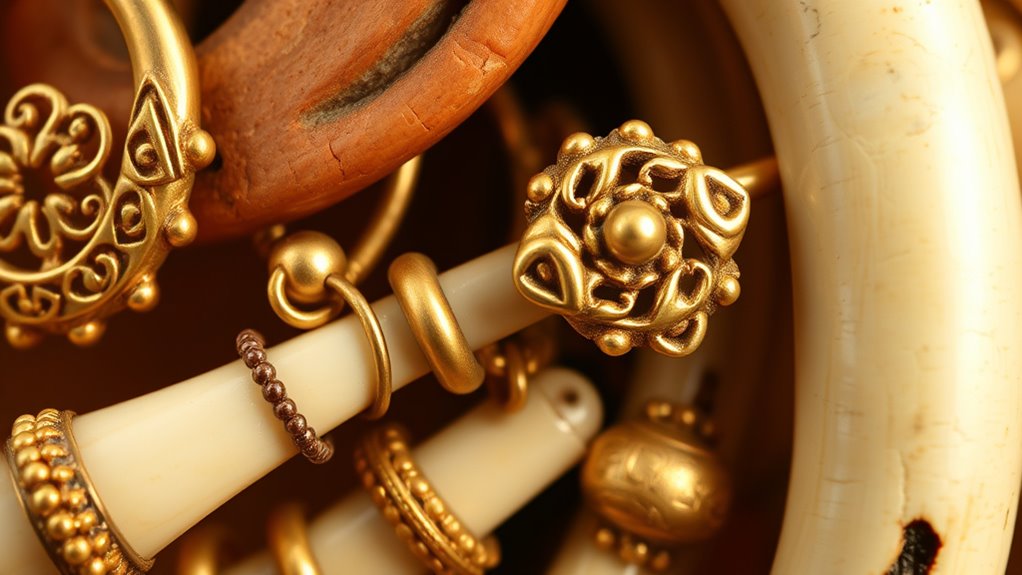
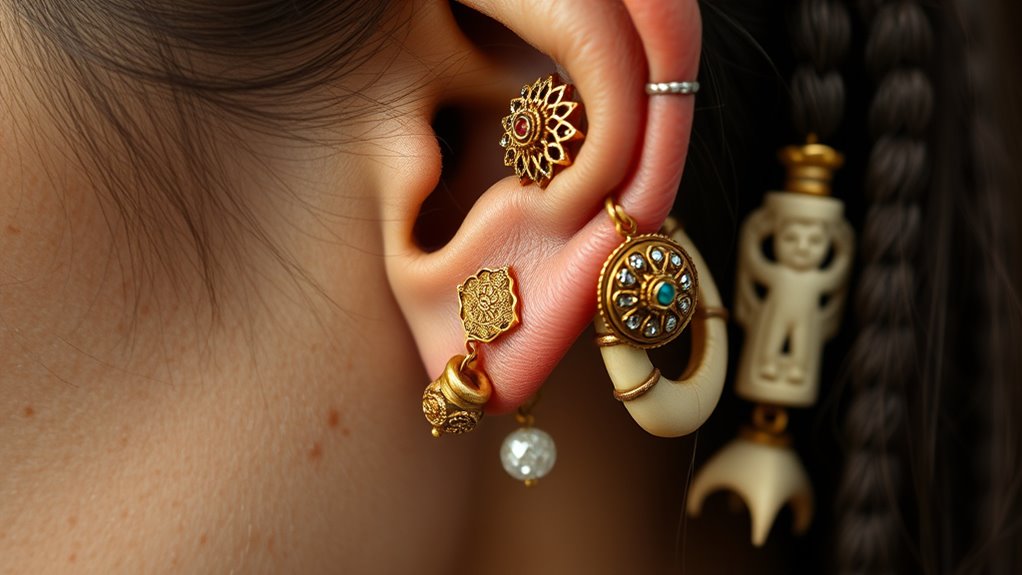
Throughout history, gold and bone have played significant roles in body piercings, serving both decorative and cultural purposes. As you explore the origins of piercing practices, you’ll notice that these materials carry deep cultural symbolism and material significance. Gold, with its luminous appearance and rarity, has long been associated with wealth, power, and divine connection. When used in piercings, it often signified status and spiritual importance, setting individuals apart within their communities. Its timeless allure made it a preferred choice for adornment that conveyed prestige and reverence. Bone, on the other hand, reflects a different aspect of cultural symbolism. It’s a material rooted in the natural world, representing life, death, and ancestral ties. In many cultures, bones were believed to carry spiritual energy or serve as protective talismans, making them a meaningful choice for piercings that linked the living with their ancestors or spiritual beliefs.
You might imagine yourself in ancient societies where gold jewelry, including piercing adornments, marked rites of passage or social hierarchy. Gold’s material significance went beyond mere beauty; it embodied divine favor or royal authority. For example, in Egyptian culture, gold was considered the flesh of the gods, and wearing it in piercings connected the individual to divine power. The cultural symbolism of gold extended across continents, from the adornments of African tribes to the ceremonial jewelry of Indigenous peoples in the Americas. Each society imbued gold with specific meanings, elevating it from a mere material to a symbol of identity, spiritual status, and social rank.
Bone, in contrast, often played a more personal or communal role. Its use in piercings could symbolize belonging to a tribe or community, or serve as a talisman for protection and spiritual guidance. Its material significance lies in its natural origin, making it accessible and meaningful to those who valued their connection to nature and ancestors. You may find that in some cultures, animal bones were carved into intricate pieces or used as piercing adornments to honor specific spirits or to invoke certain qualities like strength or resilience.
In essence, both gold and bone serve as powerful symbols within the history of body piercing. Gold’s cultural symbolism and material significance elevate it as an emblem of divine and worldly power, while bone’s natural origins and spiritual associations link wearers to their ancestors and cultural roots. When you explore their historical uses, it becomes clear that these materials are not just decorative but are deeply woven into the fabric of cultural identity and spiritual expression.
Frequently Asked Questions
How Did Ancient Cultures Source Gold and Bone for Piercings?
You would have sourced gold through ancient mining techniques like panning and digging, often in riverbeds or mines, then refined it with craftsmanship methods such as melting and hammering. For bone, you’d collect it from animals you hunted or domesticated, then shape and polish it using primitive tools. These methods guaranteed you had durable materials for your piercings, reflecting your skill and resourcefulness in utilizing natural resources.
Were There Specific Rituals Associated With Gold or Bone Piercings Historically?
Like a storyteller weaving a sacred tale, you learn that gold and bone piercings held deep ritual significance. These adornments weren’t just jewelry—they symbolized spiritual beliefs, social status, or rites of passage. Ancient cultures often performed elaborate ceremonies to bless the piercings, believing they connected individuals to divine forces. The spiritual symbolism embedded in these piercings reinforced community bonds and personal identity, making them powerful symbols within their cultural rituals.
Did Different Regions Prefer Gold Over Bone for Certain Piercings?
You’ll notice that regional preferences and cultural variations influenced whether gold or bone was preferred for specific piercings. In some regions, gold was favored for its durability and status symbol, especially in ceremonial or high-status piercings. Conversely, in areas with limited access to precious metals, bone was more common due to its availability and cultural significance. These choices reflect each region’s unique traditions and resource availability.
How Have the Techniques for Shaping Gold and Bone Jewelry Evolved?
You notice that shaping gold and bone jewelry has evolved through advanced metalworking techniques and better material preservation methods. As artisans discovered new tools and processes, they created more intricate and durable designs. Coincidentally, these innovations reflect a deeper understanding of each material’s properties, allowing you to craft pieces that honor tradition while embracing modern precision. This evolution guarantees your jewelry remains both beautiful and enduring through time.
Are There Symbolic Meanings Tied to Gold or Bone Piercings Across Cultures?
You’ll find that gold and bone piercings carry rich symbolic meanings across cultures. Gold often signifies wealth, status, and spiritual enlightenment, while bone piercings can symbolize strength, protection, or ancestral ties. These piercings hold cultural significance, representing identity, rites of passage, or spiritual beliefs. By choosing these materials, you connect with deeper traditions and meanings that transcend mere adornment, emphasizing the cultural importance behind your piercing.
Conclusion
Throughout history, gold and bone have played essential roles in piercing traditions, symbolizing status, spirituality, and cultural identity. Imagine visiting a remote tribe where a young warrior receives a gold earring, signifying his coming of age, or seeing ancient bones used in ceremonial piercings. These materials connect us to our ancestors’ beliefs and customs. By understanding their significance, you gain a deeper appreciation for the artistry and meaning behind piercing practices across cultures.
Modern Tribal Piercings: Cultural Appropriation or Appreciation?
The debate surrounding modern tribal piercings raises questions of cultural appropriation versus appreciation, inviting you to explore their true significance and impact.
How did body piercings in Viking culture reflect social status and individuality? Discover the intriguing connections and traditions that shaped these practices.
Learn how ear gauges transformed from ancient rituals to modern expressions of identity, revealing a rich history that still influences today’s body modification trends.
An exploration of how piercing evolved from ancient symbols to a mainstream fashion trend reveals a fascinating cultural transformation worth discovering.