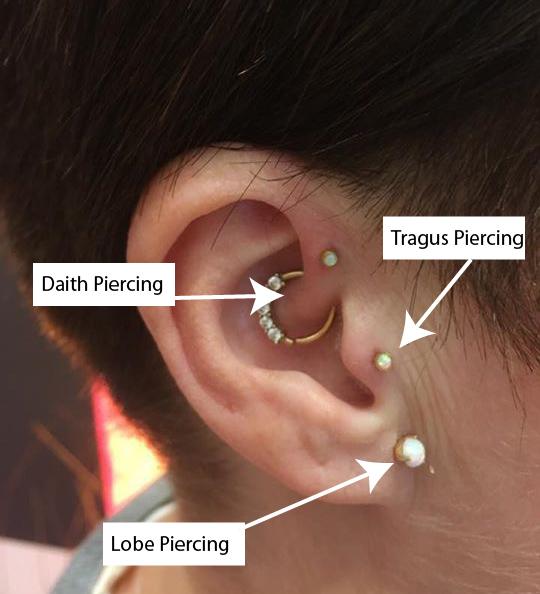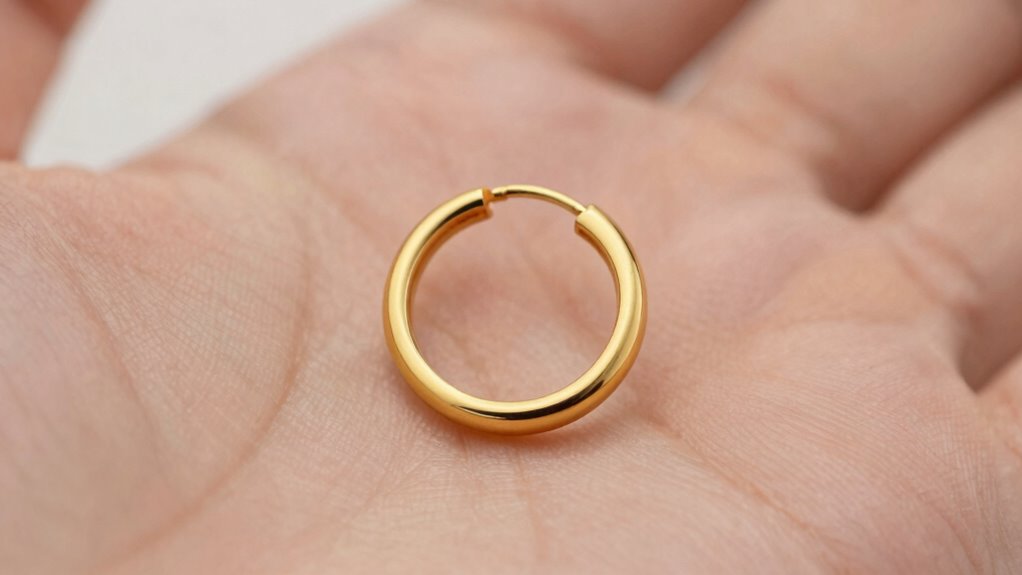

If your hoops feel uncomfortable, sore, or leave marks on your earlobes, they’re likely too tight. They should sit snugly without pinching or restricting movement, and shouldn’t slide around easily. If they move excessively or feel unstable, they’re probably too loose. Check for redness, swelling, or irritation, and adjust accordingly. Knowing how to find the right fit guarantees comfort and safety—stick around to discover how to perfect your hoop size and fit.

Get beauty and skincare favorites delivered free with Prime
- Fast, free delivery on millions of items
- Prime Video, Amazon Music and more included
- Member-only deals all year
Key Takeaways
- A too tight hoop leaves marks, causes soreness, redness, or swelling after a few hours of wear.
- A too loose hoop slides excessively, feels unstable, or shifts with movement, risking falling out.
- Comfortably fitting hoops allow slight movement without pulling or causing discomfort.
- Check for signs of discomfort such as redness, swelling, or tenderness during or after wear.
- Measure the hoop’s diameter and ensure it has enough space for movement without being overly loose.

Wearing a hoop that’s either too tight or too loose can cause discomfort and affect your overall look. Finding the right fit isn’t just about style; it’s about comfort and safety, too. When choosing your hoop, pay attention to the hoop material because it influences flexibility and how it feels against your skin. For example, metal hoops like gold or stainless steel can be sturdy but might feel heavier or less forgiving if they’re too tight. Meanwhile, softer materials like silicone or rubber offer more stretch and give, which might be better if you’re sensitive or prone to swelling.
Choose hoop materials that balance flexibility and comfort for a secure, comfortable fit.
Next, consider the hoop size. A hoop that’s too small can pinch your skin or put pressure on your earlobe, leading to pain or even tearing if you force it in. Conversely, a hoop that’s too large can slide around excessively, causing discomfort and increasing the risk of it falling out or getting caught on clothing or hair. To gauge the right size, measure the diameter of your earlobe or piercing comfortably and add a little extra space for movement. This way, the hoop isn’t snug enough to cause pain but isn’t so loose that it swings freely and feels unstable. Being aware of jewelry material can help you select options that are more compatible with your skin type and comfort preferences.
When you wear your hoop, pay attention to how it feels throughout the day. A tight hoop might leave behind marks or cause soreness after a few hours. If you notice redness, swelling, or persistent discomfort, it’s a sign that the hoop is too tight. On the other hand, if the hoop feels loose and shifts around easily, it’s likely too big, and you might need a smaller size for a better fit. You should be able to move the hoop slightly without it pulling or causing pain, and it shouldn’t feel like it’s going to fall out at any moment. Additionally, choosing hypoallergenic materials can greatly reduce the risk of irritation for sensitive skin.
If you’re unsure about the right size, try different hoops and see how they feel during regular activities. Remember, the material affects how much give you get; softer materials may allow for a slightly snug fit because they stretch a little more. But no matter the material, the key is comfort. A well-fitting hoop stays in place without pinching or sliding, ensuring you look good and feel comfortable all day long. Regularly check your hoop’s fit, especially after swelling or changes in your skin, to make sure you’re always wearing the right size and material for your needs. Understanding the biodiversity of materials used in jewelry can help you choose options that are more suitable for sensitive skin or specific needs.
As an affiliate, we earn on qualifying purchases.
Frequently Asked Questions
Can Adjusting the Hoop Size Improve Comfort During Activity?
Yes, adjusting the hoop size can improve comfort during activity. By making the hoop slightly larger or smaller through hoop adjustment, you can better fit your body, reducing discomfort and preventing strain. Properly fitted hoops promote comfort enhancement, allowing you to move freely without feeling tight or loose. Experiment with size tweaks until you find the perfect fit, ensuring your activity remains enjoyable and comfortable.
How Often Should I Check My Hoop’s Fit?
Checking your hoop’s fit measurement is like tuning a guitar—regular adjustments keep it just right. You should check your hoop sizing every few weeks or after significant weight changes or workouts. This guarantees the fit remains comfortable and effective. Remember, a well-fitted hoop moves smoothly with you, not against you. Staying proactive helps prevent discomfort and maintains the benefits of hooping.
Are There Health Risks With a Hoop That’s Too Tight?
A hoop that’s too tight can pose health hazards like restricted blood flow and skin irritation, which may cause discomfort or more serious issues over time. You might notice redness, soreness, or bruising. If you experience these symptoms, loosen the hoop immediately. Always guarantee your hoop fits comfortably, allowing movement without pinching or excessive tightness, to prevent health risks and maintain safe, enjoyable hooping sessions.
What Materials Affect Hoop Tightness and Fit?
Materials like flexible silicone and stretchable elastic affect hoop tightness and fit. Their elasticity allows you to customize the fit more easily, ensuring comfort and safety. Rigid metals like steel or aluminum provide less flexibility, making it harder to adjust the snugness. Choose materials that match your comfort level and skill, and opt for hoops with adjustable features to achieve the perfect fit. This way, you stay safe and comfortable during your workouts.
Can a Loose Hoop Damage My Skin or Clothing?
A loose hoop might seem harmless, but it can cause skin irritation from constant rubbing or chafing. You might also notice clothing damage, like tears or stretching, especially if the hoop swings freely. While it won’t crush your skin, a loose hoop can create friction, leading to discomfort and clothing wear. So, don’t dismiss a loose hoop—it’s more than just a fashion slip-up; it can cause real irritation.
Conclusion
Remember, finding the right hoop fit is like tuning a guitar—too tight, and it’ll break; too loose, and it won’t sing. Pay close attention to how it feels around your waist or hips. If it’s uncomfortable, digging in, or slipping too easily, it’s time to adjust. When your hoop fits snugly without pinching or slipping, you’ve struck the perfect balance. Trust your comfort, and your hoop will serve you well, just like a trusty musical instrument.
Halloween Picks
halloween
As an affiliate, we earn on qualifying purchases.