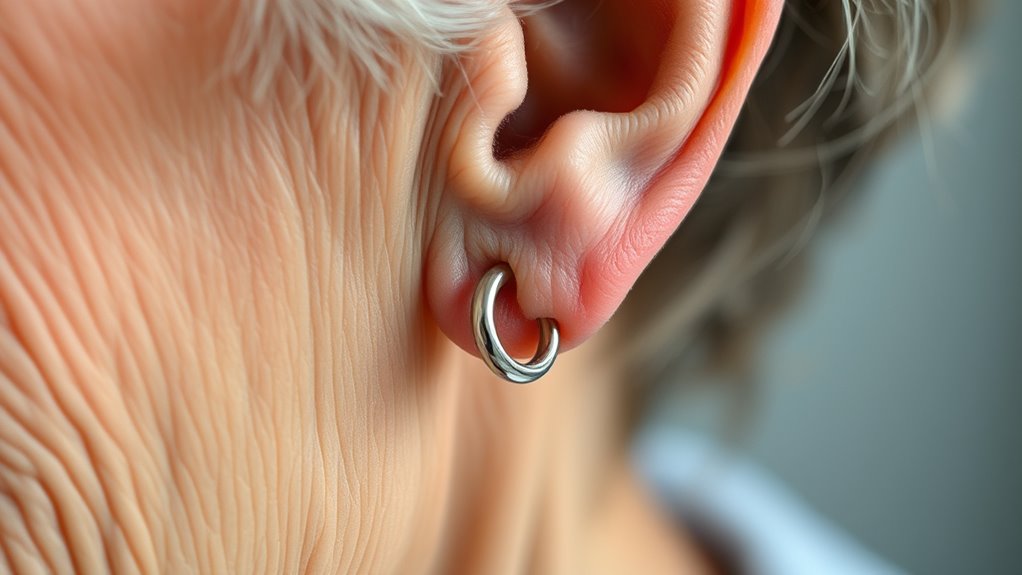
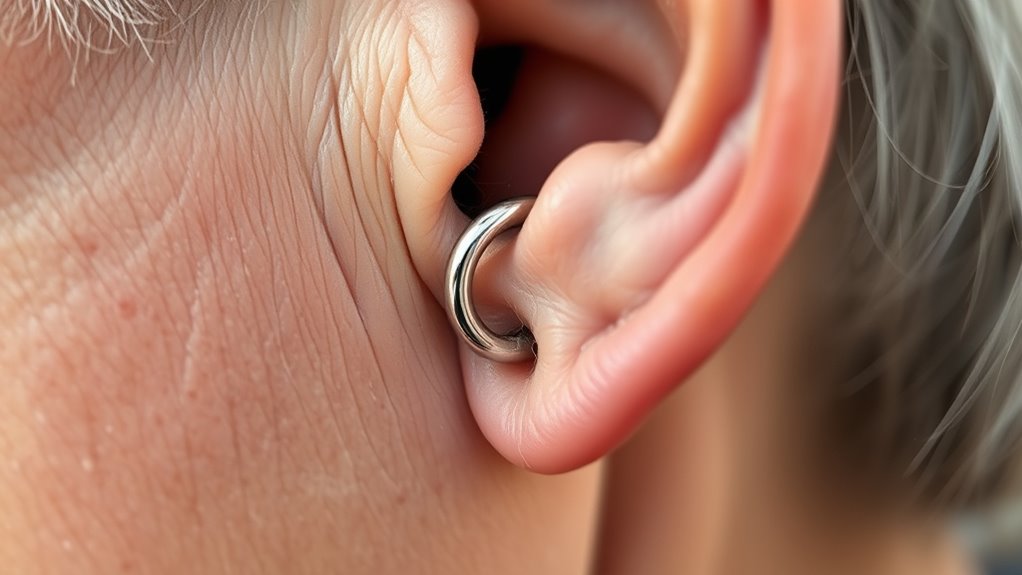
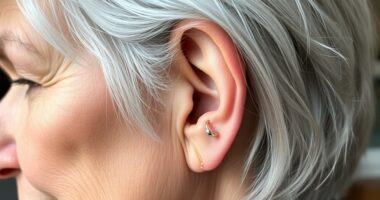
As your skin ages, it loses collagen, which weakens tissue support and reduces elasticity. This makes piercings more prone to loosening, shifting, or elongating over time. Thinner, less resilient skin can also increase the risk of tearing or injury and slow down healing. As skin support weakens, the longevity of your piercings may decrease, requiring more adjustments or replacements. To learn how to improve your piercing’s durability, keep exploring this topic further.
Collagen loss weakens skin support, increasing piercing looseness and migration over time.
Thinning, less elastic skin reduces the durability and security of piercings.
Slower healing in aging skin heightens risk of infection and complications around piercings.
Increased fragility makes skin more prone to tearing or injury around jewelry.
Aging-related changes necessitate more frequent maintenance and careful jewelry selection for longevity.
As you age, your skin naturally loses its elasticity and firmness, which can lead to concerns about the longevity of piercings. This process is primarily driven by collagen breakdown, a natural part of aging that reduces the skin’s ability to bounce back and stay tight around jewelry. When collagen diminishes, your skin becomes thinner and less resilient, making piercings more susceptible to stretching, sagging, or even migration over time. You might notice that your youthful piercing remains vibrant for years, but as skin elasticity declines, its ability to hold jewelry securely diminishes, leading to changes in appearance and comfort.
With decreased collagen production, your skin’s structural support weakens, causing the tissue around the piercing to become less dense. This means that even if your piercing was once tight and well-defined, aging skin might cause the jewelry to appear looser or shift position. The loss of skin elasticity also affects how quickly wounds heal and how well your skin maintains its shape, which can influence the overall durability of your piercing. You’re more likely to experience stretching or elongation, especially if the jewelry exerts continuous pressure. This is common in areas like the earlobe or cartilage, where aging can considerably alter the original fit.
Aging skin weakens support, causing piercings to loosen, stretch, or shift over time.
The impact of collagen breakdown isn’t limited to aesthetic concerns. As skin elasticity declines, your body’s ability to support and stabilize the piercing diminishes. You might find yourself needing more frequent adjustments or replacements of jewelry, or even considering removal if the piercing no longer feels secure. The natural thinning of skin can also make piercings more vulnerable to tearing or injury, especially if you’re active or exposed to external trauma. While aging does bring about these changes, understanding them allows you to take better care of your piercings, such as choosing suitable jewelry materials and monitoring skin health.
In essence, the decline in skin elasticity due to collagen breakdown is a key factor in how aging affects piercing longevity. It influences not just how your piercings look but also how they function and how secure they remain over time. Recognizing these changes helps you make informed decisions about jewelry type, placement, and aftercare, ensuring your piercings continue to enhance your style despite the natural aging process. Although you can’t stop aging, you can adapt your approach to maintain the beauty and integrity of your piercings for as long as possible.
Frequently Asked Questions
How Does Collagen Loss Impact Healing of Piercings in Aged Skin?
Collagen degradation in aged skin slows down your healing process after a piercing. With less collagen, your skin becomes less elastic and weaker, making it harder for wounds to close and recover properly. This means you might experience longer healing times and increased risk of complications. To support healing, you should follow proper aftercare, avoid trauma, and consider consulting a professional about suitable healing strategies for aging skin.
Do Age-Related Skin Conditions Affect Piercing Placement Options?
Yes, age-related skin conditions like wrinkle formation and skin sagging can affect your piercing placement options. These changes may cause skin to become thinner or less elastic, making certain areas more prone to tearing or uneven healing. You might need to choose spots with firmer, more stable skin, and consult a professional to ensure your piercing stays healthy and looks great as your skin ages.
Can Skincare Routines Improve Piercing Longevity for Older Adults?
A stitch in time saves nine, and the same goes for skincare routines enhancing piercing longevity. By consistently using moisturizers, sunscreens, and gentle cleansers, you help maintain your skin’s health and elasticity. This keeps piercings looking fresh longer and reduces irritation. While aging skin may challenge healing, a dedicated skincare routine supports faster recovery and prolongs your piercing’s appearance, making it a smart investment in your overall look.
Are There Specific Piercings More Suitable for Aging Skin?
If you’re considering piercings on wrinkle-prone areas or thin skin, choose locations with thicker, more resilient tissue, like earlobes or cartilage. These areas tend to hold piercings longer and heal better as you age. Avoid delicate spots like eyelids or around the mouth, which are more prone to movement, wrinkles, and skin thinning. Always consult with a professional piercer to find the most suitable and safe options for aging skin.
How Does Decreased Skin Elasticity Influence Piercing Aftercare?
Decreased skin elasticity challenges your piercing’s healing process, making it more prone to movement and irritation. You should be extra cautious during aftercare, gently cleaning and avoiding unnecessary manipulation. Reduced elasticity can also lead to healing complications like prolonged swelling or scarring. To protect your piercing, follow your piercer’s advice, stay consistent with cleaning routines, and avoid excessive pulling or twisting, ensuring your piercing heals smoothly despite elasticity challenges.
Conclusion
Don’t worry if your piercing doesn’t last as long as it once did. Aging skin naturally loses elasticity and collagen, which can affect how long your piercing stays intact. But with proper care, like moisturizing and protecting your skin from sun damage, you can still enjoy your piercings for years to come. Remember, it’s normal for your skin to change over time—embrace those changes and maintain your piercings with love and attention.
Family Piercing Traditions: Passing Down Body Modification Culture
Harness the power of family piercing traditions to deepen your cultural connections—discover how these rituals shape identities and foster lasting bonds.
Piercings for Kids: Age Restrictions and Parental Considerations
You’ll discover essential age restrictions and parental considerations for kids’ piercings that will help you make informed decisions together. What should you know first?