
TL;DR

Get beauty and skincare favorites delivered free with Prime
- Fast, free delivery on millions of items
- Prime Video, Amazon Music and more included
- Member-only deals all year
A Cosmetics Business report frames airport travel retail as a potential new sales channel for luxury beauty brands facing pressure on premium prices. The supplied extract does not include sales figures, brand examples or evidence quantifying the airport opportunity.
Cosmetics Business has reported that travel retail, including airport shopping, is emerging as a potential sales channel for luxury beauty brands facing pressure to justify higher prices. The report’s available extract describes a shift in shopping habits at airports, but does not provide figures or examples showing the scale of the opportunity.
The report places the airport opportunity against a crowded beauty market in 2026, where consumers have more products and brands to choose from. It says premium brands are struggling to defend higher price points as lower-priced products and dupes draw attention. That is the report’s characterization; the supplied extract includes no sales data on how those pressures are affecting particular companies.
Skin care is offered as an example of the challenge. Citing McKinsey’s State of Beauty Industry Trends 2026 report, Cosmetics Business says consumers are increasingly turning to lower-priced brands, including dermatologist-backed and Korean beauty (K-beauty) players, for products they see as effective and clinically credible. The extract does not reproduce McKinsey’s underlying data or explain how the findings vary by market.
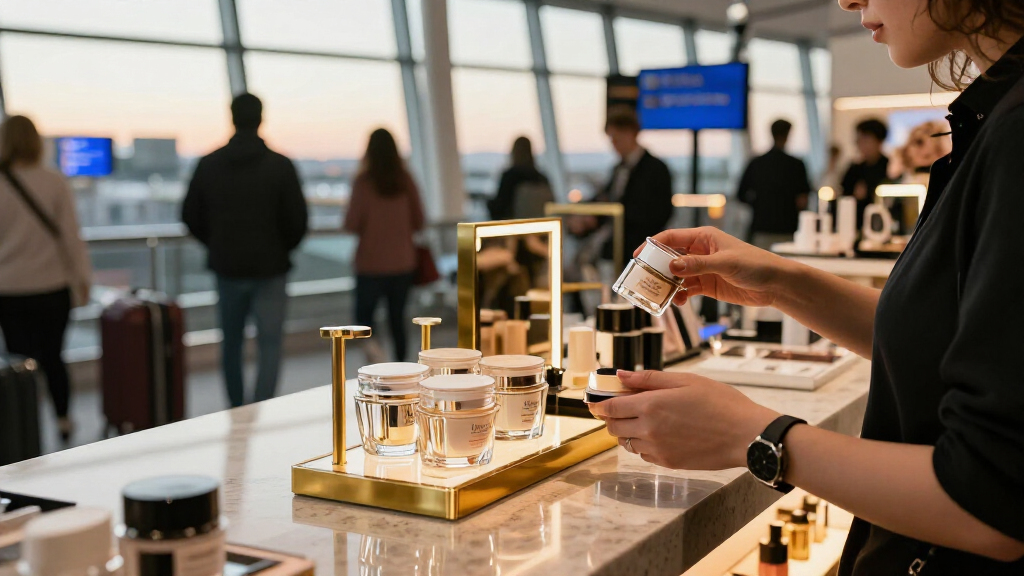
Cosmetics Business presents travel retail as a possible counterpoint: airport shopping may prompt consumer behavior different from shopping online or in conventional stores. The supplied material is only a short extract from a subscriber-only article, however, and does not identify the brands, airports, product categories or retail strategies involved. The claim that luxury beauty is “taking off” in the channel cannot be quantified from the information provided.
If travel retail is generating new demand, it could give luxury beauty companies a way to reach shoppers in a setting distinct from the online and store environments where lower-priced competitors are challenging premium pricing. That possibility matters to brands seeking to maintain their price positioning and to airport retailers deciding how to allocate space to beauty.
The available report extract does not establish that airport sales are offsetting broader pressure on premium beauty. Without information on revenue, growth rates, shopper behavior or margins, the airport opportunity is best understood as a reported trend to investigate, rather than proof of a market-wide turnaround.
Products Worth Considering

Oral-B iO Series 5 Rechargeable Electric Toothbrush with 3 Brush Heads and Travel Case, Black

Garmin Venu® 3 Premium Fitness Smartwatch 45mm Black

Oura Ring 4 Smart Ring – Silver – Size 8
As an affiliate, we earn on qualifying purchases.
Price Pressure Shapes the Beauty Market
The report describes a 2026 market with a wider range of products, brands and purported innovations competing for consumers’ attention. In that environment, the traditional idea that premium skin care necessarily delivers better performance is under pressure. Cosmetics Business attributes this observation to McKinsey’s 2026 industry report and says shoppers are responding to lower-priced options with visible results and clinical credibility.
The travel-retail story is therefore framed around a contrast: pressure on luxury beauty in everyday shopping, alongside a possible change in behavior at airports. The source extract does not provide a timeline for that shift or compare airport purchases with other channels. It also does not establish whether the trend is specific to beauty or part of a wider change in travel shopping.
“The beauty industry has become a battleground in 2026.”
— Cosmetics Business, describing the 2026 beauty market
Evidence Behind Airport Beauty Growth
The supplied material is a short extract from a subscriber-only article, so it does not show the reporting or data behind the travel-retail trend. Sales figures, growth rates, airport locations and brand examples are absent. It is also unclear which shoppers are driving the reported shift, what they are buying, and whether purchases represent new demand or spending moved from other channels.
The extract names McKinsey’s industry report but does not provide its methodology, sample size or detailed findings. It does not establish whether lower-priced competitors are reducing luxury beauty sales, nor whether airport retail can materially counter that pressure. Those questions require evidence beyond the material provided.
More Data Needed to Measure the Trend
The full Cosmetics Business report may contain the brand examples and channel evidence needed to assess the trend, but those details are not available in the supplied extract. A clearer picture would require comparable travel-retail sales data, information on airport beauty shoppers and statements from brands or retailers about performance and expansion plans.
Until that information is available, the confirmed development is the publication of a report positioning airports as a potential opportunity for luxury beauty—not a documented measure of how much the channel is growing or how much it is changing brand performance.
Key Questions
What is the reported development?
Cosmetics Business reports that travel retail is becoming a potential sales channel for luxury beauty brands. The supplied extract does not quantify that development.
Why are premium beauty brands under pressure?
The report points to a crowded market, dupes and consumer interest in lower-priced products. It says consumers are drawn to some less expensive skin-care brands for visible results and clinical credibility.
Does the extract show that airport beauty sales are growing?
No. It describes a shift in airport shopping behavior but provides no sales totals, growth rates or comparison period.
Which luxury beauty brands are benefiting?
The supplied extract names no brands, airports or retailers. It is not possible to identify beneficiaries from the information provided.
What information would confirm the scale of the opportunity?
Comparable travel-retail sales data, brand and retailer results, and detail on shopper behavior would help show whether airport purchases are growing and how they compare with other channels.
Source: cosmeticsbusiness.com