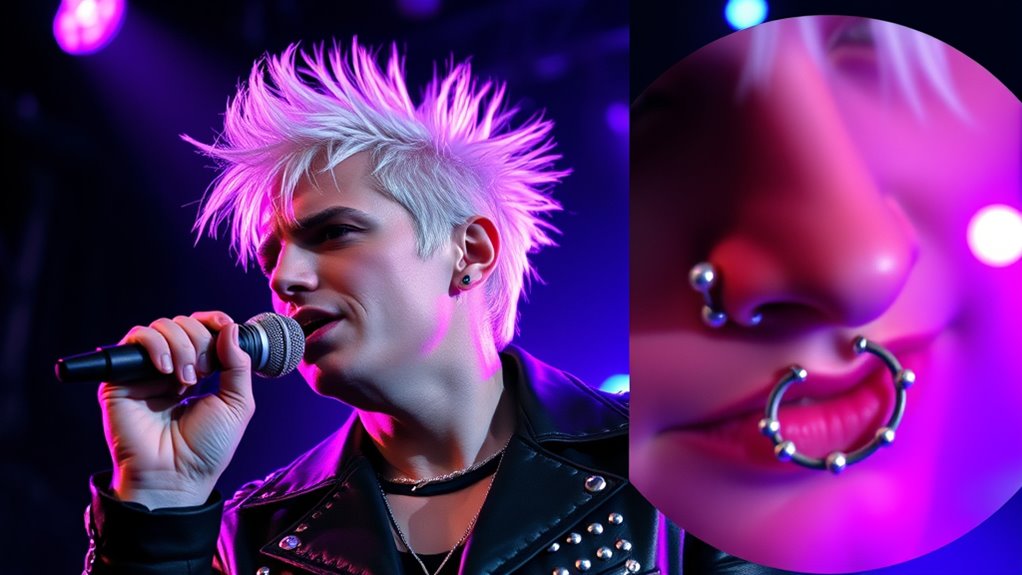
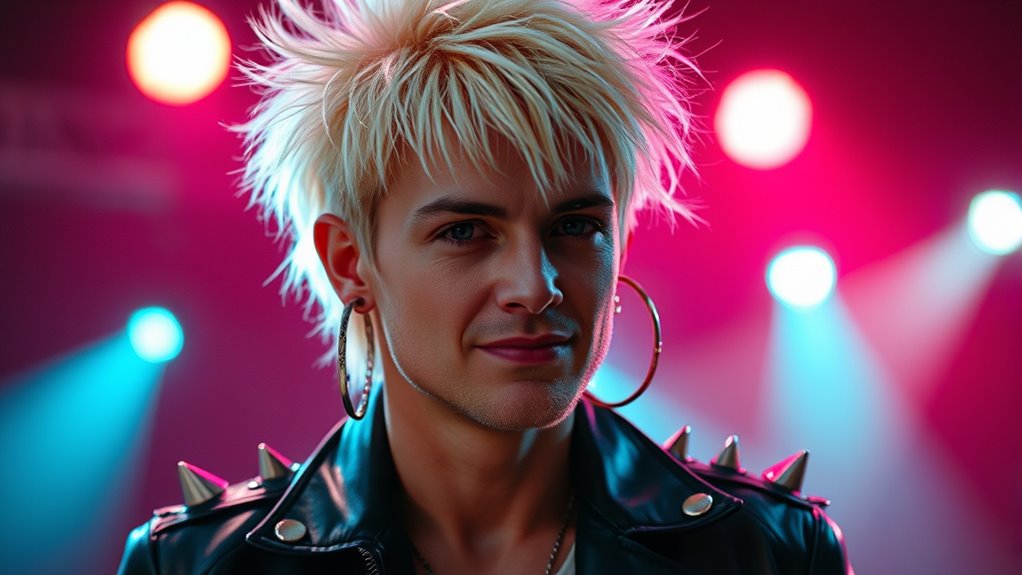
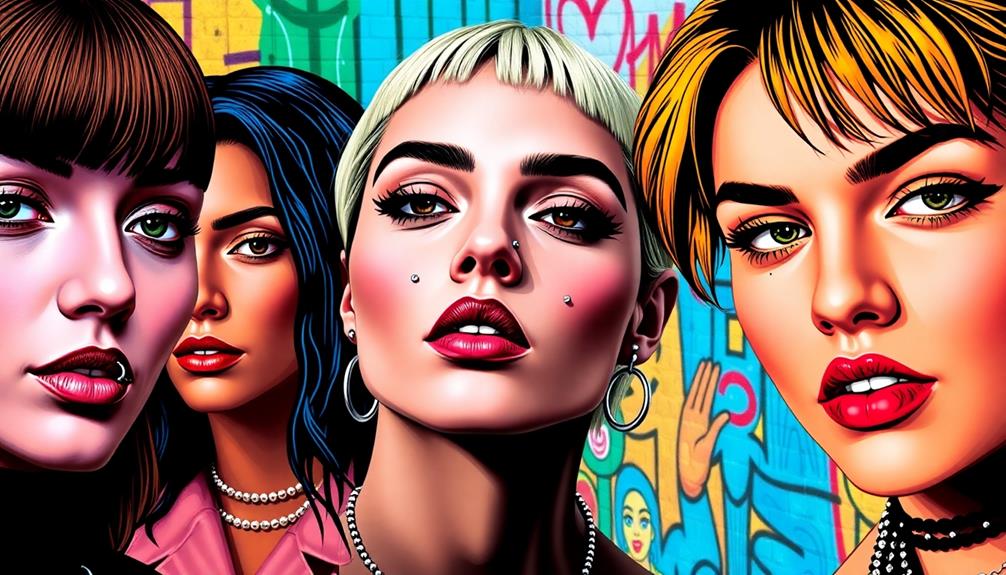
In the 1990s, music icons like Madonna and Kurt Cobain made piercings a major fashion trend by showcasing their body jewelry on stage and in photos. They challenged traditional beauty standards and showed that piercings could be both rebellious and glamorous. Their influence helped break down social stigma and made facial and body piercings widely accepted. Keep exploring how these icons shaped fashion and self-expression through their bold looks.
1990s music icons showcased facial and body piercings, making them fashionable and mainstream.
Their bold looks challenged beauty standards, encouraging fans to adopt piercings as self-expression.
Celebrities’ influence helped piercings transition from counterculture to popular fashion statements.
Iconic artists integrated piercings into their signature styles, inspiring trends across subcultures.
Media coverage of their daring styles amplified acceptance of piercings in everyday fashion.
In the 1990s, music icons didn’t just influence the sound of a generation—they also popularized a bold new style: facial and body piercings. Their cultural influence went beyond lyrics and stage presence; it extended into everyday fashion, inspiring countless fans to adopt piercings as a form of self-expression. When artists like Madonna, Axl Rose, and Lil’ Kim debuted their unique looks, they demonstrated that piercings could serve as powerful fashion statements. These icons challenged traditional beauty standards and opened up new possibilities for personal style, making piercings more accessible and accepted in mainstream culture.
1990s music icons made facial and body piercings a bold, mainstream fashion statement.
As these musicians embraced unconventional jewelry, they sent a clear message: body modifications could be both edgy and glamorous. Their bold choices encouraged fans to see piercings not just as rebellious acts, but as deliberate, stylish accessories. For example, when Madonna flaunted a pierced nose or Axl Rose sported multiple earrings, they showed how piercings could complement clothing and enhance an image of individuality. This shift in perception turned body art into a form of artistic expression, blending fashion and attitude in a way that resonated deeply with youth culture. The visual impact of their looks made piercings a symbol of nonconformity and confidence.
Moreover, these music icons influenced trends that extended into various subcultures, from punk to grunge to hip-hop. Their willingness to embrace piercings publicly helped break down stigmas, making it easier for fans to follow suit. The media spotlight on their daring styles amplified their cultural influence, inspiring a wave of people to experiment with facial and body jewelry. As a result, piercings transitioned from niche or taboo practices to mainstream fashion statements. This cultural shift underscored how celebrities can shape not just musical tastes but also societal norms around self-adornment.
In addition, the 1990s saw a rise in the popularity of alternative fashion that incorporated body piercings as central elements, further reinforcing their role as symbols of individualism and rebellion.
In essence, the 1990s saw music icons transform piercings from a countercultural act into a symbol of individuality and style. Their fearless adoption of facial and body jewelry set trends that many would emulate, cementing their role as fashion trailblazers. By doing so, they helped redefine what it means to express oneself through appearance, proving that piercings could be more than just accessories—they could be a statement of identity, rebellion, and artistic flair. This legacy continues to influence fashion today, proving just how powerful cultural influence can be when combined with a bold sense of style.
Frequently Asked Questions
Which Specific Music Icons Were Most Influential in Popularizing Piercings?
You see, rock stars like Axl Rose and Jon Bon Jovi, along with pop icons such as Madonna, were key in making piercings trendy. They flaunted tongue, eyebrow, and nose piercings, inspiring millions of fans to imitate their style. Their bold looks challenged norms and showed that piercings could be a form of self-expression, helping to popularize this edgy fashion statement across the 1990s.
How Did the Media Influence Piercing Trends Among Youth in the 1990S?
You see, media representation in the 1990s shaped cultural perceptions by showcasing pierced celebrities and models, making piercings seem cool and rebellious. When magazines, TV shows, and music videos highlighted these trends, you likely felt inspired to follow suit. The media’s portrayal normalized piercings, turning them into a fashion statement among youth, influencing how you and your peers viewed self-expression and individuality during that era.
Were There Regional Differences in Piercing Popularity During the 1990S?
You’ll notice that piercing popularity varied across regions in the 1990s, with urban areas like Los Angeles and New York showing higher rates. About 40% of youth in these regions embraced piercings, influenced by regional customs and cultural influences. In contrast, more conservative areas remained hesitant. These differences reflect how local traditions and cultural norms shaped piercing trends, making them a unique expression of regional identity during that decade.
What Types of Piercings Gained Popularity Among Different Music Genres?
You’ll notice that in the 1990s, different music genres embraced specific piercings as cultural symbolism and fashion statements. For example, punk rockers popularized eyebrow and lip rings, showcasing rebellion, while grunge artists often sported simple ear piercings. Hip-hop icons embraced nose rings and cartilage piercings, representing individuality. These styles helped define each genre’s identity and influenced fans to adopt similar looks, blending personal expression with musical culture.
How Did Piercing Styles Evolve Throughout the 1990S?
You see piercing styles in the 1990s evolve through experimentation, personalization, and alternative fashion influences. Piercing customization becomes more popular as people mix and match jewelry, creating unique looks. Multiple piercings, unconventional placements, and bold accessories define the era’s trends. You embrace the edgy, rebellious spirit, making your piercing choices stand out and reflect your individuality. This evolution showcases a shift toward self-expression and embracing diverse, artistic aesthetics in alternative fashion.
Conclusion
Just like Madonna and Kurt Cobain before you, you can use music icons as your inspiration to embrace piercings. They showed that self-expression is powerful and rebellious, shaping trends that still influence today. Remember, the 90s weren’t just about grunge or pop—they were about standing out and making your mark. So, channel that same fearless spirit, and let your style tell your story, echoing the boldness of those legendary icons.
Just like intricate jewelry, nose rings in Indian bridal culture reveal deep symbolism, regional diversity, and personal stories waiting to be explored.
Lifting body art from taboo to art form, 1970s pioneers revolutionized tattoos and piercings, inspiring a lasting legacy you’ll want to explore further.
Piercings in African Tribal Cultures: Meanings and Practices
Meaningful piercings in African tribal cultures reveal deep connections to identity and spirituality, but how are these traditions evolving in today’s world? Discover more.