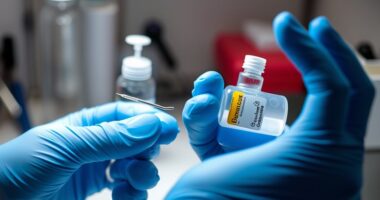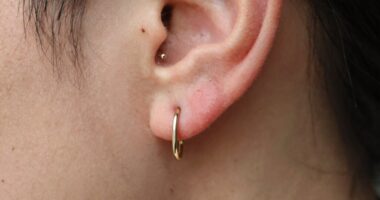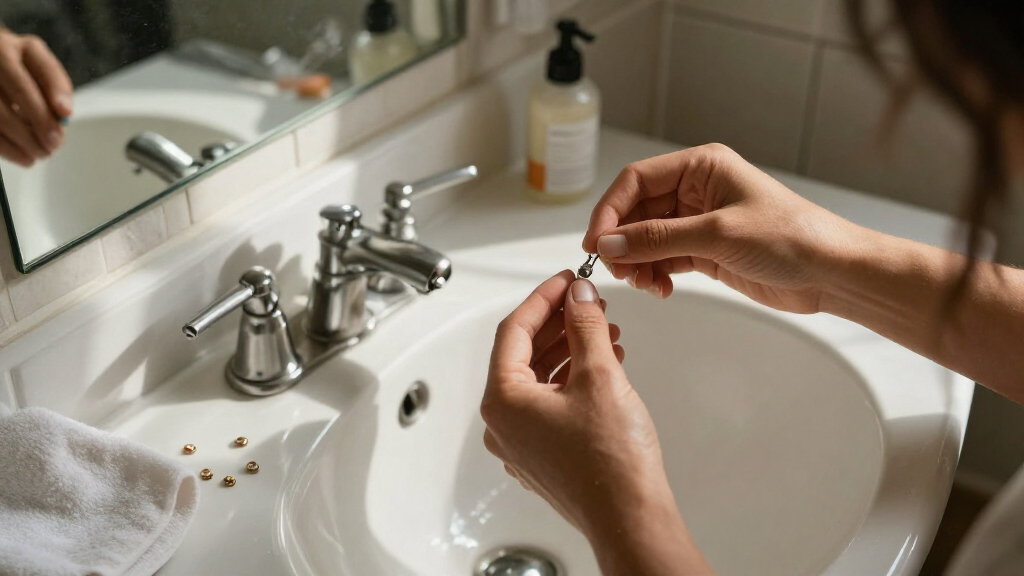

This guide helps you select body jewelry made from materials less likely to irritate sensitive skin, check that it fits your piercing, and care for it safely. It is for beginners shopping for a new piece or replacing jewelry that has caused discomfort. Allow 20-40 minutes to check material claims and sizing; cleaning and inspection take a few minutes. No jewelry can be guaranteed allergy-proof, and a reaction may need medical attention.

Get beauty and skincare favorites delivered free with Prime
- Fast, free delivery on millions of items
- Prime Video, Amazon Music and more included
- Member-only deals all year

OUFER 2PCS F136 Titanium D-Shaped Nipple Rings
- ✔ Material: G23 titanium stated in description; title references F136
- ✔ Gauge: 14 gauge (1.6 mm)
- ✔ Diameter: 14 mm

Clear Piercing Retainers Body Jewelry Set for Nose, Belly Button, Septum, Eyebrow, Lip, Cartilage, Tragus – 6pcs 14G Clear Acryli…
- ✔ Material: Bioflex acrylic, described as nickel- and lead-free
- ✔ Gauge: 14G (1.6 mm)
- ✔ Length: 10 mm

Skylarking 110-Piece Body Jewelry Piercing Kit (22 Styles)
- ✔ Piece count: 110
- ✔ Style count: 22
- ✔ Materials: 16L surgical stainless steel and acrylic
Difficulty: Beginner | Time: 20-40 minutes to research and select; ongoing care takes a few minutes per wear
What You’ll Need
Tools & Materials:
- Your piercing’s measured gauge, length, and diameter, if known
- A clean ruler or the measurements from your piercer
- Product listing or manufacturer information showing the exact material and finish
- Mild, fragrance-free soap and clean water for routine jewelry cleaning
Knowledge:
- Basic familiarity with your piercing location and how the jewelry sits
- Understanding that a metal allergy and irritation from pressure, friction, or poor care can feel similar
Prioritize jewelry made for body piercings, with a polished, smooth surface and clearly identified material. Ask a reputable piercer to confirm material and sizing if you are unsure. Do not change jewelry in a fresh, healing, painful, swollen, or infected-looking piercing without advice from a qualified piercer or clinician.
OUFER 2PCS F136 Titanium D-Shaped Nipple Rings
For shoppers who want the most straightforward material choice in this comparison, the OUFER D-shaped rings stand out. The listing identifies the jewelry as G23 titanium and describes it as lightweight and hypoallergenic, giving buyers a more specific starting point than the mixed-material Skylarking kit. The pair is also a focused purchase rather than a broad assortment: you get two matching rings, not a range of pieces for different locations.The seamless D-shaped form is the main practical distinction. It is designed to slide on and off without a conventional visible opening, and the shape is intended to stay securely in place. That could appeal to someone who prefers a simple ring profile and wants fewer small closure components to manage. Its stated 14-gauge thickness and 14 mm diameter are useful sizing details, but they are not universal dimensions; the ring should match the wearer’s anatomy and piercing requirements.Compared with the clear acrylic retainers, OUFER is the better choice when a named metal material matters more than transparency or cross-piercing flexibility. Compared with Skylarking, it is far more specific about the material and size, but offers only two pieces and a narrower design. One caution: the listing calls the material G23 titanium while the product title also says F136. Since those labels are not identical specifications, buyers who need a particular titanium grade should verify the exact material with the seller before purchase. Material claims and correct fit matter more than the “hypoallergenic” label alone.
Pros:
- Identifies G23 titanium and describes the rings as lightweight and hypoallergenic.
- Seamless D-shaped design is intended for straightforward insertion and secure positioning.
- Provides a specific 14G gauge and 14 mm diameter for fit checking.
- Two matching rings can serve a pair of piercings or provide a spare.
Cons:
- Only two rings are included, so it is not a multi-style or multi-piercing assortment.
- The title’s F136 wording and the description’s G23 wording should be verified by buyers requiring a specific titanium grade.
- The listed 14 mm diameter and 14G gauge may not fit every piercing.
Best for: Buyers seeking a pair of lightweight titanium rings with a stated 14G size and 14 mm diameter, provided those dimensions suit their piercing.
Not ideal for: Shoppers who need several jewelry styles, a clear retainer, a different gauge or diameter, or confirmation of a specific titanium grade before buying.
Bottom line: We rank OUFER first for its specifically identified titanium and useful sizing details, while recommending that buyers verify the grade terminology and confirm fit before ordering.
“We rank OUFER first for its specifically identified titanium and useful sizing details, while recommending that buyers verify the grade terminology and confirm fit before ordering.”
Clear Piercing Retainers Body Jewelry Set for Nose, Belly Button, Septum, Eyebrow, Lip, Cartilage, Tragus – 6pcs 14G Clear Acryli…
When visibility is the priority, the six clear retainers fill a role neither of the other picks matches. Their transparent look is intended to be less noticeable, and the set is described for use across nose, navel, septum, eyebrow, lip, and cartilage piercings. That makes it more adaptable by placement than OUFER’s two matching D-shaped rings, although the listed size is fixed at 14G and 10 mm.The product is described as bioflex acrylic that is nickel- and lead-free, with click closures intended to make opening and closing convenient without tools. Those details may appeal to buyers seeking a clear alternative to visible metal jewelry. Still, the material description is not a substitute for confirming whether this specific jewelry is appropriate for your sensitivity, piercing location, or healing stage. Acrylic is a different material category from titanium, and buyers with a history of reactions should not assume that every product described as hypoallergenic will work for them.Compared with OUFER, this set offers more pieces and a discreet appearance but provides less explicit metal-grade information because it is not a titanium option. Compared with Skylarking, it is more focused: the pieces are all described as clear retainers and the stated dimensions are consistent. The tradeoff is limited choice. There is only one listed gauge and length, so buyers who need a different fit should skip it rather than trying to make the jewelry work. Choose this set for concealment and variety of placement, not for adjustable sizing.
Pros:
- Six clear pieces provide more matching retainers than the two-ring OUFER set.
- The listing describes the material as nickel- and lead-free bioflex acrylic.
- Click closure is designed to open and close without tools.
- Clear styling is suited to buyers who want jewelry to be less visually prominent.
Cons:
- Only one listed size is offered: 14G and 10 mm.
- Acrylic is not the same material as titanium, so buyers should confirm suitability for their needs.
- The broad list of suggested placements does not guarantee a comfortable or correct fit at every site.
Best for: People seeking clear retainers for compatible piercings who want several matching pieces and whose measurements align with 14G and 10 mm.
Not ideal for: Buyers who need multiple gauge or length options, prefer titanium, or require a professional recommendation for a healing or especially reactive piercing.
Bottom line: We recommend this set over the other picks when clear, multi-location retainers matter most, but its fixed sizing and acrylic construction narrow its audience.
“We recommend this set over the other picks when clear, multi-location retainers matter most, but its fixed sizing and acrylic construction narrow its audience.”
Skylarking 110-Piece Body Jewelry Piercing Kit (22 Styles)
The Skylarking kit is the assortment pick: 110 pieces across 22 styles offer far more variation than the focused OUFER pair or the six matching clear retainers. It covers several common piercing locations, including lips, tongues, navels, eyebrows, and noses. For someone building a collection or wanting different looks to choose from, that breadth is the central advantage.For a roundup about hypoallergenic jewelry, however, the kit’s mixed construction makes it the least direct recommendation. The listing specifies 16L surgical stainless steel and acrylic, but does not describe every piece individually or offer a way to select a material-specific assortment. Buyers who know they react to particular metals may find that uncertainty more important than the high piece count. The clear retainer set is more focused on one material and appearance, while OUFER gives a more specific titanium-based option.Selection is also less predictable because colors and styles are randomly chosen, so the pictured or expected mix may not match what a buyer wants. Acrylic components may require different cleaning practices than metal bars, adding care considerations when the kit includes both. We would treat this as a variety kit for buyers who can identify and avoid unsuitable pieces—not as the safest default for sensitive skin. Its scale brings choice, but not precision.
Pros:
- Includes 110 pieces across 22 styles for a wide range of looks.
- The listed assortment covers several common piercing locations.
- Includes 16L surgical stainless steel and acrylic components.
- Offers more style variety than either the OUFER pair or the clear retainer set.
Cons:
- Random color and style selection can produce unwanted choices or duplicates.
- Mixed stainless steel and acrylic materials make it less straightforward for buyers with sensitivities.
- Acrylic components may need care practices different from the metal pieces.
Best for: Experienced jewelry buyers who want a broad assortment for several piercing locations and can check each piece’s material and fit before wearing it.
Not ideal for: People who need a consistently specified material, want to choose exact colors or styles, or are seeking a simple sensitive-skin purchase with minimal uncertainty.
Bottom line: We place Skylarking third because its large assortment is useful for variety but provides less material and style certainty than the titanium rings or dedicated clear retainers.
“We place Skylarking third because its large assortment is useful for variety but provides less material and style certainty than the titanium rings or dedicated clear retainers.”
As an Amazon Associate we earn from qualifying purchases.
Before You Start
“Hypoallergenic” is not a regulated guarantee that a piece contains no allergen. Check the exact material rather than relying on labels such as “surgical steel,” “nickel-free,” or “titanium color.” Some stainless steel alloys contain nickel, and plating can wear away to expose an underlying metal. Implant-grade titanium, such as materials documented to recognized implant standards, is often a suitable option for people concerned about nickel; verify the grade and source with the seller or a professional piercer. Solid niobium and appropriate glass may also suit some piercings. Individual sensitivities vary.
If you have a known metal allergy, a history of severe reactions, or a piercing that has not healed, consult a reputable piercer or healthcare professional before buying or changing jewelry. Do not use jewelry as a test patch in a piercing.
Step-by-Step Instructions
Step 1: Check the piercing before shopping
Inspect the piercing site in good light. Note whether it is healed and comfortable, and check for increasing redness, heat, swelling, unusual discharge, or worsening pain. If any of these signs are present, do not change the jewelry yourself; seek advice from a qualified piercer or clinician. For a healed piercing, record its location and the current jewelry’s gauge and wearable length or diameter.
Tip:Never force jewelry through a tight or tender piercing. A professional piercer can measure the piercing and advise whether it is ready for a change.
Check: You have a comfortable, healed piercing and reliable size information, or you have paused to get professional advice.
Step 2: Choose a verifiable material
Read the product description and ask the seller what the jewelry is made of, including the post or shaft, ball, hinge, and any other part that contacts your skin. Prefer an exact material and grade supported by manufacturer documentation. For nickel concerns, look for documented implant-grade titanium or another material recommended for your situation by a qualified piercer. Do not treat “hypoallergenic,” “surgical,” “nickel-free,” or a gold-colored finish as proof of a particular alloy.
Tip:Ask for written specifications if the listing is vague. If the seller cannot identify the material of every skin-contacting component, choose a different piece.
Check: You can name the material and, where relevant, verify its grade from reliable product information.
Step 3: Inspect the finish and construction
Examine the jewelry for a smooth, even, well-polished surface and secure, well-finished edges. Check that the design has no cracks, burrs, flaking coating, or visible corrosion. Prefer solid material over plated or coated jewelry when you need to limit exposure to an underlying metal. Confirm that the closure is intact and the piece can be cleaned without trapping residue in damaged seams.
Tip:A polished surface reduces friction but cannot make an unsuitable alloy safe for someone with an allergy. Material and finish both matter.
Check: The piece has no visible damage, rough edges, peeling finish, or loose components.
Step 4: Match the size and style to the piercing
Compare the jewelry’s gauge and wearable length or diameter with your measured piercing and current comfortable jewelry. Select a style designed for that piercing location and leave enough room for normal movement without excessive pressure. If you cannot confirm the measurement, have a piercer size the piercing rather than guessing from a photograph or the overall jewelry length.
Tip:Jewelry that is too short can press into tissue; jewelry that is too long can snag and move excessively. Both can cause irritation that resembles an allergy.
Check: The piece matches the piercing’s measurements and sits without pinching, embedding, or excessive movement.
Step 5: Clean the jewelry and your hands
Wash your hands with soap and water before handling the piece. Clean reusable jewelry according to the manufacturer’s directions; for compatible jewelry, mild fragrance-free soap and clean water are suitable for routine cleaning. Rinse away all soap and dry with a clean, lint-free material. Do not use harsh cleaners, alcohol, peroxide, or abrasive tools unless the manufacturer or a qualified professional specifically advises it for that material.
Tip:Cleaning methods vary by material and design. Avoid boiling or chemical sterilization at home unless the manufacturer confirms the method is safe.
Check: Your hands and jewelry are clean, rinsed free of residue, and dry before insertion.
Step 6: Insert the jewelry gently
Change jewelry only if the piercing is fully healed and calm. Follow the design’s opening and closing method, and guide the piece through without twisting or forcing it. Stop if you feel sharp pain, meet resistance, or cause bleeding. If the jewelry will not pass easily, leave the piercing alone and ask a professional piercer for help.
Tip:Do not apply numbing cream or use household tools to force jewelry into a piercing. These actions can hide injury or damage tissue.
Check: The jewelry passes through smoothly and closes securely, with no new pain, bleeding, or pinching.
Step 7: Monitor the piercing and maintain the piece
Check the piercing after insertion and again during the next several days. Keep the area clean, avoid unnecessary handling, and follow your piercer’s aftercare advice. Remove the jewelry only if it is safe and appropriate to do so; if swelling, pain, or a suspected infection occurs, get professional advice before changing it. Clean and inspect the piece regularly, and replace it if the surface becomes damaged.
Tip:Do not assume every rash or sore spot is a metal allergy. Pressure, friction, trapped moisture, soap residue, and infection can also cause symptoms.
Check: The piercing remains comfortable, the skin does not worsen, and the jewelry stays clean and intact.
Common Mistakes to Avoid
- Buying a piece based only on the word “hypoallergenic” or “surgical steel.” — Ask for the exact material and documentation for every part that touches skin; choose another seller if the alloy is unclear.
- Assuming a coated or plated piece is safe because its surface looks like titanium or gold. — Check whether the jewelry is solid material or coated, and avoid coatings that can wear through when you are managing a suspected metal allergy.
- Choosing a size by eye or forcing a piece that does not pass easily. — Confirm gauge and wearable length or diameter with a piercer, and stop if insertion causes resistance, pain, or bleeding.
- Treating every irritation as an allergy and changing jewelry repeatedly. — Reduce handling, check fit and cleaning practices, and seek professional advice for persistent or worsening symptoms rather than repeatedly swapping pieces.
Troubleshooting
Problem: The product listing does not identify the alloy or grade.
Solution: Contact the manufacturer or seller for written material details covering all skin-contacting components. If they cannot provide them, choose jewelry with verifiable specifications from a reputable source.
Problem: The jewelry will not go through smoothly.
Solution: Stop; do not force, twist, or use tools. The piercing may be too small, irritated, or not fully healed. Ask a qualified piercer to assess the piercing and fit.
Problem: The piercing becomes itchy, red, or sore after the change.
Solution: Avoid further handling and check for tight fit, friction, residue, or damaged coating. Contact a reputable piercer or clinician if symptoms persist or worsen. Seek urgent medical care for severe swelling, spreading redness, fever, or trouble breathing.
Problem: You suspect infection or the jewelry appears embedded.
Solution: Get prompt medical advice. Do not remove embedded jewelry or attempt to treat a suspected infection by changing pieces without professional direction.
What Success Looks Like
The jewelry has a clearly identified, suitable material; a smooth, undamaged finish; and the correct size for a healed piercing. It passes through gently, closes securely, and does not pinch or cause worsening discomfort. The piercing remains calm during follow-up checks. A lack of immediate symptoms does not prove that a material is allergy-proof, so continue to monitor the site.
Next Steps
Keep the manufacturer’s material and care information with the jewelry. Clean it on a regular schedule suited to its material, inspect it before wearing, and stop using it if the surface chips, corrodes, or develops rough edges. If irritation returns, note when it began and what products or jewelry contacted the area, then consult a qualified piercer or clinician. For ongoing or severe reactions, get medical advice rather than testing additional metals yourself.
Frequently Asked Questions
Is hypoallergenic body jewelry guaranteed not to cause a reaction?
No. “Hypoallergenic” is not a guarantee of zero allergens or irritation. Confirm the specific material and grade, and remember that pressure, friction, products, and infection can also cause symptoms.
Which material should I choose if I have a nickel allergy?
Ask a qualified piercer or clinician for advice based on your history. Documented implant-grade titanium is often chosen for people concerned about nickel, but verify the material and grade rather than relying on a label. Do not assume every stainless steel alloy is nickel-free.
Can I change jewelry in a new piercing?
Do not change healing jewelry on your own. Healing time varies by piercing location and person. Ask your piercer when a change is appropriate, and have a professional handle necessary changes during healing.
What should I do if the jewelry causes itching or redness?
Stop unnecessary handling and check whether the jewelry is tight, damaged, or leaving residue. Contact a qualified piercer or clinician if symptoms persist or worsen. Seek urgent care for severe swelling, spreading redness, fever, or breathing difficulty.
Is plated jewelry suitable for sensitive skin?
It may not be a good choice when you are avoiding a particular metal. Plating can wear or chip and expose the base material. Ask what the underlying metal is and consider a solid, documented material recommended for your piercing.