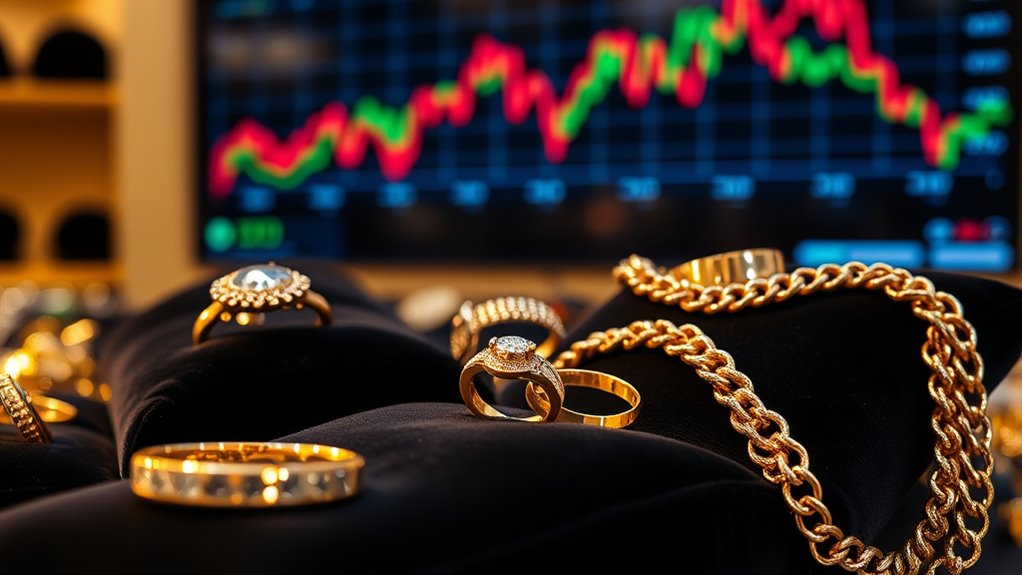

fluctuations in precious metal prices directly impact jewelry costs. When gold, silver, platinum, or palladium prices rise due to market swings, supply chain issues, or speculation, you’ll notice higher prices in jewelry. Conversely, if prices fall, jewelry may become more affordable. Market volatility and supply disruptions make prices unpredictable, especially for investment pieces or high-end collections. To understand how these changes influence your jewelry costs, keep exploring these market factors further.
Key Takeaways
- Fluctuations in gold, silver, platinum, and palladium prices directly influence jewelry costs.
- Supply chain disruptions can lead to higher precious metal prices, increasing jewelry prices.
- Speculative trading often causes price swings, impacting jewelry costs even without supply shortages.
- Market volatility makes jewelry pricing less predictable, especially during price surges.
- Retailers may raise premiums on jewelry containing precious metals during periods of high metal prices.
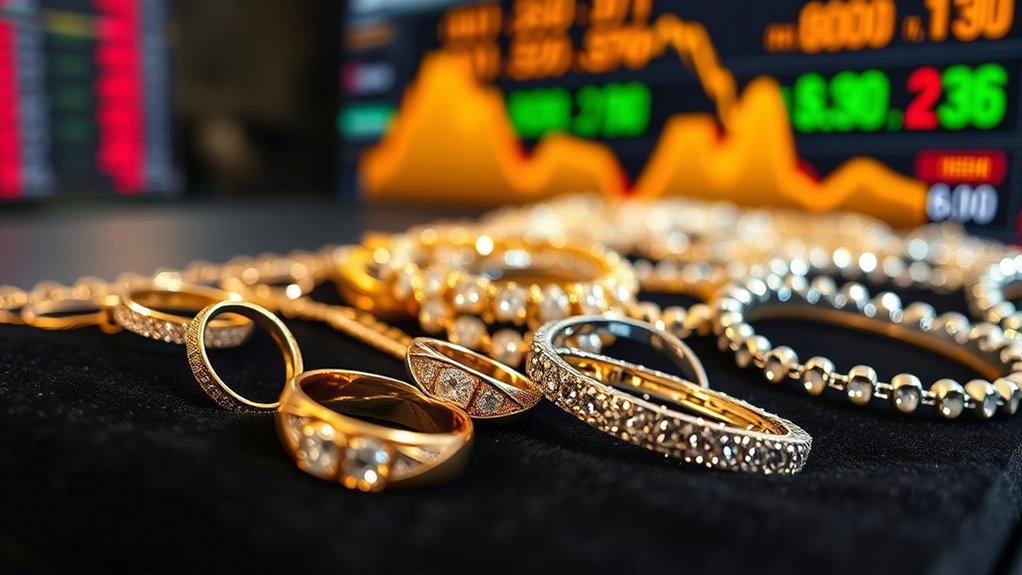
The prices of precious metals like gold, silver, platinum, and palladium directly influence the cost of jewelry. When these metal prices go up or down, it impacts how much you’ll pay for a piece, whether it’s a simple ring or an elaborate necklace. Market fluctuation plays a big role here, as global economic conditions, geopolitical tensions, and currency values can cause metal prices to swing rapidly. If the market is volatile, jewelry prices tend to follow suit, making it tricky to predict the final cost. As a buyer, you might notice that jewelry becomes more expensive during times of high precious metal prices, especially if the jewelry contains a significant amount of the metal.
The supply chain also influences these costs more than many realize. Precious metals are mined, refined, and distributed through complex supply networks that can be disrupted by various factors. When there’s a disruption—such as mine closures, political unrest in mining regions, or transportation issues—supply decreases. Reduced supply, especially when demand remains steady or rises, causes prices to climb. Conversely, an oversupply of metals, perhaps due to increased mining output or stockpiling, can lead to lower prices. These fluctuations ripple through the entire jewelry industry, affecting everything from raw material costs to retail prices. If the supply chain faces delays or shortages, manufacturers might face higher costs, which they often pass on to consumers. Additionally, precious metal prices are often influenced by speculative trading, further complicating the market dynamics.
It’s also worth noting that the relationship between market fluctuation and the supply chain isn’t always straightforward. Sometimes, a rise in metal prices is driven by speculative trading rather than actual shortages. Other times, supply constraints are the main cause. As a jewelry buyer, understanding these dynamics helps you grasp why prices might surge unexpectedly or drop suddenly. During times of market instability, jewelry prices tend to become more unpredictable, and retailers may adjust their pricing strategies accordingly. This can lead to higher premiums for jewelry containing precious metals, especially if you’re considering investment pieces or high-end collections.
Frequently Asked Questions
How Do Global Economic Events Influence Precious Metal Prices?
You’ll notice that global economic events like geopolitical tensions and rising inflation rates directly influence precious metal prices. When tensions escalate or inflation spikes, investors often turn to metals like gold as a safe haven, driving prices up. Conversely, stability and low inflation can cause prices to drop. So, your jewelry costs may fluctuate based on these economic factors, as they affect the supply, demand, and overall market value of precious metals.
What Role Do Mining Costs Play in Metal Price Fluctuations?
Mining expenses and extraction costs directly influence metal price fluctuations. When these costs rise due to increased labor, safety, or environmental requirements, producers often pass those expenses onto you through higher jewelry prices. Conversely, lower mining expenses can reduce costs, making precious metals more affordable. So, you can see how changes in mining costs shape the overall market, affecting what you pay for jewelry and other precious metal products.
How Do Currency Exchange Rates Affect Jewelry Pricing?
Imagine currency exchange rates as a tide that lifts or lowers jewelry prices worldwide. When currency fluctuations favor your currency, you’ll see more affordable prices, like catching a favorable wave. Conversely, unfavorable exchange rates make jewelry costlier, as international trade becomes a more expensive voyage. You feel the ripple effect directly, as these fluctuations influence the cost of raw materials and, ultimately, the price tag on your jewelry.
Are There Seasonal Trends Impacting Precious Metal Prices?
Yes, seasonal demand and holiday shopping trends markedly impact precious metal prices. During peak seasons like holidays, jewelry sales increase, often driving up prices due to higher demand. Conversely, in off-peak times, prices may drop as demand wanes. You’ll notice these fluctuations when shopping or selling jewelry, as market activity responds to seasonal shifts, making timing important for getting the best value or deal.
How Do Jewelry Designers Adjust Pricing During Metal Price Volatility?
When metal prices fluctuate, you stay ahead by closely monitoring market demand and making creative adjustments. You might temporarily redesign pieces to use less precious metal or incorporate alternative materials, keeping costs manageable without sacrificing style. These strategic moves help you maintain profit margins and satisfy customers, even during volatile times. Your ability to adapt quickly guarantees your jewelry remains attractive and accessible, no matter what the market throws your way.
Conclusion
As the prices of precious metals fluctuate, your jewelry costs become a reflection of market tides, a silent demonstration to global economic shifts. While the allure of fine jewelry remains timeless, its value now dances in tandem with metal prices—an intricate balance of beauty and market forces. In this way, the sparkle you cherish is both a personal treasure and a mirror of the world’s economic pulse, blending art with the economic reality you face.