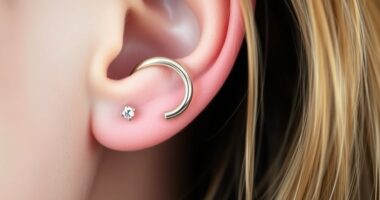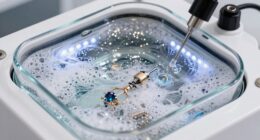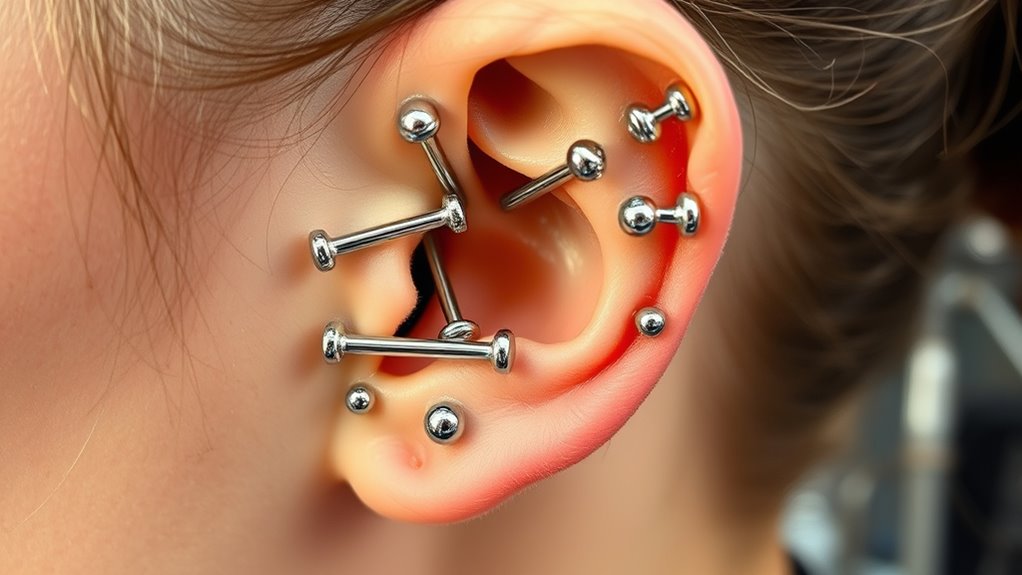
If you’re considering industrial piercings, explore bold design options like custom decorative ends or minimalist styles to suit your look. Always prioritize safety by choosing high-quality, hypoallergenic jewelry made from materials like surgical steel or titanium. Follow proper aftercare, clean regularly, and avoid unnecessary touching to prevent infections. Be mindful of placement and jewelry fit during healing. Want to create a unique style while keeping your piercing safe? Keep going for more tips and ideas!
Key Takeaways
- Choose high-quality, hypoallergenic jewelry like surgical steel or titanium for safety and comfort.
- Opt for minimalist or decorative designs to personalize your industrial piercing style.
- Ensure proper aftercare, including cleaning twice daily with saline solution during healing.
- Be cautious to avoid snagging or bumping the piercing to prevent tissue damage.
- Consult a professional piercer for safe placement, jewelry selection, and guidance throughout healing.
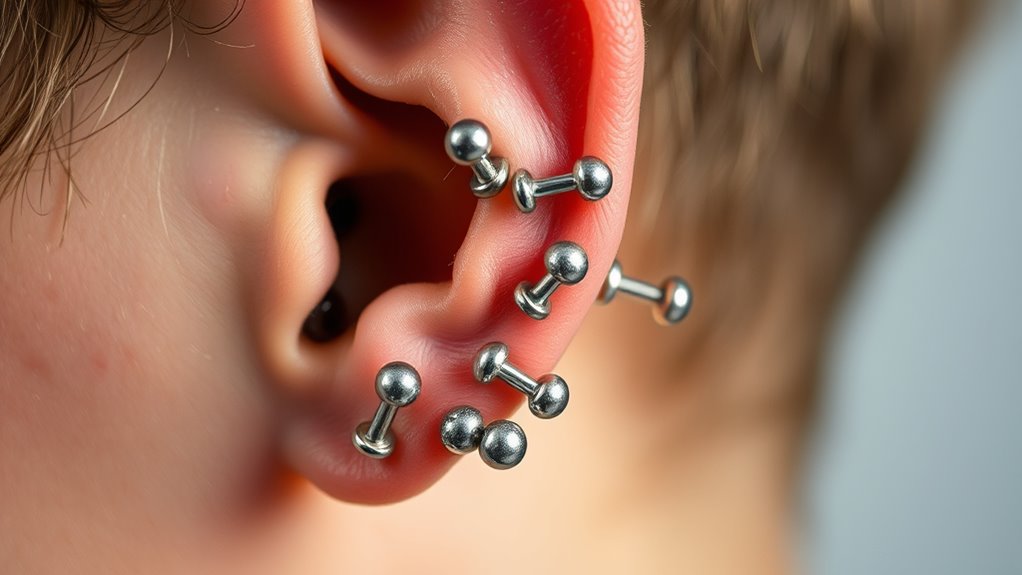
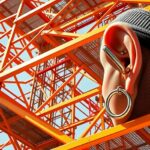
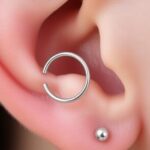
Getting a piercing is an exciting way to express your personal style, but choosing the right design and ensuring safety are essential. When it comes to industrial piercings, selecting the right piercing jewelry is crucial. Typically, this involves a straight barbell that connects two holes in your ear cartilage, creating a bold, edgy look. The jewelry you choose should be made from high-quality, hypoallergenic materials like surgical steel, titanium, or niobium to reduce the risk of allergic reactions and infection. After selecting your jewelry, you’ll need to pay close attention to your aftercare routines to keep the piercing healthy and free from complications. Proper cleaning and maintenance are vital during the healing process, which can take several months. You should clean your industrial piercing twice daily with a saline solution, gently removing any crust or debris without disturbing the jewelry. Avoid using harsh chemicals or alcohol-based cleansers, as they can irritate your skin and slow healing. Additionally, maintaining a clean environment helps minimize the risk of infection and promotes faster healing. As you start wearing your new piercing, remember that the design and placement influence both the aesthetic and healing process. Industrial piercings require a bit more care because they involve two holes connected by a single piece of jewelry. You need to be cautious about accidental bumps or snagging, which can cause irritation or even tear the tissue. When choosing your piercing jewelry, opt for smooth, well-finished bars that won’t catch on hair or clothing, and make sure the jewelry is securely fastened to prevent it from falling out or causing discomfort. During your aftercare routines, avoid touching the jewelry unnecessarily, as bacteria on your hands can introduce infection. If you notice swelling, redness, or persistent pain, consult your piercer promptly, as these could indicate an infection or improper healing. It’s also worth considering the design ideas that fit your personal style. Industrial piercings can be customized with different types of jewelry, including rings, barbells, or decorative ends. Some prefer minimalist styles, while others opt for more decorative or themed designs. Whatever you choose, ensure the jewelry is suitable for healing and that your aftercare routines are consistent. Remember that patience and diligent care are key to a successful healing process, so don’t rush to change or remove your jewelry prematurely. With the right design ideas and careful attention to aftercare routines, your industrial piercing can become a striking, long-lasting feature that truly reflects your personality.
Frequently Asked Questions
How Long Does an Industrial Piercing Take to Heal Completely?
An industrial piercing typically takes about 6 to 12 months to heal completely. During this healing timeline, you should follow proper piercing aftercare, such as cleaning regularly and avoiding irritation. Every person heals differently, so patience is key. Keep an eye on any signs of infection, and consult your piercer if you notice unusual pain or swelling. Consistent aftercare guarantees a smoother healing process and helps prevent complications.
Can I Get an Industrial Piercing if I Have Sensitive Skin?
If you have sensitive skin, you can still get an industrial piercing, but you need to be cautious. Talk to your piercer about your skin sensitivity and allergy concerns, especially with metals like nickel. They may recommend hypoallergenic materials such as surgical steel, titanium, or niobium. Always follow aftercare instructions carefully to prevent irritation or allergic reactions, ensuring a safe and comfortable healing process.
What Are the Best Materials for Industrial Piercing Jewelry?
When it comes to industrial piercing jewelry, you want the best of the best. Stick with hypoallergenic metals like surgical grade stainless steel, titanium, or niobium—they’re your safest bet and won’t cause a fuss. These materials are durable, biocompatible, and less likely to irritate sensitive skin. Don’t cut corners; choosing high-quality, surgical grade materials is like hitting two birds with one stone—safe and stylish!
Are There Specific Activities I Should Avoid During Healing?
During healing, you should avoid activities that pose a risk to your piercing. Refrain from swimming, diving, or any water activities that could introduce bacteria and disrupt healing safety. Also, steer clear of strenuous exercises or activities that cause excessive sweating or pressure on your ears. These activity restrictions help prevent infection and guarantee proper healing. Always follow your piercer’s advice to keep your industrial piercing safe and healthy during recovery.
How Often Should I Clean and Change My Industrial Piercing?
Think of your piercing as a delicate garden that needs daily care. You should clean it twice a day with a saline solution to keep bacteria at bay and promote healing. Avoid changing your jewelry until fully healed, usually around 6-8 weeks, to prevent irritation. Maintain a consistent cleaning routine and handle your jewelry gently—proper jewelry maintenance is key to a healthy, beautiful industrial piercing.
Conclusion
Now, as you explore industrial piercings, remember that choosing a unique design can reflect your style, just like a coincidence that sparks inspiration. Prioritize safety by following proper aftercare tips, and don’t rush the healing process—sometimes, the best ideas come when you’re patient. So, whether it’s a bold barbell or a subtle detail, trust your instincts and enjoy the journey of expressing yourself. After all, the perfect piercing often finds you just when you least expect it.