To create a low-maintenance piercing routine that works, choose hypoallergenic jewelry that fits comfortably and minimizes irritation. Clean your piercing twice daily with saline or a specialized aftercare solution, using gentle movements and clean hands. Avoid unnecessary touching, keep hands and surroundings clean, and watch for signs of infection. Protect your piercing from irritation caused by clothing or hair. If you stay consistent and attentive, you’ll keep your piercing healthy with less effort—there’s more helpful advice ahead.

Get beauty and skincare favorites delivered free with Prime
- Fast, free delivery on millions of items
- Prime Video, Amazon Music and more included
- Member-only deals all year
Key Takeaways
- Use high-quality, hypoallergenic jewelry that fits comfortably to reduce irritation and simplify maintenance.
- Establish a consistent cleaning routine with saline solution twice daily, avoiding harsh chemicals.
- Keep hands and the surrounding area clean to prevent bacterial buildup and infections.
- Avoid unnecessary jewelry changes until the piercing is fully healed to prevent complications.
- Monitor for signs of irritation or infection and consult a professional if issues persist.
Getting a piercing is exciting, but maintaining it properly is essential for healing and long-term health. One of the most important steps in your routine is choosing the right jewelry. Selecting jewelry made from safe, hypoallergenic materials like surgical steel, titanium, or gold minimizes the risk of allergic reactions or irritation. Avoid cheap or low-quality pieces, as they can cause complications or delay healing. When picking jewelry, consider the size and shape of the piece; it should fit comfortably without putting pressure on the piercing site. A proper jewelry selection helps prevent movement that could irritate the wound and supports the healing process.
Choose hypoallergenic, well-fitting jewelry to support healing and prevent irritation.
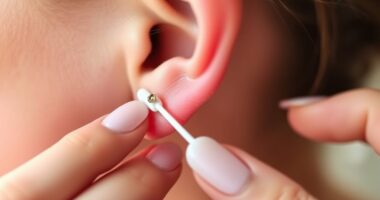
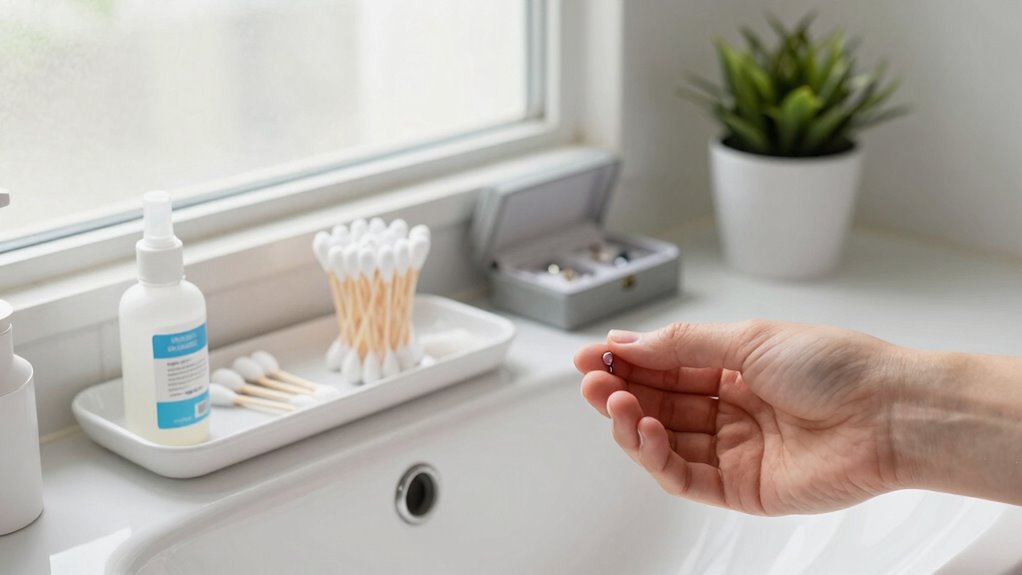
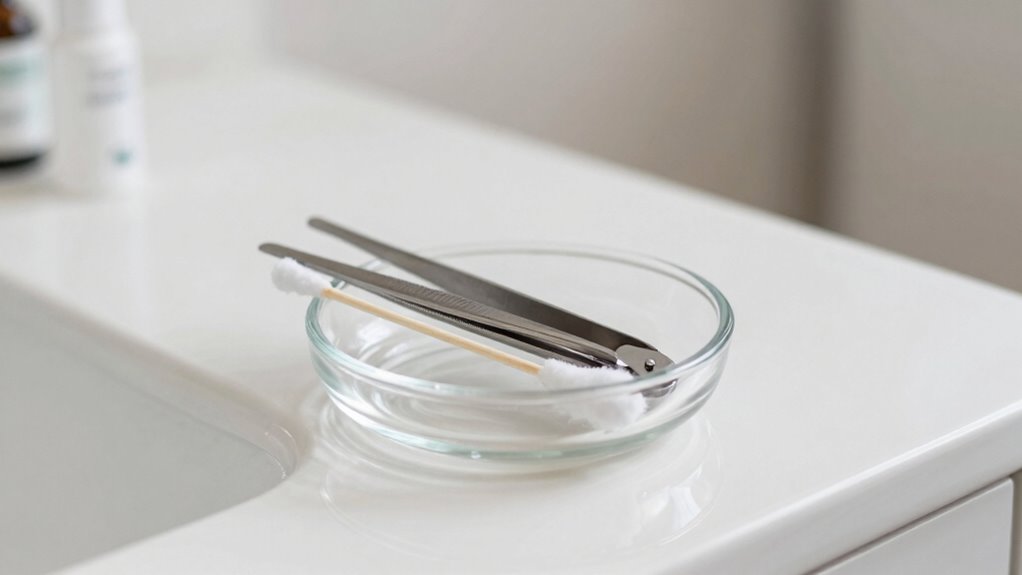
Once you’ve selected the right jewelry, establishing a simple, consistent cleaning routine is key. Use a saline solution or a specialized piercing aftercare solution to gently cleanse the area twice a day. When cleaning, use clean hands and avoid harsh chemicals or alcohol-based products that can dry out or damage the skin. Be gentle—scrubbing or twisting the jewelry can prolong the healing process and cause trauma. Keep the area dry afterward, and avoid touching it unnecessarily to reduce the risk of infection. Additionally, understanding proper sterilization methods can help prevent complications during aftercare. Maintaining proper hygiene practices is crucial for preventing bacteria buildup and ensuring a smooth healing process. Incorporating infection control techniques into your routine can further reduce the risk of complications.
During the healing process, it’s crucial to avoid unnecessary removal or changing of jewelry. Every time you take out or swap the jewelry prematurely, you risk reopening the wound or introducing bacteria. If you need to change your jewelry, wait until the piercing is fully healed, which can vary from person to person. When you do change jewelry, choose pieces that are smooth, lightweight, and designed for healing piercings to minimize discomfort and complications.
Incorporating a daily routine that’s easy to stick to makes a big difference. Keep your hands clean and avoid touching the piercing unless you’re cleaning it or changing jewelry. Be mindful of your hair, clothing, and accessories, which can snag or irritate the piercing site. Wearing loose, breathable clothing helps prevent unnecessary friction and allows air to circulate, aiding the healing process.
Finally, pay attention to your body’s signals. If you notice persistent redness, swelling, or pain, don’t ignore these signs. Consult your piercer or a healthcare professional if needed. A straightforward routine with proper jewelry selection, gentle cleaning, and patience during the healing process will set you up for a healthy, long-lasting piercing. Keep it simple, stay consistent, and give your body the time it needs to heal properly.
hypoallergenic piercing jewelry surgical steel
As an affiliate, we earn on qualifying purchases.
As an affiliate, we earn on qualifying purchases.
Frequently Asked Questions
How Long Should I Wait Before Changing My Jewelry?
You should wait at least 6 to 8 weeks before changing your jewelry, but healing timelines vary based on the piercing and jewelry materials. If your jewelry is made from hypoallergenic materials like surgical steel or titanium, healing can progress faster. Always make certain your piercing is fully healed and free of redness or swelling before changing jewelry. When in doubt, consult your piercer to avoid complications and promote proper healing.
Can I Use Alcohol or Hydrogen Peroxide to Clean My Piercing?
Using alcohol or hydrogen peroxide on your piercing can feel like a harsh storm during the delicate healing process. These cleaning agents may irritate your skin, slow healing, and cause discomfort. Instead, opt for gentle saline solutions to cleanse your piercing, supporting a smooth recovery. This approach helps maintain cleanliness without disrupting the healing process, ensuring your piercing heals beautifully and with less fuss.
What Products Are Best for Sensitive Skin?
For sensitive skin, choose products with gentle skincare ingredients like saline solutions or fragrance-free, hypoallergenic cleansers. Avoid harsh ingredients and known irritation triggers such as alcohol, fragrances, or strong chemicals. Look for labels indicating the product is suitable for sensitive skin. These options help minimize irritation and promote healing, ensuring your piercing stays healthy without causing unnecessary discomfort or reaction. Always patch-test new products before regular use.
How Do I Handle an Unexpected Allergic Reaction?
If you experience an unexpected allergic reaction, act quickly by removing any products that could be triggers. Identify and avoid common allergic triggers like certain metals or chemicals. For reaction management, rinse the area with cool water and apply a soothing, fragrance-free moisturizer or antihistamine cream. If swelling, pain, or redness worsen, seek medical attention promptly to prevent complications. Staying prepared helps manage reactions effectively and keeps your piercing healthy.
When Should I See a Professional for Complications?
You should see a professional immediately if you notice persistent pain, swelling, redness, or signs of infection, despite following proper piercing aftercare and using suitable jewelry selection. If your piercing is not healing, or if there’s increased discomfort, it’s essential to get expert advice. Prompt professional care helps prevent complications, guarantees proper healing, and confirms you’re using the right jewelry to avoid irritation or allergic reactions.
Conclusion
By sticking to a simple, consistent routine, you’ll nurture your piercings like tender sprouts reaching for the sun. Remember, patience is your best tool—like a river carving through stone, gentle persistence shapes lasting beauty. Trust the process, stay diligent, and your piercings will thrive with minimal fuss. Think of this routine as a steady heartbeat—powerful in its quiet rhythm, ensuring your piercings remain healthy and stunning for years to come.
Fall Picks
fall essentials
As an affiliate, we earn on qualifying purchases.