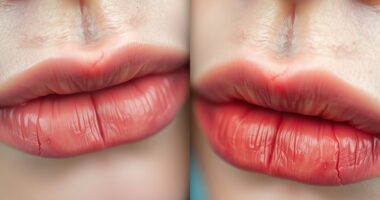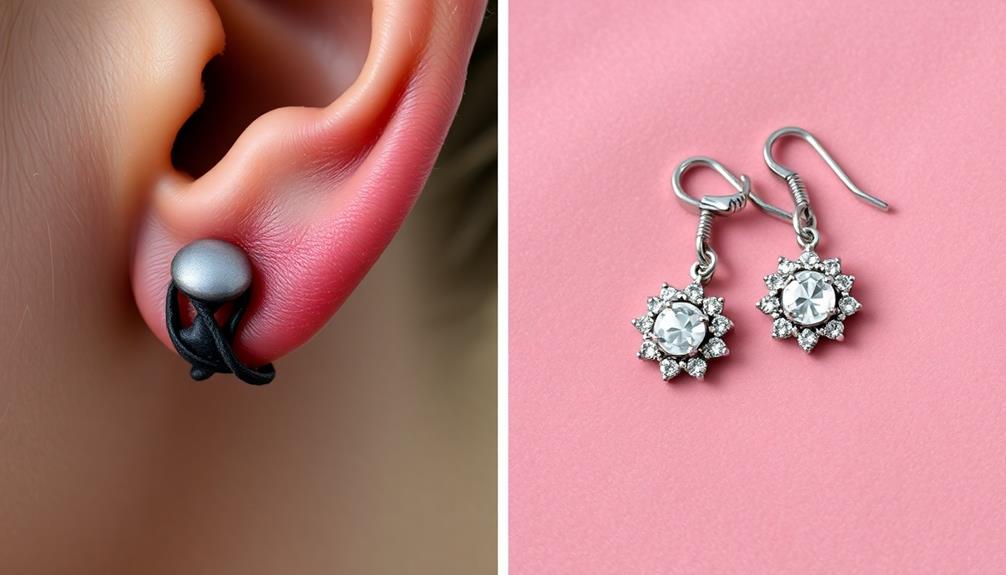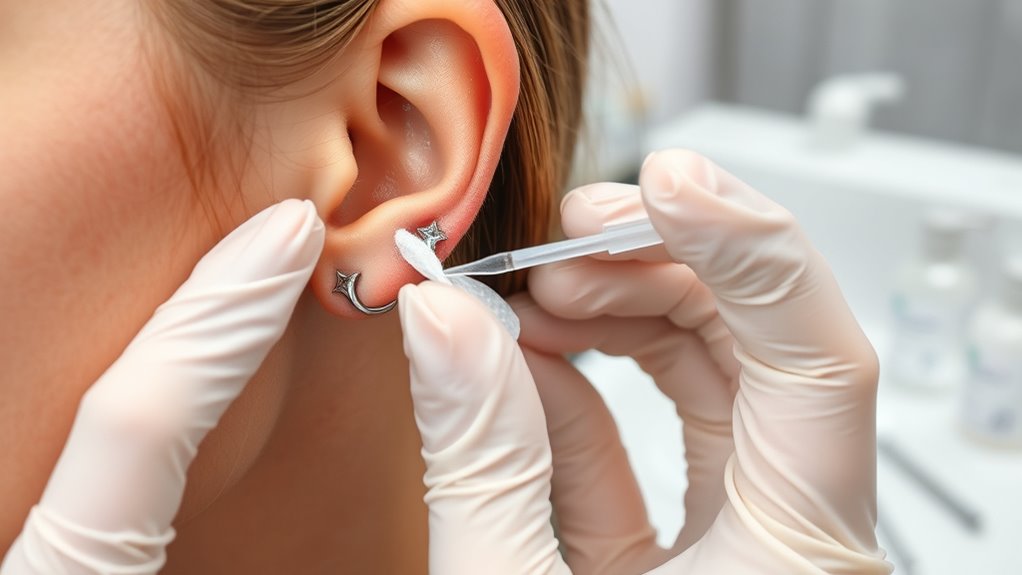

To maintain your piercings long-term, keep a consistent cleaning routine using saline solution or gentle cleansers, and avoid over-cleaning to prevent irritation. Regularly inspect your jewelry for tarnish or looseness, and promptly address any issues by visiting your piercer. Schedule periodic checkups to ensure proper healing and fit, and don’t hesitate to seek professional advice if you notice persistent irritation or damage. Staying vigilant helps your piercings stay healthy and beautiful for years to come.
Key Takeaways
- Follow a consistent cleaning routine with saline or fragrance-free solutions to prevent infections.
- Regularly inspect jewelry for tarnishing, loosening, or damage, and replace if needed.
- Schedule routine checkups with professional piercers to assess healing progress and jewelry fit.
- Address any signs of irritation, swelling, or discharge promptly with professional advice.
- Use high-quality, hypoallergenic jewelry and avoid premature jewelry changes to maintain long-term health.
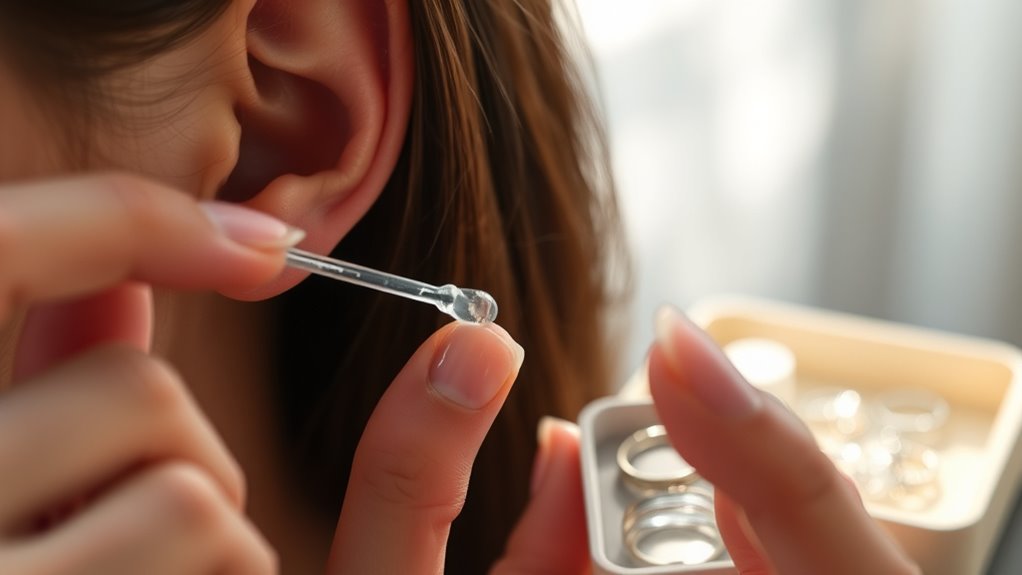
Properly maintaining your piercings is essential to guarantee they heal well and stay healthy. One of the first steps to ensure proper healing is paying close attention to your jewelry selection. Choosing high-quality, hypoallergenic jewelry made from materials like surgical steel, titanium, or niobium can significantly reduce the risk of infection or irritation. Avoid cheap or decorative jewelry with rough edges, as these can damage the piercing site or cause prolonged healing times. Your jewelry should fit comfortably, with a size that allows for swelling during the initial healing period but isn’t so loose that it risks snagging or migrating. When selecting jewelry, consider your body’s healing timelines for different piercings; some piercings, like earlobe piercings, tend to heal faster, often within six to eight weeks, while cartilage piercings may take several months. Understanding these timelines helps you set realistic expectations and guarantees you avoid prematurely changing jewelry, which can disturb the healing process. Additionally, being aware of material compatibility can help prevent allergic reactions or sensitivities that might hinder healing.
During the early stages of healing, it’s critical to follow a consistent cleaning routine, but you should also be mindful of your jewelry choices. For example, if you’re planning to switch to a different piece, wait until the piercing has fully healed to prevent unnecessary trauma. When it’s time to change jewelry, do so gently and carefully, making sure your hands are clean to avoid introducing bacteria. Regular checkups with your piercer are essential, especially if you notice signs of irritation, swelling, or discharge that persists beyond the expected healing timeline. During these visits, your piercer can assess whether your jewelry fits properly or if it needs to be replaced with a better option.
Long-term maintenance involves routine cleaning and periodic inspection of your jewelry. Clean your piercings with a saline solution or a gentle, fragrance-free cleanser recommended by your piercer. Avoid over-cleaning, as this can dry out the skin and cause additional irritation. It’s also important to check your jewelry regularly for any signs of tarnishing, loosening, or damage. If you notice any issues, don’t hesitate to revisit your piercer for advice or professional adjustments. Proper jewelry selection and understanding healing timelines are foundational to maintaining your piercings in the long run. They help prevent complications, reduce healing time, and keep your piercings looking and feeling great over the years. With attentive care, your piercings can remain healthy, beautiful, and comfortable well beyond the initial healing phase.
Frequently Asked Questions
How Often Should I Replace My Piercing Jewelry Long-Term?
You should replace your piercing jewelry every 1 to 2 years, depending on jewelry materials and your healing timeframes. For example, high-quality materials like surgical steel or titanium are more durable, while softer metals may need more frequent replacement. Once your piercing has fully healed, you can switch jewelry to match your style, but always guarantee the new piece is safe, hypoallergenic, and fits well to prevent irritation.
Are There Specific Signs of Infection to Watch For?
Did you know that about 10% of piercings develop infections? Recognizing complications early is key. Watch for signs of infection like increased redness, swelling, pain, or pus. If you notice a foul smell or persistent soreness, it’s time to see a professional. Staying alert helps prevent serious issues. Regular checkups guarantee your piercing stays healthy, and prompt action can save you from longer-term problems.
Can I Switch to Different Jewelry Types Later?
Yes, you can switch to different jewelry types later, but be cautious about jewelry materials to prevent skin reactions. Choose hypoallergenic options like surgical steel, titanium, or niobium to minimize irritation. Before switching, make certain your piercing is fully healed to avoid complications. If you notice redness, swelling, or discomfort after changing jewelry, remove the new piece and consult a professional to avoid prolonged skin reactions.
How Do Hormonal Changes Affect Healing?
Oh, the joys of hormonal impact—just when you thought healing was steady, those pesky fluctuations appear! Hormonal changes can indeed slow down or complicate healing, causing swelling, irritation, or prolonged discomfort. Your body’s natural ebb and flow influence tissue repair, so expect some variability. Stay vigilant with proper cleaning, and give your piercing extra patience during hormonal highs and lows. Remember, even your body’s chemistry loves to keep you guessing!
What Are the Risks of Neglecting Regular Checkups?
Neglecting regular checkups increases your infection risk and can lead to healing complications. Without routine inspections, you might miss early signs of infection or irritation, allowing problems to worsen. Over time, this neglect can cause scarring, persistent discomfort, or even piercing rejection. Regular checkups help catch issues early, ensuring your piercing heals properly and stays healthy. Don’t skip these visits to maintain your piercing’s long-term health and appearance.
Conclusion
Keeping your piercings healthy requires regular cleaning and checkups. Did you know that over 30% of piercing complications happen due to poor aftercare? By sticking to a consistent cleaning routine and visiting your piercer for checkups, you can reduce risks and enjoy your jewelry long-term. Remember, your piercing is an investment in your personal style—treat it with care, and it’ll reward you with years of beauty and self-expression.