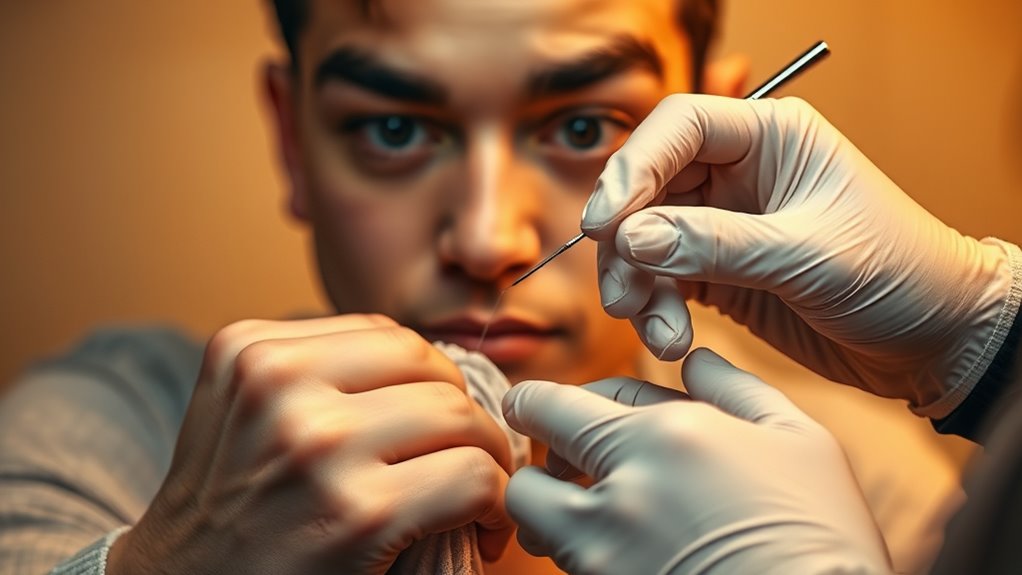
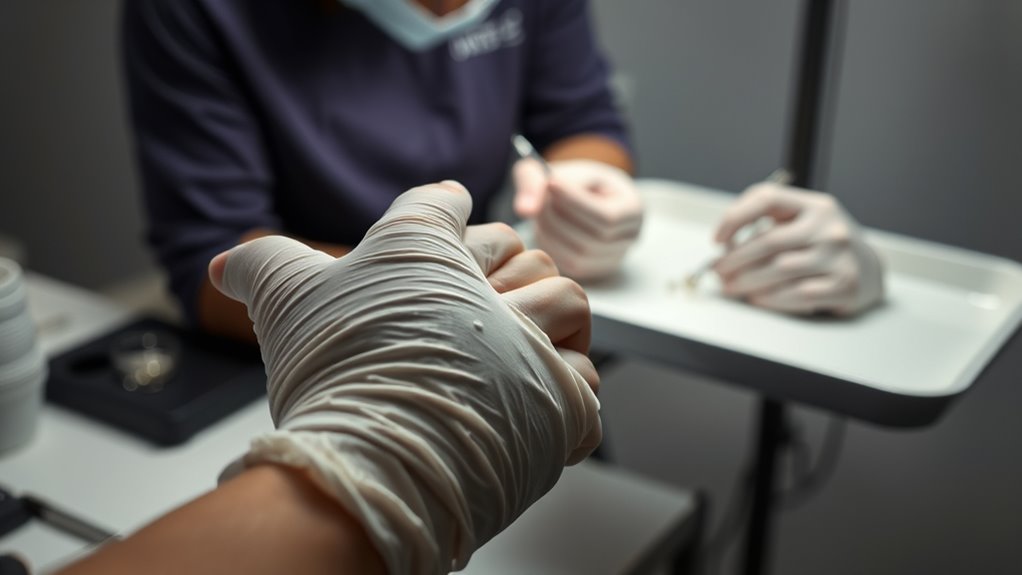
Getting anxious before and during a piercing is common, but discovering effective techniques can help you stay calm and make the experience more manageable.
Feeling nervous before and during a piercing is completely normal, but you can manage your anxiety with simple techniques. Take deep, slow breaths to calm your nerves and activate your relaxation response. Distract yourself by listening to music or visualizing peaceful scenes. Communicate your feelings with the piercer—they’re there to help put you at ease. Mastering these strategies can make your experience smoother and more comfortable, and you’ll discover even more ways to stay calm if you keep exploring.
Practice deep, slow breathing exercises to activate relaxation and reduce pre-piercing anxiety.
Use distraction techniques like calming music, visualization, or counting to shift focus away from worry.
Communicate openly with the piercer about your feelings to receive reassurance and tailored support.
Remind yourself that nervousness is normal and acknowledge these feelings as part of the process.
Focus on positive thoughts and visualize a successful, comfortable piercing experience to promote calmness.
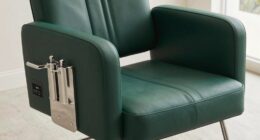
Getting a piercing can be exciting, but it often comes with feelings of anxiety or nervousness. It’s completely normal to feel a flutter of worry as you prepare to sit in the piercing chair. Your mind might race with questions about pain, the process, or even the healing afterward. To help manage these feelings, you can use simple techniques like breathing exercises and distraction methods. These tools can make a noticeable difference in calming your nerves and keeping your focus off your worries.
Start by practicing breathing exercises. Deep, slow breaths send a message to your brain that it’s safe and help slow your heart rate. Inhale deeply through your nose, counting to four, then hold that breath for a moment. Exhale slowly through your mouth for another count of four. Repeat this cycle for a few minutes. As you focus on your breathing, you’ll notice your anxiety begins to subside. Breathing exercises are effective because they activate your parasympathetic nervous system, which promotes relaxation and reduces stress. When you’re feeling nervous, take a moment before the piercing to do this. It can help you feel more in control and less overwhelmed.
Distraction techniques work well too. When your mind is preoccupied with something else, your perception of pain and anxiety diminishes. Bring along your favorite music or listen to a calming playlist as you wait. Focusing on the melody or lyrics can divert your attention away from the piercing itself. If music isn’t your thing, try visualizing a peaceful scene—a beach, a forest, or any place where you feel relaxed. Some people find that squeezing a stress ball or counting backward from 100 also helps keep their mind occupied. The key is to shift your focus from what might go wrong to something positive or neutral. By doing so, you’ll find your nerves settle more quickly.
Using visualization techniques can further enhance your ability to relax and reduce anxiety, making the experience smoother. It’s also helpful to communicate with your piercer beforehand. Let them know you’re feeling anxious; many professionals are experienced in helping clients stay calm. They might offer reassurance or suggest additional techniques to help you relax. Remember, feeling nervous is natural, but with these simple strategies—breathing exercises and distraction techniques—you can take control of your anxiety. Approaching your piercing with a calm mindset will not only make the experience more comfortable but also help ensure you walk away feeling proud and confident about your new body art.
Frequently Asked Questions
Can Anxiety Affect the Healing Process After a Piercing?
Yes, anxiety can affect the healing process after a piercing. When you’re stressed, your body releases hormones that can slow down healing and increase inflammation. To support recovery, practice relaxation techniques and stress management strategies, like deep breathing or meditation. Keeping calm helps your immune system work better, reducing the risk of infection and promoting faster healing. Staying relaxed and positive makes a real difference in your piercing’s recovery.
Are There Specific Techniques to Reduce Anxiety During Long Piercing Procedures?
Feeling uneasy during long piercing procedures? You can try simple techniques like deep breathing exercises to stay calm and use visualization techniques to imagine a peaceful place. Focus on slow, steady breaths to reduce tension and picture yourself relaxed and comfortable. These methods help shift your focus away from discomfort, making the experience more manageable. With practice, you’ll find it easier to stay calm throughout extended procedures.
How Does Anxiety Impact Pain Perception During Piercing?
Your anxiety can heighten your perception of pain during a piercing. When you stay mindful and focus on breathing exercises, you can reduce this effect. Practicing mindfulness techniques helps you stay present, while controlled breathing calms your nerves. As a result, you’ll likely experience less pain and feel more in control. So, use these strategies to manage anxiety, and it’ll make your piercing experience smoother and more comfortable.
What Are the Best Ways to Manage Anxiety if I Faint?
If you fear fainting, try breathing exercises to keep calm and improve oxygen flow. Positive visualization can also help; imagine a peaceful scene to reduce anxiety. Research suggests these techniques activate your body’s relaxation response, decreasing the chances of fainting. Practice these methods beforehand and during the piercing to stay grounded. Staying hydrated and having a friend nearby can also boost your confidence and help manage your anxiety effectively.
Can Pre-Piercing Anxiety Lead to Infection Risks?
Yes, pre-piercing anxiety can increase infection risks because it might cause you to rush the process or neglect piercing safety protocols. Anxiety triggers can make you more likely to move or fidget, which may introduce bacteria. Stay calm and communicate with your piercer about your fears. Proper relaxation helps guarantee you follow all safety steps, reducing the chance of infection and making your piercing experience safer and more comfortable.
Conclusion
By applying these calming techniques, you can turn a nerve-wracking experience into one you handle with confidence. Imagine Sarah, who was terrified of her first nose piercing but practiced deep breathing and visualized a positive outcome. During her appointment, she stayed calm and even enjoyed the process. Remember, managing your anxiety isn’t just about comfort — it’s about empowering yourself to face new experiences with courage and ease.
Class B vs Class N Autoclaves: The Difference Most New Studio Owners Miss
Understanding the key differences between Class B and Class N autoclaves is crucial for safety and efficiency—continue reading to find out which is best for your studio.