Practicing meditation and mindfulness before a piercing can help calm your nerves and reduce anxiety. Focus on deep, slow breathing to signal safety to your body and perform a body scan to release tension and stay grounded. These techniques shift your attention away from worries and bring awareness to physical sensations, promoting relaxation. Consistent practice builds confidence and resilience, making the experience more comfortable. If you want to discover effective methods to ease your piercing anxiety, there’s more to explore.
Key Takeaways
- Meditation and mindfulness help manage nerves by grounding focus inward and reducing stress before piercing procedures.
- Breathing techniques like slow, deep breaths signal safety to the nervous system, lowering anxiety levels.
- Body scan exercises promote relaxation by releasing physical tension and shifting focus from worry to sensations.
- Incorporating these practices into pre-piercing routines builds resilience and confidence over time.
- Consistent mindfulness practice fosters a more positive attitude and reduces future piercing-related anxiety.
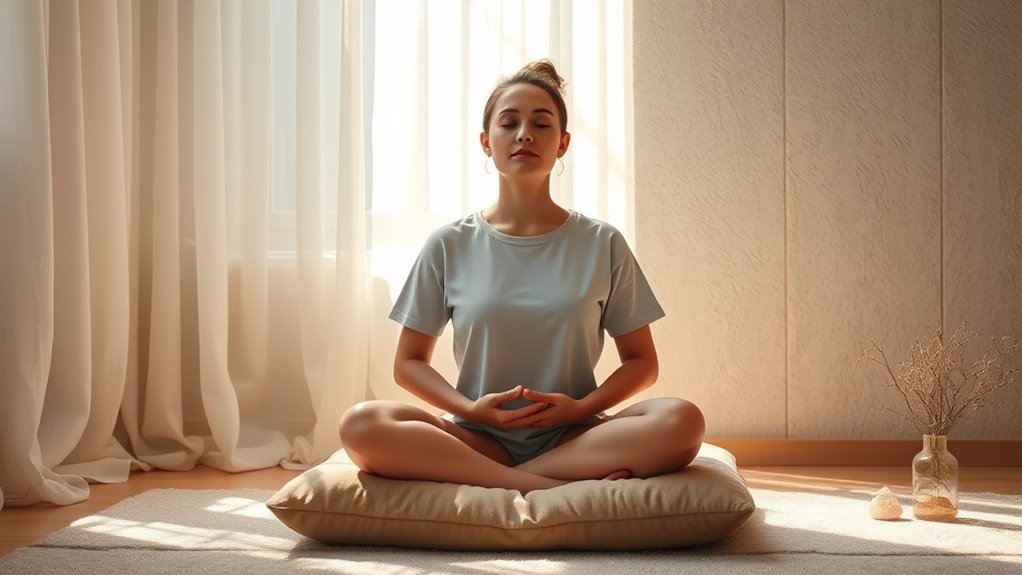
If you’re feeling anxious about getting a piercing, meditation and mindfulness can be powerful tools to help you manage your nerves. When anxiety kicks in, your mind races with worries about pain, the procedure, or how you’ll look afterward. Instead of letting these thoughts overwhelm you, try grounding yourself with simple techniques like breathing exercises and body scan exercises. These methods can bring your focus inward, calming your mind and easing your physical tension.
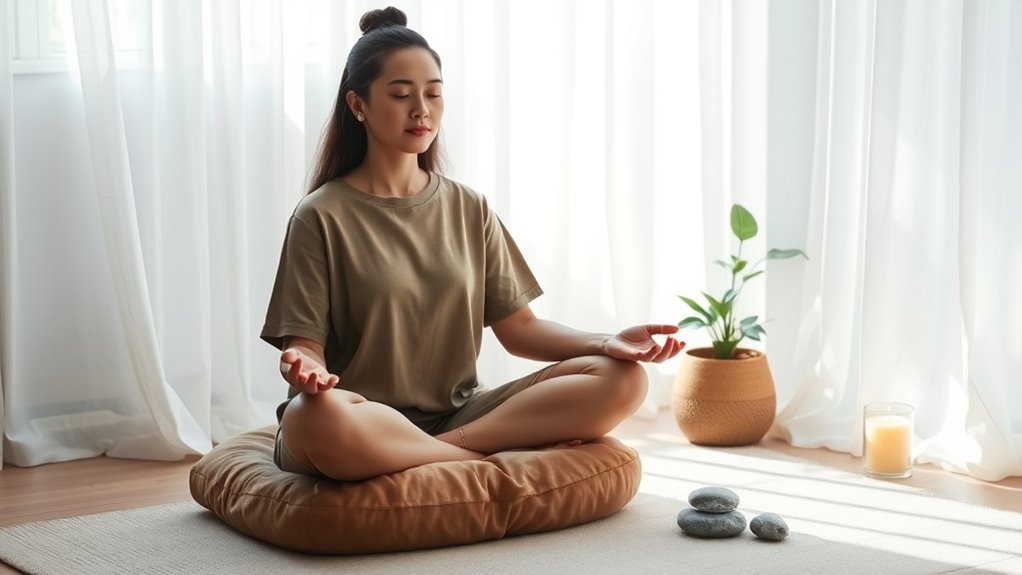
Start with breathing techniques. Deep, slow breaths signal to your nervous system that you’re safe, helping to reduce stress hormones like adrenaline. Inhale slowly through your nose for a count of four, allowing your belly to rise as your lungs fill with air. Hold that breath for a count of four, then exhale slowly through your mouth for another count of four. Repeat this cycle a few times. This intentional breathing helps break the cycle of anxious thoughts and creates a sense of control. When you focus on your breath, it’s easier to stay present, rather than spiraling into worst-case scenarios. As you practice, you might notice your heartbeat slowing and your muscles relaxing, making the idea of the piercing less intimidating.
Deep, slow breathing calms your nerves and helps you stay present before your piercing.
Another effective technique is body scan exercises. Find a comfortable position and close your eyes if you like. Begin by bringing your attention to your feet, noticing any sensations—warmth, tingling, or tension. Gradually move your awareness upward through your legs, hips, stomach, chest, arms, neck, and face. As you do this, consciously release tension in each area. Often, anxiety causes muscle tightness, which only intensifies feelings of unease. By systematically scanning your body, you acknowledge your physical state without judgment, promoting relaxation. This practice also shifts your focus away from anxious thoughts about the procedure and onto sensations in your body, grounding you in the present moment. Utilizing contrast ratio understanding can further help you appreciate how visual clarity impacts your comfort during the process.
Consistent use of these techniques can build resilience against piercing-related anxiety. When you incorporate breathing exercises and body scan exercises into your routine before your appointment, you create a mental space of calm that helps you face the experience with more confidence. It’s normal to feel nervous, but these mindfulness tools give you practical ways to manage those feelings effectively. Over time, you’ll likely find that your anxiety diminishes, and you’re better equipped to approach your piercing with a clear mind and a relaxed body.
Frequently Asked Questions
Can Meditation Replace Professional Anxiety Treatment?
Meditation can’t fully replace professional anxiety treatment because it has limitations, especially for severe cases. While it helps reduce stress and promote relaxation, it may not address underlying issues or provide extensive support. You should view meditation as an effective complementary therapy alongside other options like therapy or medication. Always consult a mental health professional to find the best approach for your anxiety, ensuring you get tailored and effective care.
How Long Should I Meditate Before Seeing Benefits?
You’ll likely notice benefits from meditation after just a few days, but full effects usually take about 8 weeks of consistent practice. Think of meditation duration as your daily dose—short sessions of 10-15 minutes can work wonders. Don’t expect miracles overnight; patience is key. Keep meditating regularly, and you’ll gradually see your piercing anxiety melt away, proving that persistence beats impatience every time.
What if My Mind Keeps Wandering During Mindfulness Practice?
If your mind keeps wandering during mindfulness practice, that’s normal. When focus challenges happen, gently bring your attention back to your breath or chosen anchor. Mindfulness triggers, like noticing thoughts or feelings, can help you stay present. Be patient with yourself, knowing that consistent practice strengthens your focus over time. Remember, it’s about progress, not perfection, so each gentle redirection improves your ability to stay mindful.
Are There Specific Meditation Techniques for Piercing Anxiety?
Yes, there are specific meditation techniques for piercing anxiety. You can try guided imagery, where you visualize a calming scene to reduce stress before your piercing. Incorporate breathing exercises like deep, slow breaths to help calm your nerves and manage pain. Focus on your breath or imagery during the procedure, and gently bring your attention back when your mind wanders. These techniques can help ease anxiety and make the experience more comfortable.
Can Mindfulness Help With Fear of the Piercing Procedure Itself?
Yes, mindfulness can help ease your fear of the piercing procedure. As you approach, focus on breathing exercises to calm your nerves and practice visualization techniques to imagine a smooth, pain-free experience. These methods shift your attention away from anxiety and create a sense of control. By staying present and grounded, you can reduce fear’s grip, making the process feel less intimidating and more manageable.
Conclusion
By embracing meditation and mindfulness, you can diminish distress and develop a deeper, more daring sense of calm. Through focused breathing and gentle awareness, you’ll ward off worry and welcome wonder rather than dread. Remember, patience and practice pave the path to peace, transforming piercing anxiety into a peaceful, present-focused perspective. So, stay steadfast, breathe boldly, and let mindfulness master your mind, making each moment of your piercing experience more peaceful and powerful.