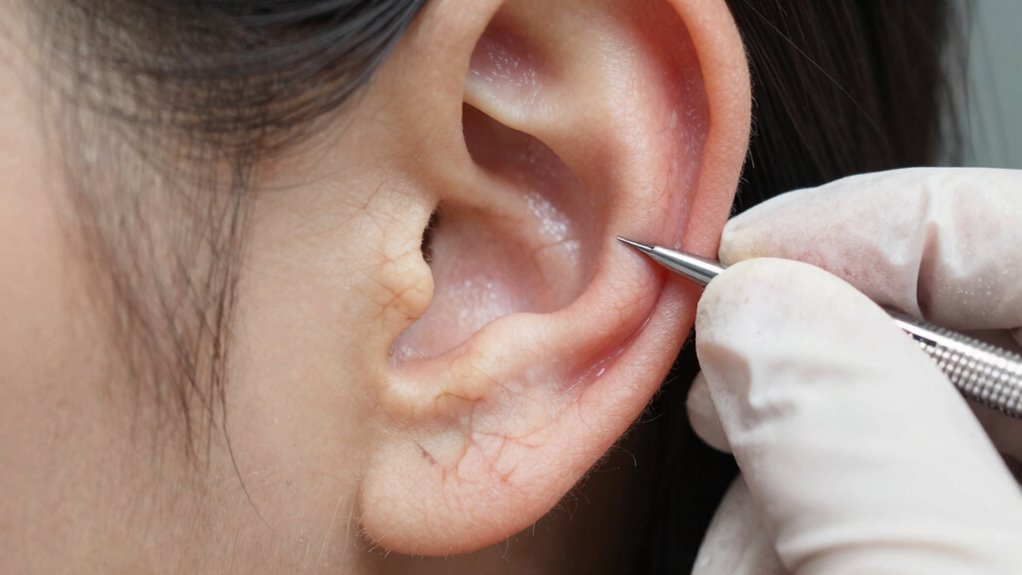
When piercers say your anatomy isn’t suitable, they mean your body’s features or tissue structure could cause safety issues or make healing difficult. Factors like thin tissue, close nerves or blood vessels, or irregular bone shape can increase risks like rejection, migration, or infection. They assess these details to protect you from potential complications. If you want to understand more about what might influence your piercings and how to make safe choices, keep exploring this topic.
Key Takeaways
- Your body’s tissue structure may not support safe piercing placement or healing.
- Certain anatomical features can increase risks like rejection, migration, or infection.
- The proximity of nerves or blood vessels may make piercing unsafe or painful.
- Limited space or irregular bone structure can hinder proper jewelry placement.
- Your anatomy might prevent achieving desired aesthetic results safely.
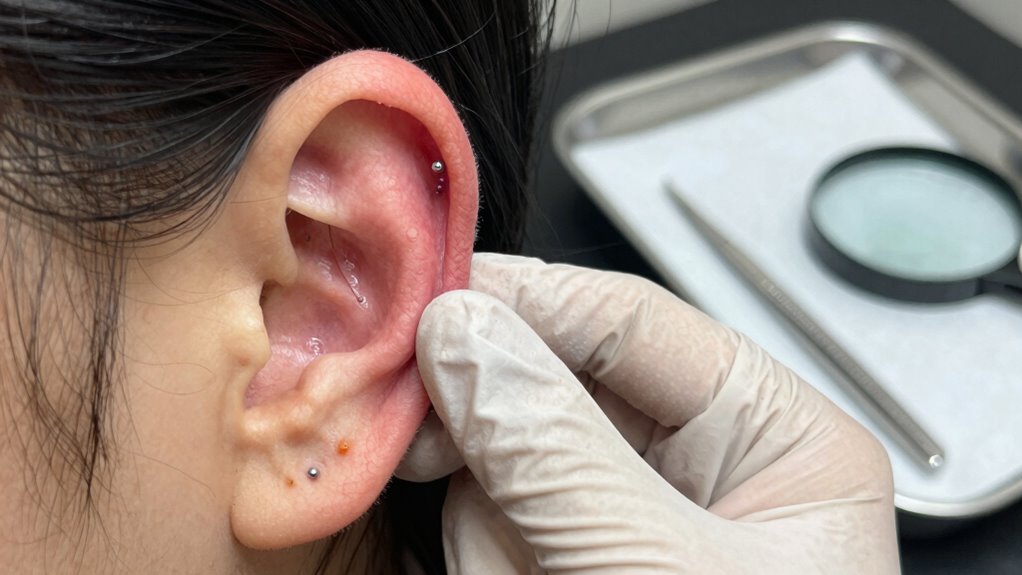
Knowing whether your anatomy is suitable for piercings is crucial to guarantee safety and proper healing. When piercers say your anatomy isn’t suitable, they’re emphasizing the importance of piercing safety and how anatomical variations can influence the process. Not everyone’s body is the same, and certain features might make some piercings riskier or more prone to complications. It’s not about discouraging you but ensuring you understand the potential challenges and health risks involved. Piercers are trained to evaluate your anatomy carefully because piercing safety depends heavily on the specific structure and tissue of your body.
Understanding your anatomy helps ensure safe, successful piercings and proper healing.
For example, if your anatomy has thin tissue, limited space, or irregular bone structure, piercing might not be advisable or could lead to issues like migration, rejection, or excessive discomfort. These anatomical variations can affect how well a piercing heals or even if it will heal at all. Piercers look at factors like tissue thickness, cartilage structure, or proximity to nerves and blood vessels, all of which can influence safety and healing outcomes. When they say your anatomy isn’t suitable, it’s often because doing the piercing could cause damage or increase the chances of infection or rejection.
You might hear that your anatomy isn’t ideal for certain piercings because it’s a matter of minimizing risk. For instance, some people have very thin earlobes or cartilage that’s more fragile, making cartilage piercings less safe. Others might have a shape or position of tissue that doesn’t support a piercing well or could interfere with jewelry placement. Piercing safety isn’t just about avoiding infection; it’s about ensuring the piercing will be stable, cosmetically pleasing, and heal properly without causing damage or pain. Additionally, understanding your anatomical features can help you discuss realistic expectations and suitable options with your piercer. Your piercer’s assessment takes into account these anatomical variations to recommend the safest options. They might suggest alternative piercings or modifications that better suit your body. Recognizing how anatomical structure impacts piercing outcomes can also guide you toward better aftercare practices and long-term satisfaction.
Remember, their goal isn’t to deny you a piercing but to protect your health and ensure a positive experience. If your anatomy isn’t suitable for a specific piercing, it’s better to listen and consider other options rather than rushing into something that could lead to long-term problems. Your body’s unique features are a critical factor in safe piercing practices, and respecting those anatomical boundaries is essential to achieving the best results with minimal risk. Being aware of these factors can also help prevent complications and promote a smoother healing process.

VitaCool Ear Piercing Kit Disposable Ear Cartilage Piercing Gun 3mm Studs
- Complete Piercing Kit: Includes gun, studs, and accessories
- Sterile and Safe: Individually sealed for hygiene and safety
- Premium Material: Made from 316L stainless steel
As an affiliate, we earn on qualifying purchases.
As an affiliate, we earn on qualifying purchases.
Frequently Asked Questions
Can Unsuitable Anatomy Be Corrected for Piercing?
Unsuitable anatomy can sometimes be corrected for piercing, but it depends on your specific situation. You might need surgical options or modifications to reduce discomfort from piercing pain and address aesthetic concerns. Consulting a skilled piercer or a medical professional helps determine if correction is feasible. Keep in mind, some anatomical features are natural, so understanding your options ensures a safer, more satisfying piercing experience.
How Do Piercers Determine if My Anatomy Is Unsuitable?
Think of your body as a complex map, full of unique landmarks and pathways. Piercers determine if your anatomy is unsuitable by examining anatomical variations, such as tissue thickness or bone structure, which could cause piercing complications. They assess these through visual inspection, palpation, and experience, ensuring your body can safely hold the jewelry. If your anatomy doesn’t align with standard piercing requirements, they’ll advise you against proceeding to prevent future issues.
Are There Alternative Piercing Options for Unsuitable Anatomy?
Yes, there are alternative piercing options for unsuitable anatomy. Historical piercing practices and cultural variations show that different communities have adapted piercings to fit unique anatomies, offering more comfortable choices. You might explore placements like surface piercings or micro-dermal implants, which can suit diverse anatomies better. Always consult an experienced piercer familiar with cultural variations, as they can suggest safe, personalized options that align with your anatomy.
Does Unsuitable Anatomy Affect Healing Time?
Unsuitable anatomy can influence your healing time, often leading to healing complications or scar formation. You might experience longer healing periods or more irritation, especially if the piercer had to adjust the placement. Proper aftercare becomes even more vital in these cases to minimize complications. If your anatomy isn’t ideal, staying vigilant about signs of infection and following your piercer’s advice helps guarantee smoother healing and reduces the risk of scarring.
Can I Still Get Pierced if My Anatomy Is Borderline?
If your anatomy is borderline, you might still get pierced, but it’s essential to explore piercing alternatives and consult a medical professional first. A piercer may suggest different spots or methods to guarantee safety and proper healing. Medical consultations help determine if your anatomy can support the piercing safely. Always prioritize expert advice to avoid complications, and consider alternatives if your anatomy isn’t ideal for traditional piercings.
Conclusion
In the end, understanding that your anatomy might not be suitable isn’t about judgment; it’s about safety. Did you know that approximately 20% of people are advised against certain piercings due to their anatomy? Recognizing these limits helps you avoid complications and guarantees a better experience. Trust your piercer’s expertise—they’re looking out for your health and safety. Remember, a suitable piercing is worth waiting for, so listen to their advice and prioritize your well-being.