Petroleum jelly works by creating a simple, effective barrier that locks in moisture and protects your skin, making it great for dry, cracked areas. Healing balms combine the same occlusive effect with nourishing ingredients like oils or shea butter, which help hydrate, heal, and soften your skin. Your choice depends on your needs—if you want basic protection, jelly is enough; if you need extra nourishment, balms are better. Keep exploring to find out which suits you best.

Get beauty and skincare favorites delivered free — and shop member deals
- Fast, free delivery on millions of items
- Access to Prime Big Deal Days deals on October 6–7
- Prime Video, Amazon Music and more included
Key Takeaways
- Petroleum jelly forms a protective occlusive barrier that seals in moisture but does not add hydration itself.
- Healing balms combine occlusion with emollients and nutrients, providing both moisture retention and skin nourishment.
- Petroleum jelly is generally safe and suitable for severely dry or cracked skin, while healing balms address hydration and healing needs.
- Healing balms may contain plant oils and herbal extracts, which can offer additional benefits but may cause sensitivities.
- The choice depends on skin condition; petroleum jelly is best for protection, whereas healing balms support hydration and skin healing.
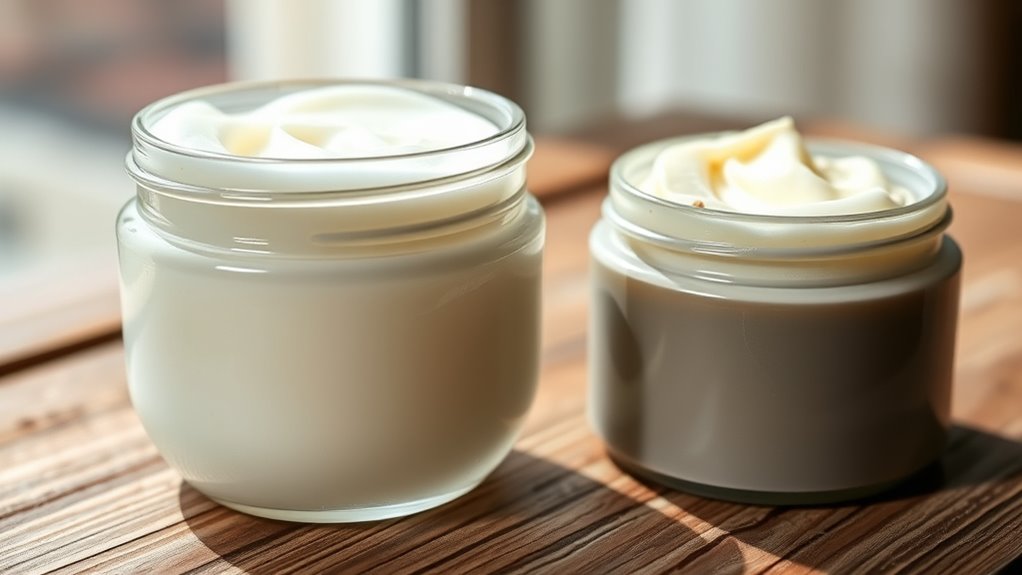
Have you ever wondered which is better for your skin: petroleum jelly or healing balms? When choosing products to soothe, protect, and hydrate your skin, understanding how each works can help you make smarter decisions. Both options aim to provide effective moisturization, but they do so through different mechanisms and ingredient compositions. To evaluate which suits your needs best, it’s essential to consider moisturization techniques and ingredient safety.
Petroleum jelly is a simple, occlusive barrier that locks in moisture by forming a protective layer on your skin’s surface. Its primary ingredient, petrolatum, is highly refined and free from contaminants, making it safe for most skin types. This ingredient safety ensures that petroleum jelly doesn’t cause irritation or allergic reactions in the majority of users. Because it creates a physical barrier, petroleum jelly is particularly effective for severely dry or cracked skin, preventing moisture loss and allowing your skin to heal. However, its occlusive nature means it doesn’t actively hydrate or add moisture itself; instead, it seals in whatever moisture is already present. This is why petroleum jelly works best when paired with moisturizers or after applying hydrating products, as part of a layered moisturization technique.
Petroleum jelly forms a protective barrier that locks in moisture and promotes healing.
Healing balms, on the other hand, often contain a blend of ingredients like plant oils, beeswax, shea butter, and herbal extracts. These ingredients not only form a barrier but also actively deliver nutrients and hydration to your skin. Many healing balms incorporate moisturization techniques that involve both occlusion and emollience—softening and smoothing the skin’s surface. Because these balms are formulated with natural ingredients, ingredient safety can vary. Some plant extracts or essential oils may cause allergic reactions or sensitivities, especially if you have sensitive skin. Consequently, it’s important to read labels carefully and choose balms with ingredients that are safe for your skin type. Their ability to provide both hydration and nourishment makes healing balms versatile for various skin conditions, from chapped lips to minor cuts.
Additionally, the effectiveness of healing balms can be influenced by the environmental conditions, which may affect how well they perform in different climates or seasons. Ultimately, your choice depends on your skin’s specific needs and sensitivities. If you prefer a straightforward, highly safe product that forms a protective barrier, petroleum jelly is an excellent option. If you want a product that offers hydration, nourishment, and potential healing benefits, a well-formulated healing balm may be better—just pay attention to ingredient safety. Both products can be effective, but understanding how they moisturize and the safety of their ingredients will help you select the best for your skin. Remember, the key is to match the product to your skin’s condition and your personal preferences for effective, safe moisturization.
petroleum jelly for dry cracked skin
As an affiliate, we earn on qualifying purchases.
As an affiliate, we earn on qualifying purchases.
Frequently Asked Questions
Are Petroleum Jelly and Healing Balms Safe for Sensitive Skin?
Yes, petroleum jelly and healing balms are generally safe for sensitive skin, but you should check their chemical safety and ingredient transparency. Look for products with minimal, gentle ingredients and avoid added fragrances or dyes that could cause irritation. Always do a patch test first, and choose brands that prioritize ingredient transparency, so you know exactly what’s going on your skin. This way, you can enjoy healing benefits without unnecessary risks.
Can Healing Balms Be Used on Open Wounds?
Healing balms shouldn’t be used on open wounds, as they can trap bacteria, increasing the risk of wound infection. Instead, keep the wound clean and covered with sterile bandages. Healing balms are better suited for dry, healing skin areas. Using the wrong product on open wounds may delay healing and lead to scar formation. Always consult a healthcare professional for proper wound care advice.
Which Product Is Better for Preventing Chapped Lips?
For preventing chapped lips, a healing balm with natural ingredients is your best choice. It provides effective lip hydration by locking in moisture and nourishing your lips. Look for products that contain natural, soothing ingredients like beeswax, shea butter, or coconut oil. These ingredients help protect your lips from dryness and environmental damage. Regular use keeps your lips soft, smooth, and well-hydrated, especially in harsh weather conditions.
Do Healing Balms Contain Harmful Chemicals?
Healing balms can contain chemical ingredients, but many are formulated with natural, safe components to guarantee product safety. Always check the label for artificial fragrances, preservatives, or questionable additives that might cause irritation. If you’re concerned about harmful chemicals, choose balms with transparent ingredient lists and opt for brands committed to non-toxic, gentle formulations. This way, you can enjoy effective healing without compromising your skin’s safety.
How Long Does Each Product Take to Heal Skin?
Petroleum jelly typically takes about 24 to 48 hours for minor skin issues, providing a protective barrier that speeds healing. Healing balms vary depending on ingredients and severity, often taking several days to a week for noticeable results. Your application duration influences healing timeframe; applying consistently helps accelerate recovery. For faster healing, make certain you follow recommended usage instructions and keep the skin clean and moisturized.
Conclusion
Ultimately, whether you choose petroleum jelly or healing balms, think of them as your skin’s loyal knights—each with their own strengths. Petroleum jelly acts like a mighty shield, sealing in moisture, while healing balms are like a gentle gardener, nurturing and restoring. Your skin’s story depends on your choice. Trust your instincts, pick what feels right, and let your skin bloom like a garden in full sun. After all, healthy skin is your personal masterpiece.
Halloween Picks
halloween
As an affiliate, we earn on qualifying purchases.