Piercing plays a essential role in many cultures worldwide, serving as a spiritual act, rite of passage, or symbol of social identity. It often involves sacred rituals, blessings, and community participation, connecting individuals to ancestors or divine forces. The placement of piercings, like ears or lips, carries deep symbolic meaning rooted in tradition. To discover how these practices shape cultural identities and spiritual beliefs across societies, explore more about these fascinating traditions.
Piercings often serve as sacred symbols reflecting spiritual beliefs, rites of passage, or social status across diverse cultures.
Ritual piercing ceremonies involve prayers, offerings, or communal participation, emphasizing their spiritual significance.
Specific body locations for piercings carry symbolic meanings, such as wisdom, communication, or spiritual protection.
Piercing practices are transmitted through generations, preserving their ritual and cultural importance globally.
In many cultures, piercing acts connect individuals with ancestors, spiritual realms, or divine forces beyond aesthetic purposes.
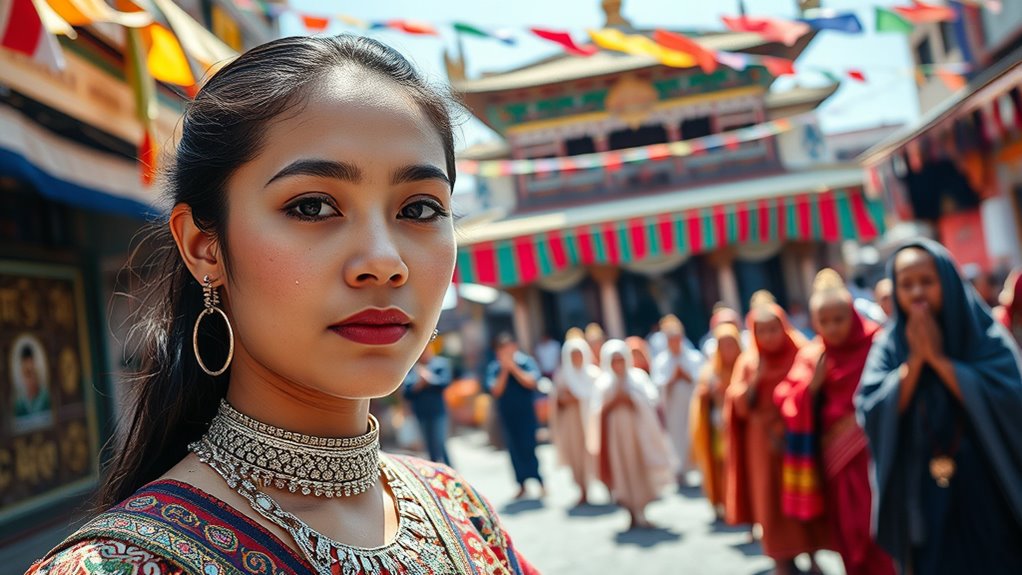
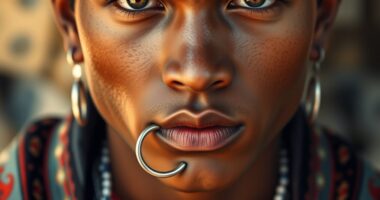
Piercing has long played a significant role in various religious and spiritual traditions around the world. When you think about piercing in these contexts, it’s often more than just an aesthetic choice; it’s deeply rooted in cultural symbolism and holds profound ritual significance. In many cultures, piercing acts as a visual language, communicating identity, spiritual beliefs, or social status. For example, in some African tribes, facial piercings symbolize maturity, bravery, or a rite of passage, marking important life transitions. These piercings aren’t random adornments—they embody cultural values and serve as tangible expressions of heritage. Similarly, in South Asian traditions, nose piercings are linked to religious beliefs and are believed to promote health and fertility, reflecting spiritual symbolism intertwined with daily life.
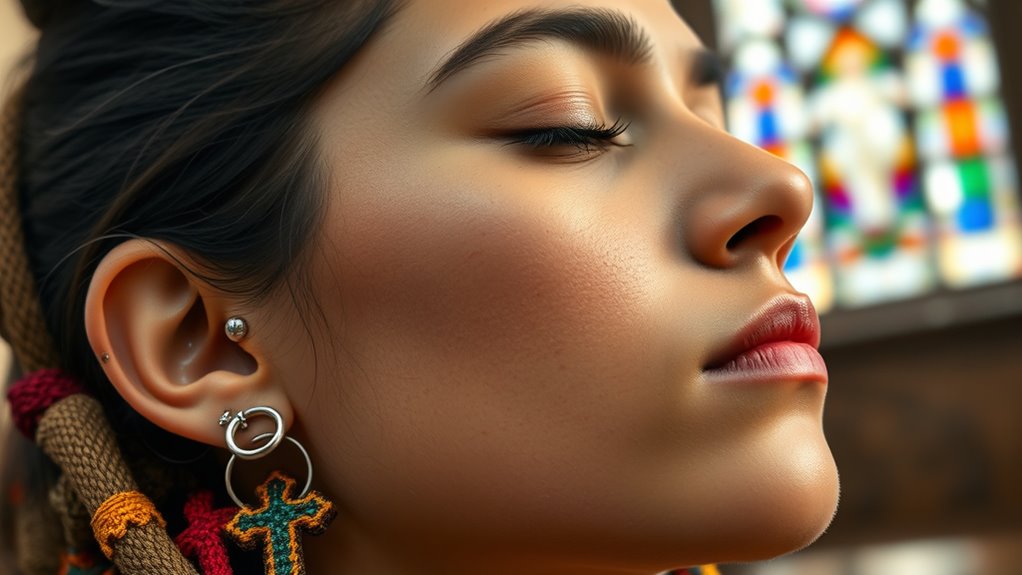
You might also notice that in various indigenous communities, piercing rituals are sacred events that connect individuals to their ancestors or spiritual domains. The act of piercing itself often involves specific rituals, prayers, or ceremonies, emphasizing its ritual significance. These ceremonies are designed to invoke protection, blessings, or spiritual guidance, making the piercing a conduit for divine connection. It’s not just about adornment; it’s about embedding spiritual meaning into the physical body. The placement of the piercing can carry specific symbolic weight—such as ear piercings representing listening and wisdom, or lip piercings signifying communication and social bonds in certain cultures.
In many traditions, the process of piercing is considered a sacred act that requires careful preparation and reverence. You might witness rituals that involve offerings, blessings, or communal participation, reinforcing the idea that piercing is a collective spiritual act. These customs elevate the practice from mere body modification to a meaningful spiritual event, often linked to purification or protection from evil spirits. The cultural symbolism behind these practices is passed down through generations, ensuring that the spiritual and ritual significance remains intact even as the styles evolve.
Frequently Asked Questions
How Do Religious Groups View Modern Body Piercing Practices?
Religious groups vary in their views on modern body piercing practices. Some see it as a form of secular acceptance, embracing personal beliefs and individual expression. Others may oppose it, considering it contrary to their religious teachings or cultural traditions. You might find that within a single faith, opinions differ, with some members adopting piercings as a personal choice, while others view it as incompatible with their spiritual values.
Are There Specific Religious Symbols That Are Traditionally Pierced?
You might find that certain religious groups do have specific symbolic piercings, such as sacred jewelry or tattoos, representing faith or spiritual commitments. For example, some traditions pierce the ears or other body parts to symbolize devotion or protection. These sacred jewelry pieces often carry deep meaning, serving as a physical reminder of spiritual beliefs. While not all religions practice this, those that do see piercing as a meaningful act of faith.
Do Religious Laws Influence Piercing Regulations in Different Countries?
You’d think laws would be straightforward, but no—they’re like a tangled tapestry of cultural influences and legal restrictions. Religious laws do influence piercing regulations in many countries, shaping what’s acceptable or taboo. Some places ban certain piercings altogether, while others embrace them as sacred symbols. So, when you’re piercing your nose or eyebrow, remember—your local laws might be more religiously inspired than you realize, turning your trendy look into a legal adventure.
How Do Cultural Differences Affect Religious Piercing Rituals?
Cultural differences markedly shape religious piercing rituals by emphasizing unique symbolism and ritual significance. You’ll notice that in some cultures, piercing marks important life stages or spiritual beliefs, serving as cultural symbols. These rituals often hold deep spiritual meaning, reinforcing community bonds and personal identity. As a result, the specific practices and symbolism vary widely, reflecting each culture’s values and religious traditions, making piercing a powerful form of cultural expression.
What Are the Spiritual Meanings Behind Certain Piercings in Faiths?
Imagine a simple earring transforming into a powerful symbol—like a key opening spiritual truths. Certain piercings hold deep ritual significance, representing purity, protection, or divine connection. For example, in Hinduism, nose piercings symbolize honor and social status, while in Christianity, they can signify spiritual devotion. These symbolic adornments serve as physical reminders of faith, embodying the deeper spiritual meanings behind each ritual piercing.
Conclusion
As you’ve seen, piercing often gently weaves into the rich tapestry of religious traditions worldwide, symbolizing deeper connections and spiritual journeys. These practices, while diverse, reflect a universal desire to express identity and devotion subtly yet profoundly. Embracing this perspective invites you to appreciate the nuanced ways cultures honor their beliefs, reminding us that such customs, cloaked in symbolism, quietly enrich our shared human experience with respectful elegance.
Gaining insight into the cultural significance of male piercings reveals their profound historical and social meanings, inviting you to explore their intriguing origins further.
Nurtured by cultural traditions, piercings in Roman and Greek societies symbolized identity and status, revealing intriguing insights into their beliefs and social structures.
Body Piercings in Ancient Civilizations: From Egypt to the Mayans
Gain insight into the significance of body piercings in ancient civilizations, revealing their spiritual and social roles—what secrets do these practices still hold today?