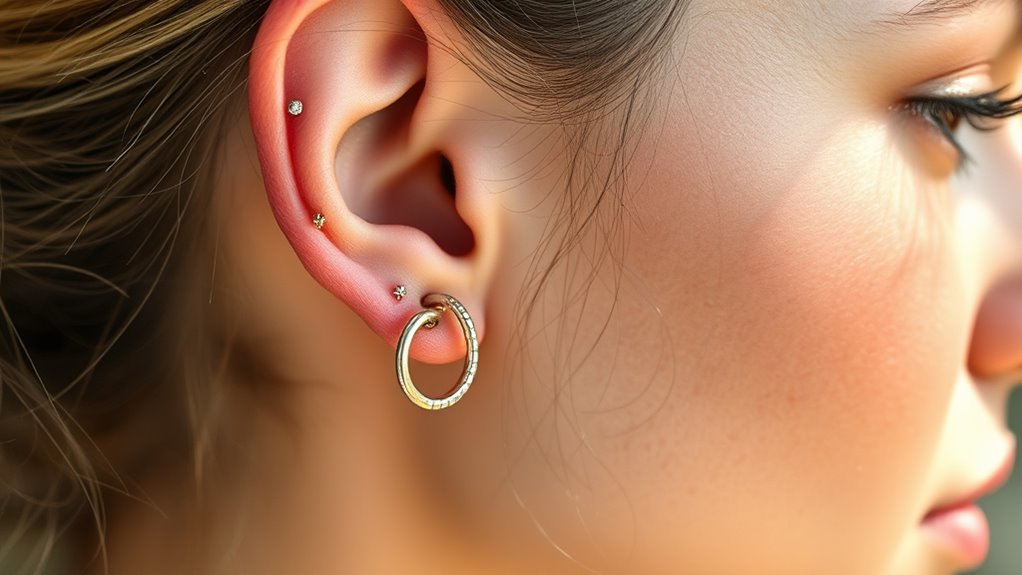

Piercings are a powerful form of self-expression and empowerment, allowing you to showcase your personal identity and cultural roots. They help you feel more confident, control your body, and symbolize your stories or values. Caring for your piercings builds resilience and self-trust, boosting your mental well-being. If you’re curious about how piercings can strengthen your sense of self, exploring this connection further can provide deeper insights.
Key Takeaways
- Piercings serve as symbols of personal empowerment, affirming control over one’s body and choices.
- They facilitate self-expression, allowing individuals to communicate identity, values, and cultural heritage visually.
- Proper care and healing processes foster resilience, patience, and a sense of achievement, boosting mental well-being.
- Wearing meaningful piercings can reinforce self-worth and confidence through personal and cultural significance.
- Piercings can be tools for emotional healing by serving as external symbols of strength, authenticity, and self-acceptance.
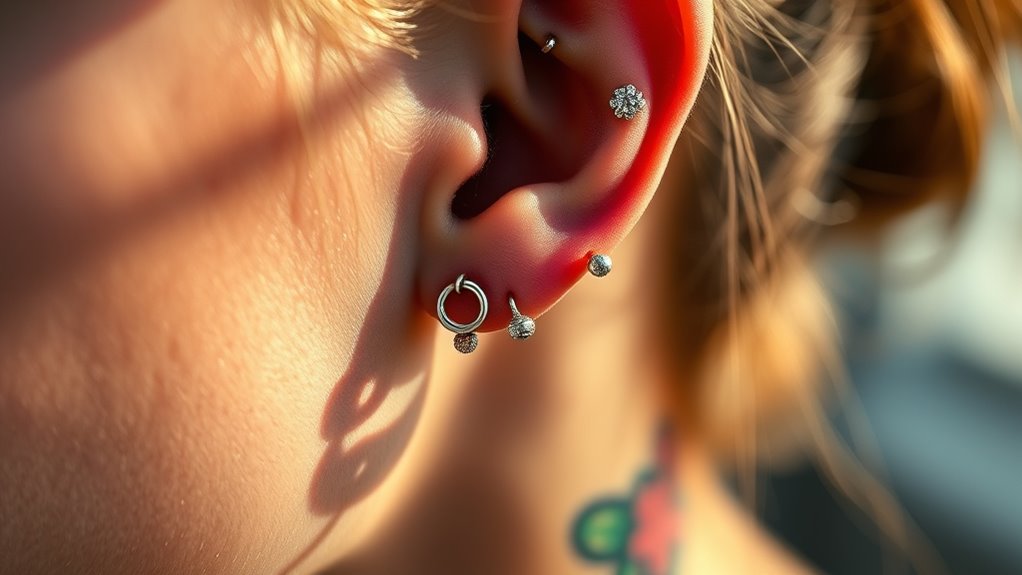
Piercings often go beyond fashion statements; they can also serve as powerful tools for self-expression and emotional well-being. When you choose to get a piercing, you’re not just adding a piece of jewelry; you’re tapping into a deeper layer of cultural significance that can resonate with your identity. Many cultures have long used piercings as symbols of rites of passage, spiritual beliefs, or social status. For you, that history can add meaning to your decision, transforming a simple adornment into a reflection of your heritage or personal journey. This connection to cultural roots can foster a sense of belonging and pride, reinforcing your self-esteem by affirming your unique identity within a broader cultural context. When you wear a piercing with intention, it becomes more than just an accessory—it embodies your story, values, or connection to your community.
Piercings connect you to cultural roots, symbolizing identity, pride, and personal journey.
Moreover, the act of choosing and maintaining a piercing can have a positive impact on your self-esteem. When you decide to modify your appearance, you’re asserting control over your body and expressing your individuality. This act of self-determination can boost confidence, especially if you’ve struggled with self-acceptance. As you see your piercing heal and settle into your look, you might feel a sense of achievement and empowerment. It’s a visual reminder that you can make choices that reflect who you are and what you stand for. This feeling of ownership can strengthen your mental resilience, helping you navigate societal pressures or personal doubts. Over time, your piercing can become a symbol of your courage and authenticity, reinforcing your self-worth. Additionally, maintaining proper appliance maintenance plans during healing can ensure a healthy piercing experience and support your emotional well-being.
Getting a piercing also involves a level of patience and care, which can be beneficial for your mental health. The process requires research, decision-making, and sometimes overcoming fears of pain or infection. Successfully managing these steps instills a sense of accomplishment, fostering a mindset of resilience and self-trust. Additionally, taking pride in your piercing’s upkeep and healing journey can foster mindfulness and responsibility, contributing to a healthier self-image.
In essence, piercings serve as more than external adornments—they act as meaningful expressions of identity and strength. Whether rooted in cultural significance or driven by personal empowerment, they can profoundly influence your self-esteem and emotional well-being. When you wear your piercing with intention, you’re embracing your individuality and affirming your worth, making it a powerful tool for mental health and self-expression.
Frequently Asked Questions
Can Piercings Help Improve Self-Esteem Long-Term?
Yes, piercings can improve your self-esteem long-term by boosting body positivity and embracing your aesthetic expression. When you choose to get a piercing that reflects your personality or style, you actively take control of your body image, which fosters confidence. Over time, these small acts of self-expression can reinforce your sense of individuality, helping you feel more comfortable and empowered in your own skin.
Are Piercings Linked to Specific Mental Health Conditions?
Piercings aren’t directly linked to specific mental health conditions, but they often serve as powerful tools for cultural significance and identity expression. When you get a piercing, you might feel more connected to your heritage or personal beliefs, which can boost your confidence and emotional well-being. While they don’t diagnose or treat mental health issues, piercings can be meaningful symbols that support your journey of self-discovery and empowerment.
How Does Peer Pressure Influence Piercing Decisions?
Peer pressure acts like a tide, pulling you toward conformity and social acceptance. You might feel the urge to pierce just to blend in or avoid standing out, even if it’s not truly your style. This influence can make decisions feel like a game of follow the leader, rather than choices rooted in your authentic self. Staying true means resisting that wave, choosing expression over conformity.
What Are the Risks of Emotional Dependence on Piercings?
You might develop emotional dependence on piercings if you attach too much emotional significance or use them as a ritual to cope with stress. This emotional attachment can lead to obsession or difficulty when removing piercings, affecting your mental well-being. Recognize that while piercings can be meaningful, relying solely on them for emotional comfort can hinder your emotional resilience and growth. Balance is key to healthy expression.
Can Piercings Assist in Trauma Recovery Processes?
Piercings can assist in trauma recovery by serving as a form of body modification that helps you regain control and express resilience. When you choose piercings intentionally, they can symbolize healing and personal strength, boosting emotional resilience. This act allows you to reconnect with your body positively, turning a painful experience into a symbol of empowerment, ultimately supporting your trauma recovery journey.
Conclusion
Ultimately, piercings can be a powerful form of self-expression and confidence boost. Studies show that 70% of people with piercings report feeling more empowered and in control of their identity. So, whether you see them as a way to showcase your personality or boost self-esteem, piercings can positively impact your mental health. Embrace your choices—they’re a bold step toward owning who you are and feeling more authentic every day.