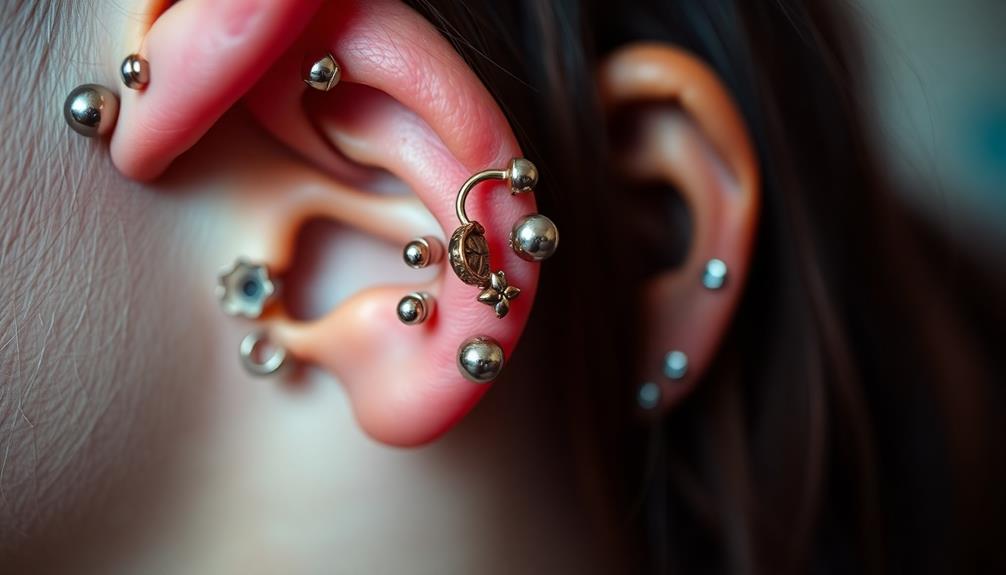
In healthcare professions, policies on piercings vary but often emphasize professionalism, hygiene, and patient comfort. You might be asked to remove visible or large jewelry during patient interactions, while discreet piercings may be permitted. Organizations aim to balance personal style with safety standards, so maintaining proper hygiene and choosing appropriate accessories is key. By following these guidelines, you can express yourself without compromising your role—continue exploring to discover how to navigate personal expression in healthcare settings effectively.
Key Takeaways
- Healthcare facilities often have policies requiring facial piercings to be removed or minimized during patient care.
- Visible or large piercings may be viewed as unprofessional, influencing patient perception and trust.
- Safety and hygiene standards emphasize keeping jewelry clean and preventing interference with medical procedures.
- Personal expression through piercings is usually permitted outside work hours, with guidelines promoting discreet or removable jewelry.
- Recognizing personal interests like anime, organizations encourage subtle accessories that align with professionalism and policy compliance.

Piercings in healthcare professions often spark debate due to concerns about professionalism, hygiene, and safety. As a healthcare worker, you might wonder how your personal style, including piercings, fits into the expectations of your workplace. Many healthcare facilities have established tattoo policies and guidelines about piercings to maintain a professional appearance. These policies are meant to ensure that patients feel comfortable and confident in your care, which often means minimizing visible accessories that could distract or be perceived as unprofessional.
Healthcare settings often have policies on piercings to maintain professionalism, hygiene, and patient comfort.
You’ll find that some institutions take a strict stance, requiring staff to remove facial piercings during patient interactions, while others adopt a more lenient approach, allowing discreet or small jewelry pieces. The goal is to strike a balance between personal expression and maintaining a professional appearance that upholds the trust and confidence of your patients. When you’re aware of these tattoo policies, you can choose to wear piercings in a way that aligns with your workplace standards—perhaps opting for jewelry that is less conspicuous or removable during shifts. This way, you demonstrate respect for your institution’s policies while still expressing your individuality outside of work hours.
Your choice of jewelry and how you present yourself directly impacts how patients perceive your professionalism. Wearing large or dangling earrings, for example, could be seen as unprofessional or potentially unsafe if they interfere with your ability to perform procedures or if they pose a risk of contamination. Conversely, small, discreet piercings that are kept clean and properly maintained tend to be acceptable in most healthcare environments. It’s also important to regard hygiene practices; jewelry that is difficult to clean or sanitize can harbor bacteria, which raises safety concerns. Following your facility’s policies on piercings and personal grooming not only upholds hygiene standards but also contributes to a professional appearance that reassures patients about your competence and care. Additionally, many healthcare organizations recognize the increasing popularity of anime movies and similar interests, which can be subtly reflected in personal accessories that are appropriate for the workplace.
In the end, understanding and adhering to your workplace’s stance on piercings helps you navigate the fine line between personal expression and professional responsibility. By being mindful of tattoo policies and maintaining a professional appearance, you show respect for your patients and your colleagues. Even if your personal style includes visible piercings, you can find ways to keep your look appropriate within the healthcare setting, ensuring that your focus remains on providing high-quality, safe care.
Frequently Asked Questions
Are There Specific Certifications Required for Piercing Professionals in Healthcare Settings?
You don’t typically need a specific piercing certification or professional licensing for healthcare settings. However, many facilities require you to possess a valid piercing certification demonstrating proper techniques and hygiene practices. Some states or institutions may have additional licensing or training requirements to ensure safety standards are met. Always check the specific policies of your employer or local regulations to ensure you’re fully compliant with their standards.
How Do Patient Preferences Influence Piercing Policies in Hospitals?
You’ll find that patient preferences greatly influence piercing policies in hospitals, especially regarding patient comfort and aesthetic standards. When patients express concerns or desires about piercings, hospitals often adapt their policies to respect those preferences, ensuring a more positive experience. By balancing safety with individual aesthetic choices, healthcare providers can improve patient satisfaction while maintaining necessary safety protocols. This approach fosters trust and aligns care with patient values.
What Legal Liabilities Exist for Healthcare Workers With Facial Piercings?
Imagine a fragile glass heart, easily shattered by oversight. As a healthcare worker with facial piercings, you face legal liability if your appearance compromises patient safety or breaches dress code policies. This could lead to negligence claims or disciplinary action. Maintaining liability insurance becomes essential to protect you from potential lawsuits. Staying compliant with institutional policies minimizes your legal risks, ensuring you safeguard both your career and your patients’ trust.
Are There Cultural Considerations Affecting Piercing Policies Among Healthcare Staff?
Cultural sensitivity and religious beliefs markedly influence piercing policies among healthcare staff. You should consider that some cultures view piercings as sacred or essential to identity, which affects their acceptance or restriction in the workplace. By respecting these cultural and religious differences, you promote inclusivity and understanding, ensuring that policies are fair and considerate. Balancing safety with cultural respect helps create a supportive environment for all staff members.
How Do Infection Control Protocols Address Piercings in Clinical Environments?
You need to follow strict infection control protocols, including sterilization procedures for piercing-related items and surfaces, to prevent contamination. Wearing appropriate personal protective equipment, like gloves and masks, is essential when handling piercings in clinical environments. These measures help reduce the risk of infection transmission and ensure patient safety. Always adhere to your facility’s guidelines, maintaining high standards of hygiene and sterilization to safeguard everyone involved.
Conclusion
In the world of healthcare, your piercings are like a double-edged sword—showing your personality while sometimes clashing with policies. By understanding and respecting these guidelines, you can navigate your career path smoothly, turning potential hurdles into opportunities for professionalism. Remember, policies are the compass guiding your journey, not barriers blocking your way. With open communication and awareness, you can keep your self-expression shining brighter than ever—without dimming your career prospects.