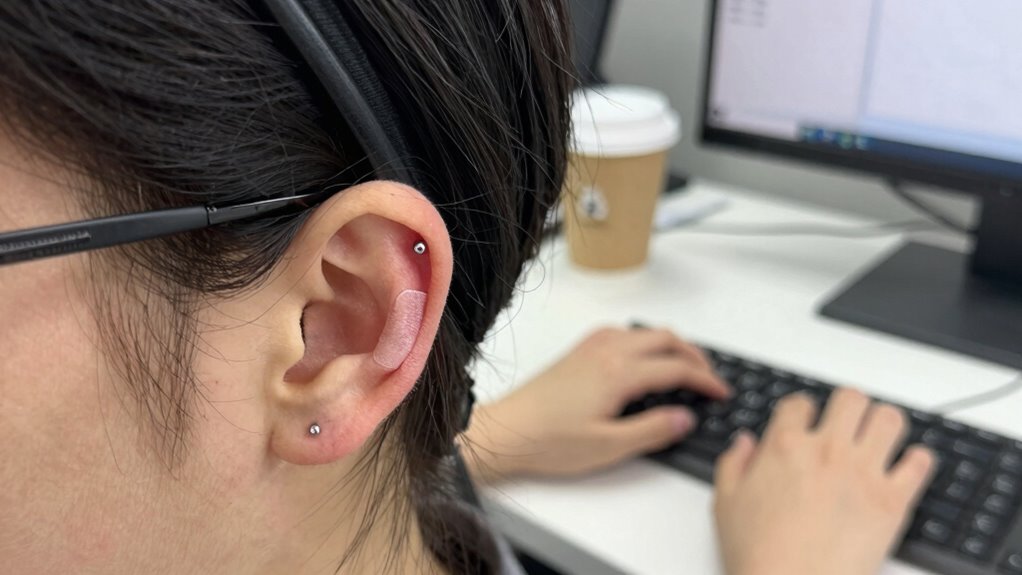
On long work days, protect your healing piercing by keeping it clean and dry, using a saline spray when needed. Avoid touching or fiddling with it, and cover it with a clean bandage if you’re in dusty or dirty environments. Wear loose, breathable clothing and avoid anything tight that could irritate the area. Regularly inspect your piercing for signs of irritation, and take extra care with hygiene and environmental factors. For more tips, you’ll find useful strategies to keep your piercing safe throughout your workday.

Get beauty and skincare favorites delivered free — and shop member deals
- Fast, free delivery on millions of items
- Access to Prime Big Deal Days deals on October 6–7
- Prime Video, Amazon Music and more included
Key Takeaways
- Cover the piercing with a clean, breathable bandage in dusty or contaminated environments.
- Minimize touching or adjusting the jewelry with clean hands to prevent infection.
- Wear loose, breathable clothing to avoid pressure or friction on the healing area.
- Carry a saline spray or gentle cleaning solution for regular, on-the-go cleaning.
- Inspect the piercing periodically for signs of irritation and keep jewelry clean and secure.
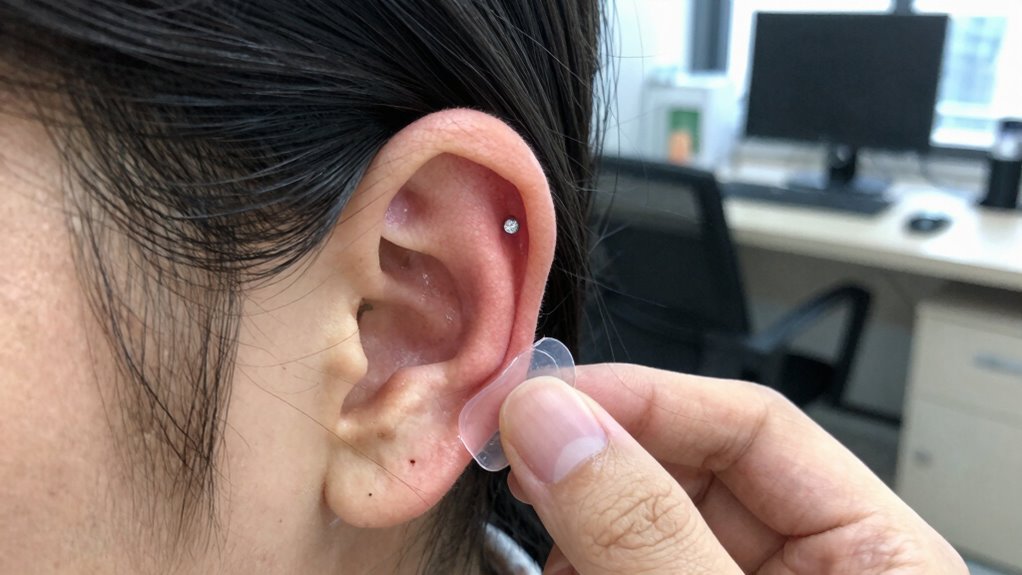
Long work days can pose a challenge to keeping a healing piercing protected, especially when you’re busy and distracted. You might find yourself juggling meetings, deadlines, and the daily grind, leaving little room for extra care of your piercing. However, protecting your healing piercing is essential to prevent infection, irritation, or even rejection. One of the most effective ways to do this is by paying close attention to your piercing jewelry. Ensure that your jewelry is made from high-quality, hypoallergenic materials like surgical steel, titanium, or niobium. These materials are less likely to cause allergic reactions or irritate your skin, which is crucial during the healing process. Additionally, keep your piercing jewelry clean and secure. Avoid unnecessary touching or fiddling with the jewelry during the day, as this can introduce bacteria or cause accidental injury. Maintaining proper workplace hygiene is vital to avoid contaminating your piercing and slowing the healing process. Proper air quality can also influence healing, especially in environments with dust or chemical fumes. Exposure to pollutants or fumes can irritate your skin and delay recovery, so being mindful of your environment is key.
Workplace hygiene plays a vital role in maintaining the health of your piercing. If your job involves handling food, chemicals, or dirty equipment, always wash your hands thoroughly before touching your face or your piercing. Avoid touching or adjusting your jewelry unless absolutely necessary, and even then, make sure your hands are clean. Consider carrying a small, alcohol-free saline spray or a gentle cleaning solution to keep your piercing fresh and free from bacteria throughout the day. This simple step can significantly reduce the risk of infection. Also, be aware that proper storage of your jewelry when not in use helps prevent unnecessary contamination or damage.
To further protect your healing piercing, be mindful of your environment and clothing. Tight collars, headbands, or hats can rub against your piercing, causing discomfort or delaying healing. Choose loose, breathable clothing that doesn’t put pressure on the area. If you work in a dusty or dirty environment, try to cover the piercing with a clean bandage or avoid exposing it to potential contaminants. When you’re at your desk or in a private space, take a moment to gently inspect your piercing and the jewelry for any signs of swelling, redness, or irritation. Additionally, being aware of digital threats and ensuring your personal information remains secure is essential, especially when managing health-related data or sharing updates about your healing process online.
Frequently Asked Questions
Can I Wear Headphones With a Healing Ear Piercing?
Yes, you can wear headphones with a healing ear piercing, but you should be cautious. Make sure to keep earphone hygiene by cleaning your earbuds regularly to prevent infection. Also, avoid headphone pressure on the healing site, as it can cause irritation or delay healing. Opt for lightweight, comfortable headphones or take breaks to reduce pressure. Being gentle and maintaining cleanliness helps protect your piercing while enjoying your favorite tunes.
Is It Safe to Use Hair Products Near a Healing Piercing?
An ounce of prevention is worth a pound of cure. You should avoid using hair products near a healing piercing because hair product interference can cause irritation or infection. Chemical exposure risks increase if hair sprays, gels, or dyes come into contact with the fresh piercing. To protect your healing process, keep hair products away and apply them carefully, ensuring they don’t touch your piercing.
How Often Should I Check for Signs of Infection During Work?
You should check for signs of infection daily during your work, especially in the early healing stages. Look for redness, swelling, pain, or discharge, which are common infection signs. Keep in mind your healing timeline; most piercings heal within a few months, but vigilance is key. Regularly inspecting your piercing helps catch issues early, ensuring proper healing and preventing complications.
Can I Exercise or Sweat Heavily During a Long Workday?
You can exercise or sweat heavily during a long workday, but exercise precautions. Sweat may irritate your healing piercing, so follow sweat management tips like wiping away sweat gently and avoiding excessive touching. Stay mindful of any discomfort or swelling, and consider postponing vigorous activities if needed. Protect your piercing by keeping it clean and dry afterward, ensuring proper healing even during busy days.
Are There Specific Materials I Should Avoid for Jewelry During Healing?
You should avoid jewelry made from materials that can cause nickel allergies or irritate your healing piercing. Nickel is a common allergen, so steer clear of jewelry with nickel content. Additionally, tight jewelry can cause discomfort and delay healing. Opt for hypoallergenic materials like surgical steel, titanium, or gold, and choose loose-fitting pieces to prevent irritation and promote proper healing during long work days.
Conclusion
By being mindful, meticulous, and motivated, you’ll master the art of protecting your piercing through long work days. Keep it clean, cover it carefully, and avoid unnecessary contact to prevent problems. Patience and persistence pay off, so stay committed to your care routine. With consistent caution and gentle handling, your piercing will heal happily and healthily, giving you peace of mind and a perfect, pristine piercing to proudly show off for years to come.
Evergreen bestsellers Picks
bestsellers
As an affiliate, we earn on qualifying purchases.