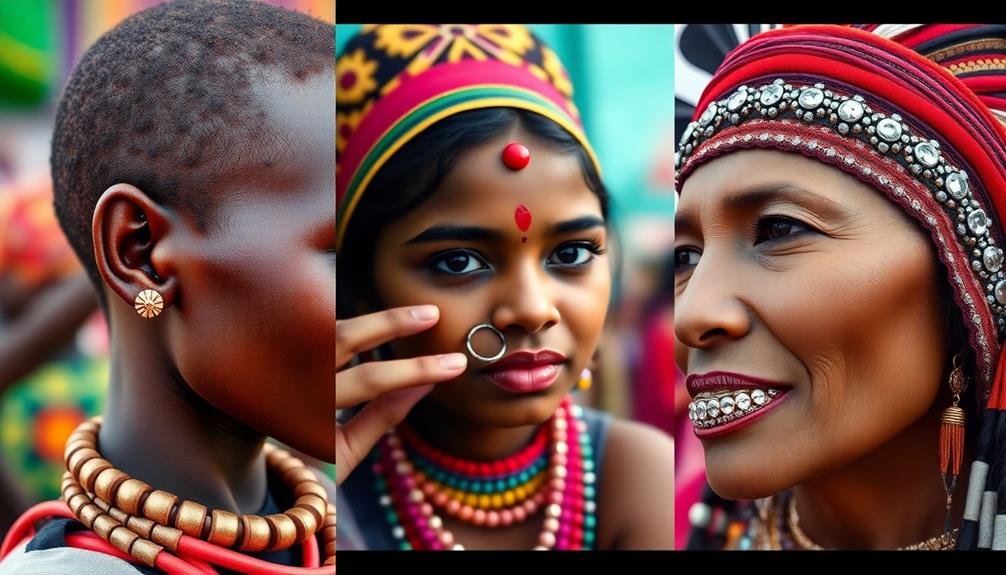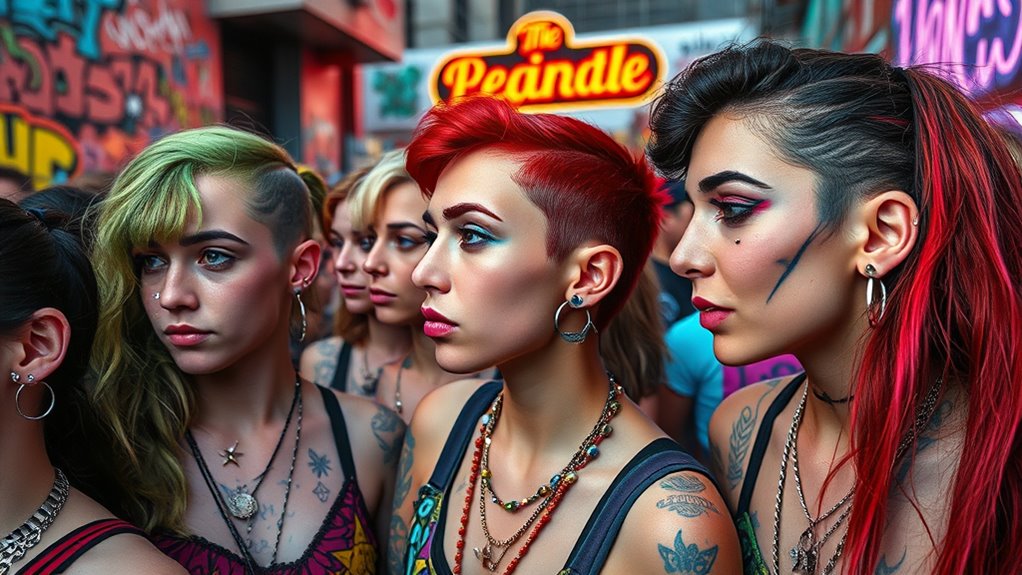

You’ve likely noticed how societal views on piercings have shifted over time, from their roots in cultural identity to symbols of rebellion during the hippie and punk movements. While many embrace body modifications as self-expression, lingering stereotypes still associate multiple piercings with delinquency or deviance. Understanding how perceptions evolved helps you see beyond misconceptions. If you’re curious about how these perceptions continue to influence attitudes today, there’s more to uncover behind the cultural history of piercings.
Key Takeaways
- Hippies embraced piercings as symbols of freedom, challenging mainstream norms and fostering a countercultural identity.
- Punk movements adopted piercings as acts of rebellion, emphasizing non-conformity and resistance against authority.
- Historically, piercings carried social and cultural meanings, often linked to status or deviance, influencing modern perceptions.
- Stereotypes associate multiple or unusual piercings with delinquency, perpetuating misconceptions about personal judgment and behavior.
- Recognizing piercings as art and personal expression helps reduce stigma rooted in historical and cultural biases.

Have you ever wondered why pierced individuals often face judgment or misunderstanding? It’s a question that taps into deep-rooted cultural perceptions about body modifications. For centuries, societies have associated piercings with specific identities or social statuses, shaping how people view those who choose to pierce their bodies. Today, piercings are more common and accepted in many circles, but they still carry a weight of history that influences perceptions. Many see piercing as a rebellious act, aligning it with fashion statements that challenge traditional norms. This perception isn’t accidental; it’s rooted in cultural narratives that once linked body modifications to non-conformity, subversion, or even deviance. When you see someone with multiple piercings or unusual jewelry, your mind might jump to these stereotypes, even if subconsciously. This cultural lens often leads to misunderstandings, where piercings are mistaken for signs of delinquency or poor judgment, rather than personal expression or art.
Throughout history, different movements have popularized piercing as a form of identity or resistance. The hippie movement, for example, embraced body modifications as a way to reject mainstream societal standards and celebrate freedom. Piercings became symbols of rebellion against conservative values, representing a desire for individuality. Later, punk movements took this further, using piercings and tattoos as a form of defiance against authority and societal expectations. These groups intentionally used body art to make a statement—sometimes shocking, sometimes provocative. As a result, piercing became closely linked with counterculture, which further cemented the idea that it was inherently rebellious or non-conformist.
But it’s important to recognize that these perceptions are shifting. What was once seen as edgy or taboo is now increasingly mainstream, especially among younger generations. Many now wear piercings as fashion statements, choosing jewelry to complement their personal style without any rebellious intent. The cultural perceptions are evolving, yet the stigma persists in some areas, often rooted in outdated stereotypes. When you see someone with piercings, you might automatically associate it with certain identities or behaviors, but it’s worth questioning those assumptions. Piercing is a form of self-expression that can carry deep personal meaning, cultural significance, or simply be a fashion statement. Recognizing this helps dismantle prejudices and opens the door to understanding the diverse reasons behind body modifications. Ultimately, piercings are a form of art and identity—worthy of respect, regardless of societal perceptions.
Frequently Asked Questions
How Has Piercing Stigma Changed Over Different Cultural Eras?
You’ve seen how piercing stigma has evolved through cultural shifts. In earlier eras, it faced more historical acceptance during hippie movements, symbolizing freedom and rebellion. Over time, as punk and alternative cultures gained prominence, piercing became more mainstream, reducing stigma. Today, piercing is widely accepted, often seen as a form of self-expression rather than rebellion, reflecting changing attitudes and a broader cultural acceptance of diverse body modifications.
What Role Does Media Play in Shaping Piercing Perceptions?
Media acts like a spotlight, shaping your perception of piercing through powerful influence. It broadcasts images, stories, and stereotypes that either elevate or stigmatize body art, turning perceptions into societal truths. When media champions piercing as edgy or rebellious, it fuels acceptance; when it portrays it negatively, it reinforces stigma. Your views are molded by this constant stream of perception-shaping content, making media the key driver in how society perceives piercings today.
Are There Specific Professions More Accepting of Pierced Individuals?
You’ll find that creative fields like arts, design, and entertainment tend to have higher workplace acceptance of pierced individuals, as they value individuality and self-expression. However, professional bias still exists in more conservative industries like finance, law, and corporate settings, where piercings may be viewed as unprofessional. It’s essential to contemplate the specific workplace culture, but generally, acceptance varies based on industry norms and personal attitudes.
How Do Religious Views Influence Attitudes Toward Piercing?
Religious views often shape attitudes toward piercing by reinforcing cultural taboos based on religious doctrines. Some faiths see piercing as a form of desecration or disrespect, leading followers to oppose it, while others accept or even incorporate it into spiritual practices. Your perception of piercing is influenced by these religious teachings, which can either stigmatize or normalize body modifications depending on cultural and spiritual contexts.
What Are Effective Strategies to Reduce Piercing Stigma Today?
You can reduce piercing stigma today by promoting body positivity and encouraging open conversations. Share your own positive experiences and challenge stereotypes, showing that piercings are a form of self-expression. Leverage peer influence by supporting friends with piercings and advocating acceptance in your community. Educate others about the cultural and personal significance of piercings, helping to normalize them and diminish negative judgments. Your attitude can make a real difference.
Conclusion
As you reflect on piercing’s journey from counterculture to mainstream, it’s clear how perceptions can change unexpectedly. Today, you might see someone with a piercing and think nothing of it—yet just decades ago, it sparked controversy. Sometimes, society’s biggest shifts happen quietly, like a piercing that starts as rebellion but becomes accepted. It’s a reminder that what’s stigmatized today might be embraced tomorrow—proof that change often begins with a small, unnoticed act.