
TL;DR

Get beauty and skincare favorites delivered free with Prime
- Fast, free delivery on millions of items
- Prime Video, Amazon Music and more included
- Member-only deals all year
Peter Xie, OEM Project Director at oral-care manufacturer ORALABX, says an approved mouthwash sample should begin production planning, not end product development. His report describes checks for ingredients, water, mixing, pH, filling and packaging, while recommending that brands involve manufacturers early.
Moving mouthwash from an approved sample to commercial production requires brands and manufacturers to coordinate formula, flavour, packaging and filling decisions, according to Peter Xie, OEM Project Director at oral-care manufacturer ORALABX. His report for Cosmetics Business says a sample is a starting point for production planning, with additional controls needed to make batches and finished packs consistent.
Xie says product decisions that may appear separate can affect one another during scale-up. A flavour adjustment may change clarity, he writes, while a different bottle or cap may require another compatibility check. The filling method also matters: a liquid that performs well in a hand-filled sample still needs to run properly through standard filling and capping operations.
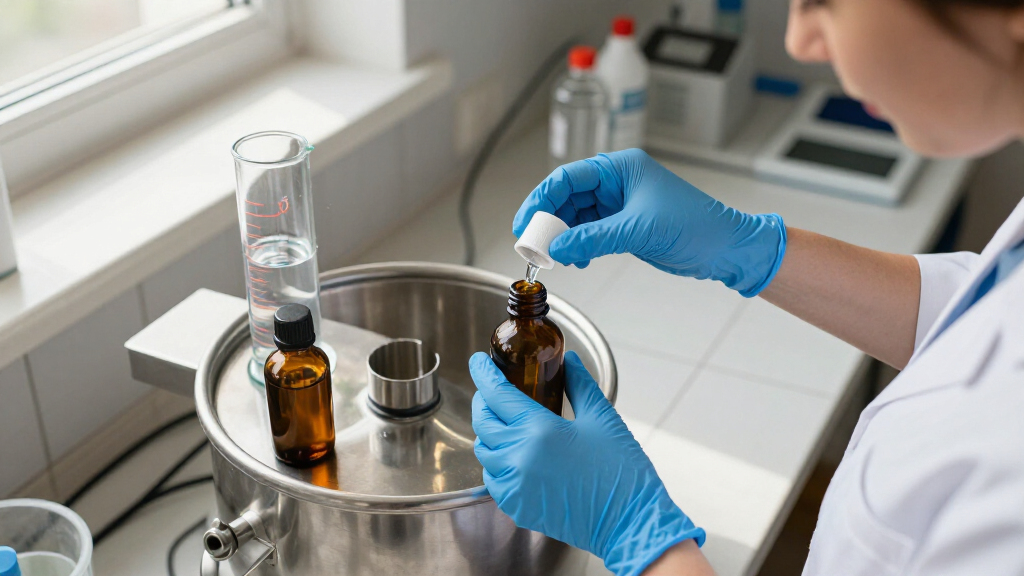
Once the product specifications are set, production teams need to follow them consistently. The report identifies raw-material specifications, water quality, ingredient addition order and mixing conditions as factors to control. During a batch, staff check practical measures including appearance and pH before the liquid goes to filling.
Checks continue on the production line and after packaging. Xie lists fill level, closure application, leakage and pack appearance among the points requiring attention. He also says finished products should be checked against agreed requirements, production records retained, and samples saved so later batches can be compared with earlier ones.
Why Early Production Planning Matters
The report’s practical point for mouthwash brands is that approval of a sample does not establish that a product is ready for high-volume manufacture. A formula and pack may work in a small trial but raise different questions when produced and filled using commercial equipment. Finding those issues late can mean changing a bottle, revisiting a flavour or clarity target, or repeating compatibility work after production plans are under way.
That makes the timing of manufacturer involvement relevant to both product consistency and launch planning. Xie recommends bringing the manufacturer into packaging and scale-up decisions before the final sample is approved. The report does not quantify the cost or frequency of production problems, but it describes a way to reduce avoidable rework: settle specifications and check how they interact before units reach the line.
For consumers, the controls described concern whether the product and its packaging match agreed requirements from batch to batch. The source does not report a particular defect, recall or safety incident; it presents production planning as a general manufacturing lesson rather than coverage of a specific failure.
As an affiliate, we earn on qualifying purchases.
From Sample Approval to Batch Controls
The source report, published by Cosmetics Business, is written by Peter Xie, OEM Project Director at ORALABX, which it describes as an oral-care OEM and private-label manufacturer in China. The article focuses on the handoff from product development to commercial manufacturing, rather than announcing a new product, regulation or company initiative.
Its sequence is straightforward: agree the formula and product targets, consider the bottle and closure alongside the filling method, then define checks for mixing, filling and completed packs. The report stresses that appearance, pH and packaging performance should be considered as part of a connected process. It does not provide a named mouthwash formula, production volume, test results or technical thresholds.
Xie’s advice reflects the source’s manufacturing perspective. ORALABX is identified as the company he works for, and the supplied report does not include independent industry data or comment from other manufacturers. The specific examples and recommendations should therefore be understood as his account of production planning, not as a survey of the whole oral-care sector.
“The approved sample as the starting point for production planning, not the end of product development.”
— Peter Xie, OEM Project Director at ORALABX, in a report for Cosmetics Business
Limits of the Production Report
The supplied report does not identify a particular mouthwash moving into production or describe a specific scale-up project. It offers general guidance from an OEM manufacturer, rather than independently verified findings about production outcomes. It also gives no data on batch sizes, costs, failure rates, testing methods or how often the cited issues arise.
The report names checks such as pH, appearance, leakage and pack presentation but does not state the acceptance limits or applicable standards. It is not clear what product-specific testing, regulatory review or quality systems would apply to any individual mouthwash. Those details depend on the formula, market and production arrangement and are not covered in the source material.
Align Specifications Before the Run
The next step described by Xie is for brands and manufacturers to discuss the formula, flavour target, colour or clarity, bottle, closure and filling method together before production is fixed. Once they agree the requirements, the production team can work to the specified materials and process conditions, check the batch before filling, monitor the line and retain records and samples for comparison.
The report does not give a timeline for a particular production run or announce a follow-up development. For any individual project, the remaining milestones would depend on the product and manufacturer; the source’s recommendation is to resolve compatibility and scale-up questions before commercial filling begins.
Key Questions
What changes when mouthwash moves from a sample to production?
Commercial production adds process and packaging controls beyond checking an approved sample. The report cites material specifications, water quality, mixing conditions, batch appearance and pH, plus filling, closure and leakage checks.
Why can a sample behave differently on a production line?
A hand-filled sample may not show how the liquid will perform during normal filling and capping. The report also notes that flavour changes can affect clarity and that changing a bottle or cap may require another compatibility check.
When should a brand involve its manufacturer?
Xie recommends involving the manufacturer in packaging and scale-up decisions before final sample approval, so potential formula, pack or filling issues can be addressed before commercial production.
What production checks does the report mention?
The report lists raw-material specifications, water quality, addition sequence and mixing conditions; appearance and pH during batching; and fill level, closure application, leakage and pack appearance on the line. It also mentions finished-product checks, records and retained samples.
Does the report document a specific product problem?
No. The supplied article gives general scale-up guidance and does not identify a particular production failure, recall, product launch or measured outcome.
Source: rss
Fall Picks
fall essentials
As an affiliate, we earn on qualifying purchases.