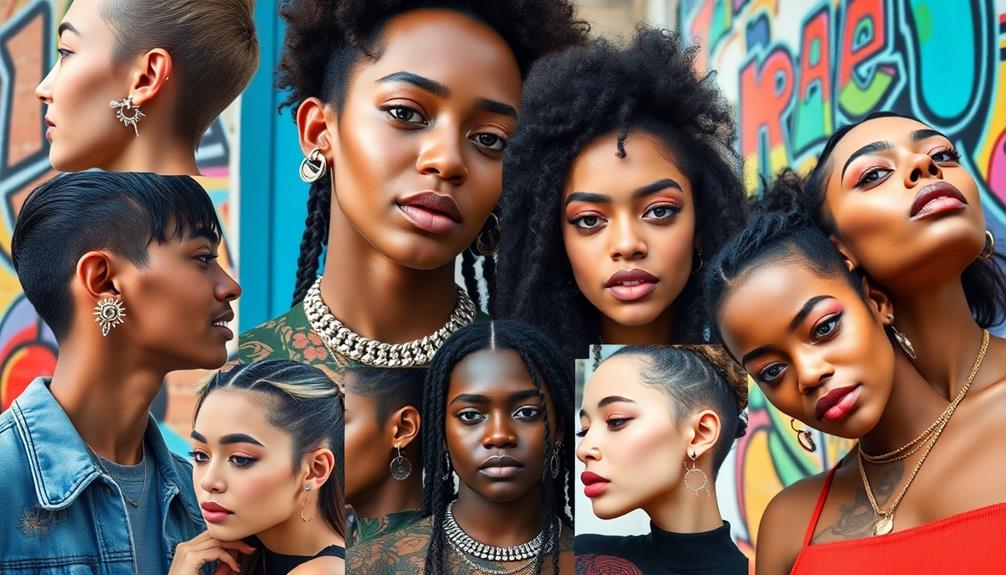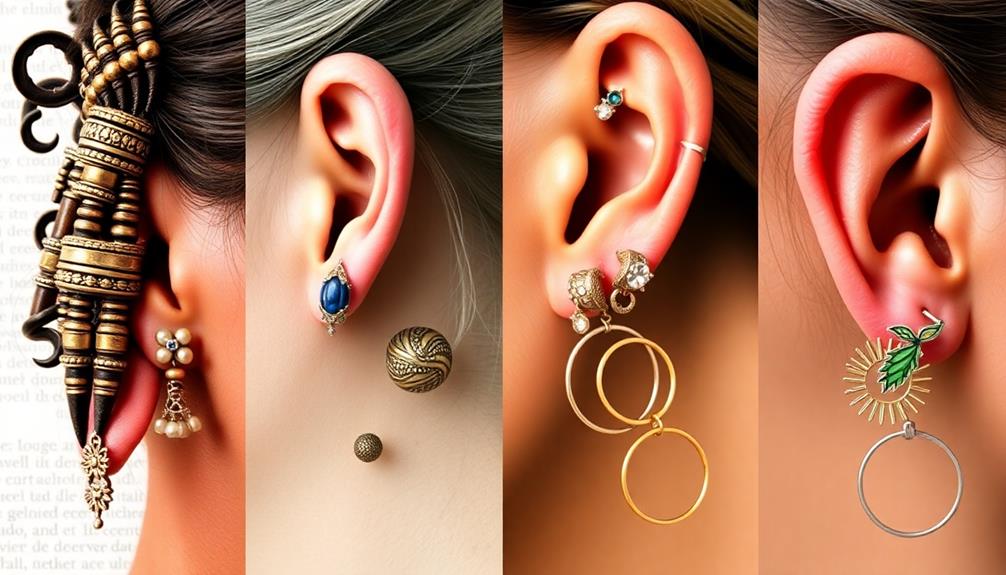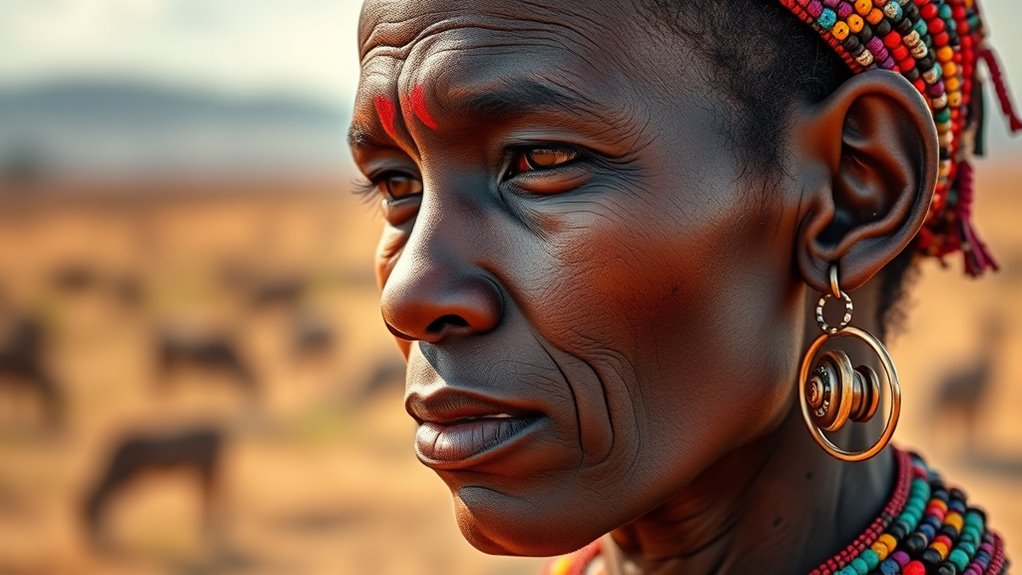
Piercing in African tribes isn’t just about adornment; it’s a powerful symbol of cultural identity, social status, and spiritual bonds. You’ll see how different tribes use specific piercings and jewelry to communicate belonging, maturity, and heritage. These practices often happen during important rites of passage, fostering community pride and personal expression. If you explore further, you’ll discover the rich stories and artistry behind each piercing tradition, revealing the vibrant cultural tapestry of Africa.
Key Takeaways
- Piercings in African tribes serve as important rites of passage and symbols of social status.
- They reflect individual and collective identity through specific designs, placements, and jewelry materials.
- Rituals involving piercing reinforce community bonds and cultural continuity.
- Variations in piercing styles across tribes highlight distinct cultural identities and historical significance.
- Piercings act as artistic symbols connecting individuals to ancestors and expressing cultural pride.
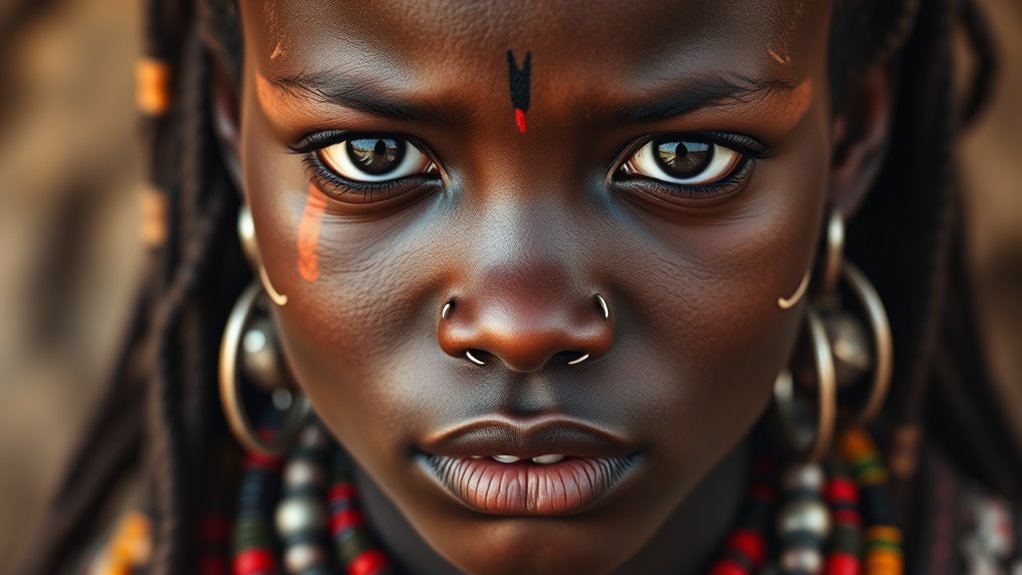
Have you ever wondered why piercing holds such significance in many African tribes? It’s because piercing is more than just ornamentation; it’s deeply woven into the fabric of their cultural significance. When you see tribes adorn themselves with pierced ears, noses, or lips, you’re witnessing a tradition that carries meaning far beyond aesthetics. These body modifications serve as powerful symbols, marking important rites of passage, social status, or even spiritual connections. For many tribes, piercing is a way to communicate identity without words, expressing belonging, maturity, or readiness for specific roles within the community. It’s a language of its own, one that’s understood across generations and social boundaries.
Piercing is also a form of aesthetic expression that reflects individual and collective identity. You might notice how the designs, placement, and jewelry used in piercings vary widely from tribe to tribe, each with its own unique style. These adornments are carefully chosen and crafted to complement the wearer’s appearance and to signify their place within the tribe’s social hierarchy or cultural history. For example, some tribes prefer elaborate jewelry with beads, metals, and shells, while others opt for more subtle piercings that highlight personal or familial symbols. Through these choices, individuals showcase their personal identity while simultaneously honoring their cultural roots. The act of piercing becomes an art form, blending tradition with personal expression.
In many African tribes, the process of piercing itself is a communal event, often performed during significant ceremonies or rites of passage. It’s a moment that solidifies bonds between the individual and their community, reinforcing shared values and cultural continuity. The piercings often carry specific meanings—such as bravery, beauty, or spiritual protection—that are passed down through generations. The community’s involvement in these rituals emphasizes the collective importance of body modifications, making each piercing a symbol of cultural pride and resilience. Self-Understanding can be enhanced through awareness of these cultural practices, fostering greater respect and appreciation.
Ultimately, piercing in African tribes isn’t just about decoration; it’s a vibrant expression of cultural significance and aesthetic identity. It’s a way to celebrate heritage, demonstrate social status, and forge personal and communal bonds. When you observe these traditions, you gain insight into a rich history of symbolism and artistry, where the body becomes a canvas for cultural storytelling. This enduring practice reminds us that body modifications can be powerful symbols of identity, connecting individuals to their ancestors and their community in meaningful, lasting ways.
Frequently Asked Questions
How Do Tribal Members Choose Their Piercing Locations?
You choose your piercing locations based on cultural significance and aesthetic choices. In many tribes, specific spots symbolize social status, rites of passage, or spiritual beliefs. You might select a piercing on your ears, nose, or lips to reflect your identity or community values. These decisions are deeply personal and culturally informed, ensuring your piercings honor traditions while also expressing your individual or group aesthetic preferences.
Are There Specific Tools Used for Piercing in African Tribes?
Did you know that traditional tools for piercing in African tribes often include sharp, handcrafted implements like thorns, bones, or metal needles? These tools hold deep cultural significance, passed down through generations. As a member, you’d use specific instruments tailored to your tribe’s customs, emphasizing respect for tradition and identity. The tools symbolize not just adornment but a connection to your ancestors and cultural heritage.
Do Age or Gender Influence Piercing Customs?
You’ll find that age and gender do influence piercing customs, reflecting cultural variations and personal significance. In many tribes, elders may have more elaborate piercings to symbolize social status, while gender-specific styles mark different roles or identities. Younger individuals often undergo piercings as rites of passage. These practices highlight how cultural variations shape piercing customs, with personal significance emphasizing individual identity and societal values within each tribe.
How Are Piercing Traditions Passed Down Through Generations?
You learn that piercing traditions are passed down through generations via cultural significance and ritual ceremonies. Elders teach younger members about the meaning behind each piercing, emphasizing its importance in community identity. These ceremonies mark milestones like coming of age or social status, ensuring the customs stay alive. By participating in these rituals, you actively preserve cultural heritage and reinforce the deep symbolic meaning behind each piercing tradition.
What Are the Common Aftercare Practices Post-Piercing?
Imagine you’ve just received a traditional tribal piercing; now, you should follow specific aftercare practices. You’ll want to clean the area regularly with antiseptic solutions to prevent infection and promote healing. Incorporate healing rituals, like applying herbal ointments or performing spiritual ceremonies, to support recovery. Avoid touching or twisting the piercing, and keep it dry. These steps help guarantee proper healing and respect cultural traditions.
Conclusion
As you explore the piercing traditions of African tribes, you realize they’re like intricate tapestries woven with symbols of identity and culture. Each piercing is a thread that connects individuals to their heritage, telling stories of rites of passage, status, and beauty. By understanding these practices, you see how they transform the human body into a living canvas—an expression of history and belonging. Embrace this rich tapestry, and you’ll grasp the powerful voice of tradition speaking through each piercing.