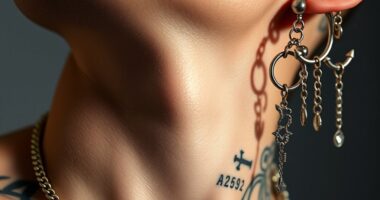

Many workplaces now adopt dress codes that support piercings, recognizing them as a form of personal expression. You’ll find policies that balance safety and professionalism while allowing facial and ear piercings to be visible, especially in creative industries. Restrictions on hair and tattoos are easing as companies see the value in embracing diversity. If you want to learn more about how workplaces are becoming more piercing-friendly, keep exploring how these policies are evolving.
Key Takeaways
- Many workplaces now adopt inclusive dress codes that permit visible piercings, supporting personal expression.
- Attitudes are shifting to view tattoos and piercings as part of individual identity, with less restriction in creative roles.
- Dress code policies are evolving to allow piercings as long as they are neat, professional, and do not interfere with safety gear.
- Some workplaces revisit hair and piercing restrictions to promote diversity while maintaining safety and professionalism.
- Flexible dress codes foster a more accepting environment, recognizing piercings as a non-impactful form of self-expression.

Many workplaces are recognizing that employees with piercings shouldn’t have to choose between personal expression and professional attire. More companies are adopting inclusive dress codes that accommodate individual styles without compromising professionalism. If you wear piercings regularly, you’ve probably encountered policies around tattoo policies and hair restrictions that can sometimes feel limiting. These rules are often rooted in maintaining a certain image or adhering to safety standards, but they shouldn’t force you to hide your personal style. Instead, many organizations are adjusting their dress codes to create more flexible, piercing-friendly work environments.
When it comes to tattoo policies, some workplaces have historically restricted visible tattoos, fearing they might offend clients or disrupt the company’s image. However, attitudes are shifting, and many employers now understand that tattoos and piercings are forms of self-expression that don’t interfere with job performance. As a result, you may find that your employer no longer enforces strict bans on visible tattoos or facial piercings, especially in creative or customer-facing roles. This change allows you to be authentic at work without feeling pressured to conceal your personal style. For those who work in more traditional industries, a balanced approach is often taken—permitting piercings in certain areas while restricting others during specific work hours or in client interactions.
Hair restrictions are another aspect of dress codes that intersect with piercings. Some workplaces have rules about hair length, color, or style, especially if safety concerns or uniform standards are involved. While these restrictions are sometimes justified by safety policies or uniform consistency, they can also serve as barriers to expressing individuality through piercings and hair choices. Thankfully, many companies are revisiting these policies, allowing employees to showcase their piercings alongside their hair styles as long as they remain neat and professional. For example, if your job involves wearing protective gear, your employer might make accommodations so that your piercings don’t interfere with safety equipment, enabling you to maintain your personal style without sacrificing safety or professionalism. Additionally, embracing inclusive dress codes can foster a more diverse and accepting work environment.
As an affiliate, we earn on qualifying purchases.
Frequently Asked Questions
Are There Legal Protections for Employees With Facial Piercings?
Yes, there are legal protections for employees with facial piercings. You’re protected under anti-discrimination laws if dress code policies aren’t applied consistently or unfairly target visible piercings. Employers can set dress code policies, but they must be reasonable and non-discriminatory. If your workplace’s dress code restricts facial piercings without a valid business reason, you may have grounds to challenge it based on legal protections against discrimination.
How Do Dress Codes Vary Across Different Industries?
You’ll find dress codes vary widely across industries, reflecting industry-specific attire and cultural dress norms. For example, corporate offices often require business formal, while creative fields embrace casual, expressive clothing. Healthcare settings prioritize practicality and hygiene, whereas hospitality may emphasize a polished appearance. Understanding these differences helps you navigate expectations and make certain your attire aligns with your industry’s standards, respecting both professionalism and cultural norms.
Can Employers Require Employees to Cover Piercings?
Employers can require you to cover piercings if their piercing policies aim to maintain a professional environment or adhere to safety standards. While they can enforce these policies, they shouldn’t unfairly restrict your cultural expression. You should communicate openly with your employer about your piercings, especially if they hold cultural significance, and seek a reasonable accommodation that respects both your identity and workplace needs.
What Are the Health and Safety Considerations for Piercings at Work?
You might find it amusing, but safety isn’t just about avoiding office mishaps. When it comes to piercings at work, you should prioritize workplace hygiene and use piercing safety gear to prevent infections. Proper sterilization and covering piercings during certain tasks protect you and your colleagues. Remember, maintaining safe practices guarantees your style doesn’t turn into health issues, proving that even in fashion, safety takes the spotlight.
How Should Employees Approach Requesting Piercing Accommodations?
When requesting piercing accommodations, you should prepare a personalized request that clearly explains your need and how it aligns with your work responsibilities. Approach your supervisor or HR with professional communication, emphasizing your commitment to maintaining a professional appearance while respecting your personal expression. Be open to discussion, and provide any relevant documentation if needed. This proactive and respectful approach can help facilitate a positive outcome.
Conclusion
Embracing piercing-friendly dress codes creates a more inclusive workplace where individuality thrives. Did you know that 45% of millennials feel more authentic when they can express themselves through accessories like piercings? By allowing personal style within professional standards, you foster a happier, more diverse environment. So, next time you update your uniform policies, remember that embracing piercings can boost morale and make your team feel genuinely accepted.