
Combining piercings with other body modifications lets you craft a unique, cohesive look that reflects your style. You can align tattoos, scarification, or other alterations near your piercings to create visual harmony or tell a story. Planning placement carefully guarantees your modifications complement each other and suit your lifestyle. Working with professionals guarantees safety and a polished result. Keep exploring to discover how best to personalize your body art journey.
Key Takeaways
- Coordinate placement of piercings with tattoos or scarification to create a cohesive and personalized visual narrative.
- Use body art like sleeve tattoos to complement and highlight piercings for a unified aesthetic.
- Incorporate scarification as a layered body modification, ensuring it complements existing piercings without overcrowding.
- Consult experienced professionals to safely plan and execute combined modifications, considering healing and hygiene.
- Consider how combined modifications impact daily life and future body art plans for a meaningful, lasting personal expression.
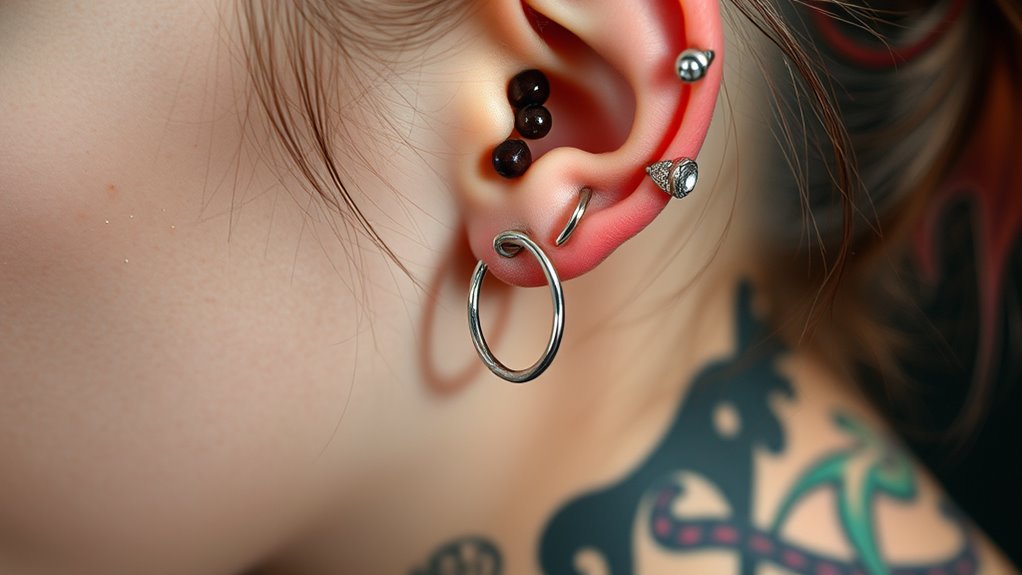
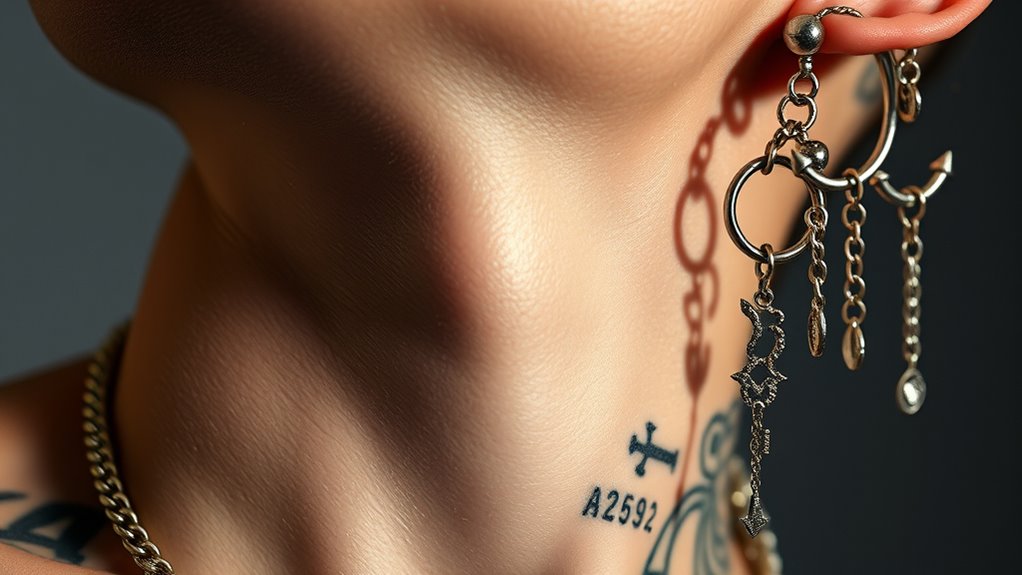
Piercings and body modifications have become popular ways for individuals to express their personal style and identity. When you decide to combine piercings with other modifications, like tattoos or scarification, you create a unique look that’s truly your own. It’s essential to plan how these elements will work together, especially when considering tattoo placements. You might choose to place a tattoo near a piercing to enhance its impact or to create a cohesive visual story on your body. For example, if you have a nose ring, you could opt for a small tattoo on your face or around your eye that complements the piercing. Alternatively, a sleeve tattoo can serve as a backdrop for multiple piercings along your arm, creating a unified aesthetic. Thinking about how to coordinate tattoo placements with existing or planned piercings helps guarantee your body art feels intentional and harmonious.
In addition to tattoos, scarification techniques offer another way to personalize your body. Scarification involves intentionally creating scars in specific patterns or designs, which can be both striking and meaningful. When combining scarification with piercings, you need to carefully consider placement. For instance, scars can be incorporated into larger tattoo designs, or they can stand alone as bold, textured elements. The placement of scarification should complement your piercings, avoiding overcrowding or creating awkward visual gaps. If you have facial piercings, subtle scarification around them can add depth and texture, emphasizing your facial features. On the body, scarification along with piercings can produce a layered effect, giving your body a narrative that’s both artistic and personal. Because scarification is more permanent and invasive than other modifications, it’s essential to work with experienced practitioners who prioritize safety and hygiene. Additionally, understanding the versatility of hybrid modifications can help you create a cohesive and personalized body art plan that suits your aesthetic and lifestyle.
Combining piercings with tattoos or scarification isn’t just about aesthetics; it’s also about balancing the pain and healing processes involved. Each modification influences the other’s healing timeline, so proper planning and aftercare are imperative. You should consider how the placement of your modifications will impact your daily life and future body art plans. When executed thoughtfully, these combinations can create a cohesive, meaningful body canvas that reflects your personality and journey. Whether you’re adding tattoo placements that enhance your existing piercings or integrating scarification techniques into your design, the key is to work with skilled professionals who understand how to blend these elements seamlessly. This approach guarantees your body modifications are not only visually striking but also safe and long-lasting.
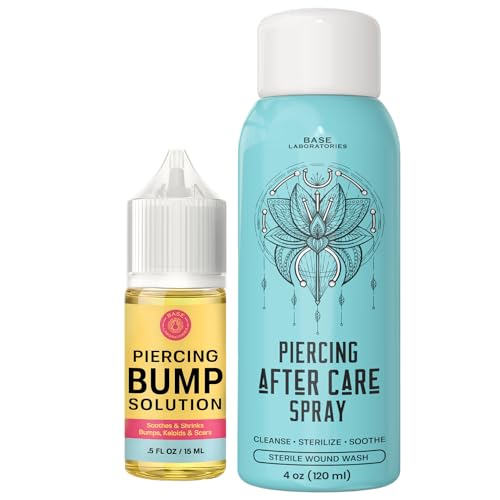
BASE LABORATORIES Piercing Aftercare Kit, Saline Spray & Bump Solution
- All-in-One Piercing Care Bundle: Includes spray and oil for cleaning and bump reduction
- Keloid & Bump Removal Solution: Targets and shrinks keloid bumps effectively
- Soothing Sea Salt Spray: Keeps piercings clean and prevents irritation
As an affiliate, we earn on qualifying purchases.
As an affiliate, we earn on qualifying purchases.
Frequently Asked Questions
Are There Specific Healing Timelines When Combining Multiple Modifications?
When combining multiple modifications, healing timelines can vary based on modification interactions. You should expect longer healing periods because your body needs to recover from each procedure. For example, piercings might take 6-8 weeks, but adding tattoos or implants could extend this. It’s essential to follow your piercer and artist’s aftercare advice, monitor for signs of infection, and give your body time to heal properly before adding or changing modifications.
How Do Different Body Modifications Interact or Affect Each Other’s Healing?
You might imagine your body as a delicate ecosystem, where multiple modifications interact. Different body modifications can challenge your immune response, leading to healing complications if not managed carefully. When you combine piercings with other modifications, they may compete for healing resources, prolonging recovery or increasing infection risk. Being mindful of your immune response and allowing proper healing time helps prevent complications and promotes healthier, more successful body art experiences.
Can Combining Piercings With Tattoos Cause Increased Risks of Infections?
Combining piercings with tattoos can increase your infection risk because both procedures temporarily weaken your immune response. When your immune system is already busy healing one modification, it may struggle to fight off bacteria from the other, raising the chance of infections. To reduce risks, verify both procedures are done by professionals, follow aftercare instructions carefully, and give your body enough time to heal between modifications.
What Are the Long-Term Maintenance Considerations for Combined Modifications?
Think of your body as a carefully tended garden; long-term maintenance means watching for scar tissue formation and ensuring jewelry compatibility. You’ll need regular cleaning to prevent infections and check for any irritation or migration. Over time, some modifications may shift or cause additional scarring, so consult your piercer or body modification specialist periodically. Staying attentive keeps your art vibrant and healthy, just like a well-loved, flourishing garden.
Are There Age Restrictions or Health Assessments Necessary for Multiple Modifications?
You should verify age restrictions and undergo health assessments before getting multiple body modifications. Many studios require proof of age, often 18 or older, to ensure you’re legally eligible. Health assessments are essential to identify any underlying conditions that could affect healing or increase risks. By following these guidelines, you protect your health and ensure your modifications are safe, successful, and long-lasting.
Conclusion
So, here you are, proudly combining piercings with other body mods, thinking you’re pushing boundaries. Ironically, it’s often those tiny studs or delicate ink that make the boldest statements. You might believe you’re standing out, but really, you’re just blending into a sea of personalized art. Who knew that the smallest adornments could make such a big statement? Sometimes, it’s the subtle touches that leave the loudest impression.