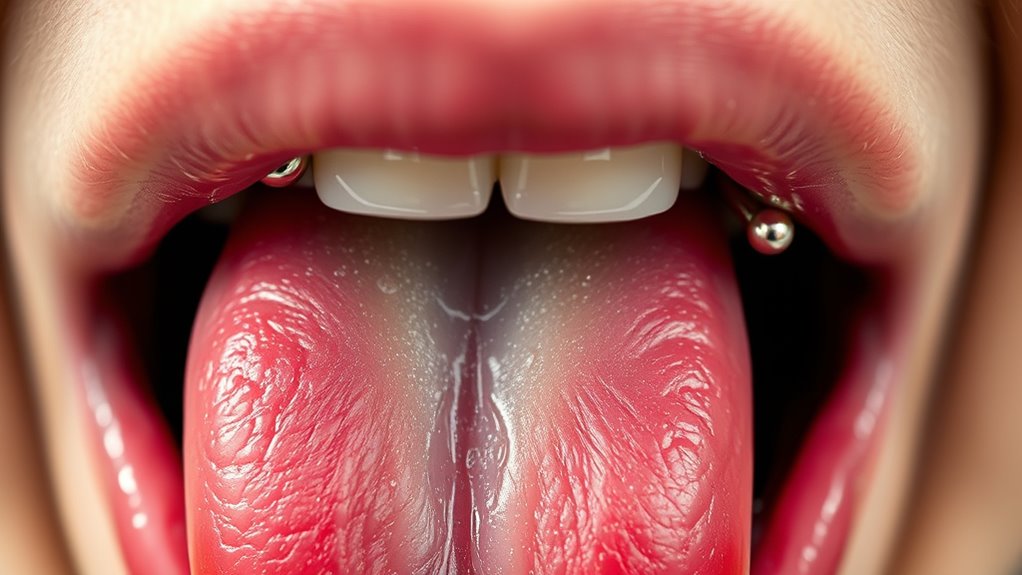
To keep your tongue and lip piercings healthy, brush gently with a soft-bristled toothbrush twice daily, avoiding the jewelry area. Rinse with a sterile saline solution or alcohol-free mouthwash after meals to reduce bacteria and promote healing. Steer clear of spicy, acidic, or crunchy foods, and avoid touching or twisting the jewelry. Staying disciplined with your oral hygiene routine helps prevent infections and complications—learn more tips to make sure your piercings heal beautifully.
Key Takeaways
- Use a soft-bristled toothbrush and gentle technique to clean teeth and around the piercing site twice daily.
- Rinse with alcohol-free, sterile saline or mouthwash to reduce bacteria and promote healing.
- Avoid touching the piercing with unwashed hands and refrain from twisting or playing with the jewelry.
- Steer clear of spicy, acidic, and crunchy foods that can irritate or delay healing of the piercing.
- Regularly monitor for signs of infection, such as redness, swelling, or pus, and seek professional help if needed.
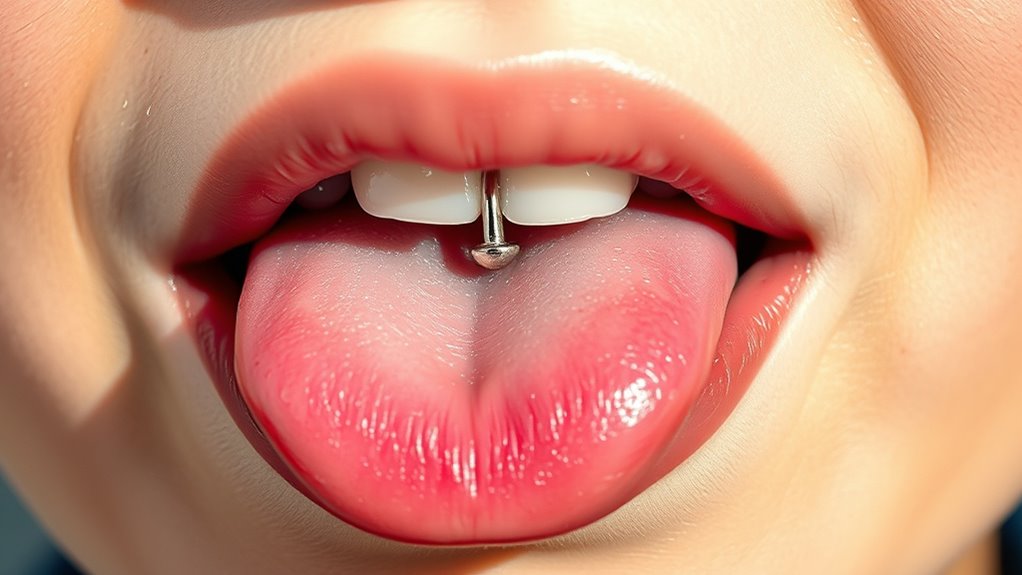
Getting a tongue or lip piercing can enhance your style, but it also requires diligent oral hygiene to prevent infections and promote healing. Proper piercing aftercare is essential because your mouth is home to countless bacteria that can easily cause complications if not managed carefully. When you get a new piercing, you need to be proactive about maintaining cleanliness to reduce the risk of oral infection. This means adopting a routine that includes gentle cleaning, avoiding irritants, and staying alert to any signs of trouble.
Immediately after getting pierced, your piercer will likely give you specific instructions for piercing aftercare. Follow these meticulously, as they’re designed to minimize swelling, prevent infection, and speed up healing. Typically, you’ll be advised to rinse your mouth with a saline solution several times a day. Saline rinses help keep the area clean and flush out food particles and bacteria that could otherwise cause infection. When preparing these rinses, use sterile or distilled water, and avoid overly salty or harsh solutions that might irritate your mouth further.
Follow your piercer’s instructions and rinse with sterile saline to promote healing and prevent infection.
You should also steer clear of certain foods and beverages during the healing process. Spicy, acidic, or crunchy foods can irritate the piercing site and delay healing. Alcohol and tobacco are also best avoided because they compromise your immune response and can increase the risk of oral infection. Consuming cold or soft foods can soothe the area and make eating less painful during the initial days.
Good piercing aftercare isn’t just about cleanliness; it’s about preventing complications. Pay close attention to your piercing and watch for signs of infection, such as increased pain, swelling, redness, or pus. If you notice any of these symptoms, seek professional advice promptly. Ignoring these signs can lead to more serious issues, including prolonged healing or the need for medical intervention.
Another key aspect of oral infection prevention is maintaining excellent oral hygiene overall. Brush your teeth twice daily with a soft-bristled toothbrush and use alcohol-free mouthwash to keep bacteria levels in check. Be gentle around the piercing site to avoid irritation or accidental damage. Avoid touching the piercing with unwashed hands, and refrain from playing with or twisting the jewelry, which can introduce bacteria or cause trauma.

Makeup Organizer Countertop for Vanity, Rotating Perfume Tray with 5-compartment Cosmetic and Skincare Organizers, Multi-Purpose Desk Storage Makeup Brush Holder for Bathroom Bedroom Counter
- Rotating Makeup Organizer: Smooth 360-degree rotation for easy access
- Multi-Compartment Design: Separate spaces for brushes, lip glosses, and more
- Transparent Material: Clear view of stored items for quick identification
As an affiliate, we earn on qualifying purchases.
Frequently Asked Questions
How Long Should I Avoid Smoking After Getting a Piercing?
You should avoid smoking for at least two to four weeks after your piercing. Smoking cessation helps reduce irritation and speeds up healing timelines. During this period, avoid smoking as it can delay healing, increase the risk of infection, and cause complications. Keep in mind, the longer you abstain, the better your chances of a smooth recovery. Follow your piercer’s advice and prioritize your oral health for ideal healing.
Can Certain Mouthwashes Damage My New Piercing?
Certain mouthwashes can damage your new piercing if they contain alcohol or harsh ingredients. These can irritate the piercing site and hinder healing. Always check the ingredients and opt for a gentle, alcohol-free mouthwash to maintain good piercing hygiene. This helps prevent infection and promotes faster healing. Avoid mouthwashes with strong chemicals, and stick to those recommended by your piercer for the best care.
How Do I Recognize an Infection Early?
You’ll want to watch for signs of infection early, like increased pain, swelling, redness, or pus around your piercing. If you notice a foul odor, persistent bleeding, or if the area feels warm to the touch, these are early symptoms indicating you should see a professional. Trust your instincts—if anything feels abnormal or worsens, seek prompt medical advice to prevent complications.
Are There Specific Foods I Should Avoid During Healing?
During piercing healing, you should avoid spicy, acidic, and crunchy foods, as they can irritate your tongue or lip piercing. Stick to soft, cool foods like yogurt, smoothies, and cold soups to promote healing. A proper tongue piercing diet helps reduce swelling and discomfort, so steer clear of alcohol, caffeine, and hot beverages. Following these piercing healing foods guidelines guarantees faster recovery and minimizes infection risks.
When Can I Safely Change or Remove My Piercing Jewelry?
Think of your piercing as a delicate garden needing time to bloom. You should wait at least 4-6 weeks before changing or removing jewelry, but only do so after proper cleaning and ensuring the piercing is fully healed. When switching jewelry, choose the right type and size for your healing stage. Always consult your piercer, and avoid rushing to prevent irritation or infection. Patience helps your piercing flourish.
Conclusion
Maintaining good oral hygiene is essential when you have tongue or lip piercings. Proper care prevents infections and promotes healing. Did you know that studies show nearly 20% of oral piercing complications are caused by poor hygiene? By brushing twice daily, rinsing with an antiseptic, and avoiding irritating foods, you can substantially reduce your risk. Prioritize your oral health to enjoy your piercing safely and comfortably for years to come.