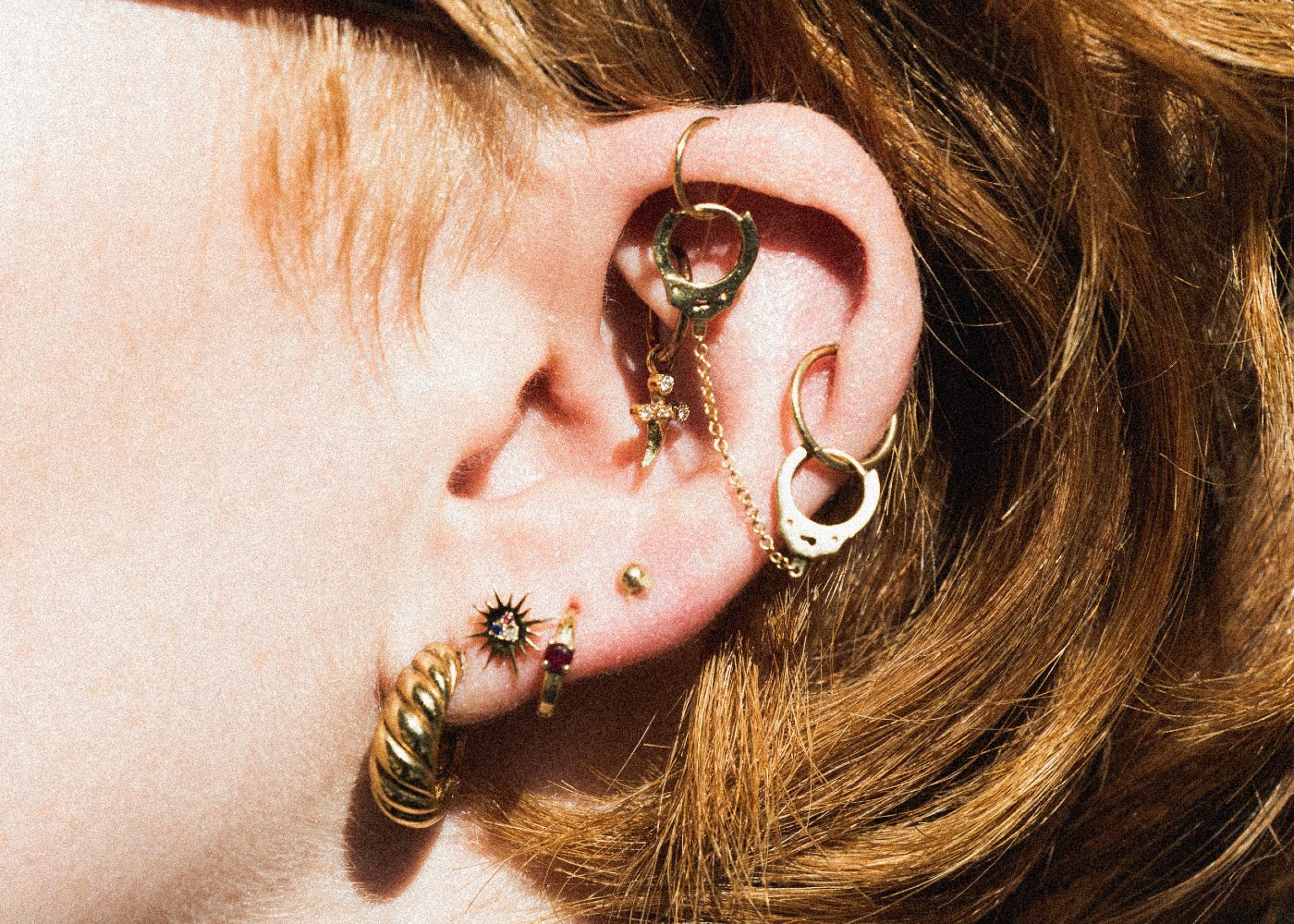

Understanding pain levels for various piercings helps you set realistic expectations. For example, earlobe piercings are usually less painful because of soft tissue, while cartilage piercings tend to hurt more due to denser tissue. Sensitive areas like the nose or nipples may cause sharper, longer-lasting discomfort. Factors like tissue type, location, and your pain tolerance influence how you feel. Exploring more details can help you prepare better for your piercing experience.
Key Takeaways
- Pain varies by piercing location; softer tissues like earlobe are less painful than dense cartilage areas.
- Tissue type and thickness influence the initial discomfort experienced during piercing.
- Cartilage piercings tend to be more painful and have longer healing times compared to lobe piercings.
- Proper pain management and aftercare can reduce discomfort and promote smoother healing.
- Individual pain tolerance and sensitivity affect perceived pain levels across different types of piercings.

Have you ever wondered why piercing pain feels the way it does? When you get a new piercing, the sensation isn’t just about discomfort; it’s a complex response from your body that involves nerve endings, inflammation, and tissue damage. Understanding the pain levels associated with different piercings can help you prepare mentally and physically, making the healing process smoother. Pain management becomes a key part of this journey, ensuring you stay comfortable and avoid unnecessary complications.
Piercing pain varies by location, tissue type, and individual response—knowing this helps manage discomfort and promotes healing.
The pain you experience during a piercing largely depends on its location and the thickness of the tissue being pierced. For instance, ear lobes tend to be one of the least painful spots because of their soft, fatty tissue, which can absorb the needle’s impact more easily. Conversely, cartilage piercings, such as helixes or rook piercings, tend to be more painful because cartilage is denser and less vascular, making it more sensitive and slower to heal. Knowing this, you can expect a more intense initial sensation with cartilage piercings, but it doesn’t mean they’re impossible to manage. Proper pain management strategies, like taking over-the-counter pain relievers before and after the procedure, can considerably reduce discomfort.
The healing process plays an essential role in how you perceive pain over time. Immediately after piercing, it’s normal to feel a sharp, stinging sensation, but this typically subsides within a few seconds to minutes. As days go by, some soreness, tenderness, or mild throbbing might persist, especially if the piercing is in a sensitive area. During this period, keeping the area clean and avoiding irritants helps minimize inflammation and pain. Applying cold packs can also provide relief by numbing the area and reducing swelling, which makes pain more manageable. As you progress through healing, the pain should gradually diminish, but it’s important to continue practicing good hygiene and avoid unnecessary trauma to prevent setbacks.
Pain management doesn’t end with the initial piercing. Long-term care involves monitoring for signs of infection and being gentle with your jewelry. If you notice persistent pain, redness, or swelling beyond the typical healing timeline, it’s essential to consult a professional. This proactive approach helps prevent complications that could prolong discomfort or damage the tissue. Remember, patience is key—each piercing heals at its own pace, and effective pain management techniques can make this process more comfortable and less stressful. Additionally, understanding piercing anatomy can help you better anticipate and address specific areas of sensitivity during healing. Understanding the different pain levels for various piercings empowers you to take control of your healing journey and enjoy your new body art with confidence.
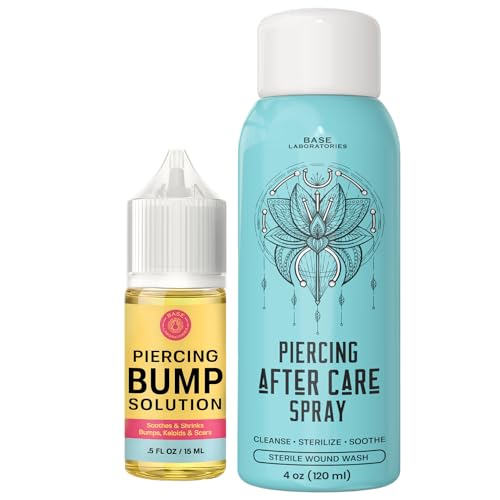
BASE LABORATORIES Piercing Aftercare Kit: Keloid & Piercing Bump Solution Oil(15ml) + Piercing Aftercare Spray (4oz) – for Keloid Bump Removal & Cleansing Soothing Piercings Before & After
- All-in-One Piercing Care Bundle: Includes spray and oil for cleaning and bump reduction
- Keloid & Bump Removal Solution: Targets and shrinks keloid bumps effectively
- Soothing Sea Salt Spray: Keeps piercings clean and prevents irritation
As an affiliate, we earn on qualifying purchases.
As an affiliate, we earn on qualifying purchases.
Frequently Asked Questions
How Does Individual Pain Tolerance Affect Piercing Discomfort?
Your pain tolerance directly influences how you experience piercing discomfort. If you have high pain sensitivity, you might find piercings more uncomfortable and have a stronger emotional response to the sensation. Conversely, those with lower pain sensitivity often feel less pain and less emotional distress during the process. Remember, individual pain tolerance varies, so your personal experience will be unique, depending on your emotional response and how your body perceives pain.
Can Pain Levels Predict Healing Time for Piercings?
Pain measurement can hint at healing duration, but it doesn’t tell the whole story. You might experience intense pain but heal quickly, or feel mild discomfort and take longer to recover. While pain levels can influence your healing process, other factors like aftercare and individual biology matter more. Stay attentive to your body’s signals, and don’t rely solely on pain to gauge how long your piercing will take to heal.
Are There Ways to Reduce Pain During Piercing Procedures?
You can reduce pain during piercing procedures by using effective pain management techniques like topical numbing gels or sprays. Piercing numbing methods, such as ice or numbing creams, help minimize discomfort. Communicate with your piercer beforehand to discuss these options, and relax during the process. Proper preparation and choosing experienced professionals guarantee a smoother, less painful experience, making your piercing journey more comfortable and enjoyable.
How Do Age and Skin Type Influence Piercing Pain?
Your age and skin type markedly influence piercing pain. Younger individuals often experience less sensitivity, but older people might feel more discomfort due to age-related sensitivity changes. Skin type differences also matter; sensitive or thin skin can heighten pain levels, while thicker or less sensitive skin might lessen discomfort. Knowing your age and skin type helps you prepare better and communicate with your piercer for a more comfortable experience.
Does Previous Piercing Experience Impact Pain Perception?
Yes, your previous piercing experience can impact how you perceive pain. If you have piercing scar tissue, it might make future piercings more sensitive and uncomfortable, especially in areas with high piercing location sensitivity. You may notice increased pain or longer healing times. Your familiarity with the process can also reduce anxiety, but scar tissue and location sensitivity still influence your overall pain perception during new piercings.
Conclusion
While piercing pain varies, remember it’s a temporary discomfort for a lasting piece of self-expression. Don’t let fear hold you back from something that can boost your confidence and reflect your personality. Yes, it might hurt a little, but the moment you see your new piercing, all the nerves will fade away. Embrace the experience—you’re stronger than you think. Take the leap, and wear your new jewelry with pride!