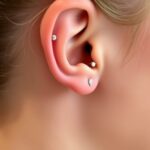
To balance piercings with an active lifestyle, prioritize proper ear care by cleaning twice daily with saline, avoiding harsh chemicals, and keeping hair and sweat away from your ears. Choose hypoallergenic jewelry like surgical steel or titanium, and don’t change earrings until fully healed. Protect your ears during workouts and water exposure, and monitor for signs of irritation. Staying attentive to your piercing’s needs will help you stay active without compromising healing—discover more tips to keep your ears healthy long-term.
Keep earrings secure but not too tight during workouts to prevent irritation and accidental pulling.
Wear moisture-wicking headbands or tie back hair to minimize sweat and dirt transfer to piercings.
Clean earrings thoroughly after sweating or water exposure to prevent infections.
Avoid swimming in pools, lakes, or hot tubs during initial healing to reduce bacterial risk.
Follow proper ear care routines, including gentle cleaning and avoiding harsh chemicals, to support healthy healing.
If you lead an active lifestyle, you might wonder how piercings fit into your routine. Staying active involves sweating, physical contact, and sometimes exposure to dirt or water—factors that can complicate piercing healing. The key is to prioritize ear care and follow specific healing tips to keep your piercings healthy and comfortable.
First, understanding ear care is essential. Proper cleaning prevents infections and speeds up healing. Use a saline solution twice daily to gently cleanse your piercings, removing dirt and excess oils that can build up from sweat or outdoor activities. Avoid harsh chemicals or alcohol-based cleansers, as they can irritate the tissue and delay healing. When you’re washing your face or showering, be mindful not to tug or snag your earrings, which can cause irritation or even dislodge the jewelry. Keep your hair away from your ears during workouts to reduce the transfer of sweat and dirt. If you have long hair, consider tying it back to prevent contact with your piercings.
Proper cleaning with saline and avoiding chemicals promotes healthy piercing healing.
Healing tips for active individuals also include managing sweat. Excess moisture can cause irritation or even lead to infections if not properly cleaned. After sweating, gently pat your ears dry with a clean towel or let them air dry to prevent moisture buildup. Avoid swimming in pools, lakes, or hot tubs during the initial healing phase, as contaminated water can introduce bacteria to the healing site. If swimming is unavoidable, wear waterproof ear protection or remove the jewelry if possible, and clean the piercing thoroughly afterward. Additionally, choosing appropriate jewelry materials such as titanium or surgical steel can reduce allergic reactions and irritation during healing.
It’s equally important to choose the right jewelry. Opt for hypoallergenic materials like surgical steel, titanium, or gold to minimize allergic reactions. Avoid changing earrings prematurely—wait until the piercing is fully healed, typically several weeks to months, depending on the location. During workouts, make sure your earrings are secure but not too tight, as pressure can cause discomfort or slow healing.
Lastly, listen to your body. If you notice excessive swelling, redness, or pain, give your ears a break from strenuous activity and consult a professional piercer or healthcare provider. Balancing an active lifestyle with piercings requires awareness and consistent ear care, but with patience and proper healing tips, you can enjoy your piercings while staying fit. Remember, taking care of your ears during this vital healing time ensures your piercings heal well and remain a stylish part of your active life.
Frequently Asked Questions
How Can I Prevent Piercing Irritation During Intense Workouts?
To prevent piercing irritation during intense workouts, choose earrings made from hypoallergenic materials like surgical steel or titanium, which reduce irritation. Always remove jewelry before exercising to avoid sweat and friction. Follow the healing timelines for your specific piercing, and keep the area clean and dry after workouts. This helps minimize irritation, supports proper healing, and keeps your piercings comfortable, even during active days.
Are There Specific Piercings Better Suited for Active Individuals?
Think of your piercings as a sturdy ship steering busy waters. For active individuals, certain piercing placements like helix or lobe tend to withstand movement better. Opt for jewelry materials like surgical steel or titanium, which are less prone to irritation. These choices keep your piercings resilient and comfortable, allowing you to stay active without worry. Prioritize placement and quality jewelry to guarantee your piercings remain shipshape through all your adventures.
How Do I Clean Piercings After Sweating During Exercise?
After sweating during exercise, you should gently clean your piercings with a saline solution to prevent infection. Use jewelry materials like surgical steel or titanium, which resist bacteria and promote healing. Clean your piercings at least twice a day, especially after workouts, to keep them fresh. Remember, healing timelines vary depending on the piercing, so be patient and consistent with your cleaning routine to make certain of proper healing.
What Signs Indicate My Piercing Needs Medical Attention?
Your piercing might be signaling trouble if you notice signs like increasing pain, swelling, or pus—these infection symptoms are serious. Also, watch for jewelry rejection, where your body pushes the jewelry out, causing redness or a noticeable gap. If you see these signs, don’t ignore them; seek medical attention promptly. Acting quickly can prevent complications and help your piercing heal properly, keeping your body’s delicate artwork safe.
Can Certain Sports or Activities Damage My Piercings?
Certain sports or activities can damage your piercings if you’re not careful. High-impact sports or contact activities risk pulling or knocking out jewelry, especially if you don’t follow sports safety guidelines. Choosing jewelry material like titanium or surgical steel reduces irritation and damage. Always wear protective gear, avoid rough play, and listen to your body. Proper precautions help keep your piercings safe while staying active.
Conclusion
Remember, you can’t have your cake and eat it too, but with the right care, you can enjoy both your active lifestyle and your piercings. Stay vigilant with hygiene, choose durable jewelry, and listen to your body. By balancing your passions and taking precautions, you’ll keep your piercings healthy while staying active. After all, a little effort now prevents bigger problems later—so stay mindful and keep moving forward!
How Piercings Affect Perceptions in Dating and Relationships
Piercings can dramatically influence how potential partners perceive you, revealing your style and personality—discover what your piercings say about you.