
Recent surveys show that body modification can boost your self-esteem by allowing you to express your true self, challenge societal beauty standards, and build a sense of community. Many people find that tattoos and piercings help them feel more confident and authentic. These changes often serve as empowering symbols of personal values, resilience, and creativity. If you keep exploring, you’ll discover even more about how body art influences confidence and self-perception.
Key Takeaways
- Recent surveys indicate that individuals with meaningful body modifications often report higher self-esteem and greater self-acceptance.
- Studies show societal acceptance of tattoos correlates with improved body image and confidence among wearers.
- Data reveals that body art fosters a sense of community, boosting feelings of belonging and personal empowerment.
- Surveys highlight that body modifications help individuals align their external appearance with internal identity, enhancing authenticity.
- Research suggests that embracing body modifications challenges traditional beauty standards, leading to increased self-esteem and resilience.
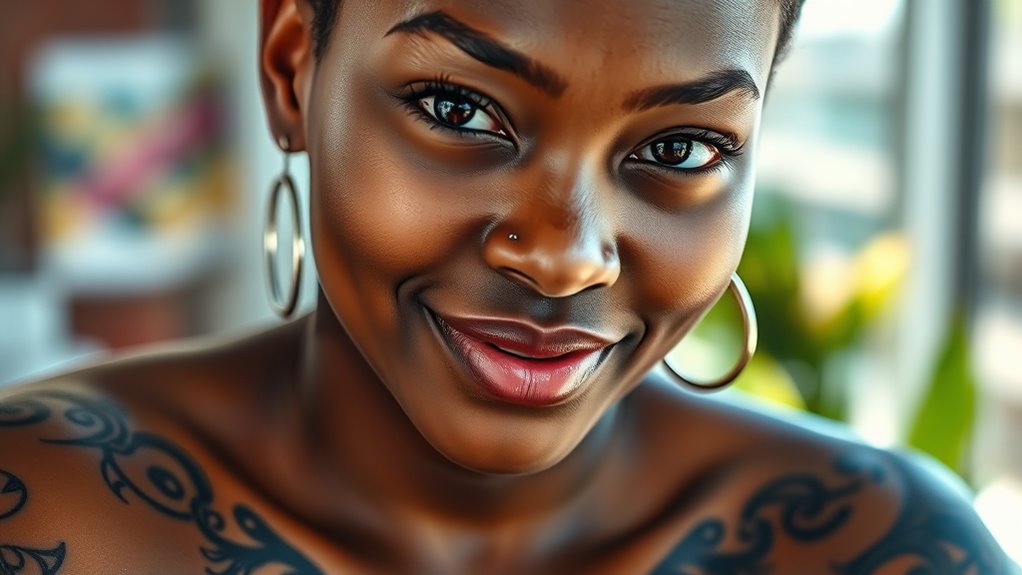
Have you ever wondered how body modification impacts your self-esteem? It’s a question many people ask as they consider transforming their bodies through tattoos, piercings, or other alterations. Recent surveys reveal that body modification often plays a significant role in how individuals perceive themselves and how they’re perceived by others. For many, tattoo acceptance isn’t just about aesthetics; it’s about embracing their identity and asserting their independence. When you decide to get a tattoo, you’re not just adding ink to your skin—you’re making a statement about who you are and what you value. This act of self-expression carries profound significance because it allows you to visually communicate your personality, beliefs, or life experiences. As a result, many individuals find that body modifications boost their confidence, helping them feel more authentic and aligned with their inner selves.
Survey data indicates that people who undergo body modifications often report increased self-esteem, especially when those modifications are deeply meaningful. Tattoos, in particular, serve as permanent reminders of personal milestones or values, reinforcing a sense of self-acceptance. For some, tattoo acceptance by society might still be a hurdle, but for those who embrace their modifications, it’s a process of reclaiming control over their bodies and stories. They see their tattoos as symbols of resilience, creativity, or rebellion, which enhances their overall sense of self-worth. Additionally, body modification can challenge societal standards of beauty, encouraging individuals to redefine what attractiveness means to them personally. This shift in perspective can lead to greater self-confidence and a more positive body image.
You might notice that the act of body modification often fosters a community of like-minded individuals who support each other’s choices. This sense of belonging and acceptance can further elevate your self-esteem, reinforcing the idea that your body is a canvas for your unique narrative. When you own your decisions about body modification, you’re asserting control over your self-image, which is a cornerstone of healthy self-esteem. Whether it’s a discreet tattoo or an elaborate body art piece, the significance you attach to your modifications ultimately shapes how you feel about yourself. It’s not just about the physical change but about your willingness to express who you are without fear of judgment. As recent surveys suggest, embracing body modifications often correlates with a stronger sense of self and increased confidence, making it clear that body art is much more than skin-deep—it’s an essential part of personal identity and self-empowerment. Recognizing the impact of high-quality projectors on visual expression can also inspire a deeper appreciation for personal aesthetics.
Frequently Asked Questions
How Do Cultural Perspectives Influence Body Modification and Self-Esteem?
Cultural perspectives shape how you view body modification and your self-esteem by enforcing cultural norms and beauty standards. If your culture values certain body features, you’re more likely to feel confident when aligning with those ideals. Conversely, differing norms can make you feel self-conscious or pressured to conform. Your self-esteem is closely linked to how well your body aligns with societal expectations, which vary across cultures and influence your body modification choices.
What Psychological Factors Motivate Individuals to Pursue Body Modifications?
Imagine your mind as a garden, where psychological factors plant seeds of change. You might pursue body modifications to bloom into your true self, seeking self-acceptance and embracing your unique identity. These choices act as expressions of who you are, helping you feel more confident and authentic. The desire to reshape your body often stems from a need to align outward appearance with inner identity, fostering personal growth and self-love.
Are There Long-Term Mental Health Impacts of Body Modification?
You might wonder if body modifications have long-term mental health effects. Research shows that positive peer support can improve body image and help you cope better with any challenges. However, if peer support is lacking or body image issues persist, you could face lasting impacts like anxiety or low self-esteem. Staying connected with supportive communities and focusing on your well-being can help mitigate potential long-term mental health concerns.
How Does Age Affect Perceptions of Body Modification and Self-Esteem?
Age shapes your perceptions of body modification and self-esteem like changing seasons, with attitudes evolving over time. Younger individuals often view modifications as bold expressions, boosting self-esteem through rebellion or identity. As you age, those attitudes may shift, embracing natural aging and prioritizing comfort. Self-esteem shifts from external validation to internal acceptance, reflecting your journey through life stages, where perceptions deepen and become more nuanced with experience and wisdom.
What Role Does Social Media Play in Body Modification Trends?
You see social media’s role in body modification trends clearly through influencer impact and viral trends. Influencers showcase new styles, making body modifications seem more accessible and desirable. Viral trends quickly spread, encouraging many to try piercings, tattoos, or other modifications. This constant exposure shapes your perceptions and can boost confidence or pressure you to conform. Social media fundamentally amplifies body modification popularity by creating a shared, ongoing dialogue.
Conclusion
As you’ve seen, body modification often boosts self-esteem, transforming how you see yourself. It’s like planting a seed of confidence that blooms into self-acceptance. But remember, your worth isn’t measured by your appearance alone—it’s built from within. Embrace your choices, and let your journey be a demonstration of your unique story. After all, isn’t it time you celebrated the person you truly are, inside and out?