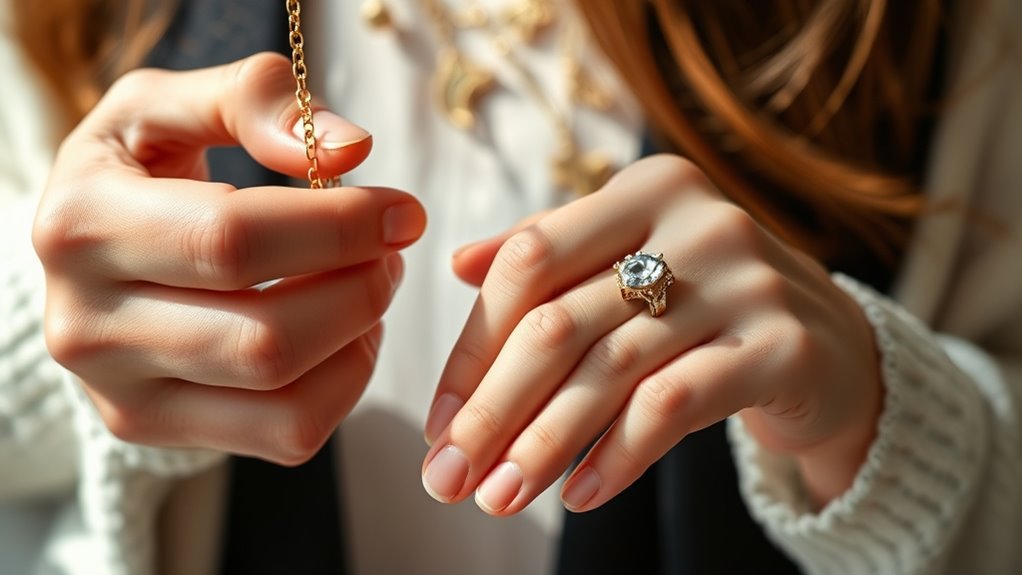

To change jewelry safely, make sure to choose the right time when your hands are dry and stable to avoid slips. Carefully examine the jewelry’s material and condition to select appropriate tools and techniques, such as gentle sliding or slight warming. Use lubricants and proper tools to reduce friction and prevent damage. Taking your time and paying attention to the jewelry’s structure helps avoid injury or breakage. Keep going to learn more essential tips to guarantee a smooth switch.
Key Takeaways
- Examine jewelry for fragile parts or damage before attempting removal to prevent breakage.
- Use gentle, controlled movements and avoid forceful pulling during removal.
- Select appropriate tools like jewelry pliers and lubricants to facilitate safe removal.
- Warm the area slightly to expand metal, easing the removal process for certain jewelry types.
- Match removal techniques to jewelry material and condition to minimize damage risk.
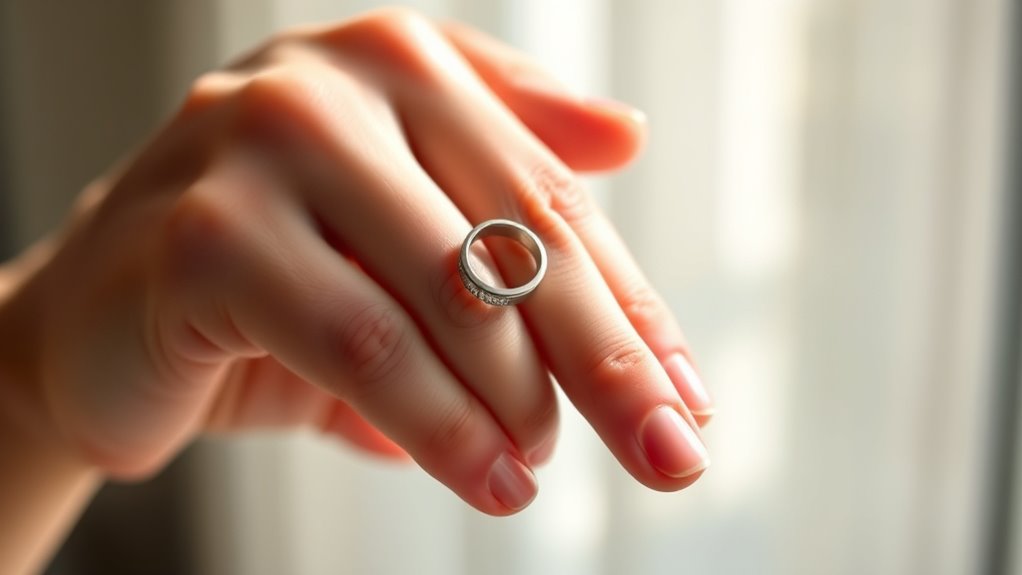
Have you ever wondered how to change your jewelry without risking damage or injury? It’s a common concern, especially when dealing with delicate pieces or unfamiliar materials. The key to a safe and successful switch lies in understanding material compatibility and employing proper removal techniques. Not all jewelry is created equal, and knowing how different materials react to handling can save you from costly repairs or painful accidents. For instance, some metals, like aluminum or softer alloys, are more prone to bending or scratching, so you need to be gentle. Meanwhile, harder materials like stainless steel or titanium are more durable but can still cause damage if not handled correctly. Before you start, always examine your jewelry, looking for signs of wear, weak spots, or fragile components that might influence your approach.
When it comes to material compatibility, it’s essential to match your removal method to the jewelry’s composition. For example, if you’re removing a ring with a gemstone, avoid forceful pulling that can loosen or crack the stone. Instead, opt for a gentle sliding motion, possibly warming the area slightly to expand the metal if needed. For jewelry made of softer metals, such as gold or silver, using a lubricant like soap or oil can reduce friction, making removal smoother. If your piece features clasps or hinges, check their condition first—damaged or stiff parts might require special attention or tools like pliers designed for jewelry work. Knowing your jewelry’s materials helps you select the right tools and techniques, minimizing the risk of damage and ensuring a safe removal process. Additionally, using appropriate tools can significantly improve safety and efficiency during removal.
Frequently Asked Questions
Can I Change Jewelry While Wearing Certain Clothing or Accessories?
You can change jewelry while wearing certain clothing or accessories, but it’s important to ensure clothing compatibility and accessory coordination. Avoid changing jewelry over delicate fabrics or intricate layers that could snag or damage your pieces. Opt for a flat, stable surface if possible, and choose clothing that won’t interfere with your jewelry. This ensures your accessories stay safe and your outfit stays coordinated, making the process smooth and damage-free.
How Do I Identify the Type of Jewelry Material Safely?
To identify the type of jewelry material safely, start with visual inspection for color, texture, and markings. Use a jeweler’s loupe for detailed examination and perform a simple scratch test on a discreet area, if appropriate. Always follow safety precautions, such as wearing gloves and testing in well-ventilated areas. When in doubt, consult a professional jeweler for accurate material identification to prevent skin reactions or damage.
Are There Specific Cleaning Methods Before Changing Jewelry?
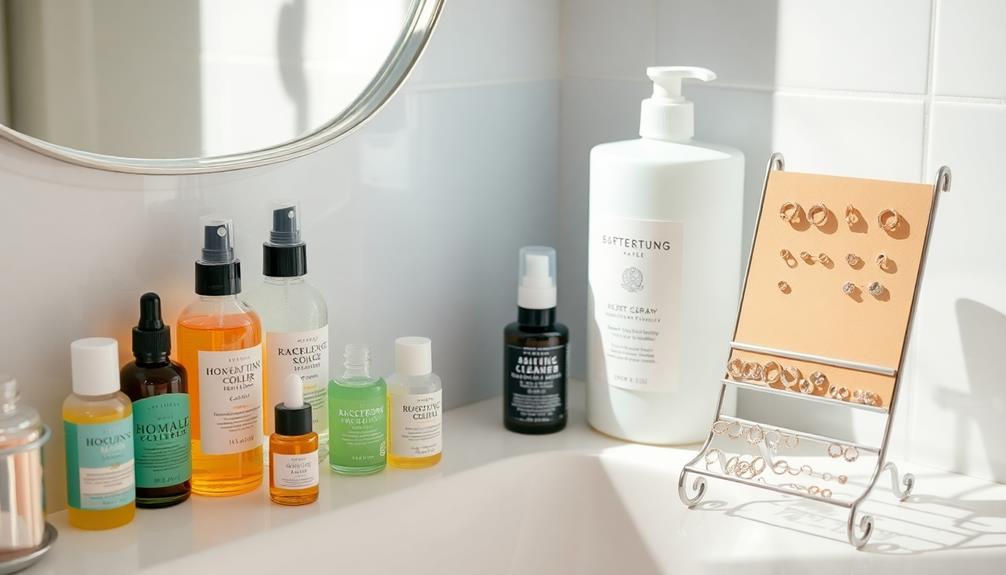
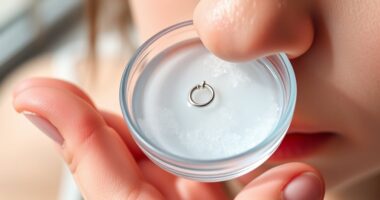
Before changing jewelry, it’s important to do jewelry cleaning to make sure it’s free of dirt and oils. Use gentle methods like mild soap and warm water or specialized jewelry cleaner suited for your piece. Regular jewelry maintenance, including careful cleaning, helps preserve its shine and prevents damage. Avoid harsh chemicals or abrasive materials, as they can harm delicate surfaces. Proper cleaning makes changing jewelry safer and keeps your pieces looking their best.
What Should I Do if I Damage My Jewelry During Removal?
If you damage your jewelry during removal, act quickly and carefully. Stop pulling to prevent further harm, then seek professional Jewelry repairs immediately. For urgent situations, consider an emergency removal to avoid injury or loss. Keep calm, avoid using excessive force, and don’t attempt DIY fixes that could worsen the damage. Your best move is to consult a jewelry expert who can safely repair or assist with your damaged piece.
How Often Should I Change Jewelry to Avoid Skin Irritation?
You should change your jewelry only when necessary, generally every few months, to prevent skin irritation. To support allergy prevention and reduce skin sensitivity, give your skin regular breaks from jewelry, especially if you notice redness or discomfort. When changing jewelry, do it carefully, ensuring you clean the new piece thoroughly. This minimizes irritation and helps maintain healthy skin, making your jewelry experience safer and more enjoyable.
Conclusion
Changing your jewelry safely is simple when you follow the right timing and techniques. Remember to clean your hands and work in a well-lit area to avoid accidents. Did you know that jewelry-related injuries have decreased by 20% since more people started practicing proper removal methods? So, take your time and be cautious—your jewelry will look stunning, and you’ll keep your skin safe. Enjoy switching up your accessories confidently and securely!