Disposing of Piercing Needles and Biomedical Waste
Ineffective disposal of piercing needles and biomedical waste can pose serious health and environmental risks—discover essential safety tips to protect yourself and others.
To safely dispose of piercing needles and biomedical waste, always use puncture-resistant, leak-proof containers labeled for sharps. Never recap or bend needles before discarding, and promptly place used needles into approved containers to prevent injuries. Seclude contaminated items like gloves and gauze in biohazard bags rather than regular trash. Following proper procedures reduces infection risks and environmental harm, and staying compliant with local guidelines keeps everyone safe—learn more to guarantee you’re fully prepared.
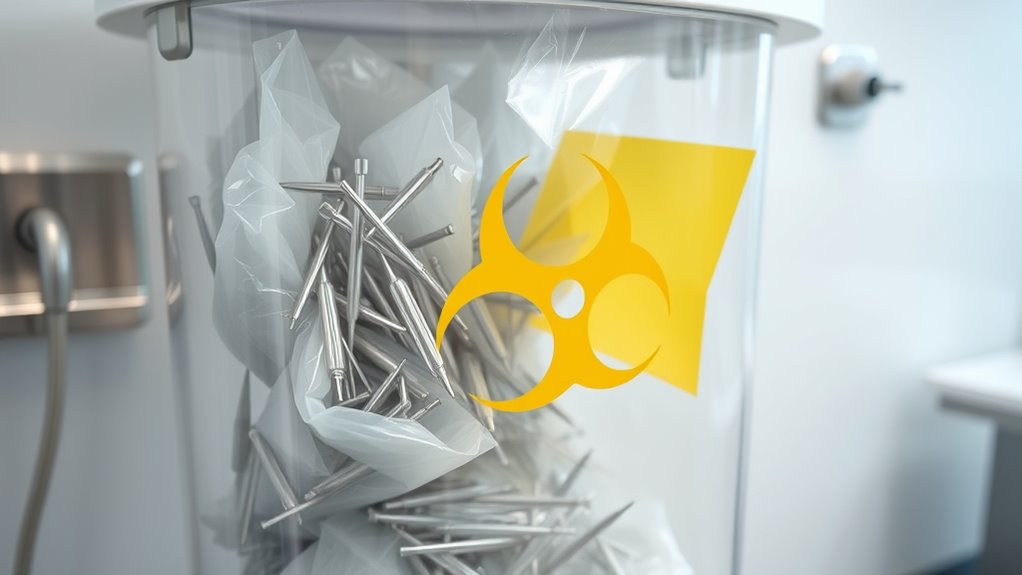
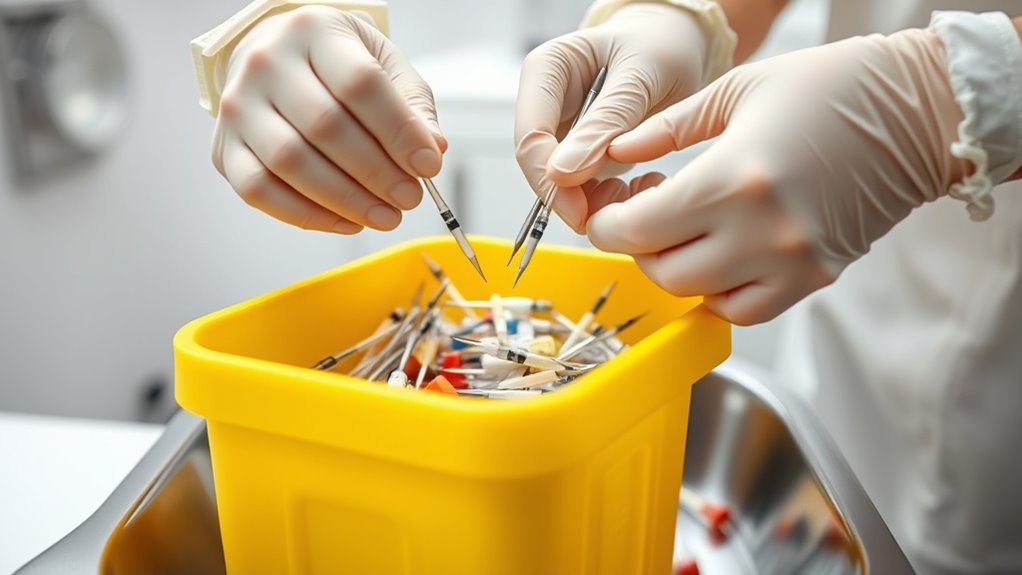
Use puncture-resistant, labeled sharps containers for immediate disposal of used needles.
Never recap or bend needles; seal containers securely when full before disposal.
Segregate biomedical waste like gloves and gauze into biohazard bags, avoiding regular trash.
Follow local regulations and coordinate with licensed waste disposal services for safe handling.
Provide staff training on proper disposal procedures and safety protocols regularly.
Proper disposal of piercing needles and biomedical waste is essential to prevent injuries and reduce the risk of infection. When you handle sharps disposal, you’re taking a vital step in maintaining safety for yourself and others. Sharp objects like needles can cause accidental punctures if not disposed of properly, leading to the potential transmission of bloodborne pathogens. That’s why adhering to proper biomedical waste management protocols is so important. Always use designated sharps containers that are puncture-resistant, leak-proof, and clearly labeled. Never attempt to recap or bend needles after use, as this increases the chance of accidental injury. Instead, immediately dispose of used needles into these approved containers to minimize risk. Once the sharps container is full, seal it securely and follow local guidelines for disposal or pick-up. Proper biomedical waste management isn’t just about safe disposal; it also involves segregating waste correctly from other materials. For example, contaminated gloves, gauze, and other items that have come into contact with bodily fluids should be disposed of separately in biohazard bags. This segregation ensures that waste is handled safely throughout its lifecycle, from disposal to final treatment. You should never throw biomedical waste into regular trash bins, as this can expose sanitation workers and the public to infection. Instead, coordinate with licensed waste disposal services that follow strict biomedical waste handling regulations. They will transport and treat the waste safely, often through autoclaving or incineration, to eliminate any infectious agents. Proper biomedical waste management also involves understanding the importance of proper training and education for personnel involved in waste handling to ensure compliance with safety standards. Remember that proper sharps disposal and biomedical waste management are ongoing responsibilities, especially in settings like tattoo parlors, clinics, or piercing studios. Staying informed about local regulations and best practices helps you avoid legal penalties and guarantees safety. Training staff on correct procedures and providing the right disposal containers also makes a significant difference. Always check the manufacturer’s instructions for any disposal products you use, and ensure that containers are replaced when full. By taking these steps, you’re actively reducing the chance of needle-stick injuries and preventing the spread of infections. Proper biomedical waste management also demonstrates your commitment to hygiene and public health, building trust with clients and the community. In the end, responsibly managing sharps disposal not only protects health but also promotes a safer environment for everyone involved. Keep safety protocols at the forefront of your practice, and never compromise on proper disposal procedures.
Frequently Asked Questions
Are There Any Specific Laws for Biomedical Waste Disposal?
Yes, there are specific laws for biomedical waste disposal that you must follow. You need to guarantee legal compliance by adhering to local, state, and federal regulations regarding waste management. Proper disposal of piercing needles and biomedical waste helps prevent injury and infection. Always use approved containers, label waste correctly, and follow protocols for transportation and disposal. Staying informed and compliant protects public health and avoids legal penalties.
How Often Should Biomedical Waste Be Collected?
Think of biomedical waste as a ticking clock; you need to collect it regularly to prevent hazards. You should schedule waste collection daily or as recommended by local regulations, especially to maintain needle safety and prevent contamination. Proper waste segregation ensures contaminated needles and other waste are separated immediately after use. Staying consistent with collection helps avoid accidental injuries, keeps your environment safe, and complies with health standards.
Can Personal Disposal of Biomedical Waste Be Done at Home?
You should not attempt home disposal of biomedical waste, including piercing needles, because it poses serious risks. For needle safety, always use approved sharps containers and follow local regulations. Home disposal can lead to injuries or infections, so it’s best to take used needles to authorized disposal sites or contact your healthcare provider. Prioritizing proper disposal guarantees safety for you and your community.
What Training Is Required for Proper Biomedical Waste Handling?
You need proper training in biomedical waste handling, which includes understanding sterilization protocols and using personal protective equipment (PPE). You should learn how to safely segregate, containerize, and transport waste to prevent infection. Training programs often cover these topics, ensuring you handle waste responsibly. By following these protocols and wearing the right PPE, you minimize risks and stay compliant with health and safety regulations.
How to Identify Different Categories of Biomedical Waste?
You identify different categories of biomedical waste by following segregation protocols and waste labeling guidelines. Sharp objects like piercing needles go into puncture-proof containers marked as infectious waste. Non-sharp contaminated materials are placed in clearly labeled biohazard bags, while sharps are separated to prevent injury. Proper labeling guarantees quick identification and safe handling, reducing risks. Always stay updated with your facility’s waste management procedures to make certain of compliance and safety.
Conclusion
Remember, proper disposal of piercing needles and biomedical waste isn’t just about following rules—it’s about protecting yourself and others. Did you know that improper waste disposal can lead to the spread of infections like hepatitis B and C? By always using designated sharps containers and adhering to safety protocols, you help prevent these serious health risks. Stay responsible, stay safe, and keep your community protected by handling biomedical waste with care.
Caring for your piercing involves effective pain and swelling management techniques that can significantly influence healing—discover essential tips to ensure a smooth recovery.