In a piercing studio, steam sterilization is generally preferred because it offers quick, reliable sterilization that effectively kills bacteria, viruses, and spores—crucial for safety and compliance. Dry heat sterilization suits heat-resistant, moisture-sensitive tools but takes longer and may be less reliable for complex instruments. Understanding the advantages and limitations of each method helps you make the right choice to keep your clients safe. If you want to know which method best fits your setup, keep exploring.
Steam sterilization is generally preferred for piercing studio tools due to its quick, effective, and reliable microbial kill rate.
Dry heat sterilization suits heat-resistant, moisture-sensitive instruments, but its longer cycles may reduce efficiency in busy studios.
For complex, multi-part instruments, steam sterilization offers better penetration and sterilization assurance.
Dry heat is advantageous for sterilizing items that cannot withstand moisture, but it requires higher temperatures and longer cycles.
Choosing the appropriate method depends on instrument material, workflow volume, and safety standards in the piercing studio.
What Are Dry Heat and Steam Sterilization?
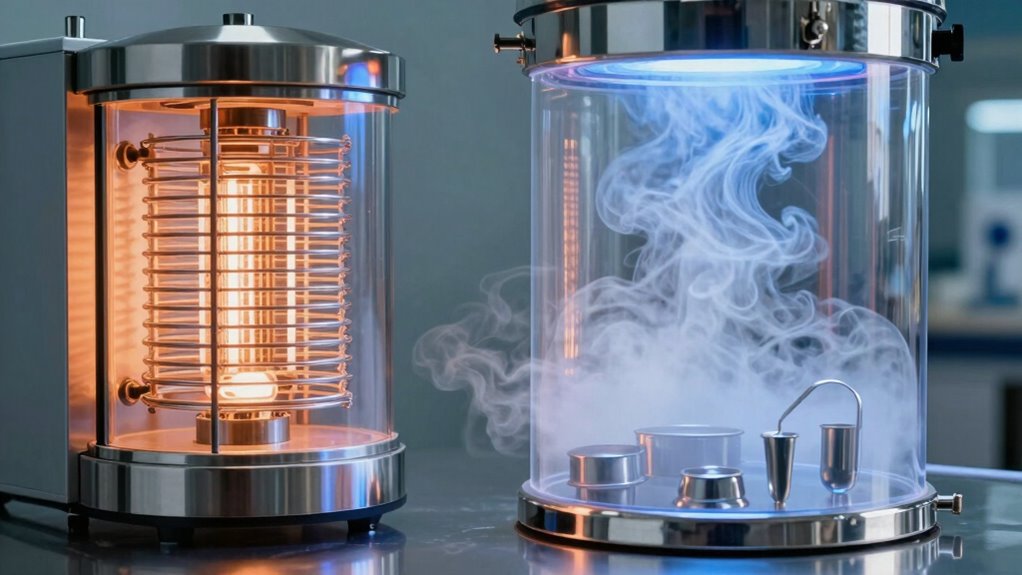
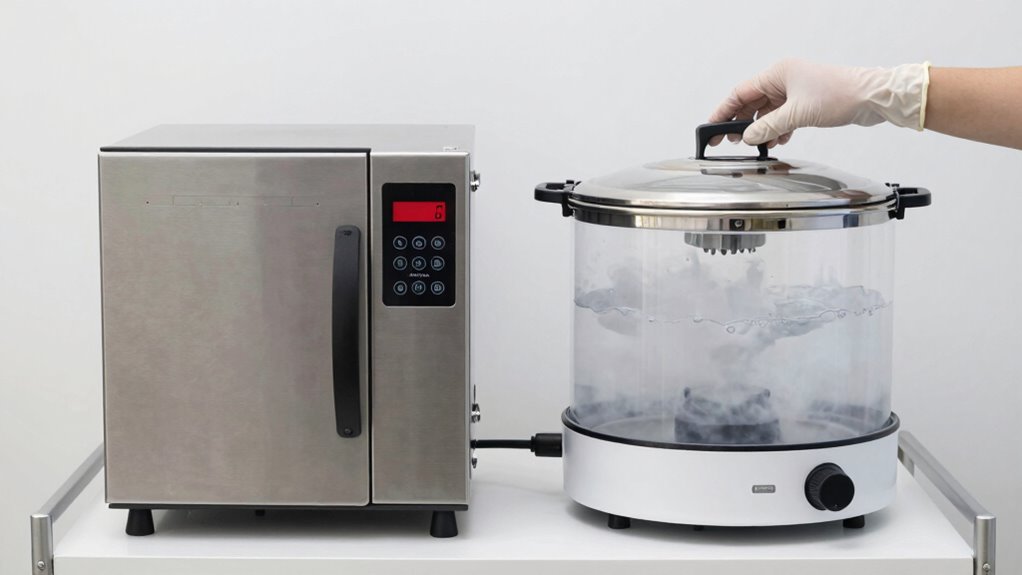
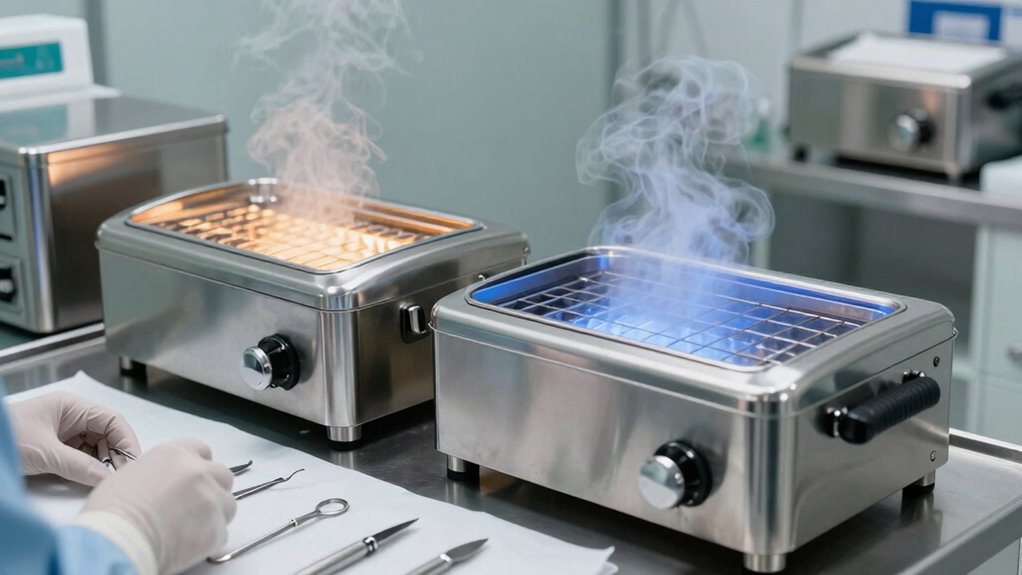
Have you ever wondered how piercing studios guarantee their tools are completely free of bacteria and viruses? It all comes down to sterilization techniques. Dry heat and steam sterilization are two common methods used to assure equipment durability and safety. Dry heat sterilization involves exposing tools to high temperatures in an oven, which effectively kills microbes without moisture. It’s ideal for items that can withstand high heat over longer periods. Steam sterilization, on the other hand, uses pressurized steam to rapidly sterilize instruments, making it efficient for quick turnaround. Both methods are reliable, but each has its advantages depending on the type of equipment being sterilized. Choosing the right technique helps keep your tools safe and your clients protected.
How Do Dry Heat and Steam Sterilization Work?
Ever wondered how dry heat and steam sterilization actually eliminate germs from piercing tools? These sterilization techniques use different methods to destroy bacteria, viruses, and spores. Dry heat sterilization works by exposing tools to high temperatures, usually between 320°F and 340°F, for a set period, causing proteins to coagulate and germs to die. Steam sterilization, or autoclaving, involves pressurized steam at around 250°F, which penetrates microorganisms, disrupting their cell structures. Proper equipment maintenance is vital to guarantee these processes work effectively; for example, sterilizers must be regularly calibrated and cleaned. Both methods require careful attention to cycle times and temperatures to guarantee sterilization. Understanding how these techniques operate helps you maintain safe, sterile tools in your piercing studio. Additionally, proper equipment maintenance ensures that sterilization cycles are effective and consistent over time.
Which Method Ensures Better Sterility in Piercing Studios?
While both dry heat and steam sterilization are effective at eliminating microorganisms, steam sterilization generally provides a higher level of sterility in piercing studios. Steam sterilization uses pressurized saturated steam, which penetrates more effectively, ensuring thorough sterilization of tools. When evaluating sterilization techniques, consider these points:
Steam sterilization minimizes sterilization myths, like thinking it’s only suitable for certain materials.
It offers faster turnaround, reducing contamination risk.
It’s more reliable for sterilizing complex, multi-part instruments.
Its penetration ability allows for complete sterilization even in intricate tools and devices.
Steam sterilization’s ability to reach all surfaces makes it superior for piercing studios focused on safety. While dry heat has its place, especially for heat-resistant items, steam sterilization’s proven efficacy makes it the preferred choice for ensuring the highest sterility standards.
Pros and Cons of Dry Heat Sterilization
Dry heat sterilization offers a reliable method for sterilizing heat-resistant instruments, especially when moisture could damage delicate tools. It provides high sterilization accuracy, guaranteeing that pathogens are effectively eliminated without relying on steam. It is also suitable for moisture-sensitive tools, ensuring they remain intact after sterilization. This method is ideal for items like metal tools that can withstand high temperatures over longer periods. Additionally, dry heat enhances equipment durability because it doesn’t cause corrosion or rust, extending the lifespan of your instruments. Properly implementing natural filtration systems can further improve the safety and longevity of sterilized tools. However, it requires longer sterilization cycles and higher temperatures, which might be less energy-efficient and time-consuming. You also need to ensure your sterilizer is properly calibrated to achieve consistent results. Overall, dry heat is a solid choice for specific tools, but it’s essential to weigh its pros and cons for your studio’s needs.
Pros and Cons of Steam Sterilization
Steam sterilization is widely regarded as one of the most effective methods for disinfecting piercing instruments, especially those that can withstand moisture and heat. It’s fast, reliable, and widely used in studios. However, some sterilization myths persist, like believing it damages all equipment, which isn’t true for durable tools. When considering steam sterilization, keep these pros and cons in mind:
Steam sterilization is fast, reliable, and effective for heat-resistant piercing tools—just ensure proper maintenance and loading.
It offers thorough sterilization, killing bacteria, viruses, and spores efficiently.
Equipment durability matters—only heat-resistant tools should undergo this process.
It requires regular maintenance and proper loading to avoid contamination, which can be a drawback if not properly managed.
Understanding testing accuracy can help verify that sterilization procedures are effective and equipment remains safe for use.
Ensuring the use of appropriate sterilizers that meet industry standards is critical for consistent results.
Additionally, selecting proper sterilization techniques based on the specific equipment can help prolong tool life and maintain safety standards.
Implementing quality control measures ensures ongoing compliance and the reliability of sterilization processes.
Cost, Maintenance, and Practicality of Each Method
Understanding the costs, maintenance needs, and practicality of sterilization methods is essential for running an efficient piercing studio. When comparing dry heat and steam sterilization, consider their cost comparison and upkeep requirements. Dry heat sterilizers generally have higher upfront costs but lower ongoing maintenance, as they don’t need water or sterilizing solutions. Steam sterilizers are usually more affordable initially but require regular upkeep to prevent rust and ensure proper function.
Method
Cost Comparison
Maintenance Requirements
Dry Heat
Higher upfront, lower ongoing
Low; focus on temperature accuracy
Steam
Lower upfront, higher ongoing
Regular cleaning and water refilling
Safety Standards and Regulations for Piercing Studio Sterilization
Maintaining proper sterilization standards is vital to guarantee client safety and comply with legal requirements in your piercing studio. You must follow strict safety standards and regulations related to sterilization techniques to prevent infections and assure safety compliance. Regulatory bodies often specify procedures for cleaning, sterilizing, and storing equipment. To stay compliant, focus on these key points:
Maintaining sterilization standards ensures safety, compliance, and trust in your piercing studio.
Regularly validate sterilization equipment to confirm it functions correctly.
Follow manufacturer instructions and local health codes for sterilization procedures.
Keep detailed records of sterilization cycles and maintenance to demonstrate safety compliance.
Incorporate climate considerations into your sterilization protocols to ensure consistency and effectiveness in different environmental conditions. Properly adjusting procedures based on temperature and humidity can help maintain sterilization efficacy across various settings. Additionally, understanding the impact of air quality and environmental factors on sterilization processes can further enhance safety measures. Being aware of environmental influences can help you adapt your sterilization practices to maintain their effectiveness.
Which Sterilization Method Do Professionals Prefer?
You want to know which sterilization method professionals rely on most because reliability and effectiveness are essential. Most prefer methods that consistently eliminate bacteria and viruses without fail. Ultimately, their choice reflects a balance of proven results and ease of use.
Professional Preferences Matter
Which sterilization method do professionals prefer in piercing studios? Many favor steam sterilization because it offers quick turnaround and proven effectiveness. However, some prefer dry heat sterilization for equipment durability, especially with tools that withstand higher temperatures without damage. Your choice often depends on balancing equipment longevity with client comfort. Additionally, understanding cabling solutions can help ensure that sterilization equipment is properly set up and maintained for optimal performance. Proper sterilization procedures are essential to prevent contamination and ensure safety. Considering the equipment materials can also influence which sterilization method is more suitable, as certain materials respond better to specific processes. For instance, material compatibility plays a crucial role in selecting the appropriate sterilization technique. Ultimately, your preference hinges on which method aligns best with your studio’s workflow and commitment to providing safe, comfortable experiences for clients.
Reliability and Effectiveness
When it comes to selecting a sterilization method, reliability and effectiveness are top priorities for piercing professionals. Many sterilization myths circulate, but the goal remains consistent: ensuring client safety. Steam sterilization, or autoclaving, is widely preferred because it reliably kills bacteria, viruses, and spores, making it highly effective. Dry heat sterilization, while suitable for certain materials, may not be as universally dependable, especially for complex instruments. You want a method you can trust to prevent infections and give your clients peace of mind. Choosing the most reliable sterilization technique helps dispel myths and emphasizes your commitment to safety. Additionally, understanding the different sterilization methods can help you make informed choices for your studio. Ultimately, professionals favor sterilization methods proven to maximize effectiveness, safeguarding both your reputation and your clients’ health.
How to Choose the Best Sterilization Method for Your Studio
Choosing the right sterilization method for your studio is essential to guarantee client safety and maintain compliance with health standards. To do this effectively, consider these key factors:
Sterilization techniques: Evaluate which method—dry heat or steam—is most effective for your tools and procedures, ensuring thorough sterilization.
Equipment compatibility: Confirm that your sterilizers are compatible with your tools, preventing damage and ensuring proper sterilization.
Workflow and volume: Choose a method that fits your studio’s scale and frequency of use, balancing efficiency with effectiveness.
Understanding sterilization outcomes: It’s important to understand the prognosis of infection control to select the most reliable sterilization method for your practices.
Frequently Asked Questions
Can Dry Heat Sterilization Damage Certain Piercing Tools or Jewelry?
Dry heat sterilization can damage certain jewelry materials and may affect tool compatibility. If your jewelry contains plastic, rubber, or certain metals, dry heat might cause warping or degradation. Always check your jewelry material before sterilizing with dry heat, and verify your tools are compatible to prevent damage. Using the right sterilization method protects both your tools and jewelry, ensuring safe, effective piercing procedures.
How Long Does Each Sterilization Process Typically Take?
Think of sterilization processes as race cars: steam sterilization is like a swift, turbocharged car, taking around 15-30 minutes to complete, ideal for quick turnaround. Dry heat sterilization, however, is a sturdy vintage vehicle, needing 1.5 to 2 hours, but it’s compatible with many tools and jewelry. Your choice depends on equipment compatibility and how fast you need sterilization speed, ensuring safety without sacrificing efficiency.
Are There Specific Regulations Dictating Sterilization Methods in Piercing Studios?
Yes, there are specific regulations that dictate sterilization methods in piercing studios. You must adhere to regulatory compliance standards set by health authorities, which often specify approved sterilization techniques like steam or dry heat sterilization. Certification standards guarantee your equipment and procedures meet safety requirements. Staying updated on these regulations helps you maintain a safe environment, protect clients, and ensure your studio’s legal operation.
What Environmental Impacts Are Associated With Each Sterilization Method?
Think of sterilization methods as two sides of the same coin, each with unique environmental impacts. Steam sterilization uses water and energy, creating waste that needs careful management. Dry heat involves higher temperatures, potentially releasing more energy and emissions. Both impact waste management, but steam’s water use can strain resources, while dry heat’s energy consumption contributes to overall carbon footprint. You should consider these factors to minimize your studio’s environmental footprint.
Is Sterilization Effectiveness Affected by the Size or Shape of Items?
Sterilization effectiveness can be affected by the size or shape of items, impacting sterilization consistency. You need to ensure material compatibility because some tools, especially those with complex shapes or sensitive materials, may not withstand high temperatures or moisture. Properly evaluating these factors guarantees thorough sterilization. Using appropriate sterilization methods for different items guarantees safety and reduces the risk of infection, keeping your piercing studio compliant and hygienic.
Conclusion
Choosing the right sterilization method is vital for your piercing studio’s safety and success. While steam sterilization is popular—used by over 80% of medical facilities for its efficiency—dry heat offers a viable alternative for certain tools. Ultimately, your decision should weigh factors like cost, practicality, and safety regulations. Remember, prioritizing sterilization not only protects your clients but also builds trust, making your studio a trusted name in piercing safety.
Piercing Allergies: Symptoms, Causes, and Solutions
Inevitably, piercing allergies can cause discomfort and frustration—discover the symptoms, causes, and effective solutions to reclaim your comfort and style.