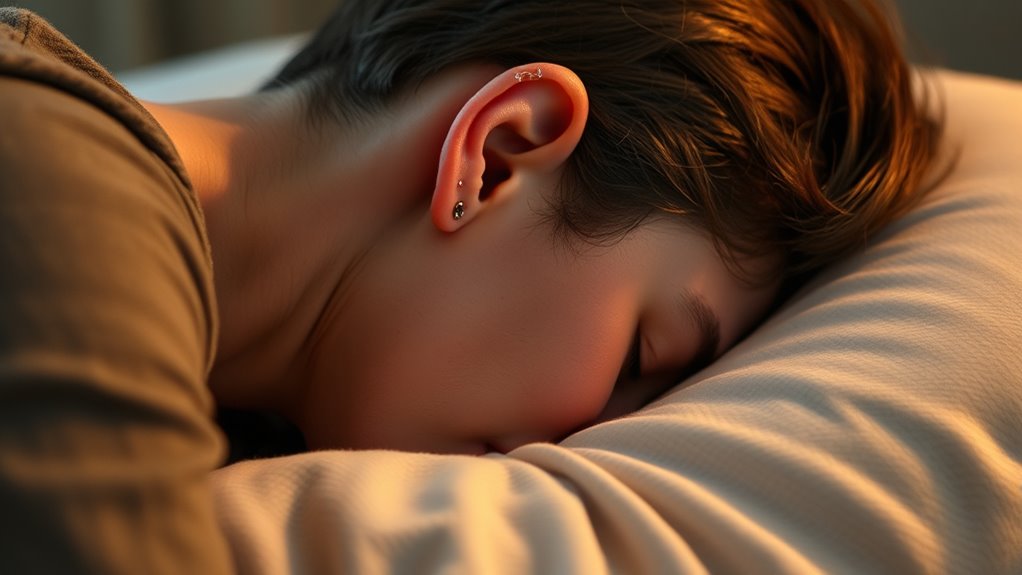

Your sleep position considerably influences how quickly your piercing heals. Sleeping on your back minimizes contact with bedding and pillows, reducing pressure, friction, and potential irritation. Avoid side or stomach sleeping, which can reopen wounds or cause irritation. Using soft, clean pillows and maintaining good bedding hygiene helps prevent infection and inflammation. Proper positioning not only speeds healing but also minimizes discomfort. Want to learn more about optimizing your sleep for better piercing recovery? Keep exploring for practical tips.
Key Takeaways
- Sleeping on the back minimizes contact with bedding and pillows, reducing irritation and trauma to the piercing site.
- Proper sleep posture decreases friction and pressure, promoting faster and more comfortable healing.
- Avoiding side or stomach sleeping prevents reopening wounds and minimizes risk of infection.
- Using clean, soft pillows helps protect the piercing from dirt and bacterial transfer during sleep.
- Conscious sleep positioning reduces swelling, discomfort, and potential scarring, supporting overall piercing recovery.

Your sleep position can substantially impact the healing process of a new piercing. When you rest, your body’s movements and the way you position yourself can influence how well your piercing heals. One of the key factors is maintaining good piercing hygiene, which involves keeping your piercing clean and free from infection. Your sleep posture plays a significant role here because certain positions can cause friction, pressure, or accidental trauma to the site, disrupting healing and risking complications.
Proper sleep position supports piercing healing by reducing friction, pressure, and trauma to the site.
If you tend to sleep on your side or stomach, your piercing might experience more contact with bedding or pillows, leading to irritation or even reopening a fresh wound. For example, if you have a facial piercing, lying on that side can cause unnecessary pressure and dirt transfer from the pillow to the piercing area. This can hinder piercing hygiene by trapping bacteria or debris, increasing the risk of infection. To promote better healing, try to sleep on your back whenever possible, as this position minimizes contact and reduces the chances of irritation. It also helps you avoid accidental tugging or pressure that could prolong the healing process.
Adjusting your sleep posture isn’t always easy, especially if you’re used to certain habits, but it’s a worthwhile effort. Using soft, clean pillows and avoiding overly firm or textured bedding can further protect your new piercing. Ensuring your bedding is regularly washed helps maintain piercing hygiene, preventing bacteria buildup that could lead to infection. If you find it difficult to stay on your back, consider placing a small, clean pillow behind your back or under your knees to encourage this position. Some people find that wearing a soft, comfortable eye mask or a supportive pillow can make back sleeping more comfortable and sustainable.
Keep in mind that even small movements during sleep can affect your piercing. If you already notice irritation or swelling, paying extra attention to your sleep posture becomes even more critical. Combining good piercing hygiene practices with a conscious effort to avoid placing pressure on the piercing helps your body heal faster and reduces discomfort. Remember, healing times vary depending on the piercing type, but being mindful of how you sleep can make a notable difference. Self Watering Plant Pots are designed to help maintain consistent moisture, which is similar to the importance of consistent care during piercing healing. By prioritizing your sleep posture and keeping your bedding clean, you’re giving your body the best chance to recover swiftly and without complications.
Frequently Asked Questions
Does Sleeping on My Side Cause More Swelling?
Sleeping on your side can cause more swelling around your piercing because your sleep posture applies pressure and friction on the area. To promote swelling reduction, try to sleep on your back or avoid pressing directly on the piercing. You might also use a soft pillow or cushion to protect the area. This helps reduce irritation, encourages healing, and keeps swelling to a minimum.
Can Sleeping on My Stomach Delay Healing?
Sleeping on your stomach can delay healing because it puts pressure on your piercing, causing irritation and swelling. To promote faster healing, focus on piercing protection by avoiding this position and try to sleep on your back or side. Follow healing tips like keeping the area clean and avoiding unnecessary movement. These steps will help reduce discomfort and make sure your piercing heals properly and quickly.
Is It Okay to Switch Sleep Positions During Healing?
Switching sleep positions during healing is like changing lanes on a busy road—you can do it, but it’s best to stay aligned for safety. You should try to maintain sleeping comfort and healing alignment to avoid irritating your piercing. If you must switch, do so gently and gradually, ensuring your piercing isn’t pressed or twisted. Prioritize consistent, gentle sleep to support quicker healing and avoid setbacks.
How Long Should I Avoid Certain Sleep Positions?
You should avoid certain sleep positions for at least two weeks to promote healing and prevent irritation. Prioritize bed comfort and sleep hygiene by choosing a supportive pillow and avoiding pressure on your piercing. If you notice discomfort or swelling, extend this period. Switching positions too soon can hinder recovery, so listen to your body and maintain a gentle, comfortable sleep environment to guarantee proper healing.
Do Pillow Types Impact Piercing Recovery?
Pillow types are like gentle guardians for your healing piercing. A soft, breathable pillow made from cotton or memory foam reduces friction, similar to cushioning a delicate flower. The right sleep surface, free from rough fabrics or allergens, minimizes irritation and infection risk. Choosing the proper pillow material supports faster recovery and comfort, allowing your piercing to heal smoothly without unnecessary pressure or irritation during restful nights.
Conclusion
So, next time you’re tempted to sleep on that fresh piercing, remember: your cheek isn’t a pillow, and your bed isn’t a spa. Ignoring sleep position advice is basically a free ticket to prolonged healing, extra discomfort, and maybe even a *little* more shopping for jewelry replacements. But hey, who needs beauty sleep when you can wake up with a swollen, irritated piercing? Sleep smart, heal faster, and keep that piercing looking sharp—literally.